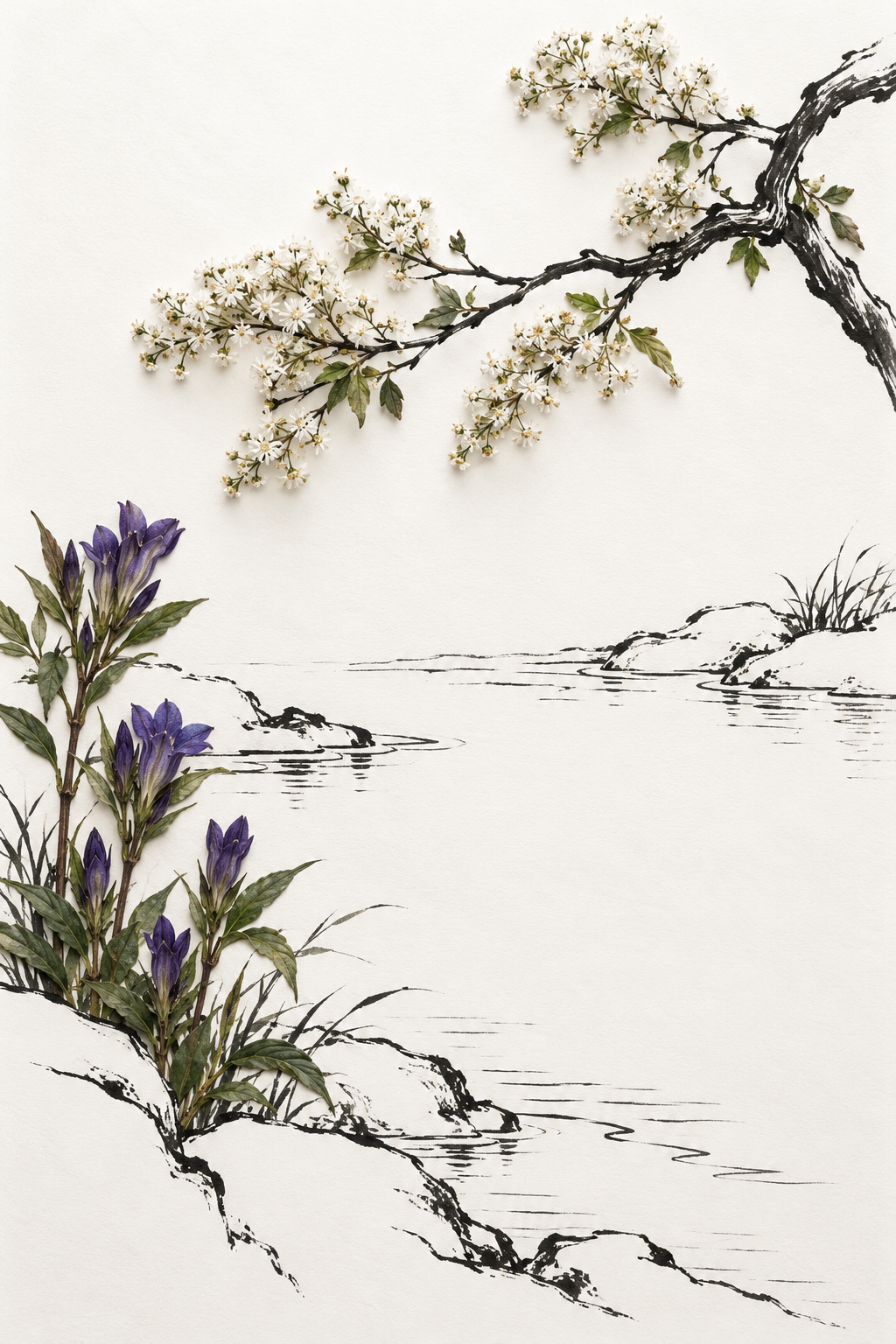
An Open Heart of Stillness
Critique
Introduction A flowering branch extends above a quiet, sparsely drawn waterway. Purple flowers rise among near rocks at the left, while a small opposite bank appears farther right. The composition uses white blossoms, narrow leaves, and black contours to connect separated areas around a broad central openness. Description The branch enters from the upper right and divides leftward into clusters of tiny white flowers and green leaves. Below, upright purple blooms emerge from elongated leaves beside pale boulders. Dark grass strokes follow the near shore. Across the water, a few low rocks and pointed grass tufts interrupt the otherwise empty right middle ground. Analysis The upper branch's diagonal and the lower bank's curve frame the unmarked water without enclosing it completely. Ripples beneath stones establish a shared surface and differing distances. Purple is concentrated at the left, balanced by the dark branch above rather than another colored mass. Shallow botanical shadows distinguish the flower clusters from the flatter rock and water drawing. Interpretation and Evaluation The scene suggests attentive stillness through the way boundaries surround an open interval. Its originality lies in giving botanical materials a spatial role without filling the setting with continuous scenery. The contrasting scales of small overhead blossoms and larger near flowers are effective, preserving depth while allowing the plant surfaces to remain individually legible. Conclusion The initial impression of a floral arrangement develops into recognition of a coherent waterside space. Branch, shore, opposite stones, and ripples each help define what is largely left undrawn. The work demonstrates how restrained color and economical contour can make openness specific, allowing material richness at the margins to support rather than overwhelm the scene's quiet center.
Same Subcategory
Similar Artworks
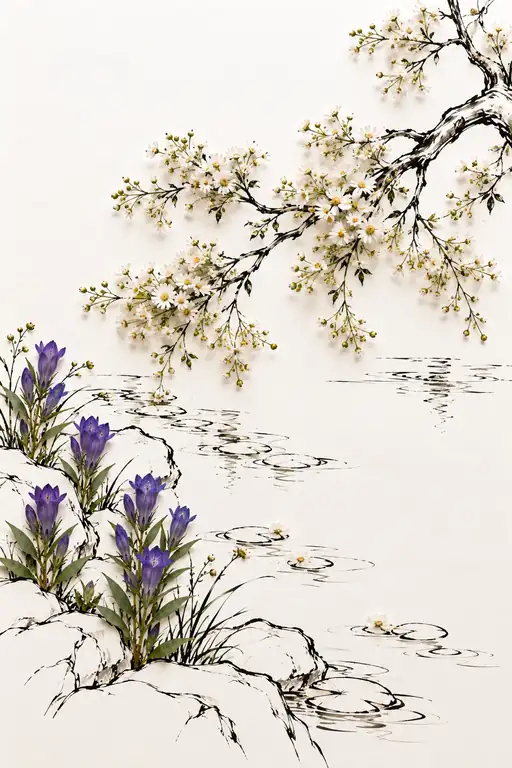 The Silence Between Ripples
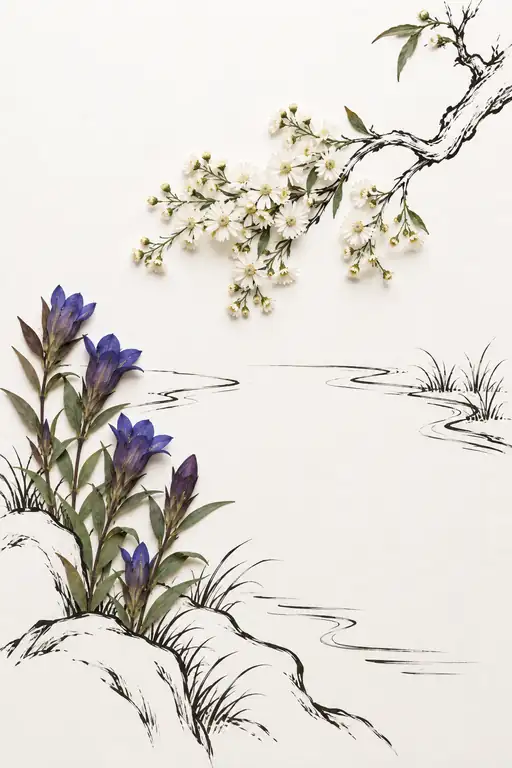 Silence Has Room to Wander
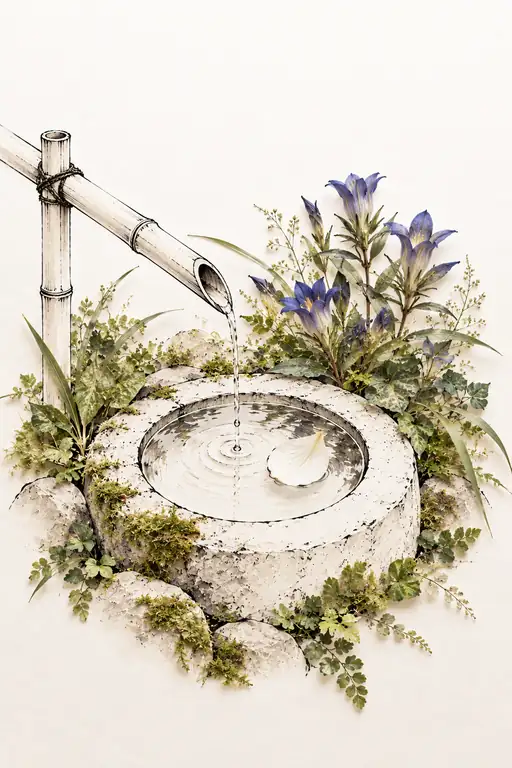 Listen to the Quiet Arriving
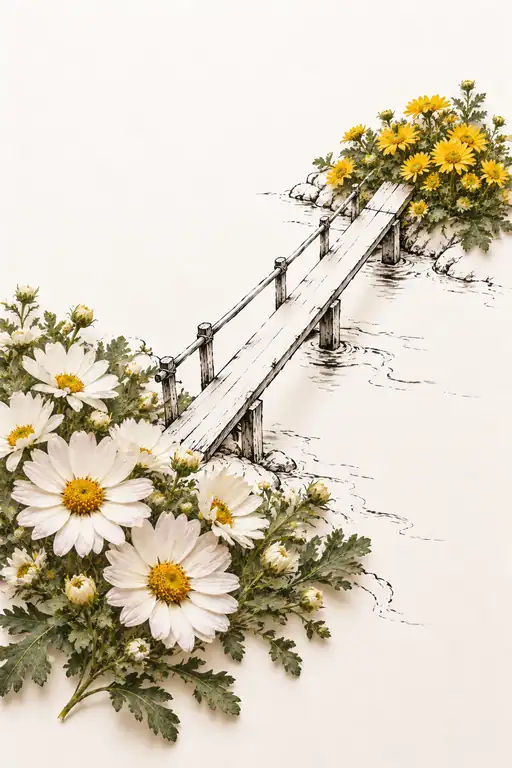 The Quiet Between Two Shores
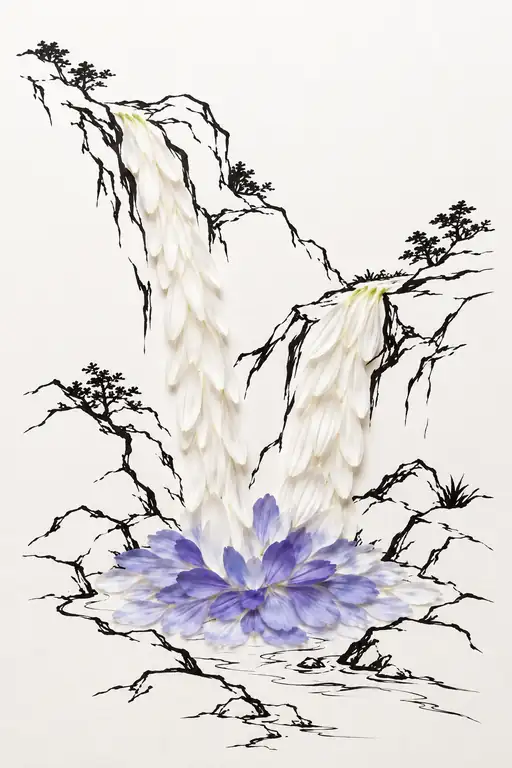 All Heights Return to Blue
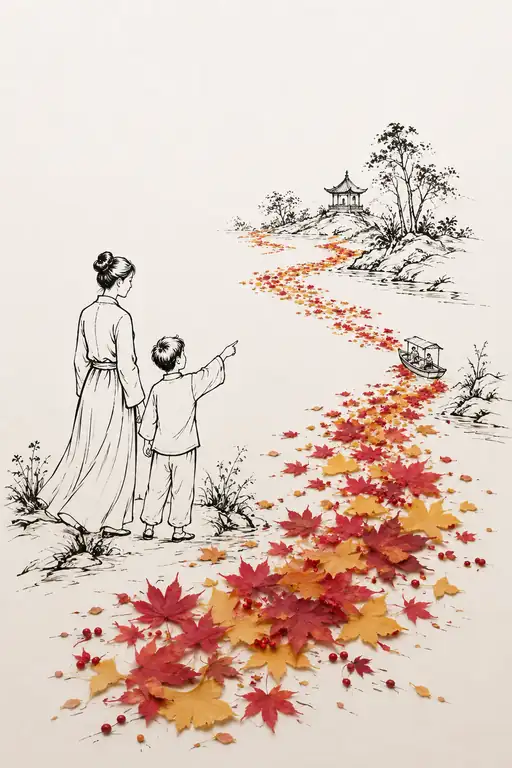 Autumn Stream and the Distant Pavilion
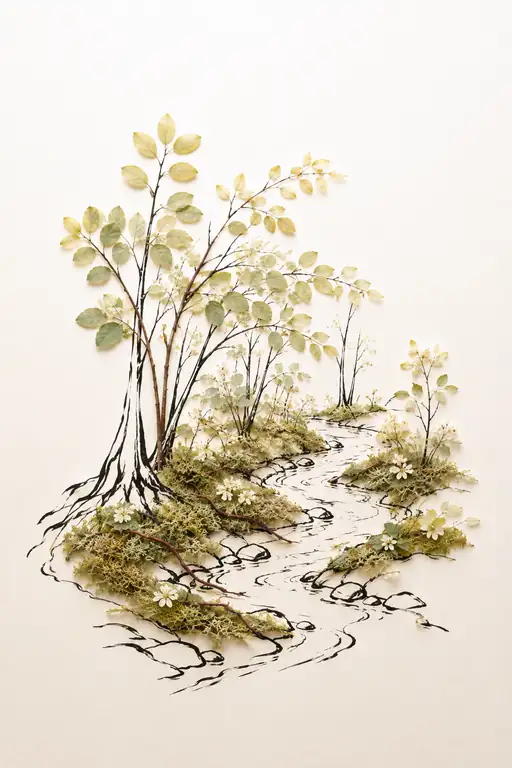 Serenade of the Winding Stream
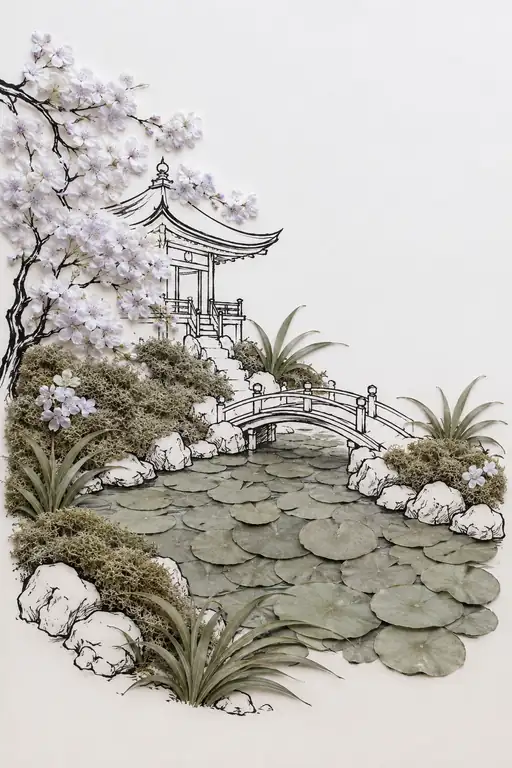 Spring Solitude at the Curved Bridge
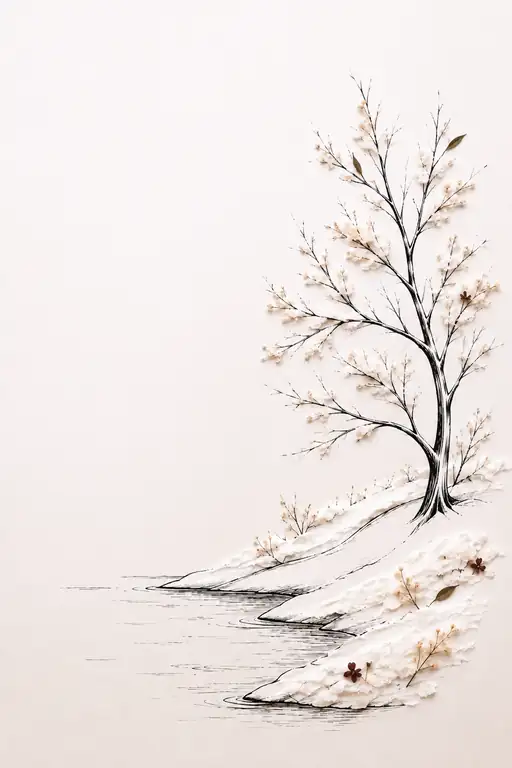 Winter Shore Awakening with Budding Boughs
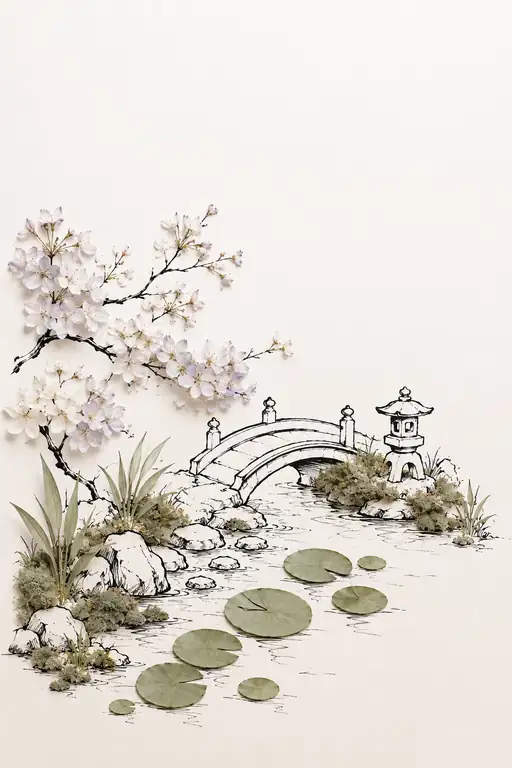 Arched Bridge by the Blossoming Cherry Tree