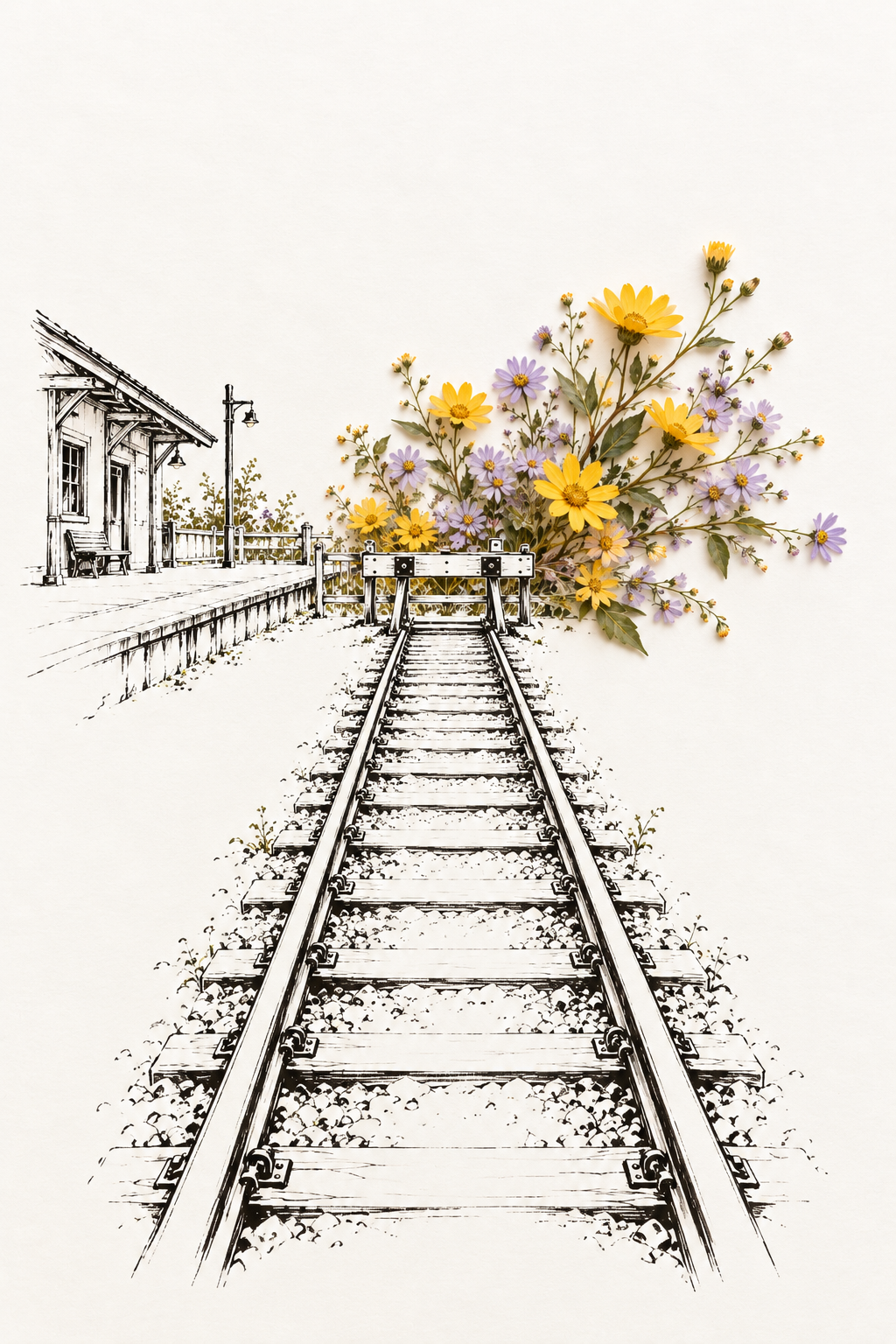
Where the Journey Opens Out
Critique
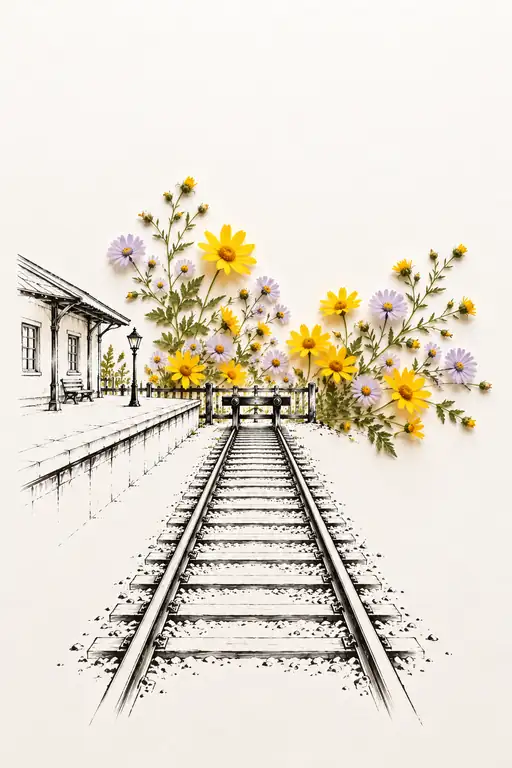
Introduction A railway terminus is seen along a centered track, with a station building set back on the left. Yellow and lavender flowers rise beyond the buffer stop in the upper-right middle ground. The pale background gives the scene an expansive character, concentrating attention on the meeting of infrastructure and branching botanical forms. Description Sleepers, bolts, and scattered ballast become progressively smaller toward the timber stop. The platform supports a bench beneath the station roof, while two slender lamps punctuate the left side. Behind the barrier, several large yellow blooms stand among smaller purple flowers, narrow leaves, and numerous buds. Empty space surrounds the track on both sides. Analysis The symmetrical rails establish a forceful foreground axis, while the flowers expand asymmetrically to the right. The distant station's reduced size makes the track feel longer and the floral destination more prominent. Dense black marks distinguish ballast from sleepers; the plant surfaces provide softer detail above the rigid barrier. Repeated yellow centers link the differently colored flowers. Interpretation and Evaluation The scene transforms a stopping point into a place of visual proliferation. This reading follows directly from the contrast between converging rails and outward-growing stems. Its descriptive precision is strongest in the foreground fastenings and repeated sleepers, while its originality rests in allowing a botanical cluster to exceed the scale of the modest architectural setting without obscuring its organization. Conclusion The first impression of a long, empty track becomes an appreciation of the carefully weighted endpoint. Open ground isolates the mechanical sequence and makes the flowers' expansion legible. The image sustains its imaginative scale through clear perspective, giving the encounter between an engineered limit and organic variety a coherent spatial foundation.
Same Subcategory
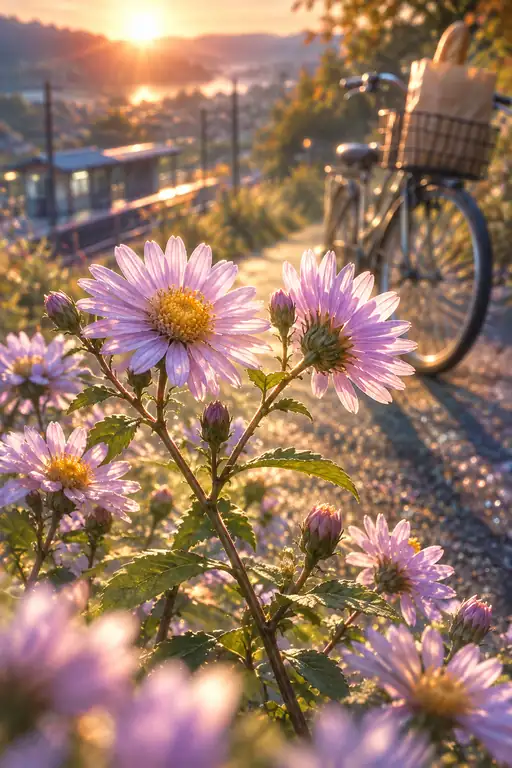 The Journey Paused in Golden Hour
Similar Artworks
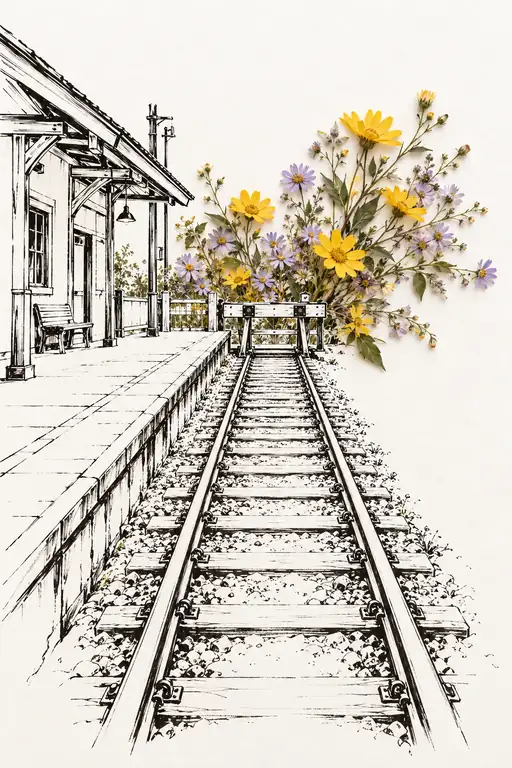 Where the Rails End, Color Begins
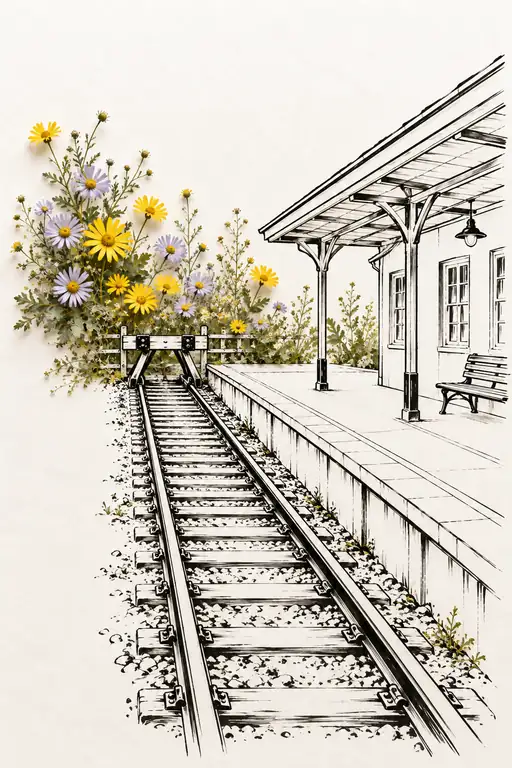 Where the Journey Learns to Bloom
 Where the Journey Learns to Stay
 The Light Before Departure
 Before the Journey Becomes Mine
 Arrival on Rain-Soaked Rails
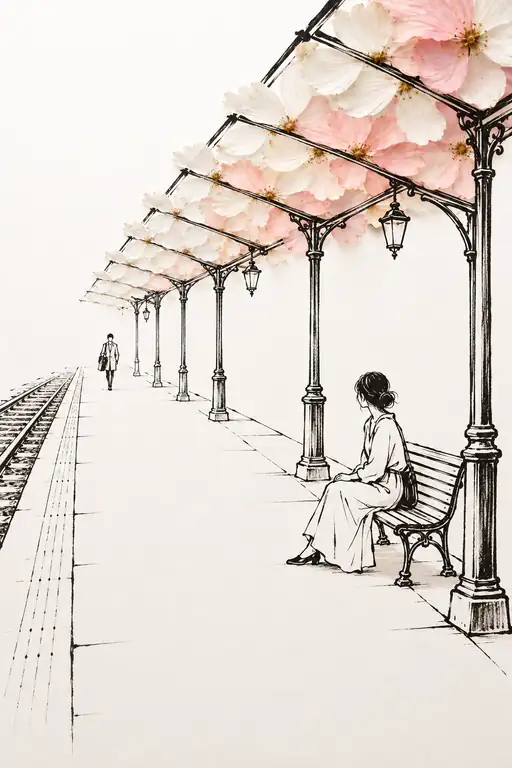 Each Footstep Shortens the Wait
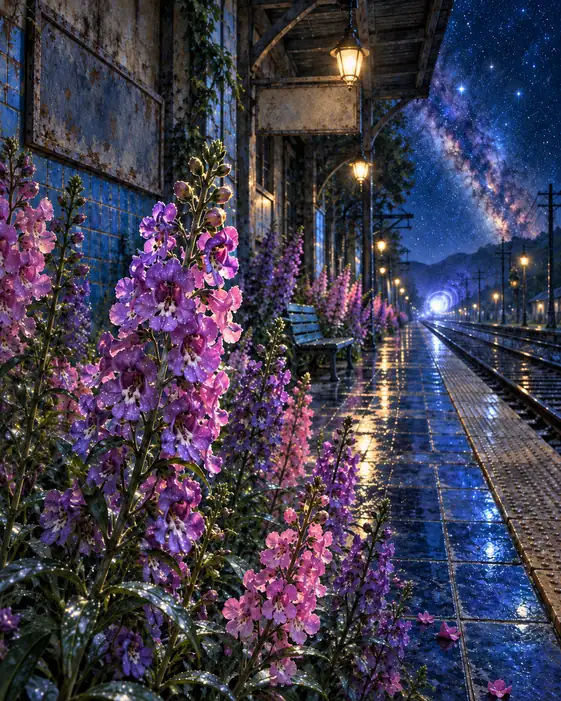 Midnight Express Under Starlight
 Hydrangeas by the Morning Platform
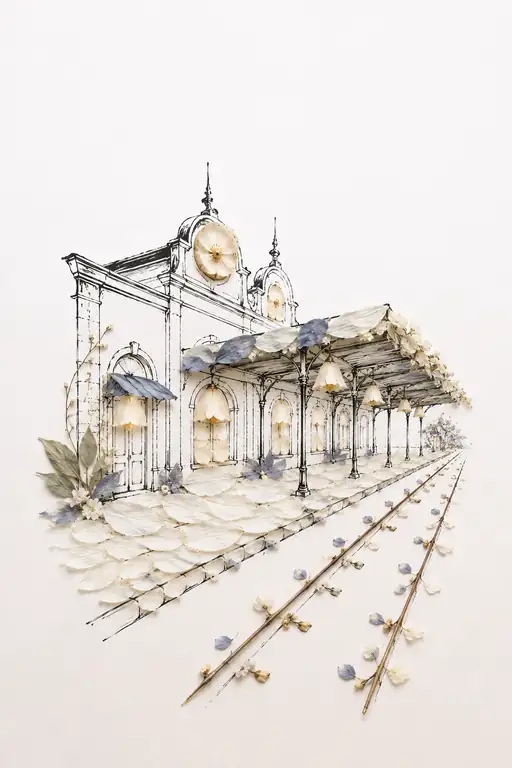 Station of the Silent Departure