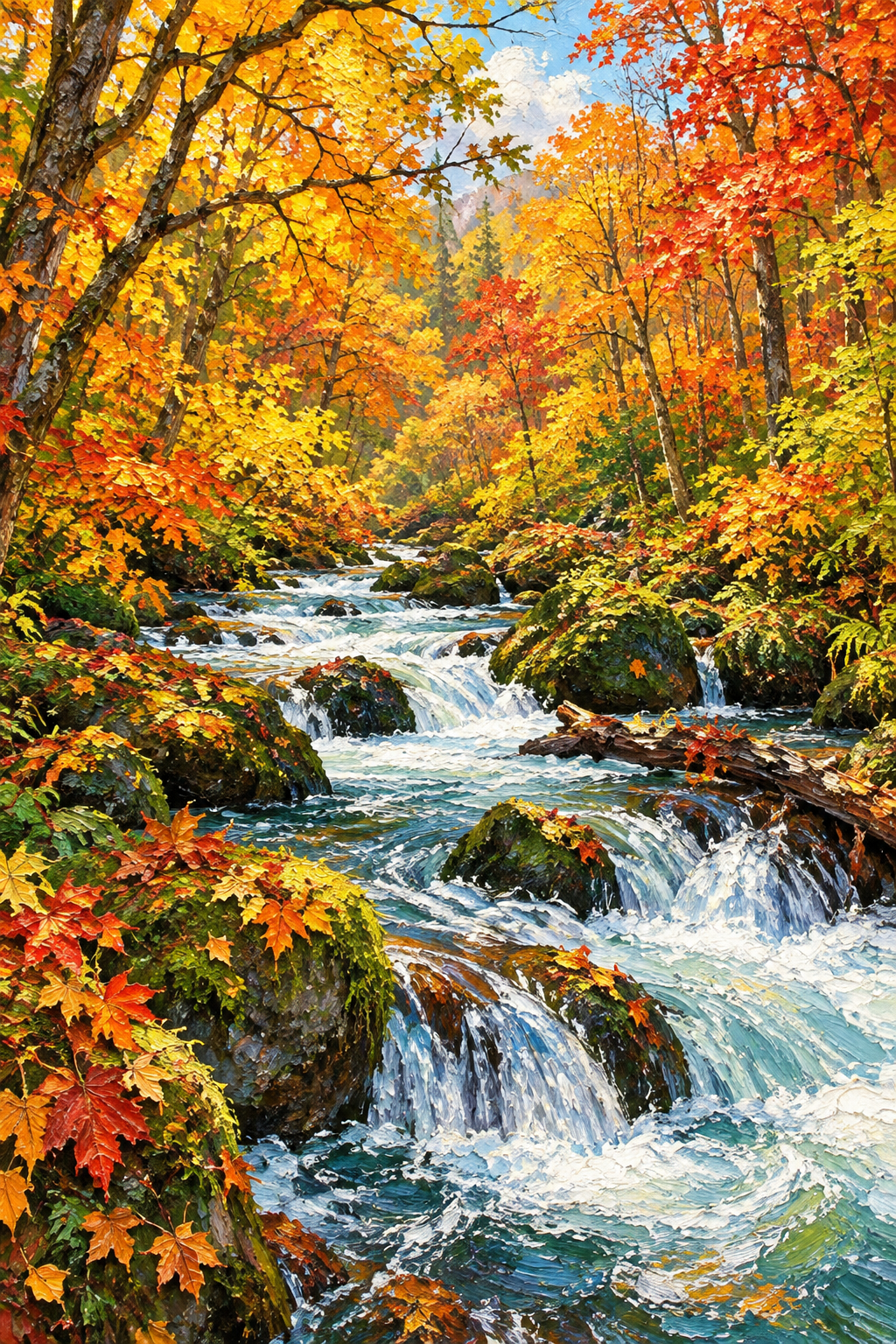
Water Finds a Way Past What Has Fallen
Critique
Introduction A narrow autumn river winds between dark rocks and densely colored woodland. Large yellow branches enter from the upper left, while red foliage rises on the right. The strongly textured rendering unifies the scene, but distinct directions in the leaves, water, and fallen timber prevent its surface from becoming merely decorative. Description The distant channel appears below a patch of blue sky and pale cloud. Successive low waterfalls advance toward a broad foreground drop. A fallen trunk crosses diagonally from the right bank above the middle current. Moss covers the large left foreground stone, where red and yellow maple leaves lie against its shadowed face. Analysis The left foreground rock creates a heavy anchor, balanced by the darker bank and projecting log on the right. White cascades step between these masses, carrying attention toward the distance. Broad blue-green strokes describe the near current, while smaller broken marks compress the upper foliage. Warm reflected passages in the water connect the two color zones. Interpretation and Evaluation The projecting log introduces a horizontal obstruction into the otherwise lengthwise movement of the stream. Its rough surface makes the forest appear materially varied rather than uniformly lush. The work's strength lies in organizing abundant color through a clear sequence of falls, although the repeated bright leaf marks deliberately maintain a high level of visual activity throughout. Conclusion What first reads as an exuberant seasonal view becomes a study of directed passage around resistant forms. Foreground moss and leaves establish stillness, while thick foam strokes insist on continuing movement. The interaction of a weighty bank, crossing timber, and descending water gives the landscape a structural coherence beyond its immediate chromatic appeal.
Same Subcategory
Similar Artworks
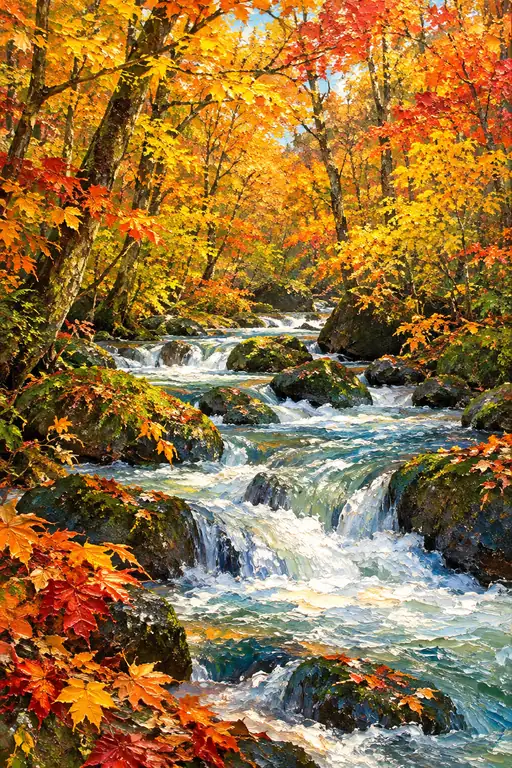 The River Learns Every Stone
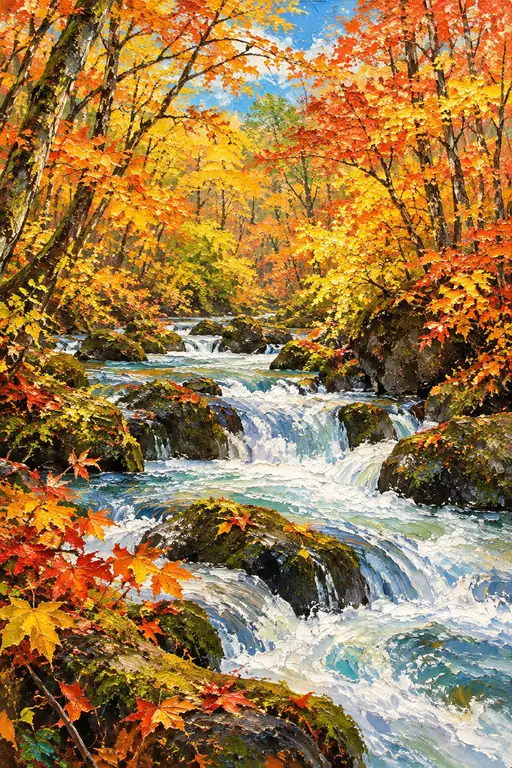 The Forest Opens a Window to the Sky
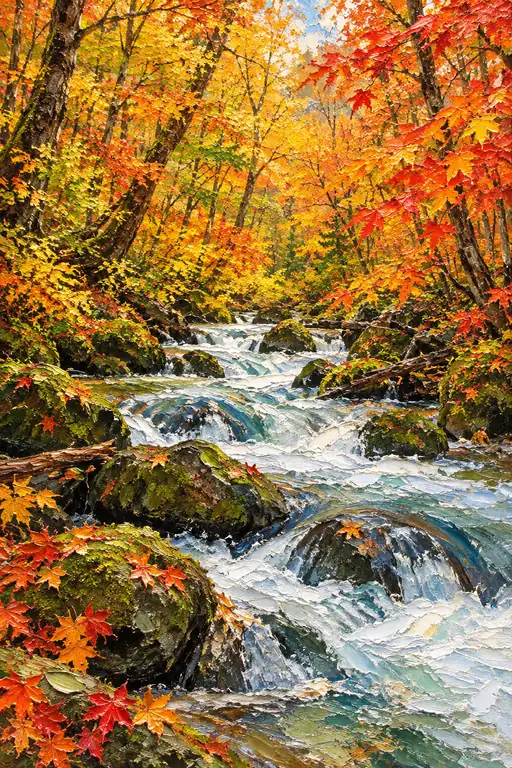 The River Carries the Forest's Fire
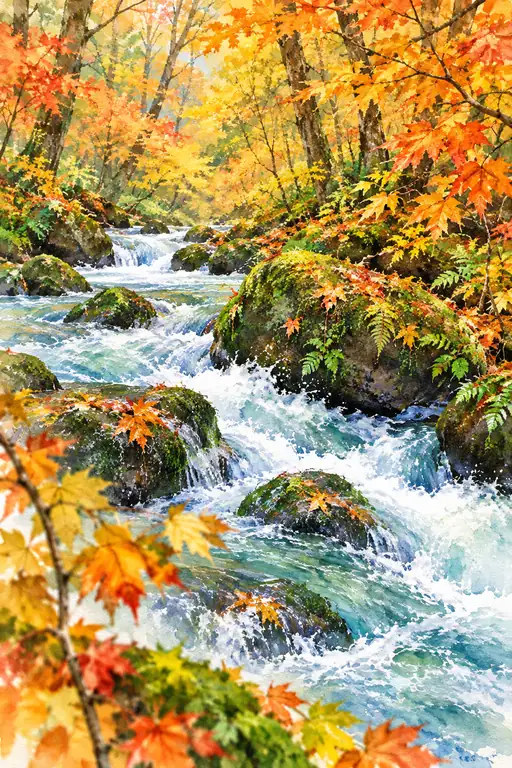 Where Autumn Rests Beside the Rush
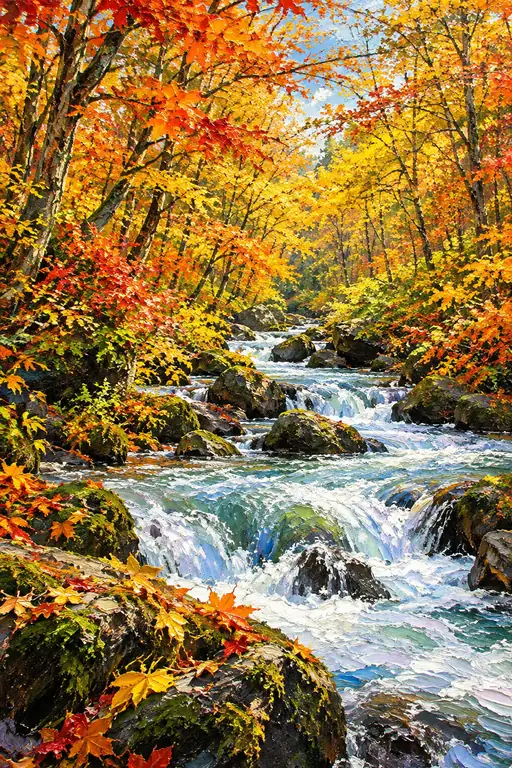 Close Enough to Hear Autumn
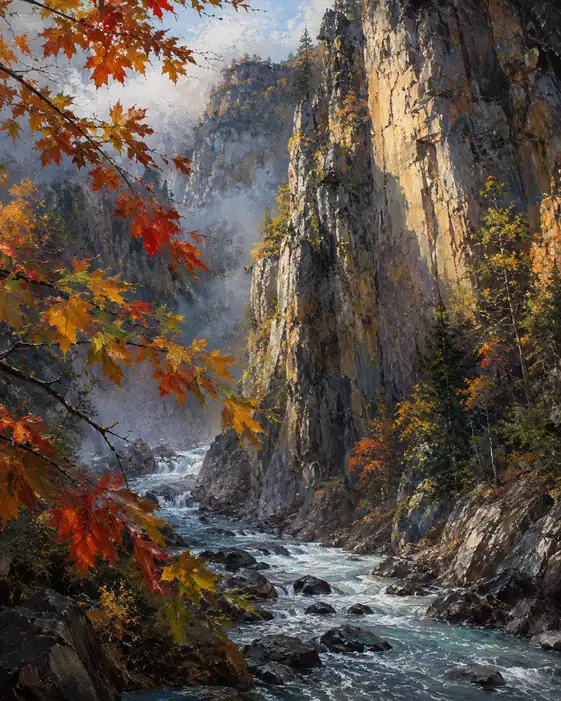 Autumn Whispers in the Sunlit Gorge
 The Roaring Heart of the Mountain
 The Enduring Rhythm of the Wild
 A Symphony of Falling Leaves
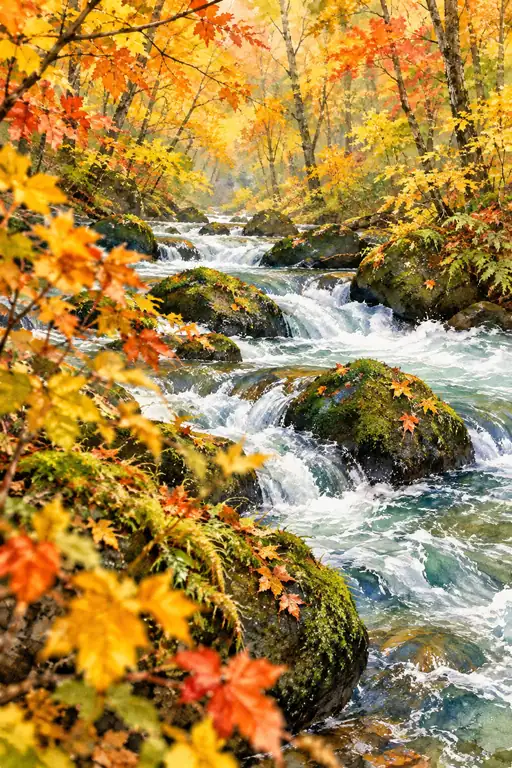 Upstream, the Light Grows Quiet