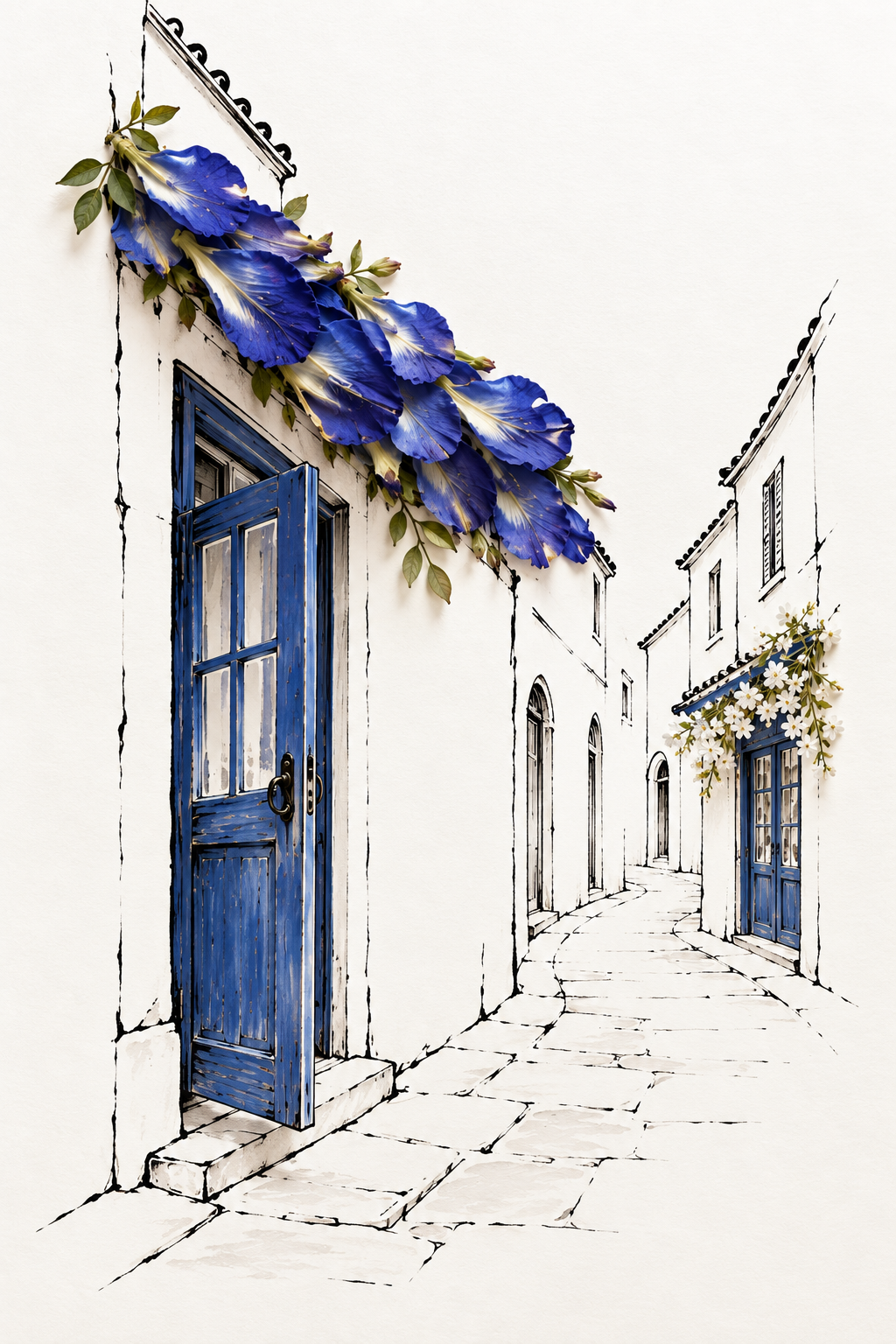
An Invitation Beyond the Bend
Critique
Introduction A blue door opens onto a narrow, gently turning lane between pale buildings. Large blue blossoms extend above the near doorway, while smaller white flowers frame a second blue entrance across the street. The reduced architectural setting gives unusually clear attention to the relationship between colored thresholds and unoccupied passage. Description The near door has divided panes, dark ring hardware, and vertically streaked blue panels. A small step separates it from the irregular stone pavement. Along the opposite wall, white flowers hang above a closed blue door. Farther away, simple arched openings and high windows mark the street's bend, with only sparse stems interrupting the wall edges. Analysis The tall foreground door anchors the left, while the road's curving recession carries attention toward the center-right. Blue repeats at a smaller scale across the lane, establishing depth through color correspondence. Broad walls remain pale and largely undecorated. Shadows beneath the botanical forms add local thickness without obscuring the clean relationships among thresholds, paving, and roof edges. Interpretation and Evaluation The image makes openness and continuation more significant than any depicted activity. The flowers enlarge the near roofline but remain aligned with its direction, preserving the architecture's organization. Its effectiveness lies in the deliberate economy of surrounding details: fewer objects leave the doors and the changing paving intervals to sustain the scene's spatial and emotional coherence. Conclusion The initial appeal of intense blue develops into awareness of repeated invitations and boundaries. The open near door and closed opposite entrance give the shared street different kinds of access. Selective botanical texture and measured contour drawing allow the empty route to feel specific, while leaving its destination beyond the bend gently unresolved.
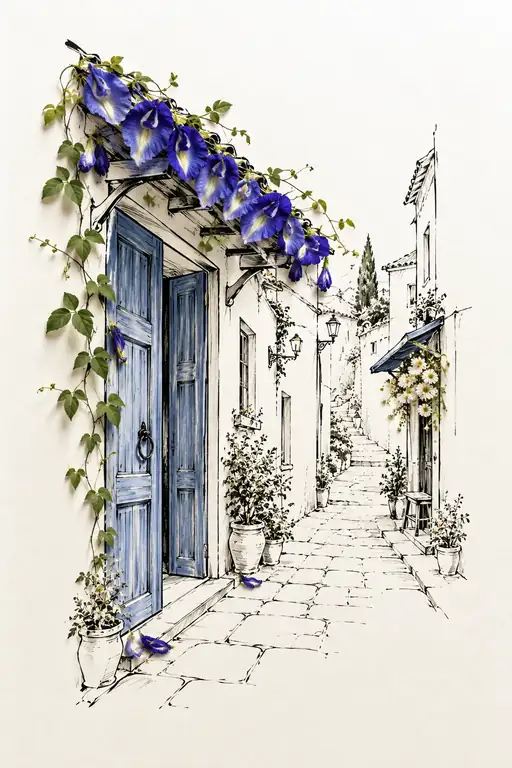 Beyond the Door I Left Ajar
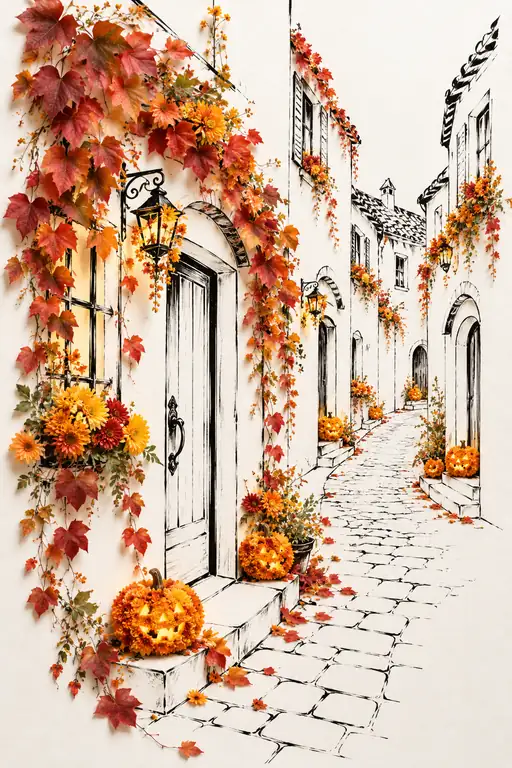 Every Corner Welcomes You Home
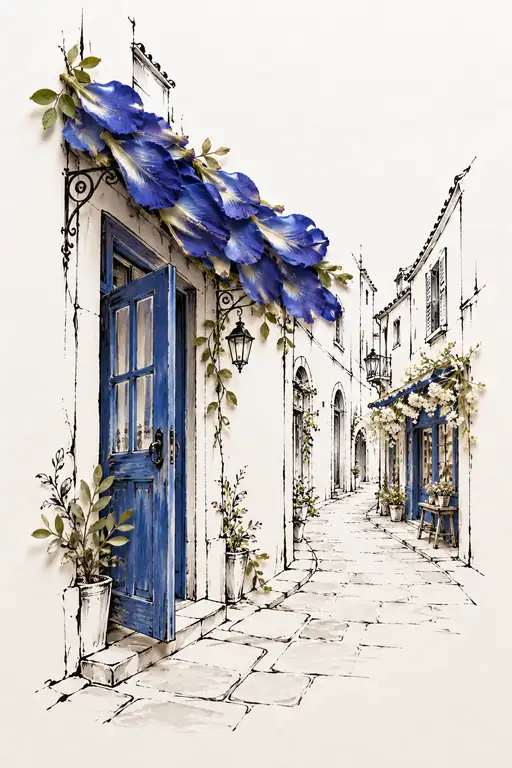 Blue at Every Turning
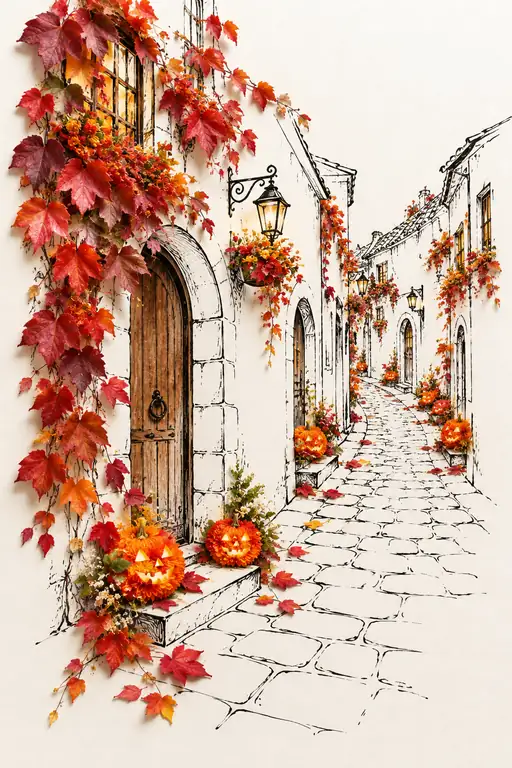 May Autumn Wait Beyond the Door
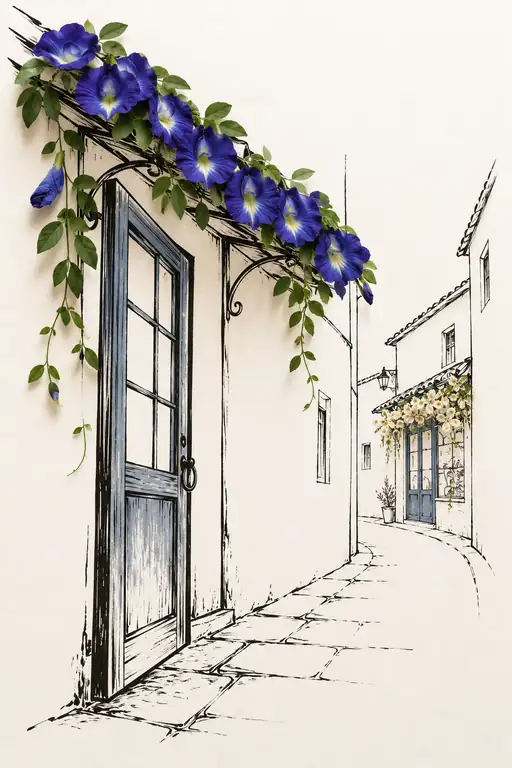 The Blue Door Remembers
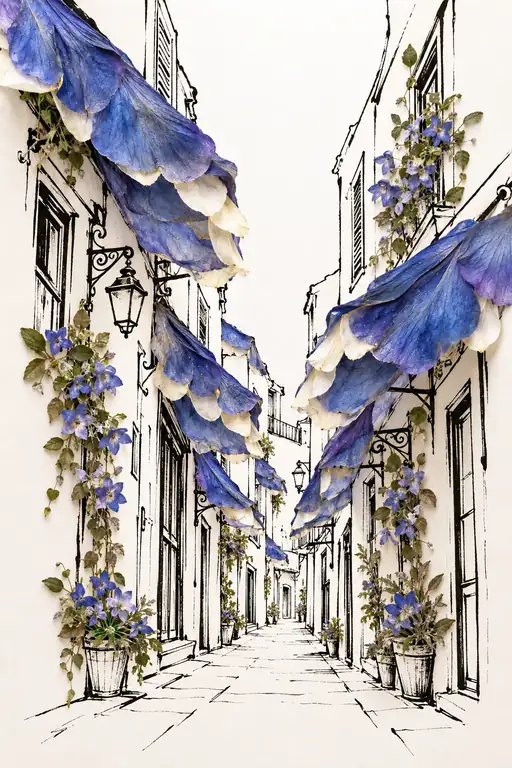 Under a Blue Kindness
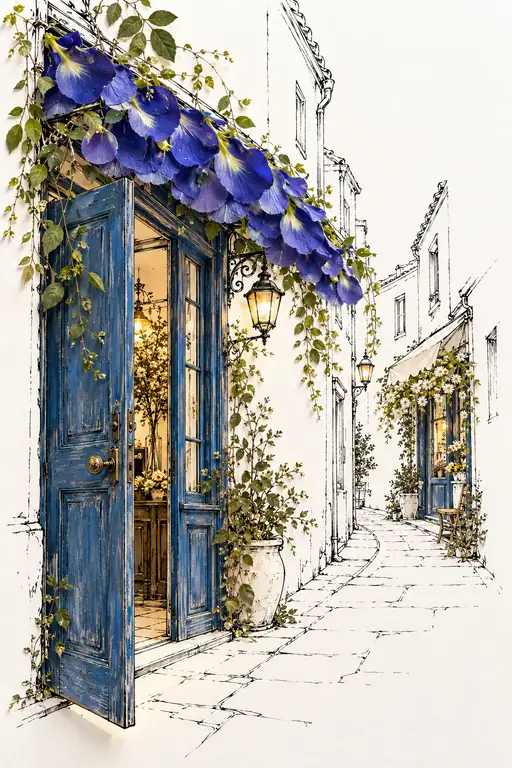 The Blue Door Knows My Name
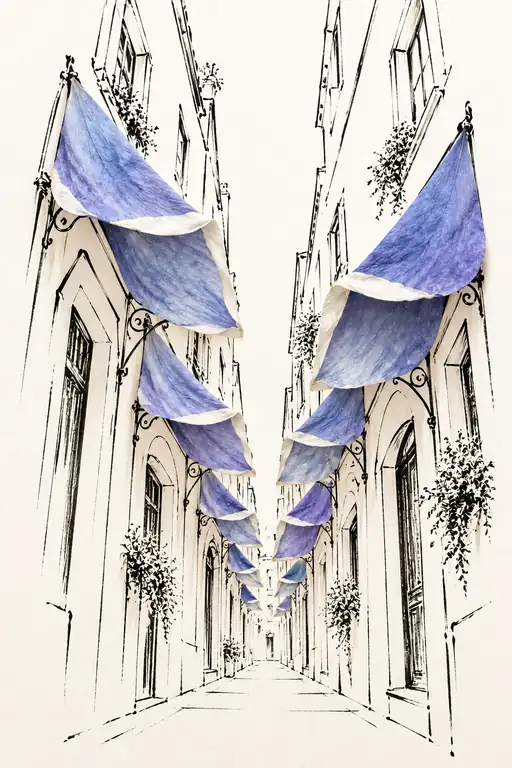 Follow the Blue a Little Further
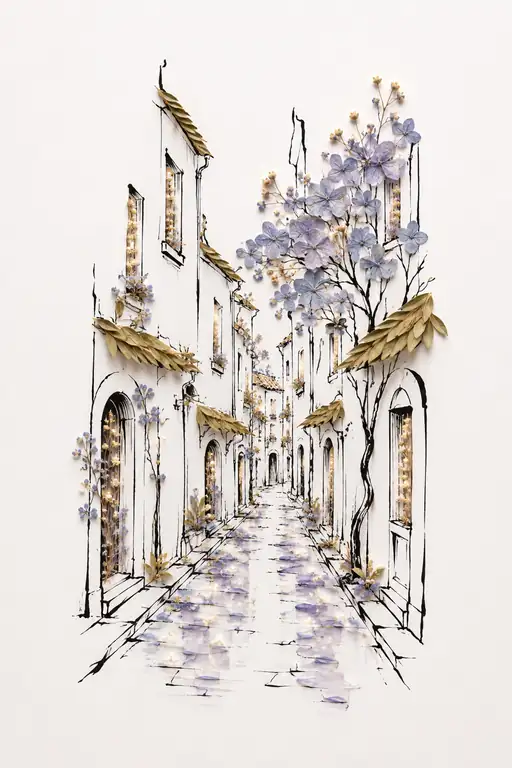 Deep into the Wisteria Lane
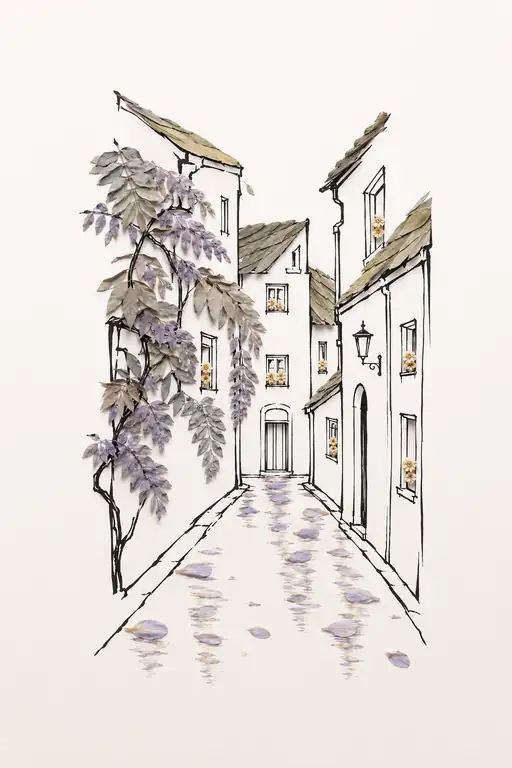 Wisteria Lane Overlooking Cobblestone
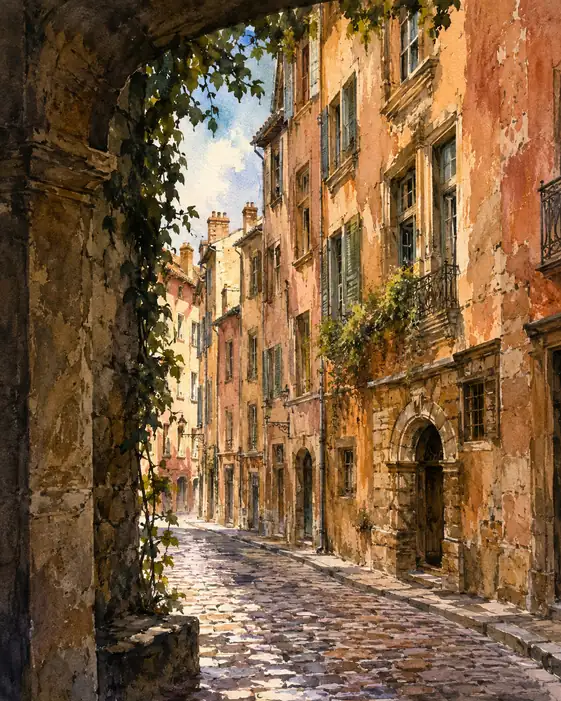 Golden Afternoon in the Mediterranean Alley