The Way Into Wonder
Critique
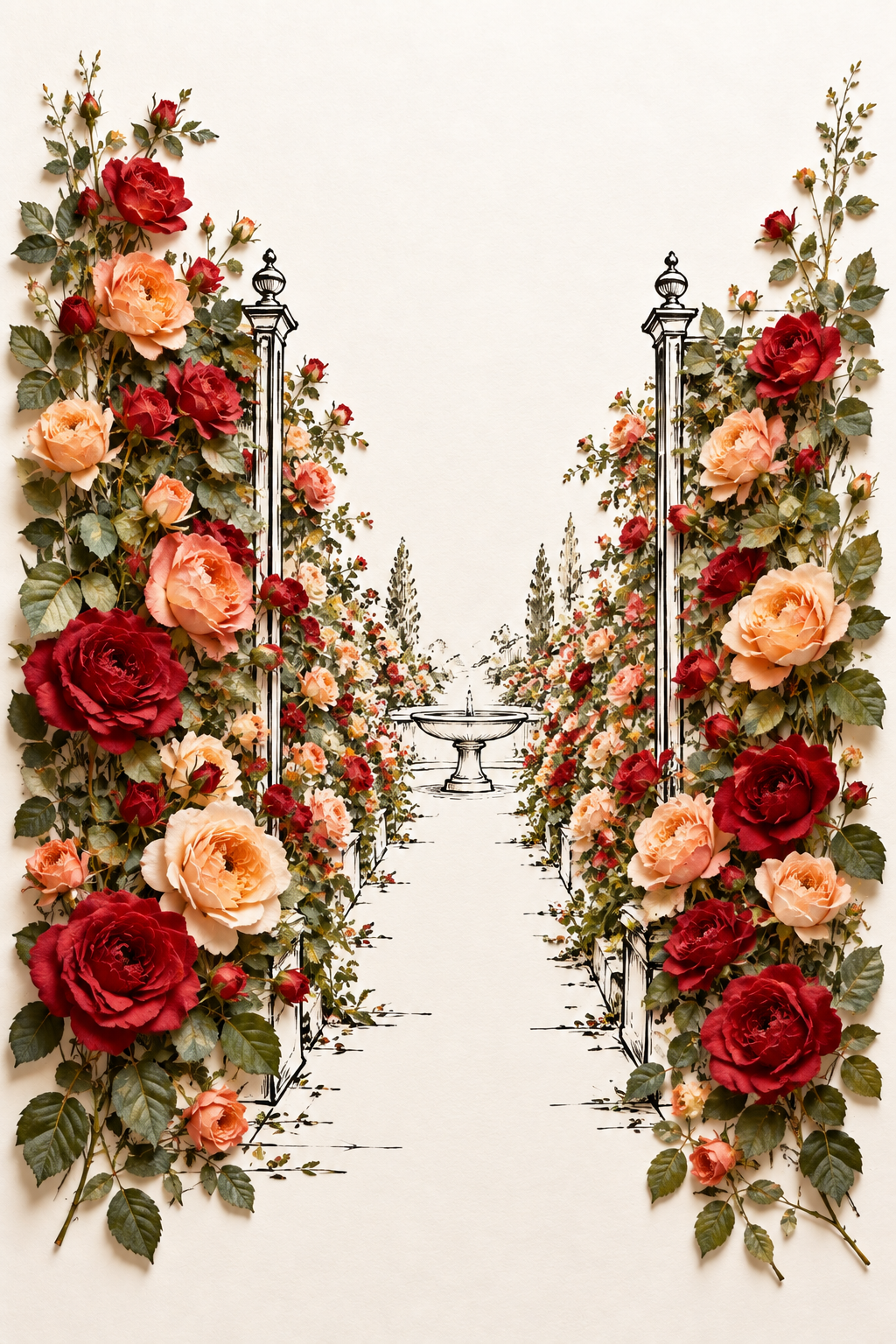
Introduction Tall rose-covered borders enclose a narrow path leading toward a small drawn fountain. Red and peach blossoms occupy both sides, interwoven with green leaves and black architectural uprights. The composition uses strong recession and a large pale center to turn dense botanical surfaces into a traversable garden space. Description Two prominent foreground posts carry ornamental rounded finials. Flowering stems climb beside them, with large open roses lower down and buds extending above. The borders diminish toward the fountain, where slender dark trees reinforce the distant verticals. The path remains mostly empty, marked only by sparse ground strokes near its narrowing edges. Analysis The paired borders create a clear central axis while unequal flower placements avoid exact symmetry. Deep red blooms punctuate softer peach masses, with green leaves providing continuous connections. Scale changes from foreground flowers to distant clusters establish depth. The black posts give a rigid reference against which the organic stems' branching and irregular spacing become more visible. Interpretation and Evaluation The garden is experienced primarily as a directed approach. Its effectiveness lies in allowing the empty path to do as much compositional work as the flowers themselves. The material-rich roses contrast with the lightly drawn fountain, but consistent perspective keeps them within the same imagined environment. Repeated color and architecture sustain order without eliminating local variation. Conclusion The initial impression of lavish floral borders develops into recognition of an organized route through them. The foreground posts mark entry, and the small basin gives the recession a destination. Attention can move between individual petals and the whole corridor, revealing a balanced relationship between botanical abundance, structural repetition, and carefully preserved open space.
 The View Beyond the Trunk
 The Garden Leaves a Path for You
 The Path I Saved for You
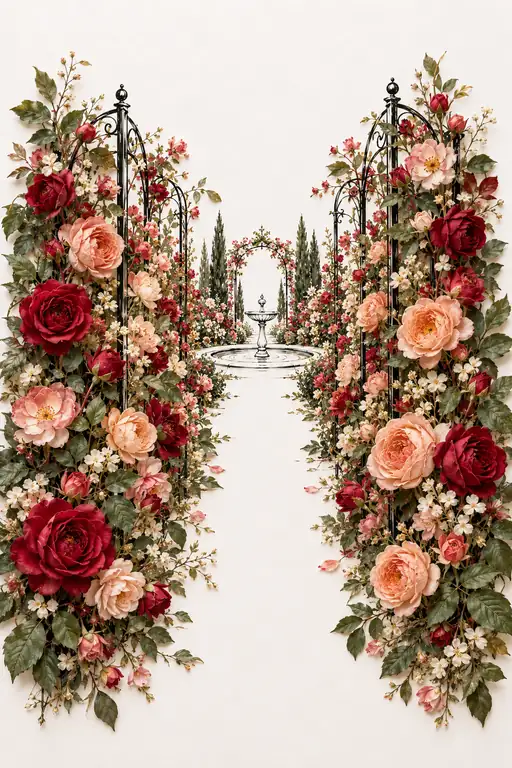 There Is Still a Way In
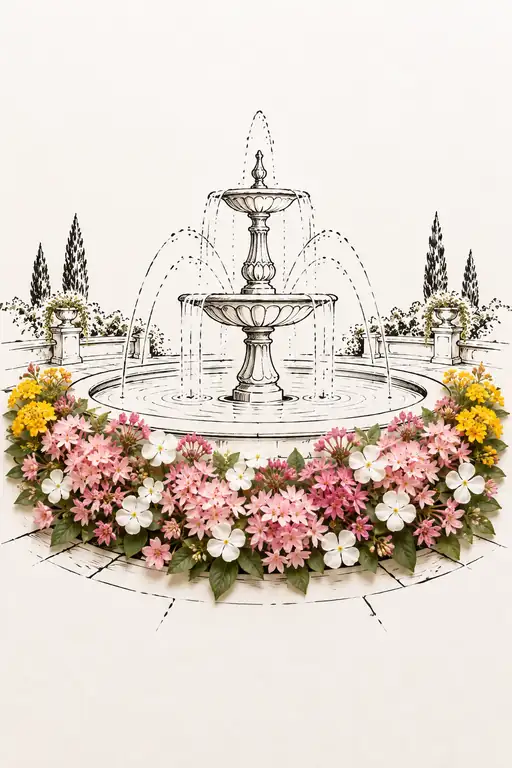 An Afternoon in Widening Circles
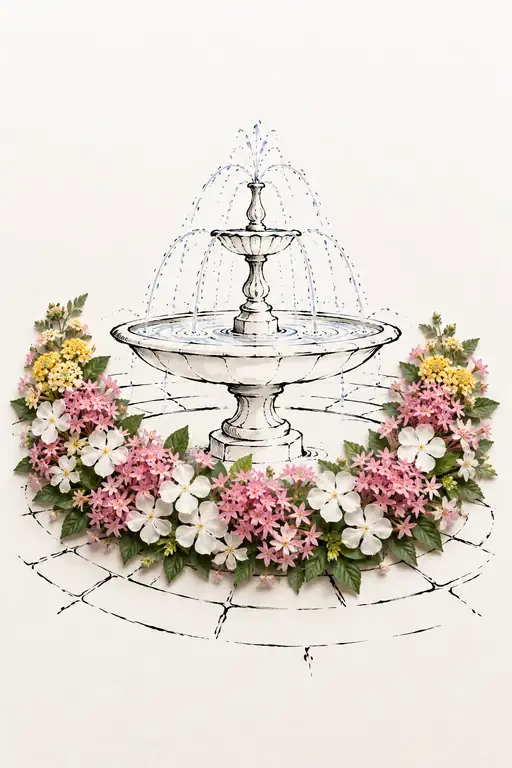 Circles of Refreshment
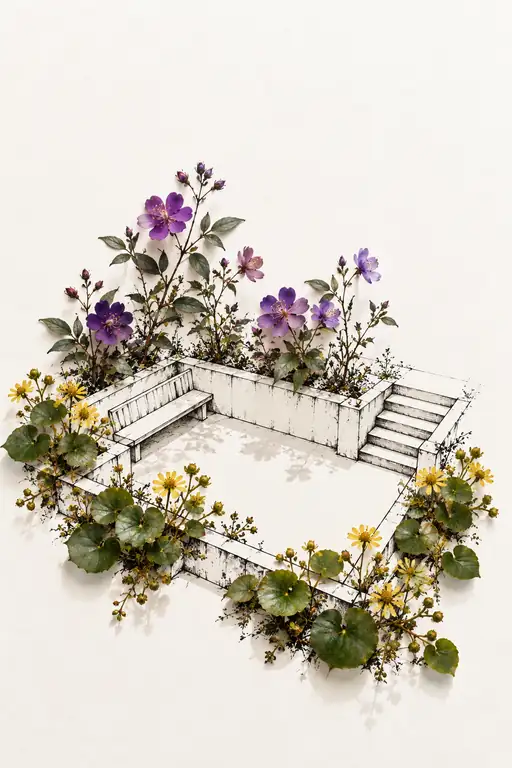 A Seat for the Unhurried
 Where Tenderness Returns
 A Still Point Within the Splendor
 Pathway of Peace in the Morning Garden
 Blossom Terraces of the Sunlit Garden