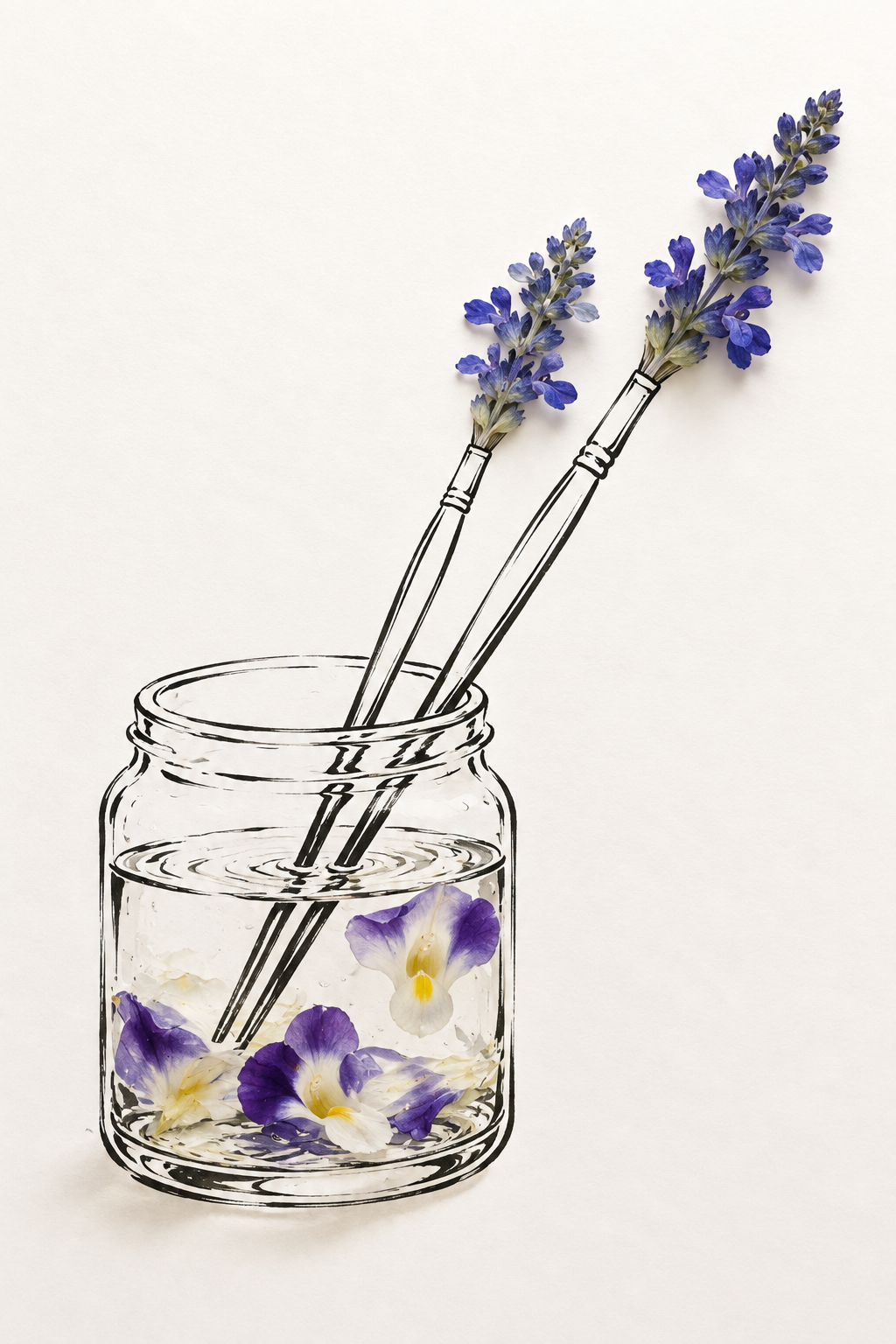
The Blue Left After Painting
Critique
Introduction Two long brushes lean from a transparent jar, their tips replaced by upright blue flower spikes. Additional purple-and-white blossoms appear within the lower vessel. The composition brings drawing implements and botanical forms into a shared still life, using the jar's visible contents to complicate the boundary between containment and growth. Description The rounded jar occupies the lower left, with dark elliptical lines describing its rim, water surface, and heavy base. The brush handles descend through the water at a diagonal, bending visually at the surface. Above the metal ferrules, small blue flowers and greenish buds form tapered spikes of unequal height, rising toward the upper right. Analysis Parallel brush shafts establish the primary diagonal, while the jar's horizontal ellipses steady their movement. Dark reflections concentrate near the waterline and base, contrasting with the unobstructed upper flowers. The lower blossoms repeat the blue-purple range but introduce broad pale throats and yellow centers, giving the vessel its own localized pattern of color and detail. Interpretation and Evaluation The brushes' floral tips suggest a relationship between the act of depiction and the living forms it represents. This interpretation remains anchored in the clearly drawn tools and the visible crossing of the waterline. The image is effective in its controlled reflections and material contrast, particularly where rigid ferrules meet the irregular, clustered surfaces of the spikes. Conclusion The first impression of flowers in a jar develops into recognition of a carefully constructed hybrid still life. The vessel's transparency allows the diagonal movement to continue through several layers rather than stopping at its rim. Looking between the upper spikes and submerged-looking blooms reveals a measured exchange between linear structure, reflective detail, and botanical color.
Same Subcategory
 A Warmth Against the Evening
 Home Before the Spell Fades
Similar Artworks
 Blue Depth, White Reverie
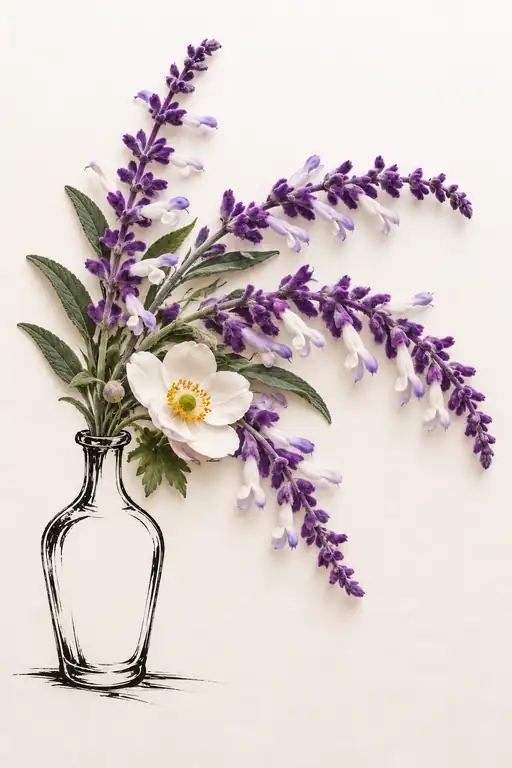 Purple Refrain, White Rest
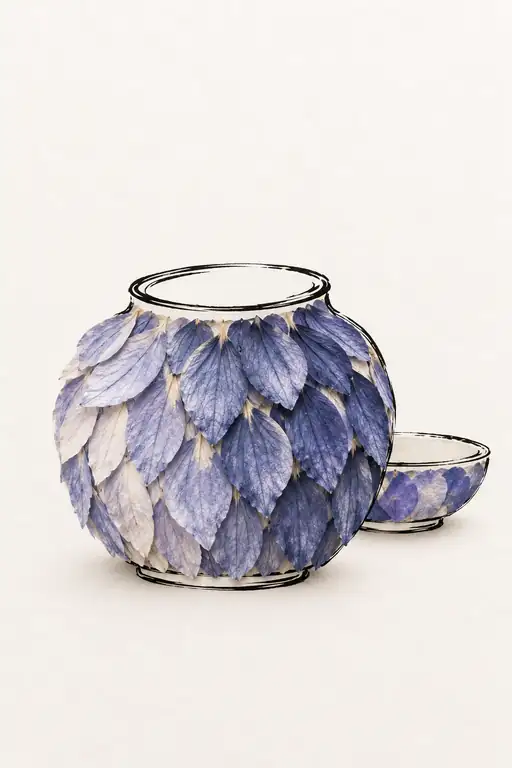 Blue Holds Its Silence
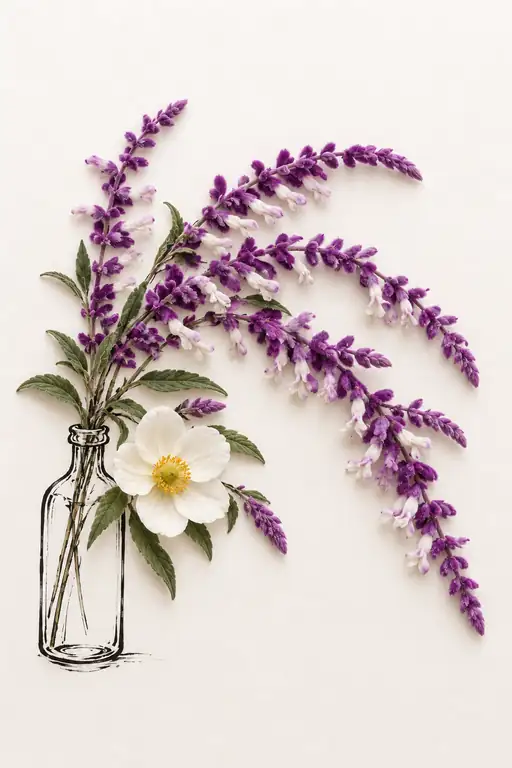 The Grace of Yielding
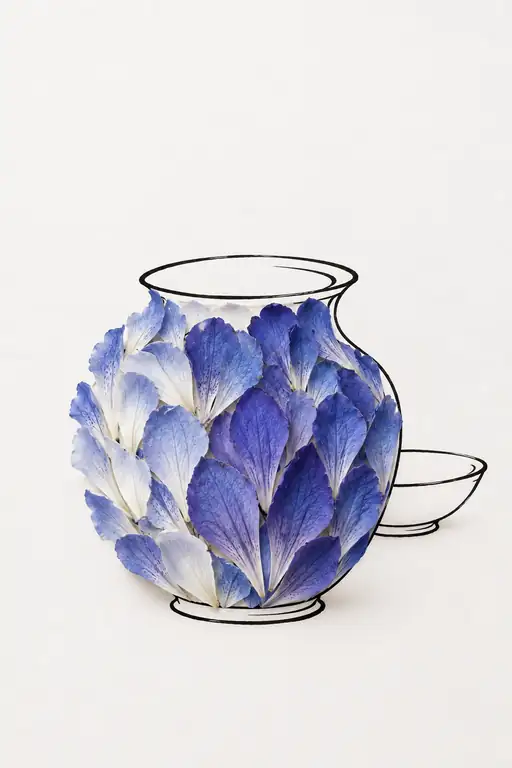 Blue Gives Stillness a Shape
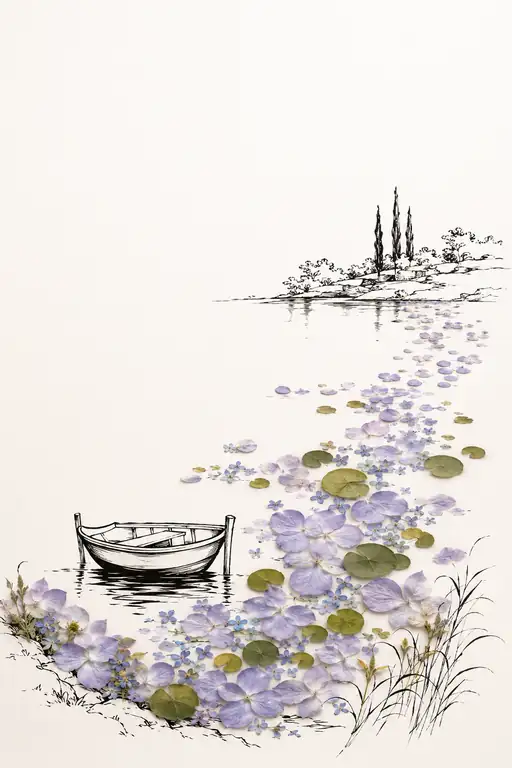 Drifting Stream Toward the Island of Cypresses
 Trio of Serene White Roses in Ink Silhouette
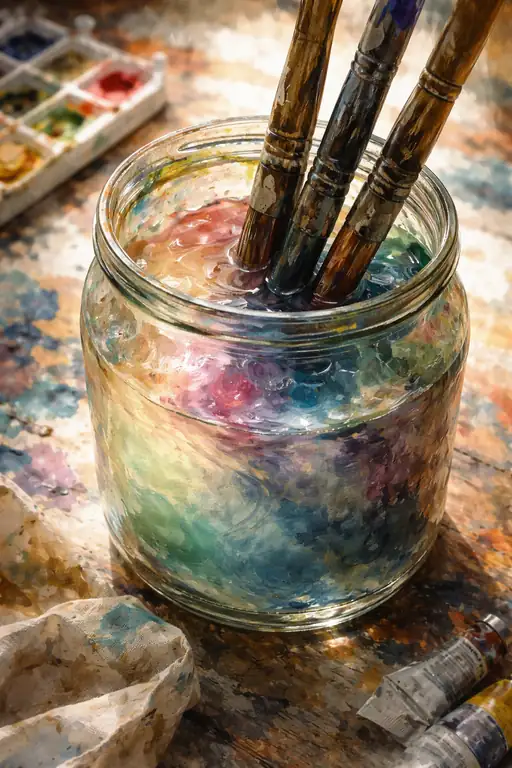 Where Dreams Dissolve and Bloom
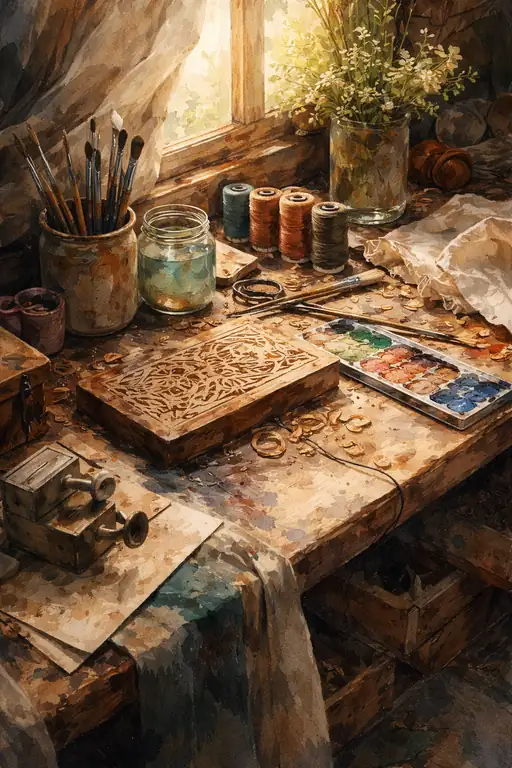 The Sanctuary of Light and Creation
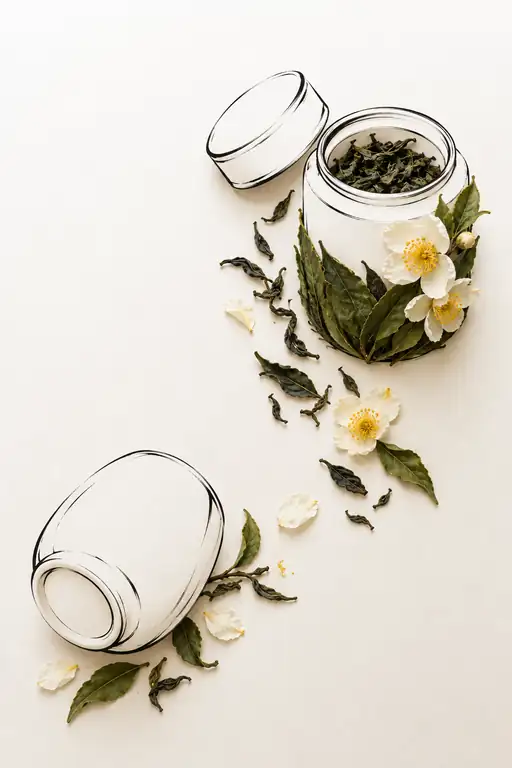 An Interval of Green