An Interval of Green
Critique
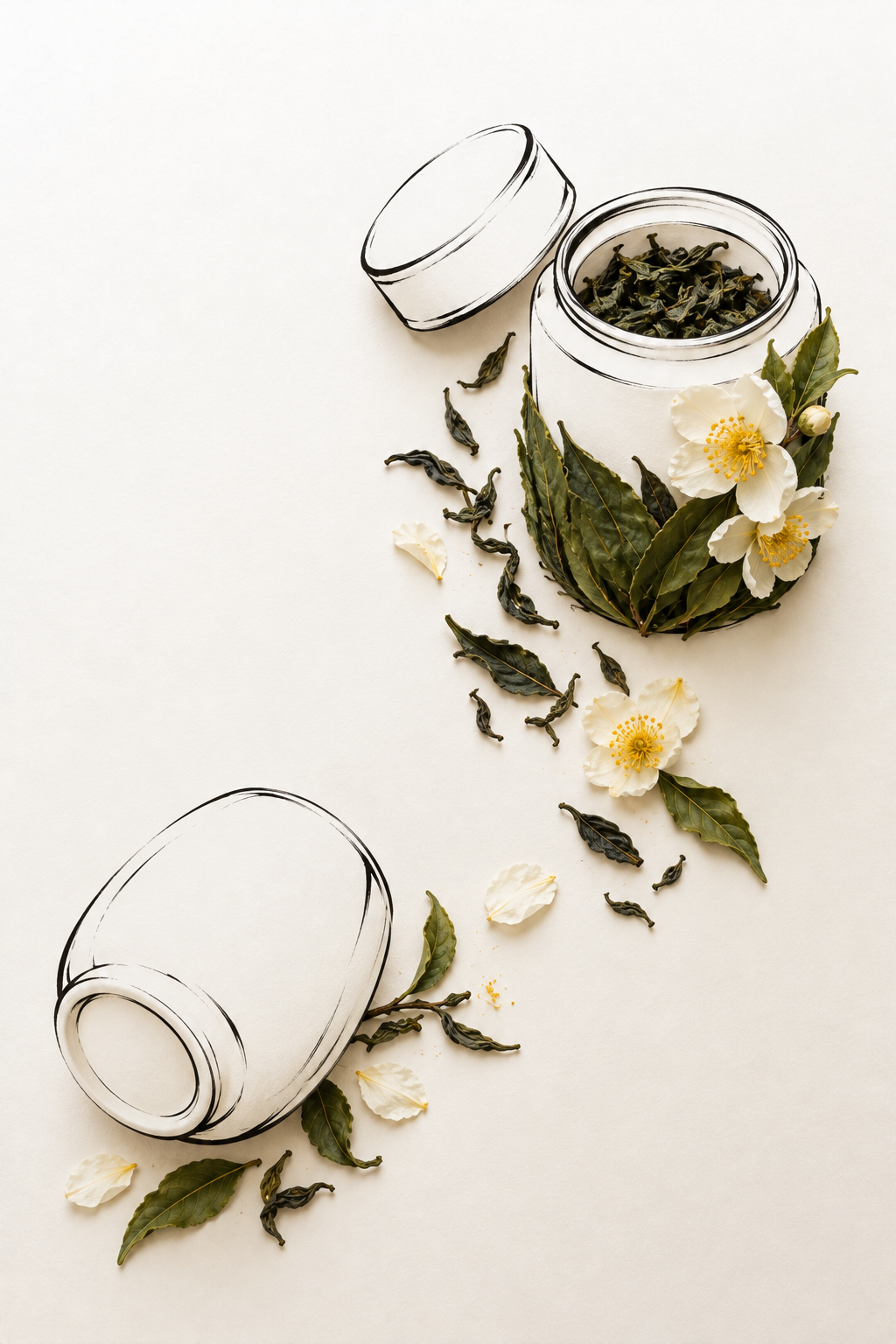
Introduction An open canister, displaced lid, and overturned bowl form a diagonal still life among green leaves and white flowers. Dark curled fragments create a loose trail between the vessels. Black contours meet botanical surfaces, with separated objects suggesting handling without a visible human figure. Description The canister sits at the upper right with a clearly outlined circular mouth containing curled dark material. Its pale lid leans behind at the left. Long leaves cover the lower wall beside white flowers with yellow stamens. The bowl lies on its side at the lower left, its foot ring facing outward among scattered leaves and pale petals. Analysis The canister and bowl establish opposing endpoints across a broad empty interval. Loose fragments connect them through irregular spacing rather than a continuous line. Dark contents contrast with the canister's white interior, while longer leaves describe a second, broader scale of green texture. Shadows below the vessels help distinguish their positions and orientations on the shared ground. Interpretation and Evaluation The still life invites attention to the relation between stored material and individual fragments outside its container. Its effectiveness lies in balancing clear vessel geometry with irregular organic forms. The white flowers introduce delicate radial centers without becoming a separate dominant bouquet, and the turned bowl adds a readable change of viewpoint to the otherwise restrained arrangement. Conclusion The initial impression of a scattered preparation scene develops into a study of enclosure and dispersal. Lid, opening, bowl, and loose fragments each describe a different state of access or containment. The limited palette and generous spacing give these relationships clarity, preserving material specificity while leaving the circumstances of the arrangement open.
 A Pause Beneath the Lid
 A Guest in the Teapot
 Where Quiet Turns Green
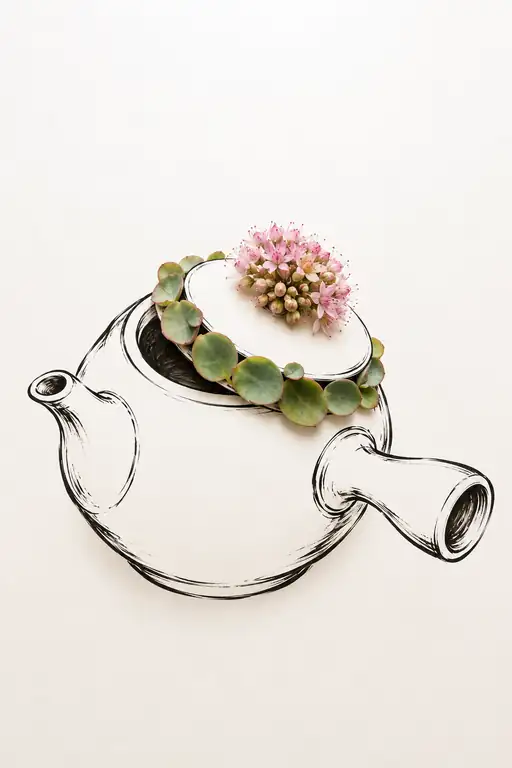
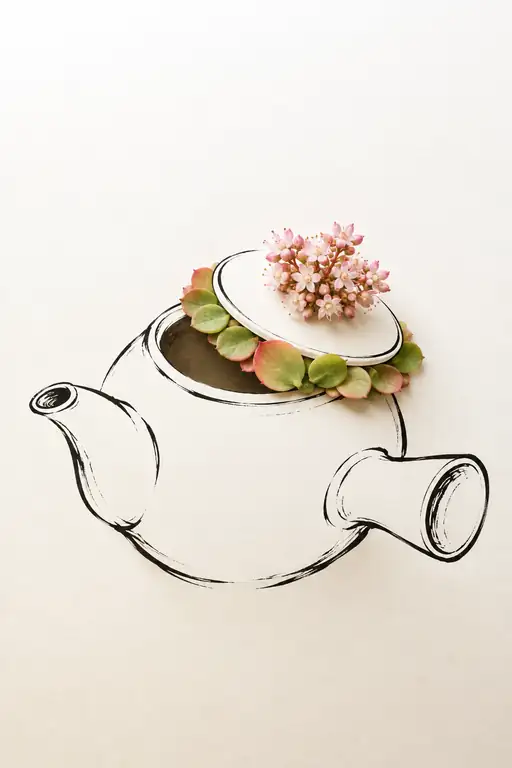 A Pause Beneath the Lid
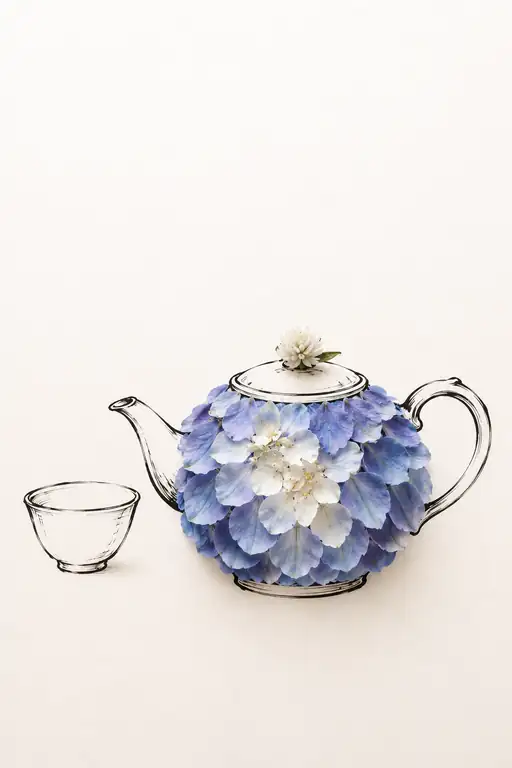 An Invitation in Blue
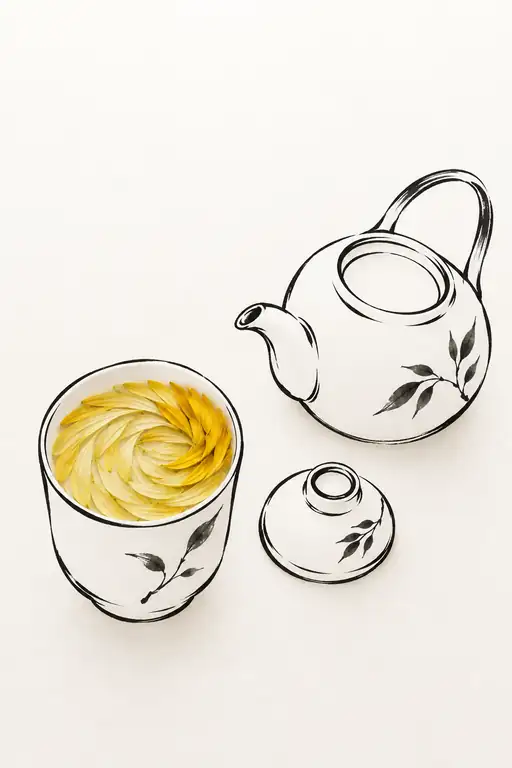 Stillness Has a Yellow Center
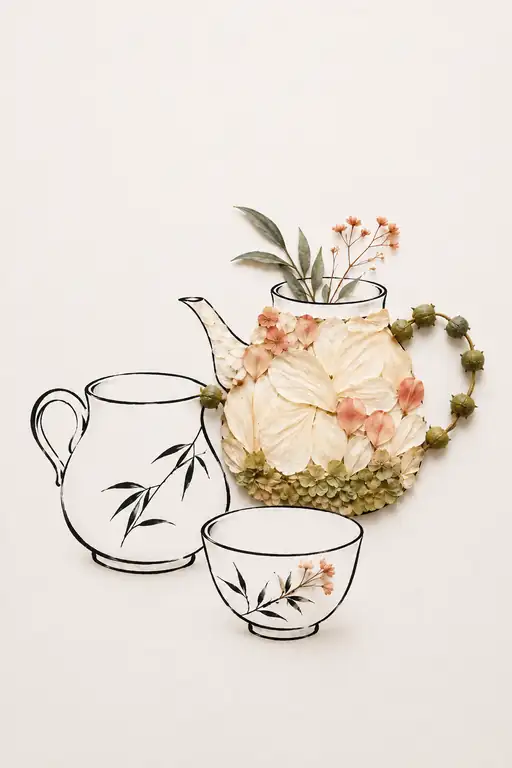 Ivory Blossom Teapot with Berry Handle
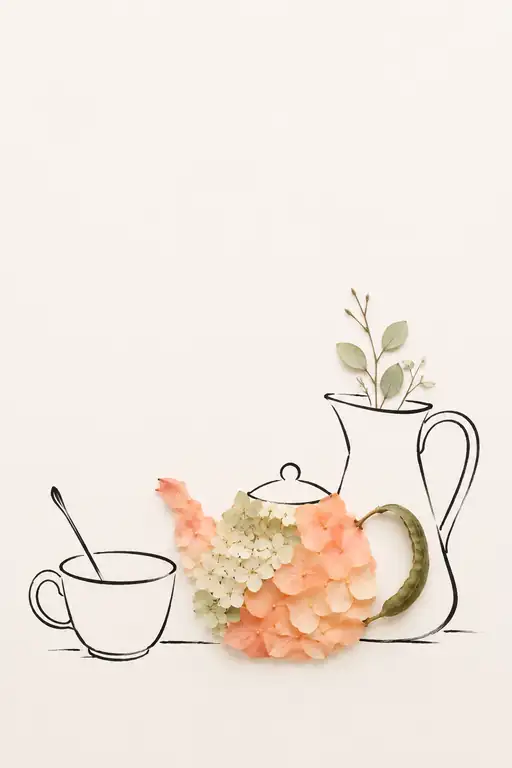 Teapot of Blossoms and the Graceful Pitcher
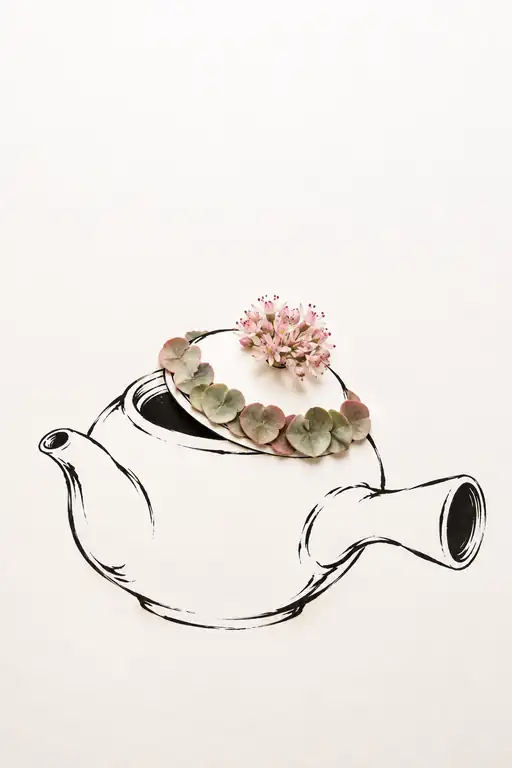 A Small Spring Beneath the Lid
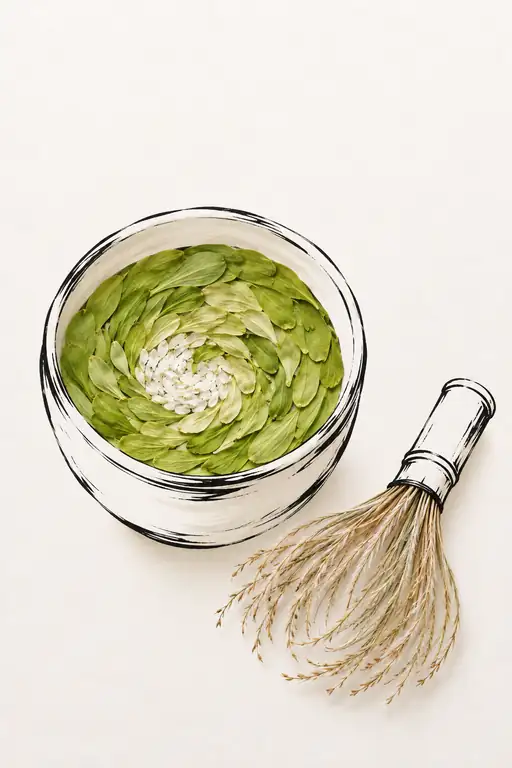 A Green Pause Before the Day
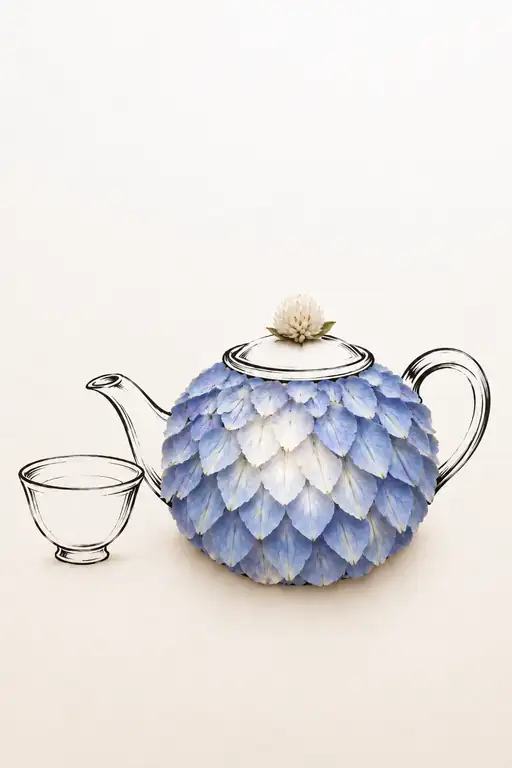 A Little Blue Between Us