The Crimson I Keep Inside
Critique
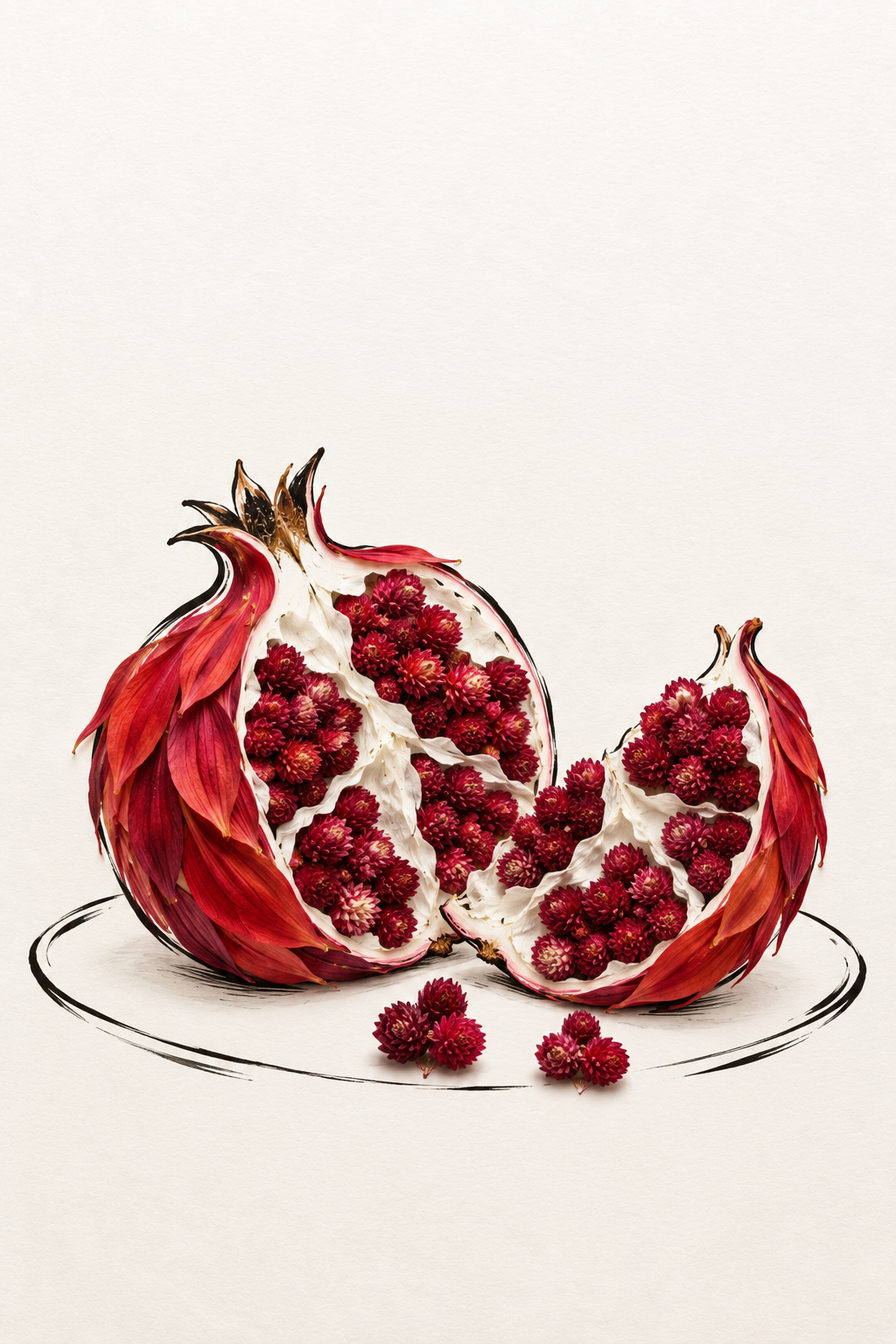
Introduction A split pomegranate-like form rests on a simply outlined plate, its interior reconstructed from deep red flower clusters and pale dividing layers. Long red petals describe the outer skin. The still life turns a familiar cut fruit into a comparison between enclosing surfaces, internal compartments, and many small rounded units. Description The larger half stands on the left beneath pointed crown remnants. A smaller section tilts outward on the right, exposing several pale-bordered cavities. Dark red blossoms fill those spaces, with occasional light tips visible among tightly packed petals. Two loose clusters sit in front on the plate, whose broad black ellipse anchors the lower composition. Analysis The unequal halves form a balanced open wedge. Pale interior divisions separate the dense red groups, making depth readable through overlap rather than extensive drawn shading. Outer petals follow the curved shell, contrasting with the compact clustered centers. The detached foreground pieces repeat the internal texture at a smaller distance and clarify its modular construction. Interpretation and Evaluation The work's originality lies in assigning different botanical forms to rind, membrane, and seed-like contents. Recognition remains grounded in the crown, rounded silhouette, and opened structure. The restricted red-and-cream palette is effective because texture provides the major distinctions, while the unadorned plate keeps attention on the relationship between whole enclosure and exposed interior. Conclusion The initial impression of a bright cut fruit develops into awareness of carefully nested surfaces. The loose clusters offer a closer view of what fills the larger cavities. Economical drawing and differentiated material scales preserve the still life's simplicity, allowing the image to remain readable as both a recognizable object and an imaginative botanical construction.
 Two Pieces of Sunshine
 Two Measures of Sunshine
 A Brightness Almost Tart
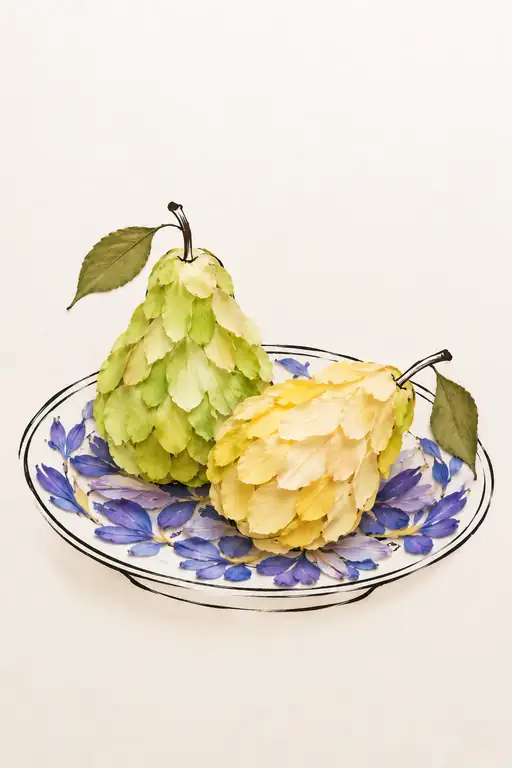 Contentment in Two Voices
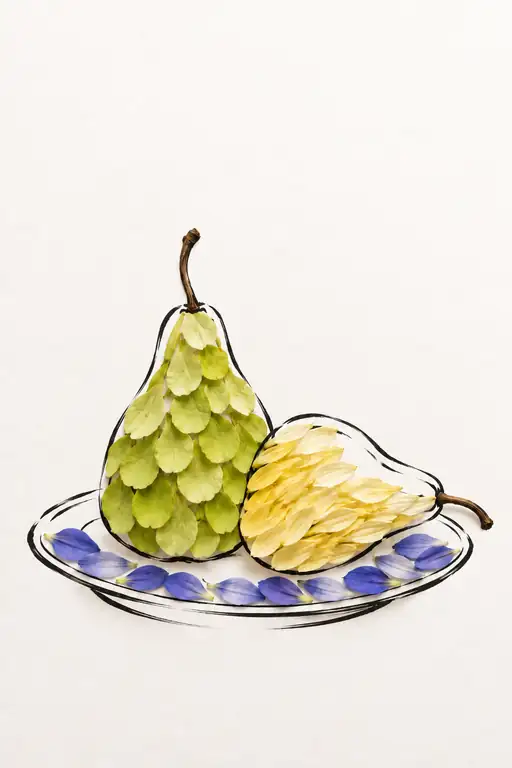 Two Ways to Rest in Light
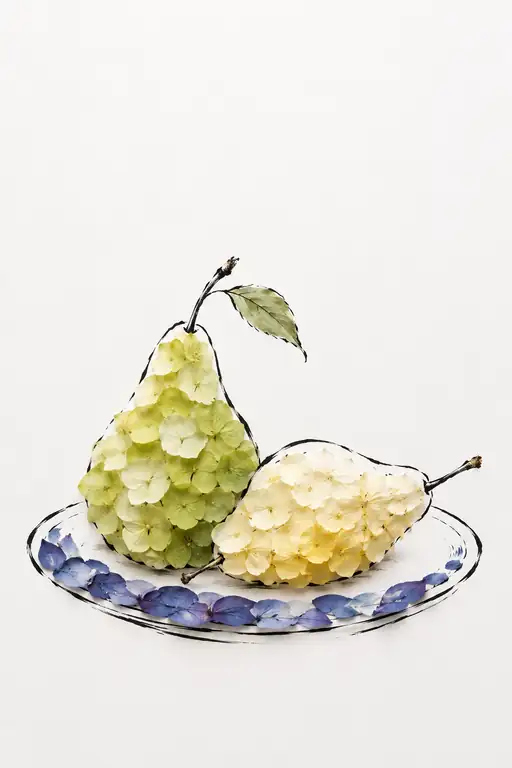 A Quiet Plenty
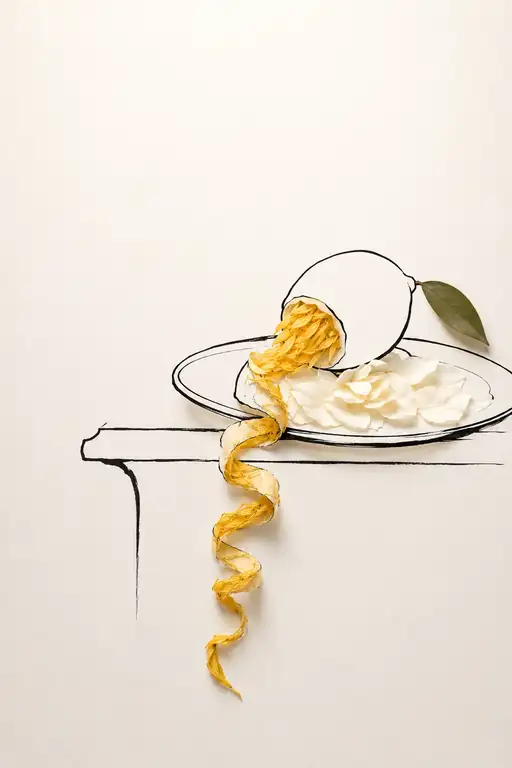 Descent of the Unfolding Spiral
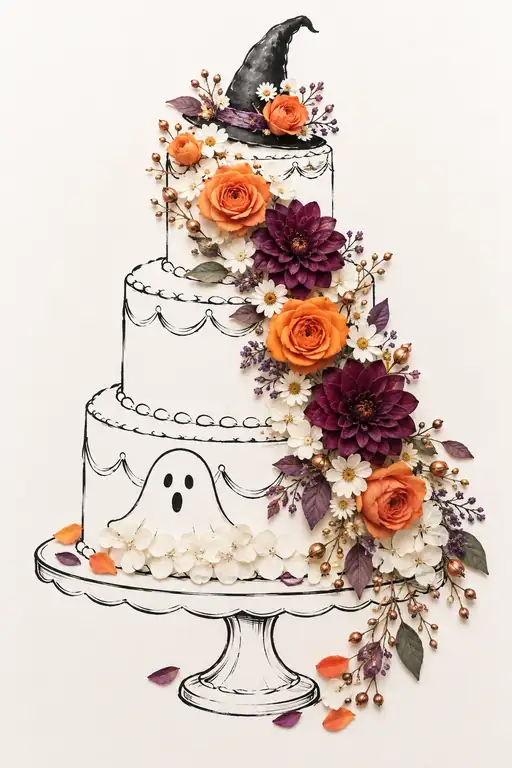 Luscious Spire of the Festive Night
 The Tenderness Left Untouched
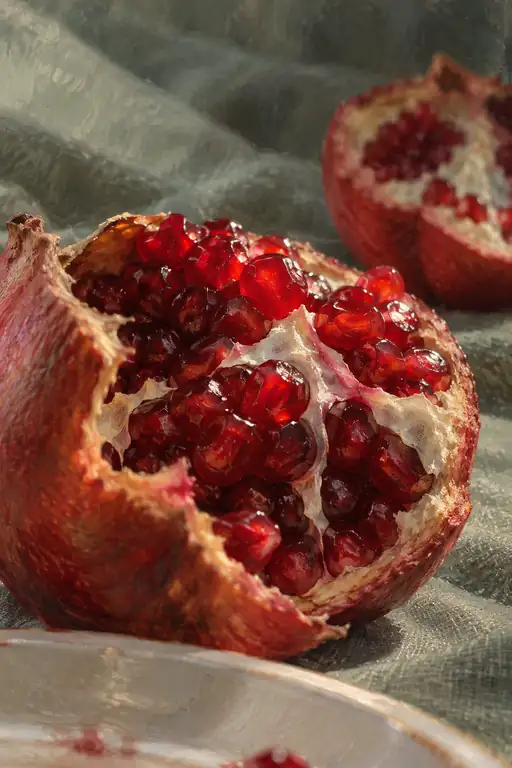 A Heart with Room for Many Suns