Blue Depth, White Reverie
Critique
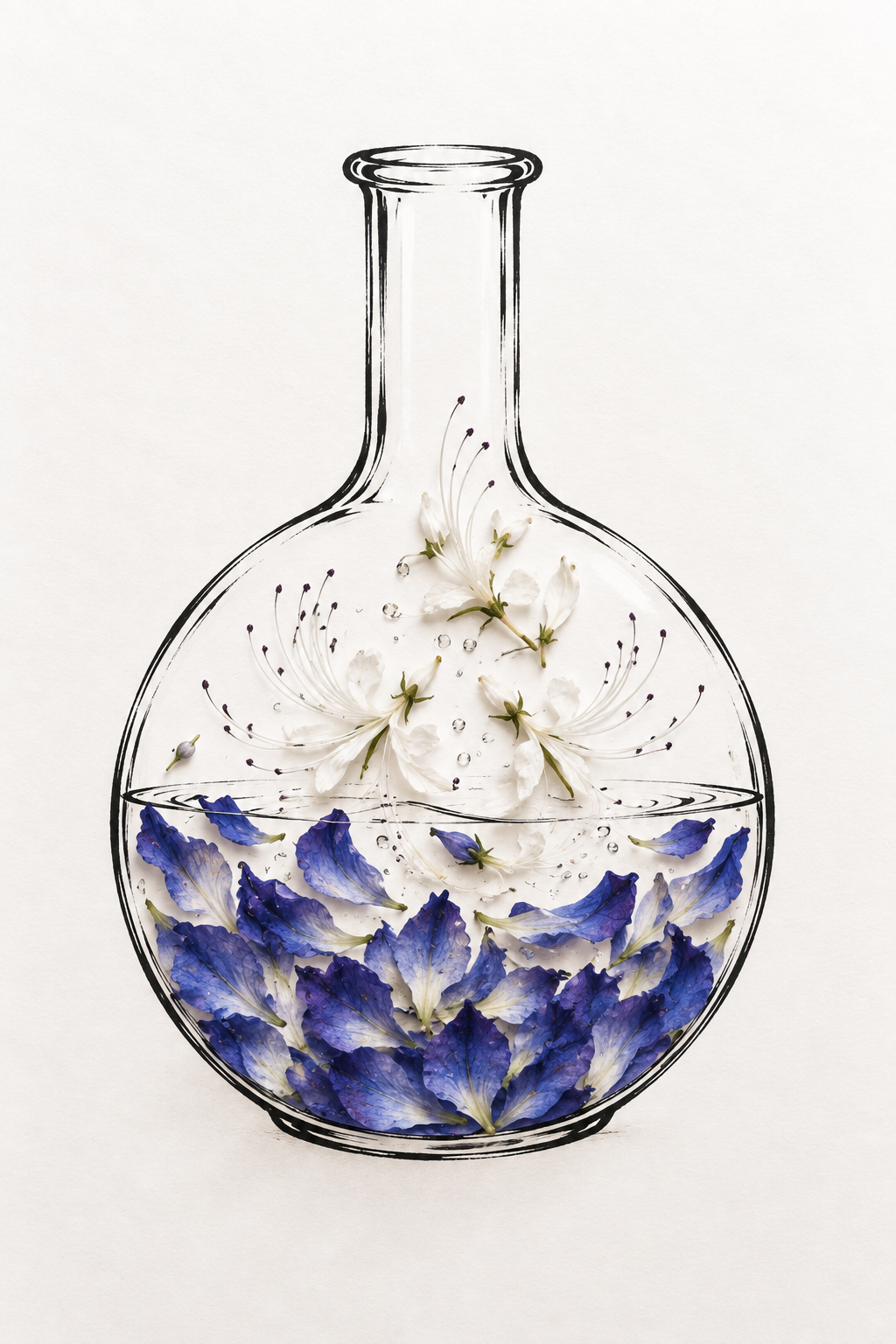
Introduction A round-bellied glass vessel contains blue petals below a drawn waterline, with white long-stamened flowers arranged above them. A tall narrow neck rises into a largely empty upper field. Black contours and small transparent droplets describe enclosure, while botanical surfaces introduce a concentrated comparison of colors, scales, and apparent suspension. Description The lower body is filled with overlapping blue petals whose pale bases point in different directions. Above the horizontal ellipse, white flowers extend slender filaments ending in dark purple tips. Clear rounded droplets appear among their stems and petals. The bottle's thick outer rim and doubled neck lines remain visible around the otherwise pale interior. Analysis The circular body contains the image's visual weight, while the long neck creates a quieter vertical extension. The waterline separates a dense blue lower field from dispersed white structures above. Droplets bridge those zones with small repeated highlights. Fine filaments contrast with broad petals, allowing the arrangement's complexity to emerge through changes of scale rather than through an expanded palette. Interpretation and Evaluation The image explores containment as a way of organizing different kinds of lightness and density. Its originality lies in making delicate projecting structures occupy the same vessel as a compact lower accumulation. The glass drawing is effective where doubled contours and the elliptical surface clarify depth without covering the botanical elements with excessive reflected detail. Conclusion The initial impression of a floral bottle develops into recognition of a carefully divided internal space. The blue base anchors the composition, while white filaments open it upward. Transparent accents and economical contours allow these contrasting densities to remain distinct yet connected, giving the static vessel an internally active organization.
Same Subcategory
 An Ivory Path to the Center
 Choose Your Frights, One by One
Similar Artworks
 Purple Refrain, White Rest
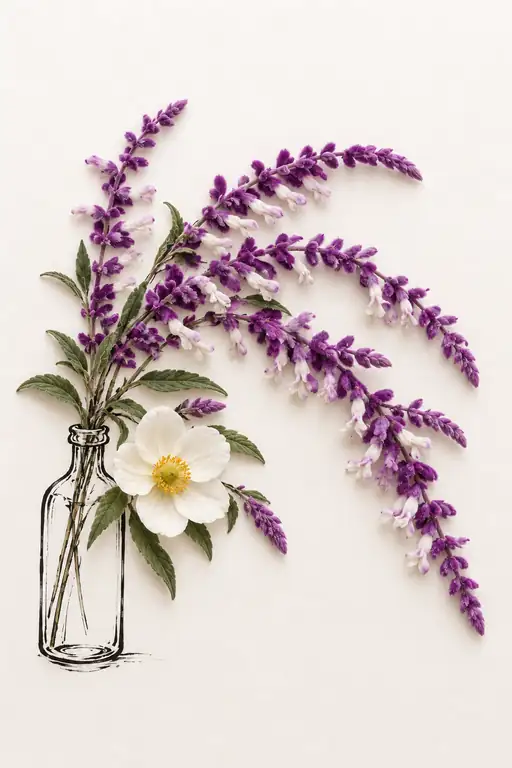 The Grace of Yielding
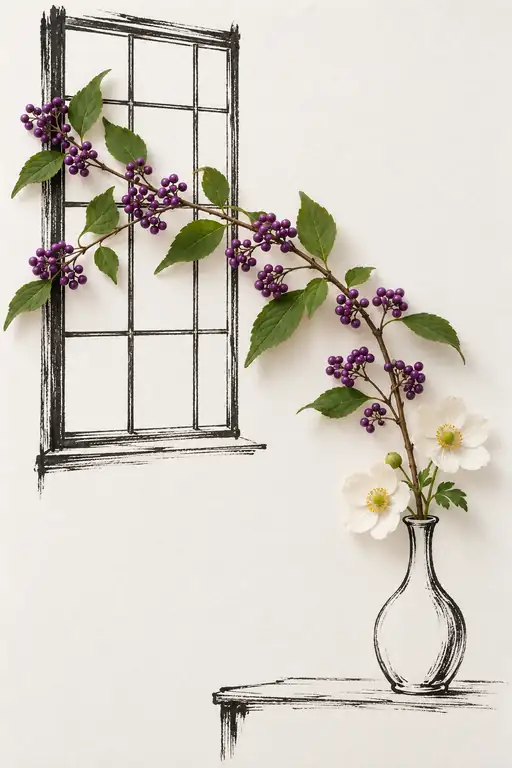 A Violet Thought Across the Room
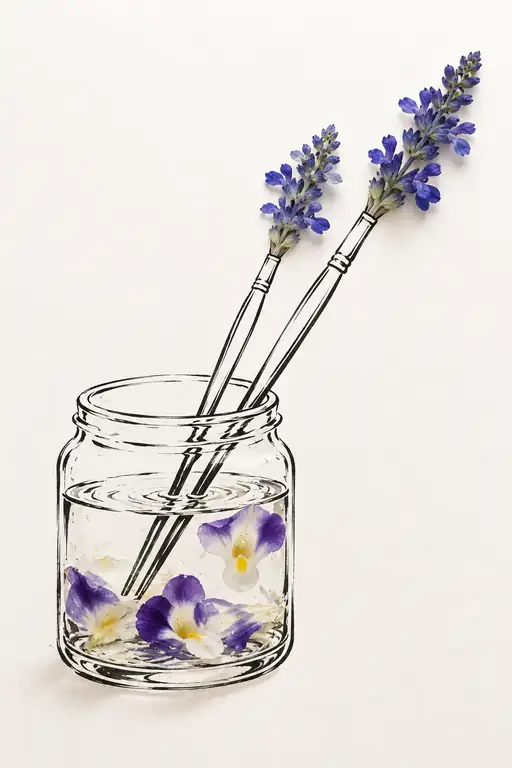 The Blue Left After Painting
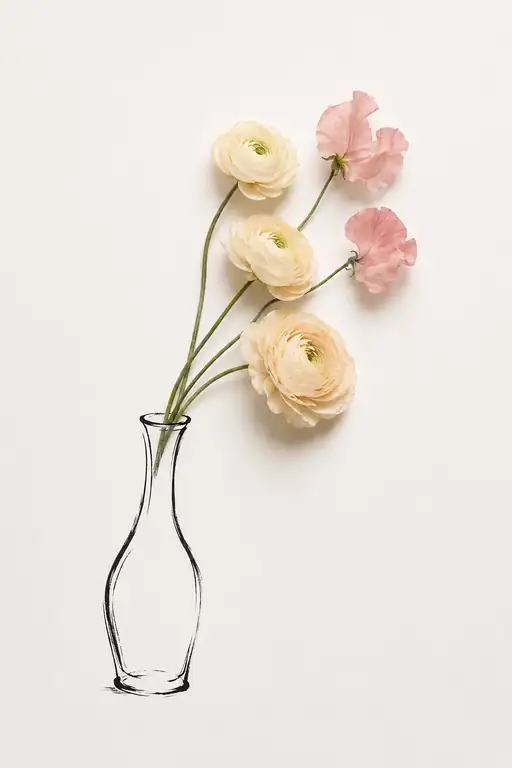 The Gentle Arch of Morning Blooms
 Two Blossoms in Pure Equilibrium
 Resonance of Morning Pale
 Gentle Blossoms in a Minimal Vase
 Wisteria Falling Over Glass and Perfume
 A Quiet Wish, Reaching Higher