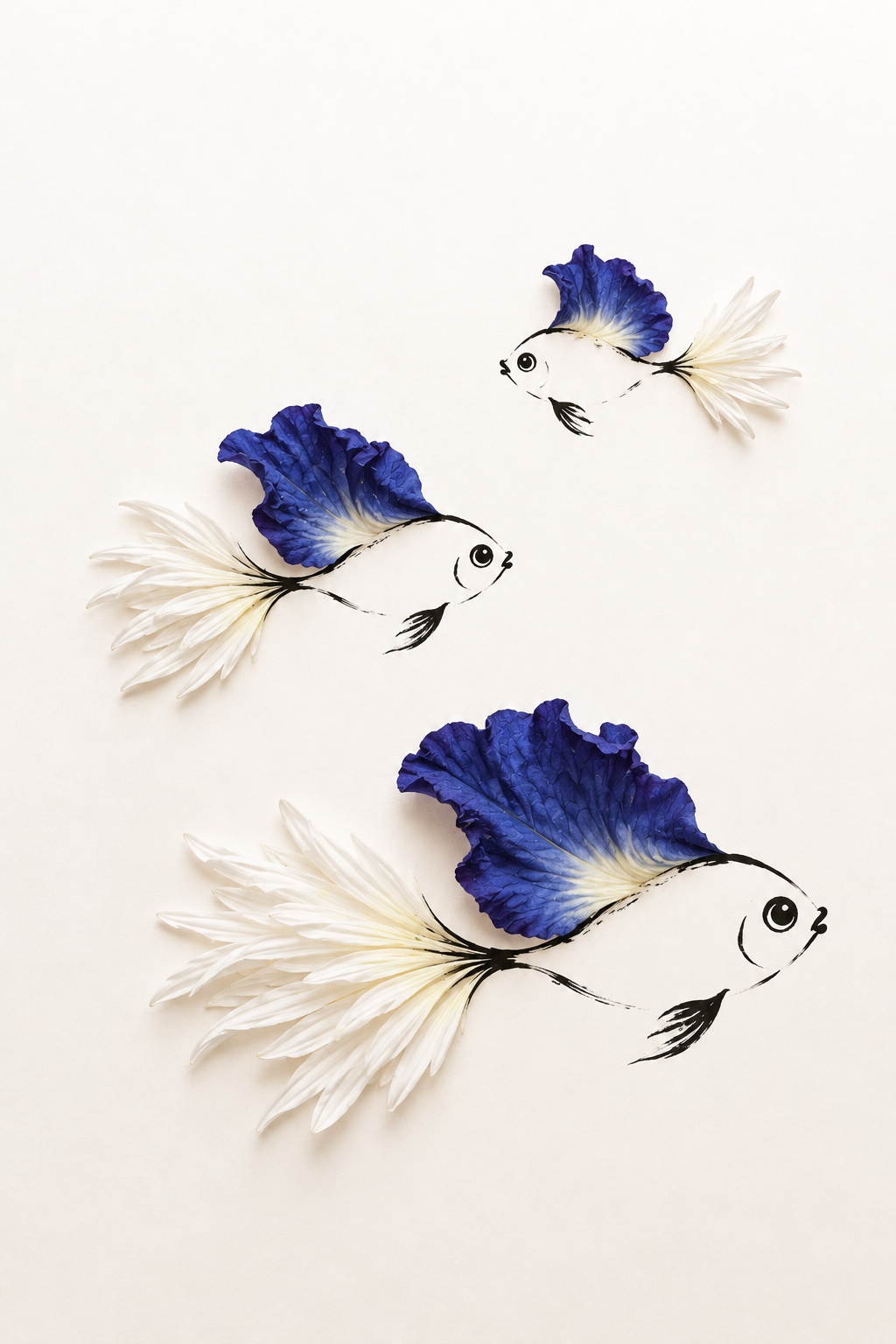
Blue Turns Back to Blue
Critique
Introduction Three fish with blue petal fins and pale botanical tails occupy an open cream field. The largest and middle fish face right, while the smallest turns left above them. This change of orientation gives the repeated design an internal exchange, making spacing and direction as important as the shared floral construction. Description Rounded white bodies are defined by short black contours, dark circular eyes, and small pursed mouths. Broad blue petals rise like fans above each back, their pale bases meeting the body. Thin ivory strips spread from the tails. The largest fish fills the lower right, the middle one sits leftward, and the smallest floats at the upper right. Analysis The three bodies form a staggered triangle rather than a uniform row. Scale establishes distance, while the smallest fish's reversal interrupts a simple rightward procession. Blue fans supply dense upper color, contrasting with the narrow tails' airy spacing. Minimal body lines preserve white surfaces that separate these two different botanical textures. Interpretation and Evaluation The work translates fin and tail movement through petals' natural folds and tapering ends. Its strongest feature is the distinction between a continuous fan above and many separated strands behind. The repeated figures remain coherent, but the opposed upper fish adds a modest relational focus, suggesting a group whose members occupy different directions within the same open space. Conclusion The initial attraction of blue-and-white ornament develops into awareness of measured differences in size, position, and orientation. Empty intervals allow each tail to expand without collision. Economical drawing and selectively varied plant forms keep the scene legible, turning repetition into a balanced arrangement of related but spatially distinct bodies.
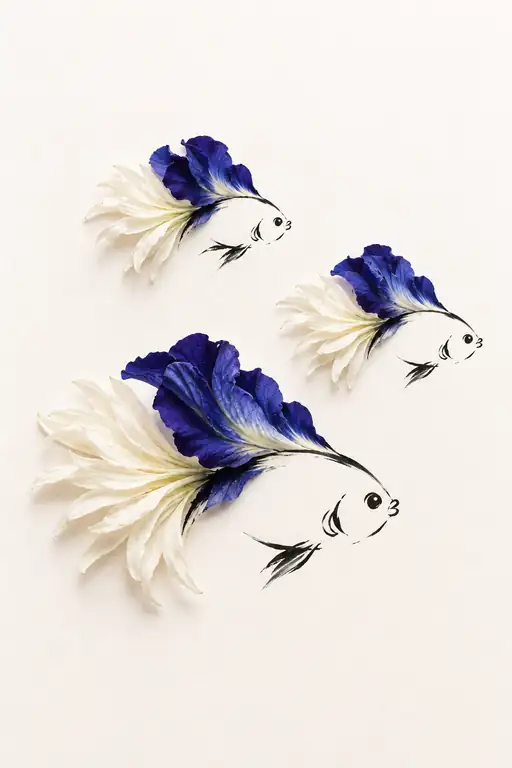 Three Ways Through the Blue
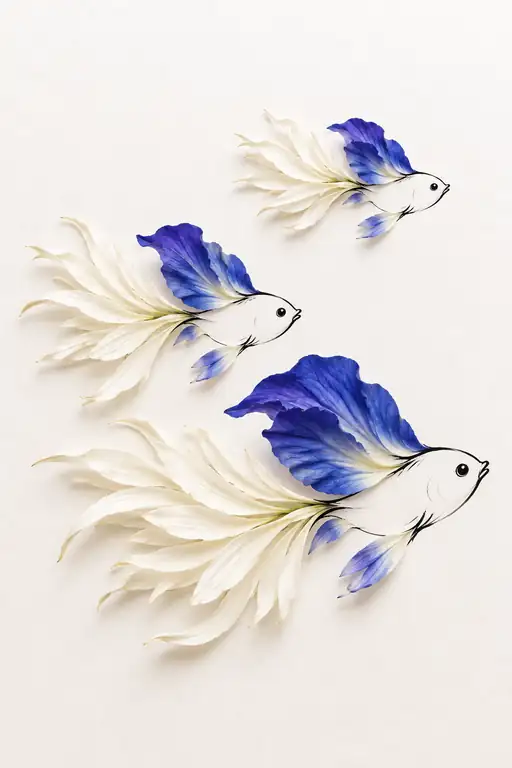 We Travel on a Breath of Blue
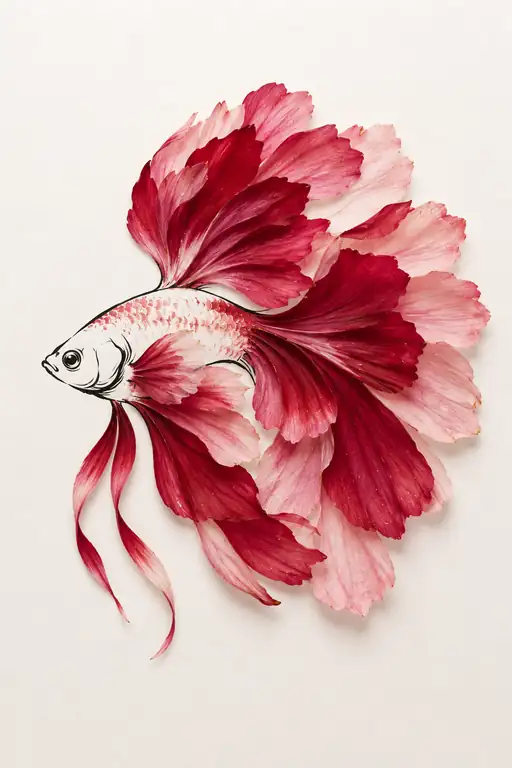 The Crimson I Cannot Hide
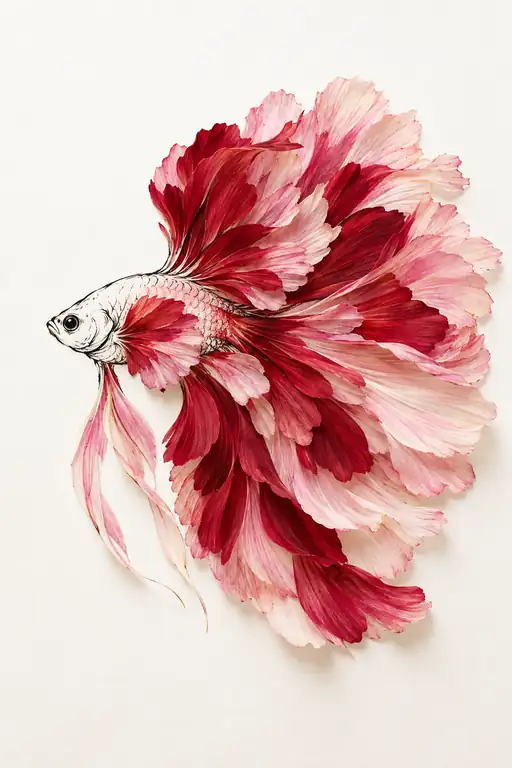 Let My Heart Unfurl
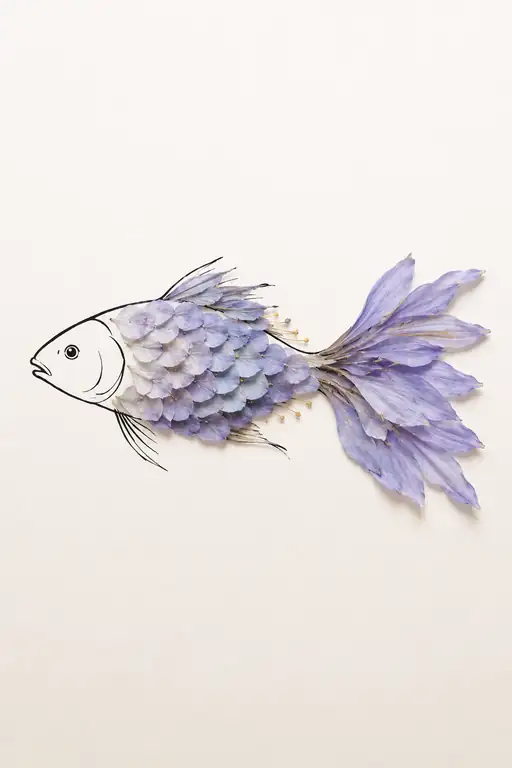 Violet Fin Gliding Through Crystal Depths
 Scarlet Dance in the Silent Deep
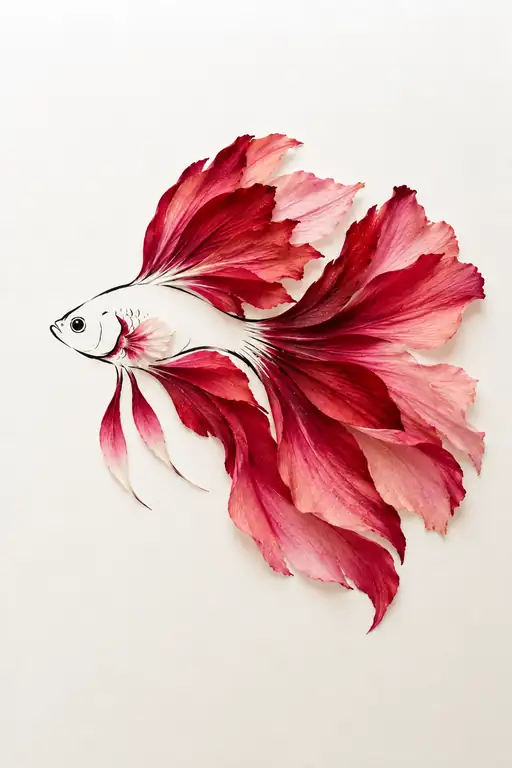 Crimson Unfolds Without a Sound
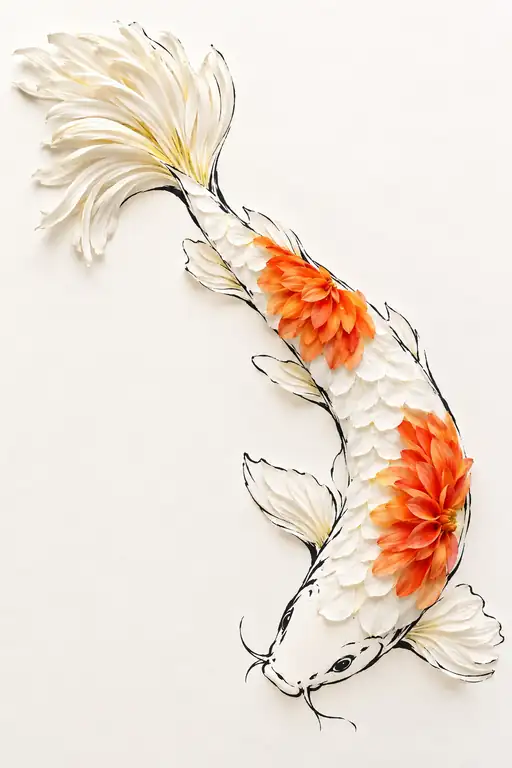 The Long Curve Home
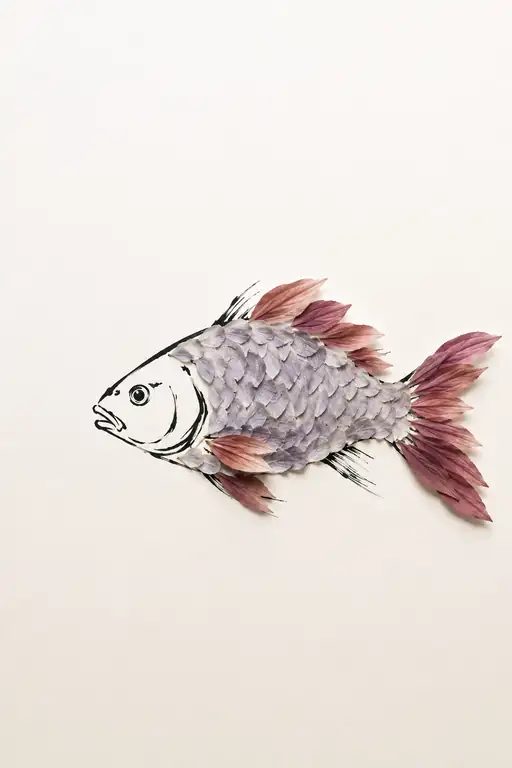 Fish Gliding with Lavender Scales
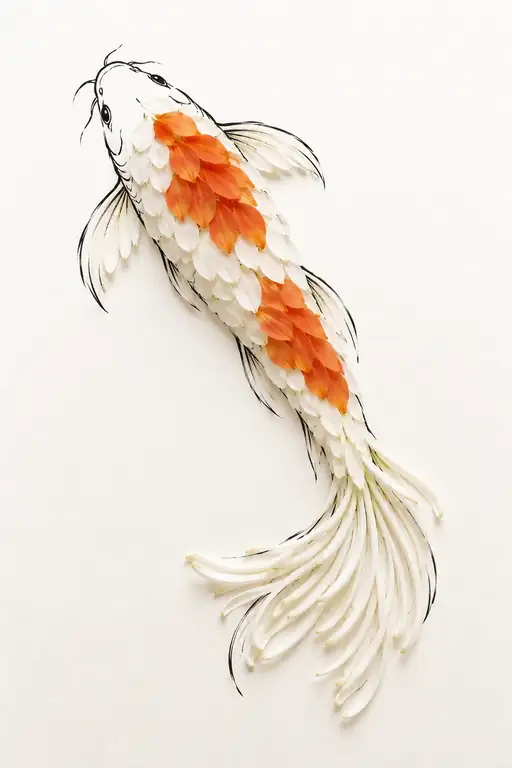 Slowly Toward the Light