Three Ways Through the Blue
Critique
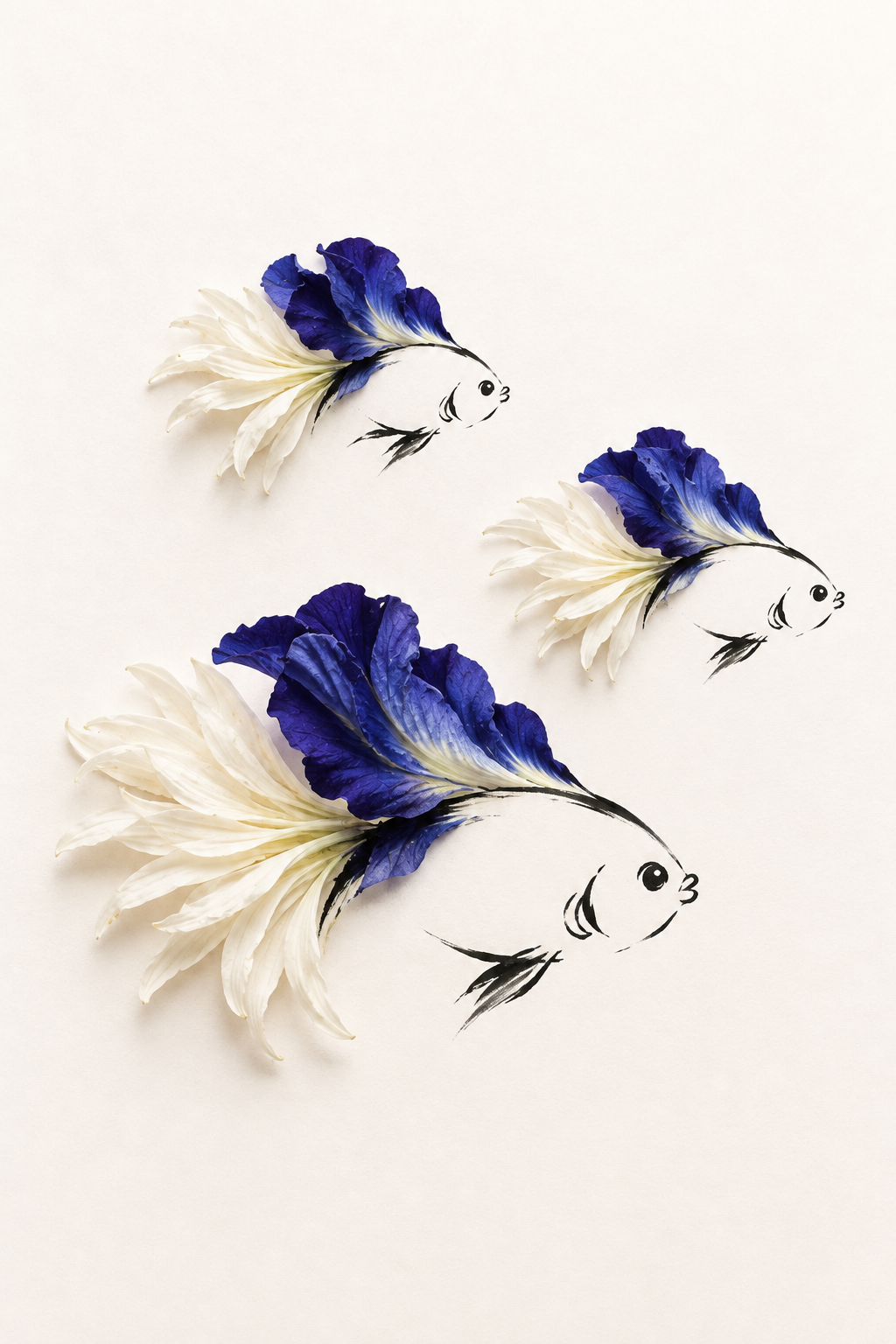
Introduction Three fish made from black outlines and blue-and-white petals move across an otherwise empty pale field. Their bodies face the right, while broad floral fins and tails extend behind them. Differences in scale and spacing establish the composition's principal spatial cues without depicting water, a horizon, or a surrounding habitat. Description The largest fish occupies the lower left and center, with two smaller companions above and to the right. Each has a rounded white body, a glossy black eye, and a small pursed mouth. Deep blue ruffled petals rise along the back, while long cream petals spread leftward in layered, irregular tail fans. Analysis The repeated rightward orientation gives the group a unified movement, while the triangular spacing prevents a rigid row. Scale separates foreground from background more strongly than contour or shading. Blue petals create a dense upper edge on each fish; the pale tails dissolve more gently into the ground, making their pointed tips especially delicate. Interpretation and Evaluation The floral substitutions emphasize the ornamental fluidity of fins without obscuring recognizable fish anatomy. Their effectiveness depends on the contrast between simple rounded bodies and highly articulated petal surfaces. The repeated design is coherent, although variation is concentrated mainly in size and position rather than in individual gestures, giving the scene a deliberately patterned character. Conclusion The image initially attracts attention through its blue-and-white palette, then reveals a carefully controlled relationship between repetition and depth. Empty intervals stand in for the surrounding water and allow the tails to expand freely. The largest fish anchors this open arrangement, while the smaller forms extend its movement beyond a single isolated decorative figure.
 Where Wonder Outgrows My Reach
 Blue Turns Back to Blue
 We Travel on a Breath of Blue
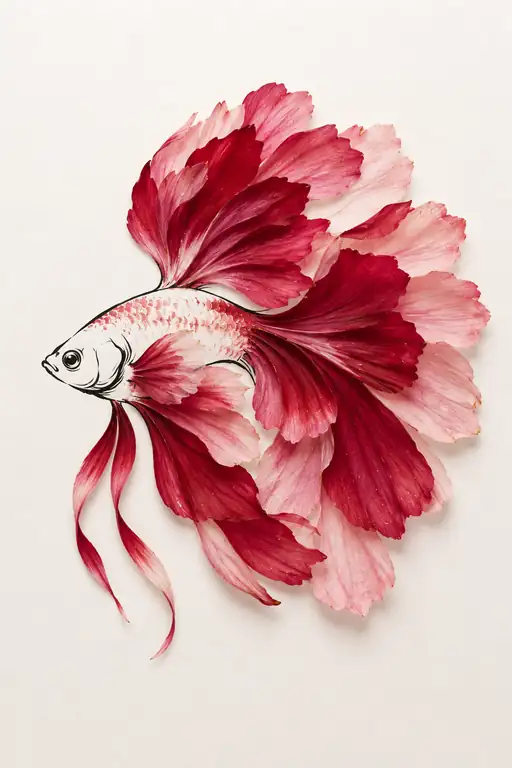 The Crimson I Cannot Hide
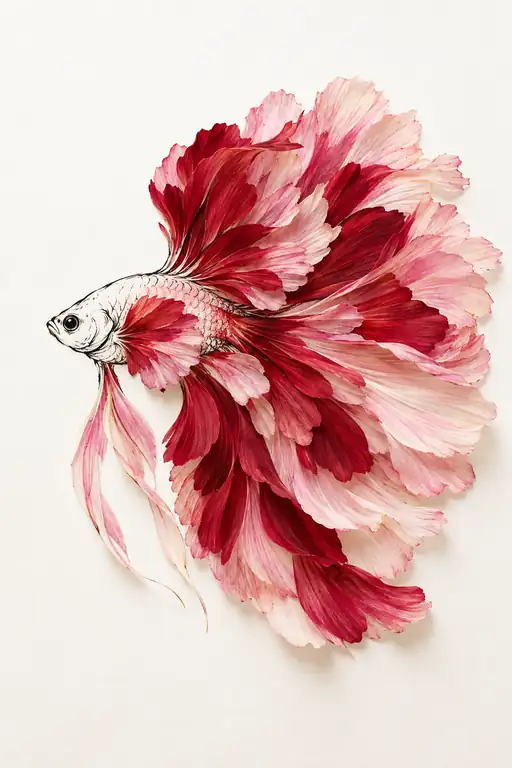 Let My Heart Unfurl
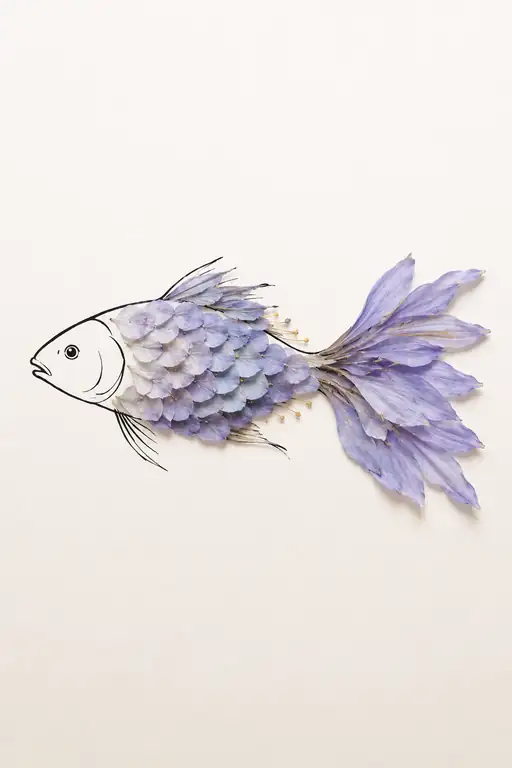 Violet Fin Gliding Through Crystal Depths
 Scarlet Dance in the Silent Deep
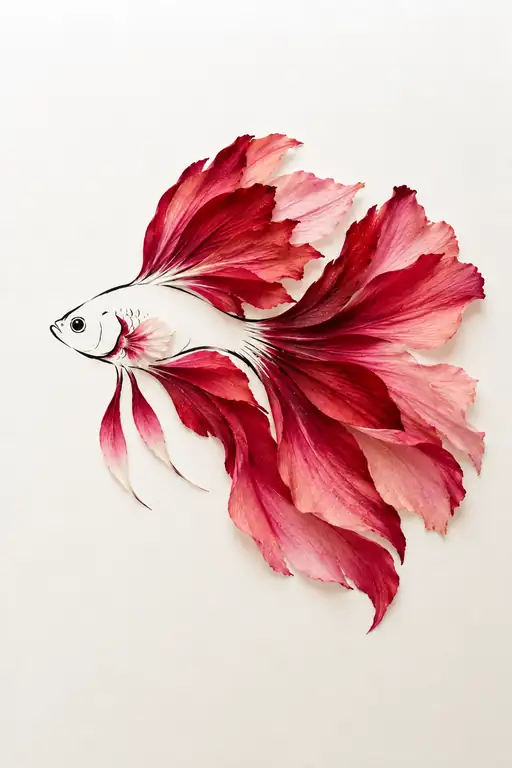 Crimson Unfolds Without a Sound
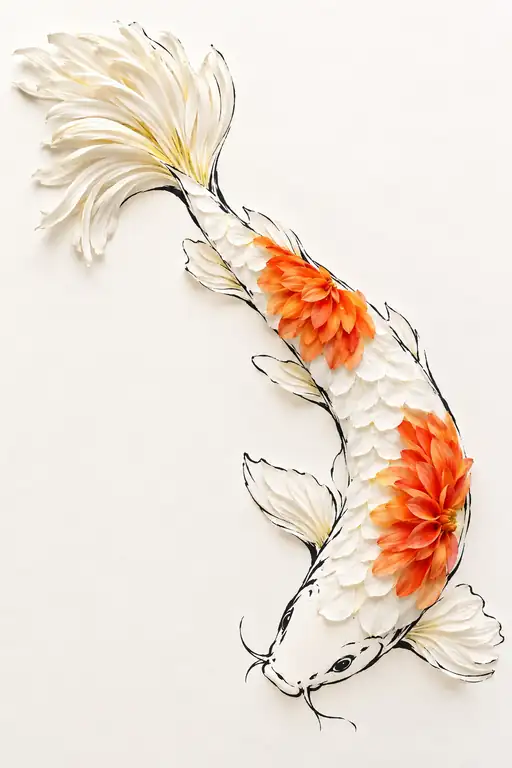 The Long Curve Home
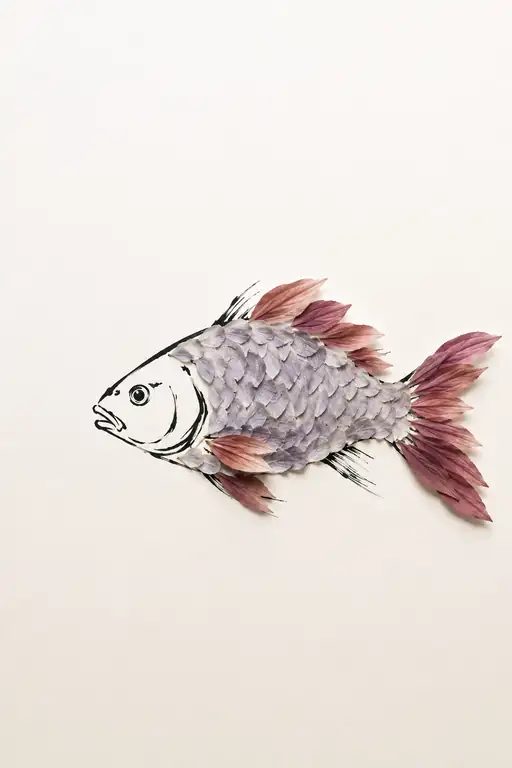 Fish Gliding with Lavender Scales
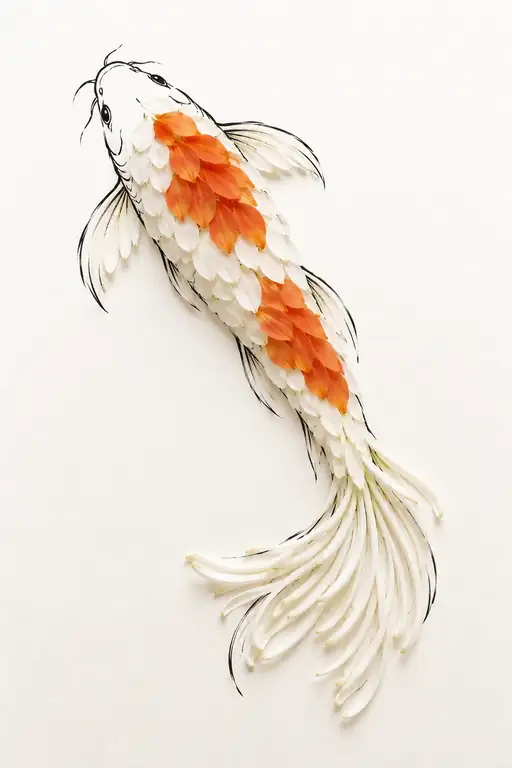 Slowly Toward the Light