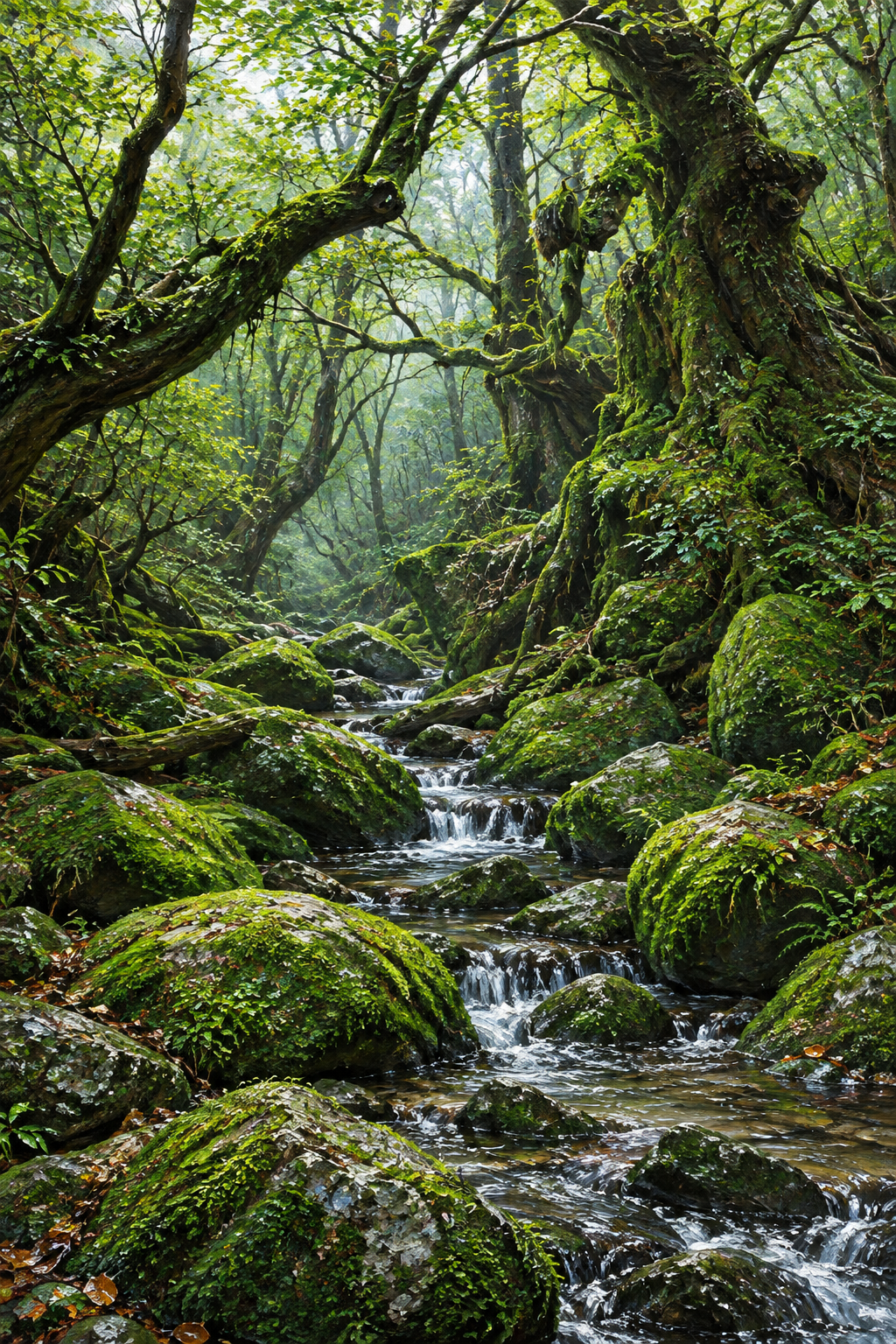
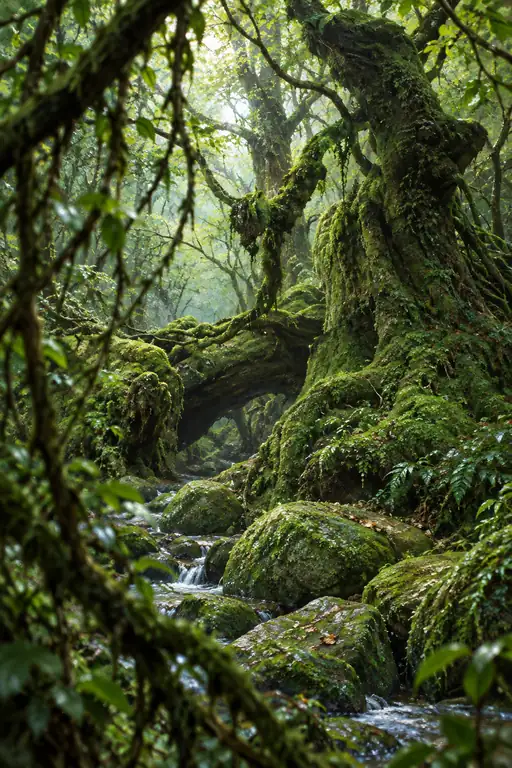
Water Knows the Way Beneath the Branches
Critique
Introduction A stepped forest stream runs centrally between moss-covered rocks beneath an arch of large branches. A thick trunk anchors the right, while another heavy limb enters diagonally from the left. The image uses these enclosing structures to lead the eye toward a paler, mist-filled space deep within the trees. Description Small cascades descend from the middle distance toward the lower right, alternating with shallow reflective pools. Rounded boulders carry green moss, pale lichen, and fallen brown leaves. The main tree has spreading roots and irregular bark folds. Fine trunks and branches fill the background, where softened blue-green light separates successive layers of vegetation. Analysis The stream creates a continuous but broken route through the vertical frame. Its white falls recur at different sizes, making recession easy to follow. The left diagonal limb and right trunk form an asymmetrical canopy over this route. Bright rock tops contrast with shaded undersides, while muted background values prevent the dense branches from flattening into one plane. Interpretation and Evaluation The composition suggests passage without introducing a marked path or human figure. Water performs the guiding role, drawing attention through a landscape otherwise full of obstacles. The material contrasts are especially effective where smooth wet stone meets granular moss and fine plant growth. The central light gives the enclosed scene a destination while preserving uncertainty about its farther extent. Conclusion The initial impression of a secluded forest develops into awareness of a carefully staged visual journey. Branches frame the route, rocks interrupt it, and water reconnects the intervals. Controlled depth and detailed surface differences make the scene feel both sheltering and spatially extensive.
Same Subcategory
Similar Artworks
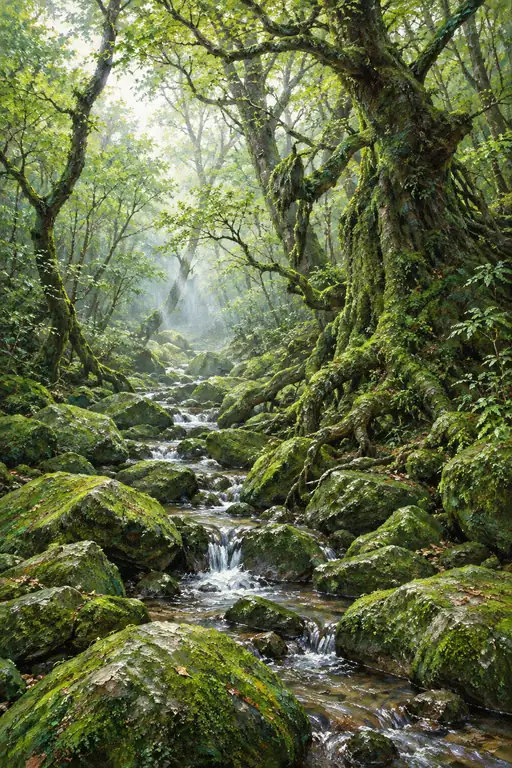 The Forest Lets the Light In
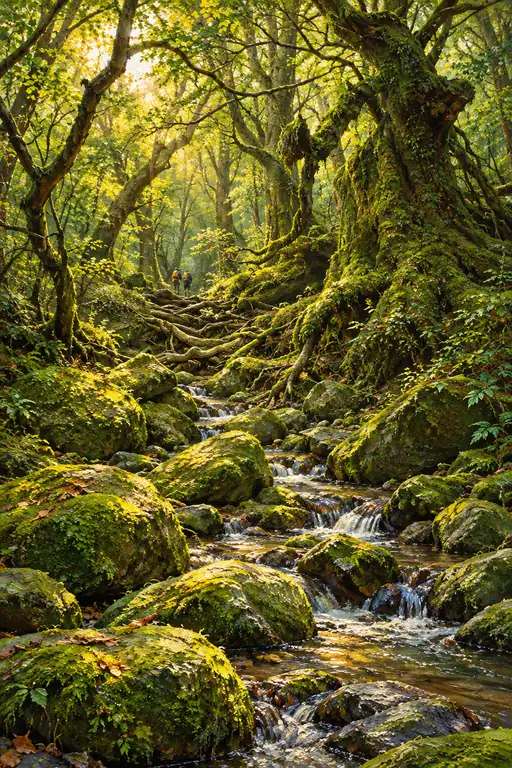 Our Footsteps Borrow the Forest
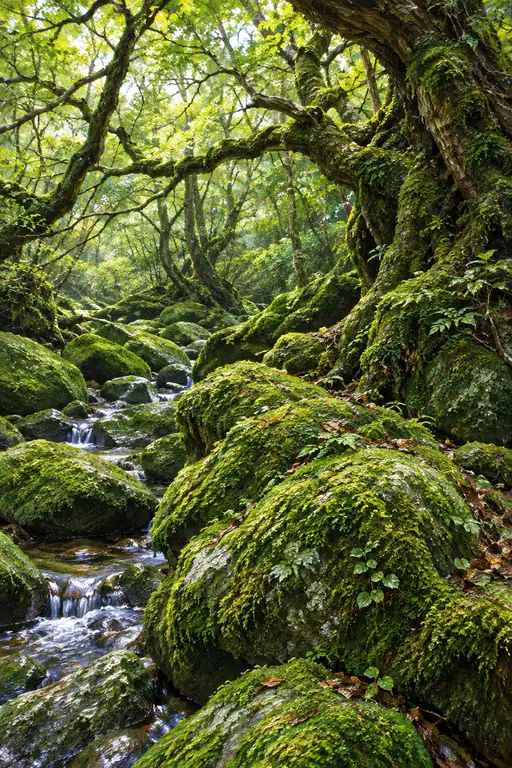 The Weight of Green, the Voice of Water
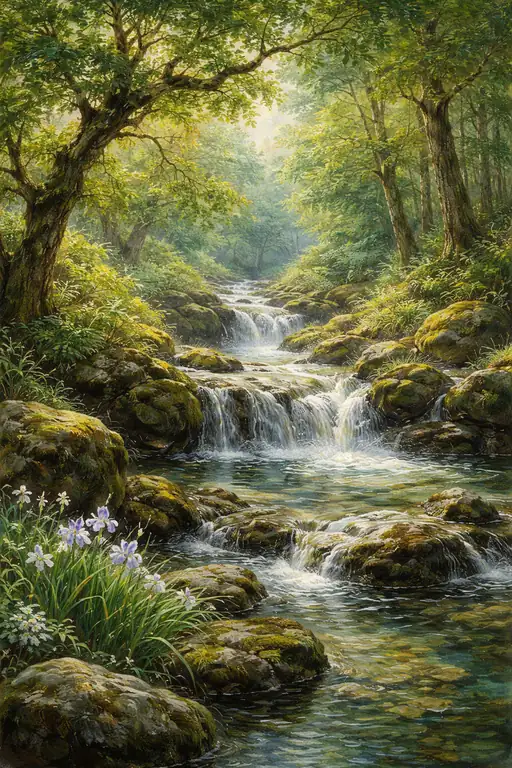 Symphony of the Crystal Rapids
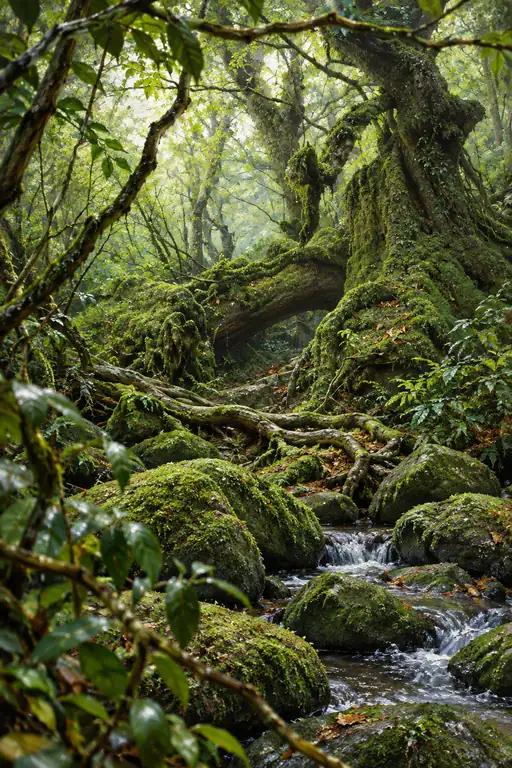 Inside the Old Tree's Embrace
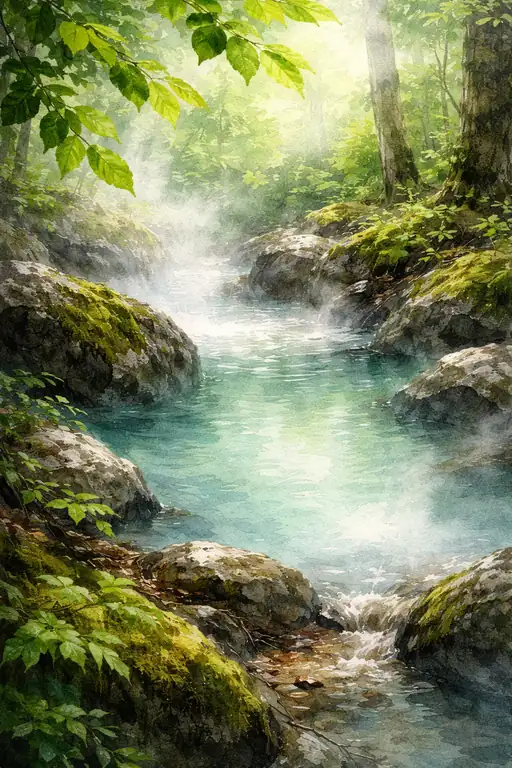 A Misty Solitude Within the Whispering Woods
 Whispers of the Deep Forest
 Whispers of the Mountain Stream
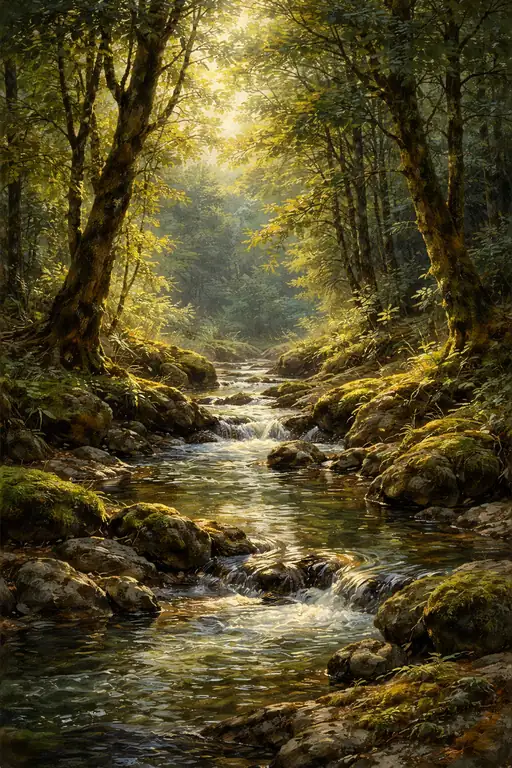 Sunlit Serenade of the Secret Brook
 What the Leaves Let Me See