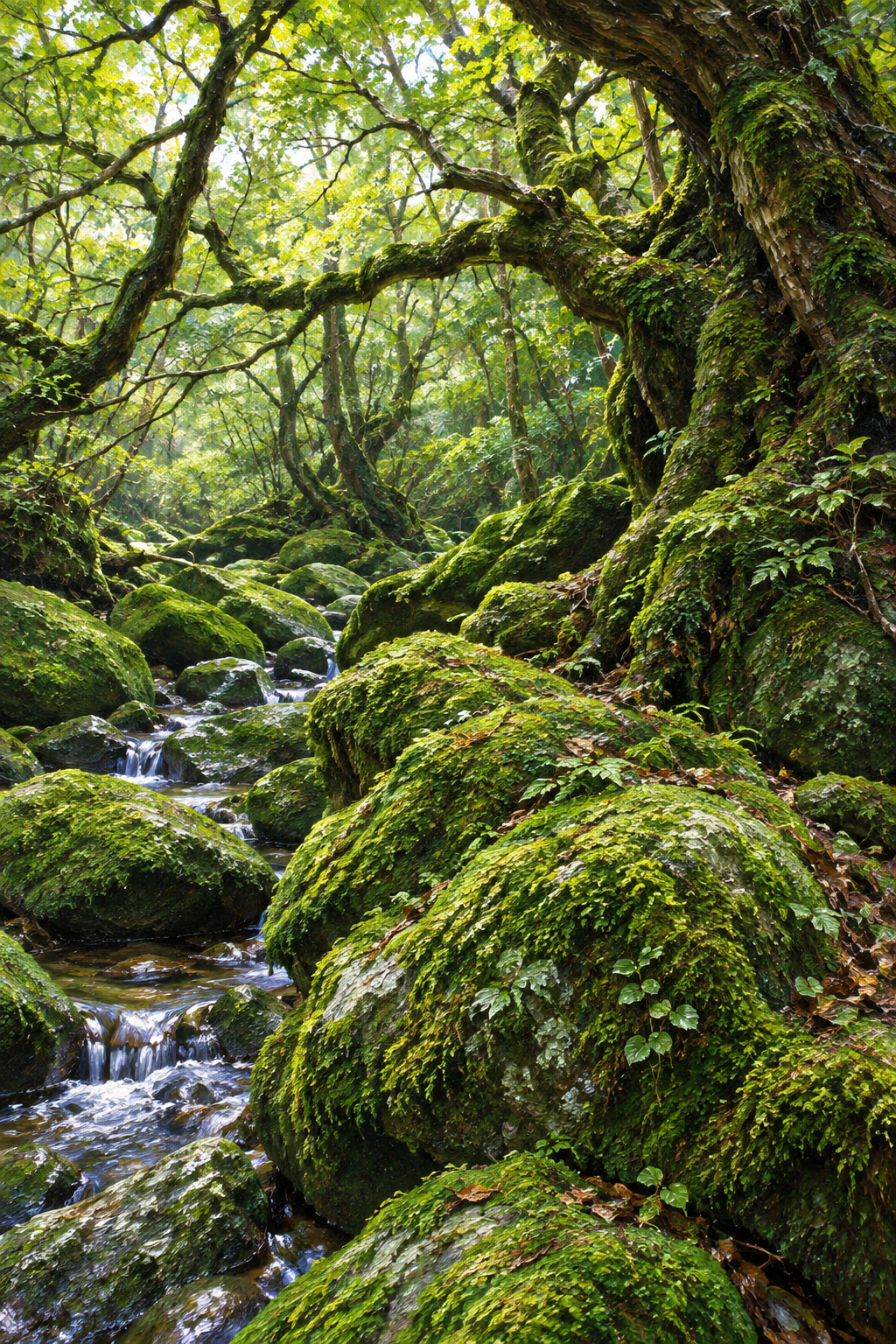
The Weight of Green, the Voice of Water
Critique
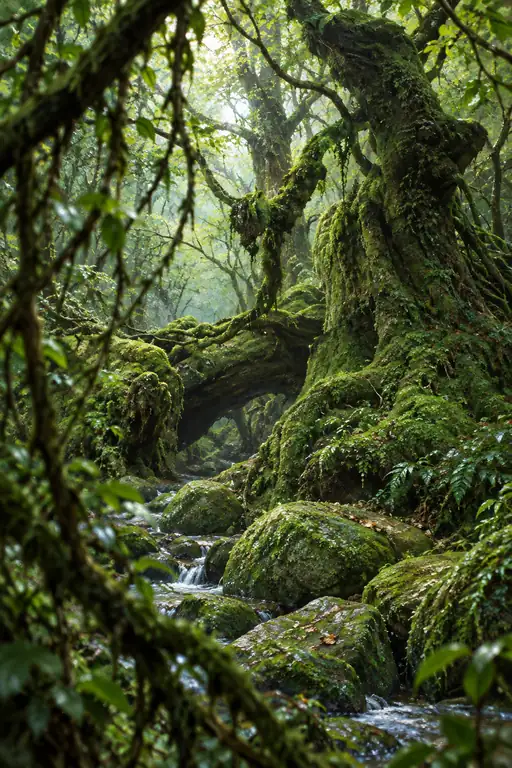
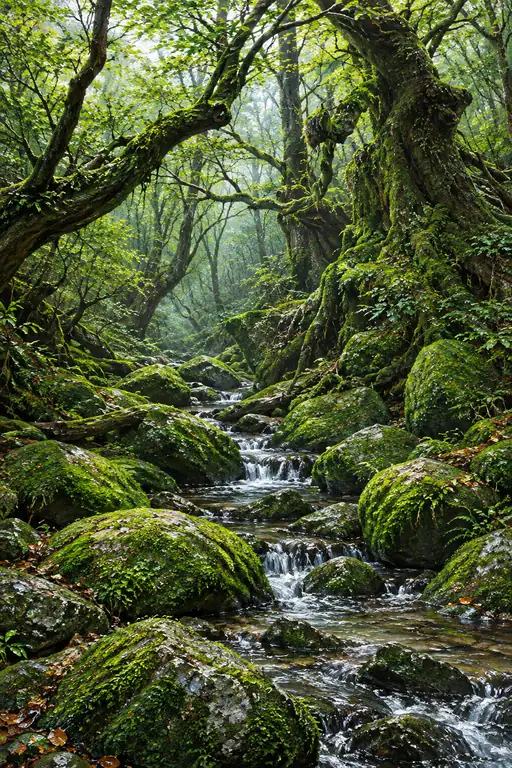
Introduction A moss-covered tree rises close to the right edge of this forest scene, extending a heavy branch across the upper middle. Below, a narrow stream descends along the left side of large green boulders. The composition gives unusual prominence to the surfaces of nearby stone, making the forest feel tactile as well as deep. Description The foreground rocks carry hanging moss, small heart-shaped leaves, and scattered brown litter. Water appears in short white falls between darker pools. The trunk's rough exposed bark remains visible beneath dense green growth. Behind the horizontal branch, slender trees overlap against a pale canopy, with small patches of daylight breaking through the leaves. Analysis Large boulders form a diagonal mass from lower right toward the center. The stream counters that weight by opening a lighter route on the left. The overhead branch links both sides and limits the bright upper space. Repeated yellow-green highlights across stone and bark unite different materials, while gray exposed patches keep the moss from becoming a uniform covering. Interpretation and Evaluation The scene presents growth as an occupation of existing contours: plants follow rock slopes, cracks, and root channels. This close relationship makes the environment feel continuous without erasing material difference. The strongest quality is the detailed distinction between draping moss and harder rounded stone. The asymmetrical stream placement keeps movement visible while allowing the foreground's mass to remain dominant. Conclusion The initial impression of abundant green develops into a reading of weight, coverage, and directional balance. The stream's small bright steps provide a measured counterpoint to the large rocks. Careful surface variation gives the dense setting coherence and encourages sustained, close observation.
Same Subcategory
Similar Artworks
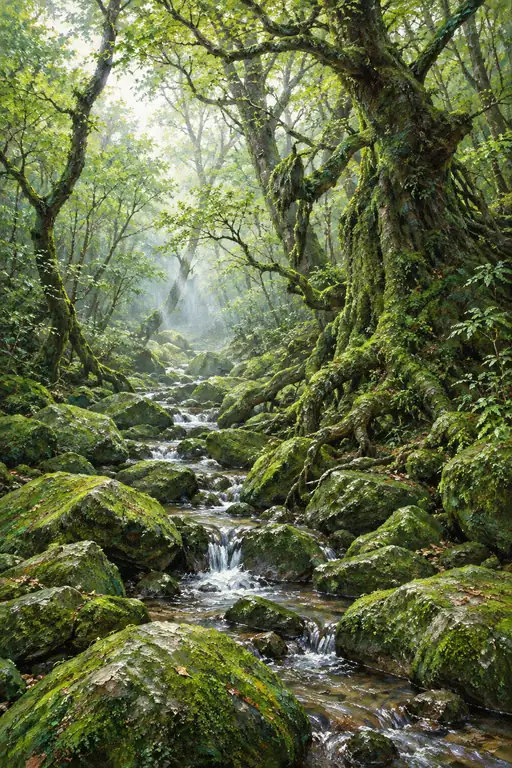 The Forest Lets the Light In
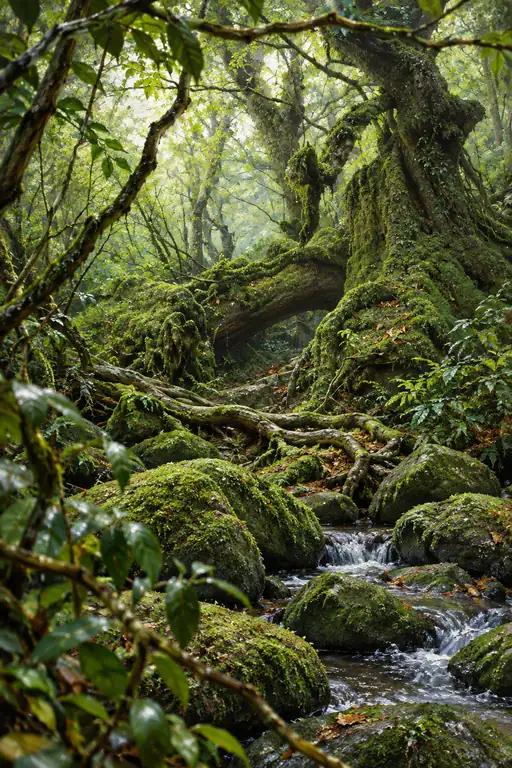 Inside the Old Tree's Embrace
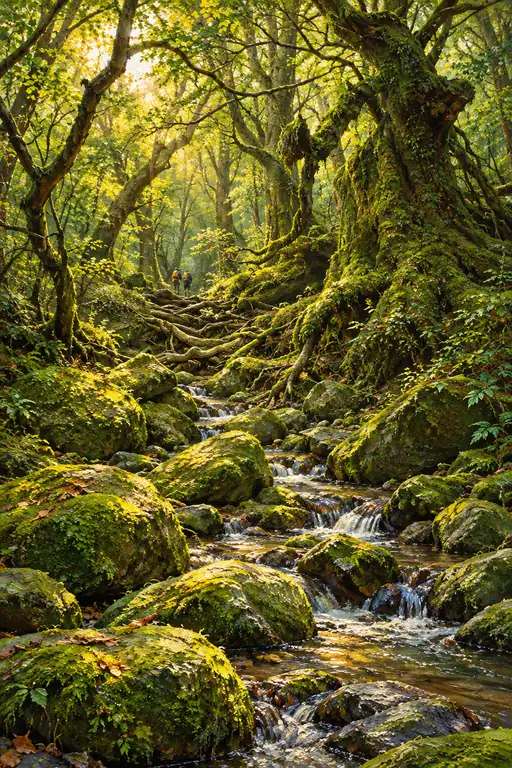 Our Footsteps Borrow the Forest
 What the Leaves Let Me See
 Water Knows the Way Beneath the Branches
 Komorebi's Grace: The Ancient Forest's Breath
 Dance of the Restless Rapids
 Symphony of the Crystal Rapids
 Where Cedar Roots Hold the Morning
 Breathing with Ancient Roots