Let the Little Light Drift Slowly
Critique
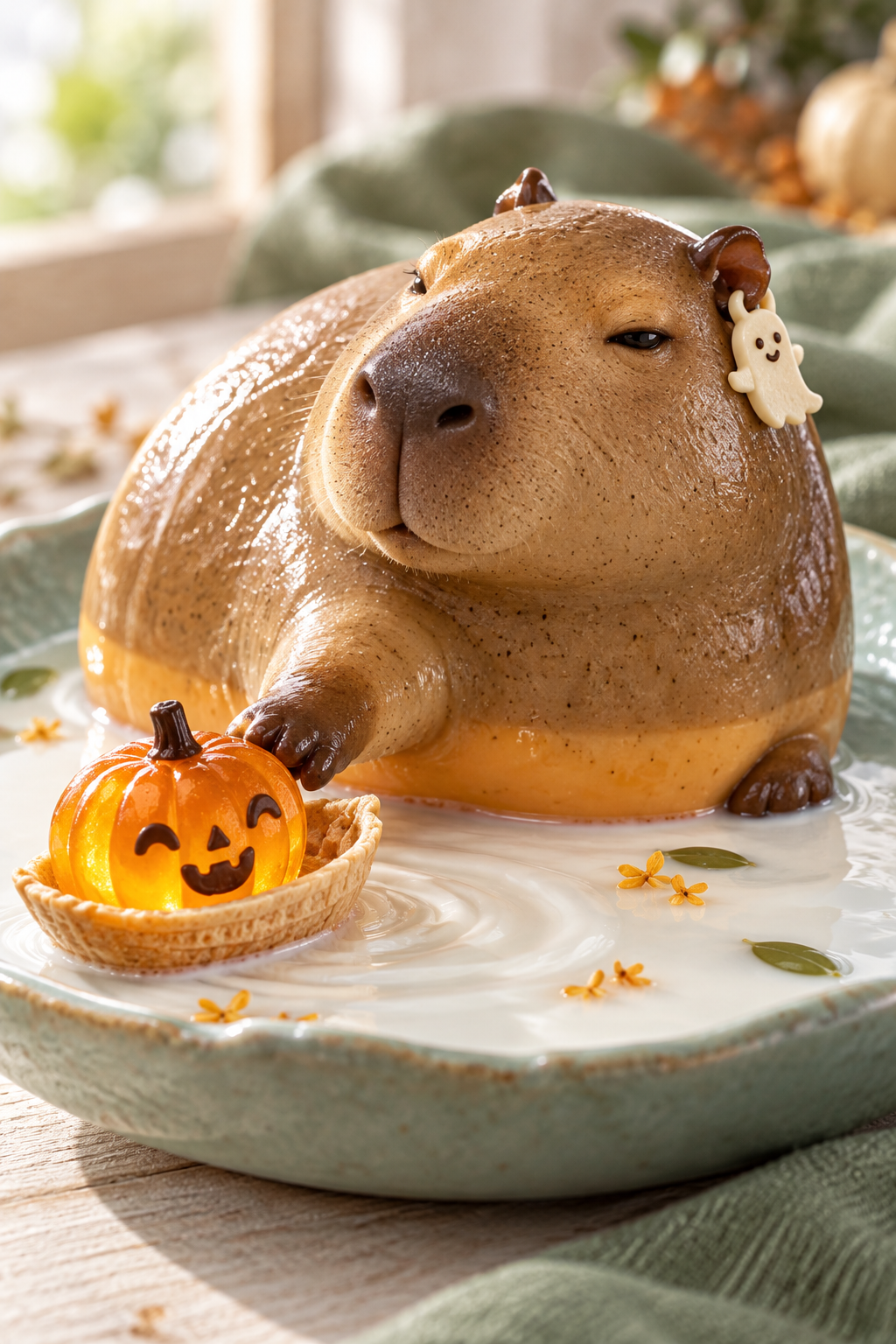
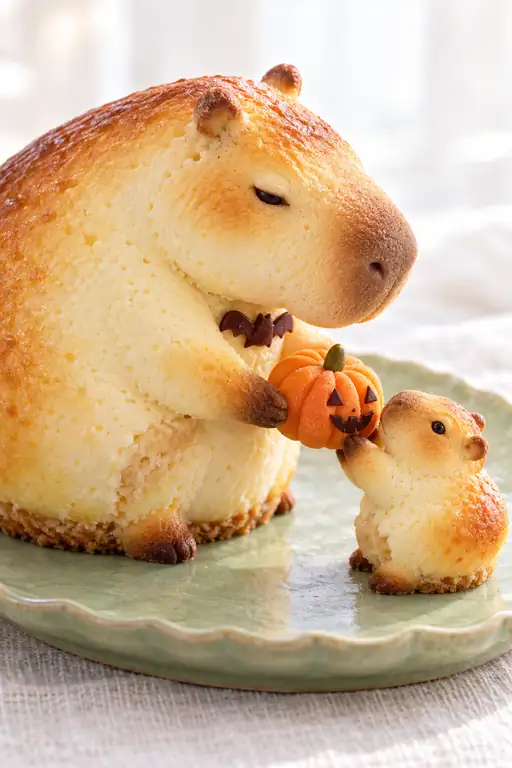
Introduction A caramel colored capybara rests in a broad dish beside a glowing pumpkin ornament. Its half closed eyes and low extended foreleg establish a restrained mood. Unlike a scene built around exaggerated action, this composition concentrates on the quiet contact between a large rounded body and a small bright object. Description The animal occupies the upper right, with a broad divided muzzle, tiny ears, and glossy dark toes. A pale ghost charm hangs beside the right ear. Its reaching paw touches the pumpkin at the lower left, where a shallow tart shell supports the translucent orange form. White sauce spreads across the dish with scattered yellow flowers and green leaves. Analysis The foreleg creates a diagonal bridge between the two principal masses. The pumpkin's bright interior draws attention first, then directs the eye back toward the shaded face. Broad reflections describe the capybara's smooth surface, contrasting with the tart shell's dry layered edge. The green rim and background cloth moderate the caramel tones, while ripples in the white surface suggest gentle displacement. Interpretation and Evaluation The small touch reads as a deliberate, unhurried investigation. The sleepy expression supports this interpretation without requiring a dramatic narrative. Scale is handled effectively: the pumpkin feels precious because it sits apart from the substantial animal. The refined reflective surfaces are persuasive, though their uniform gloss reduces some distinction between face and body. Conclusion The initial impression of a whimsical dessert resolves into a measured arrangement of weight, light, and contact. Sparse flowers preserve openness around the central gesture. The image's strongest quality is its ability to make a minimal movement carry the scene's emotional significance.
 Whose Little Magic Have We Found
 Tonight My Spout Has a Smile
 The Warmest Bath of Autumn
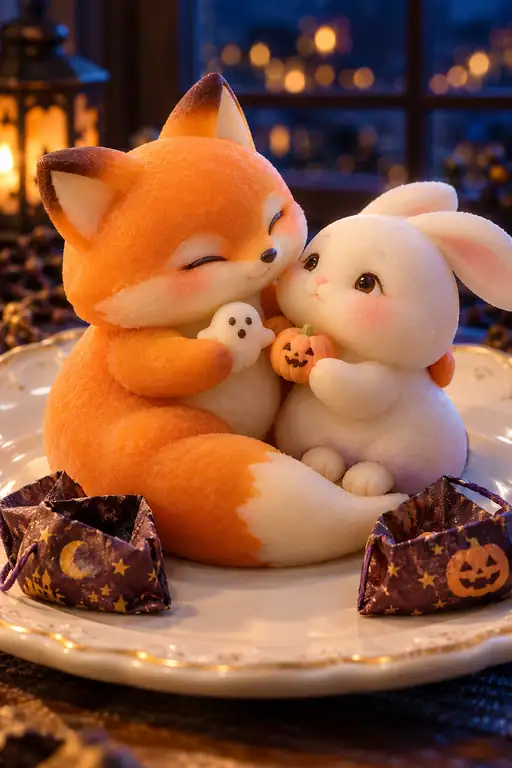 The Night Fits Inside Our Embrace
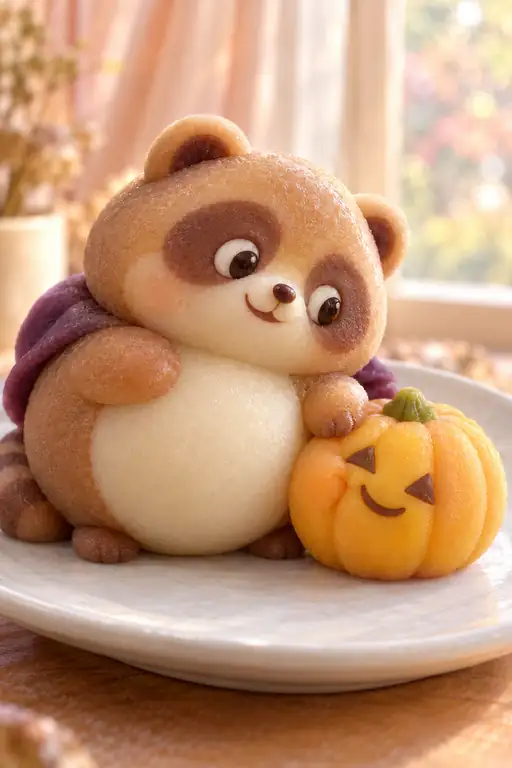 Nothing to Do but Lean on You
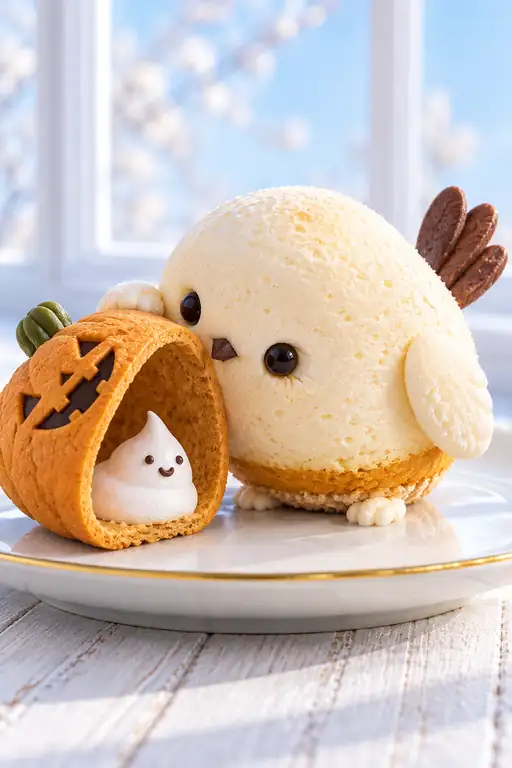 So This Is Where You Live
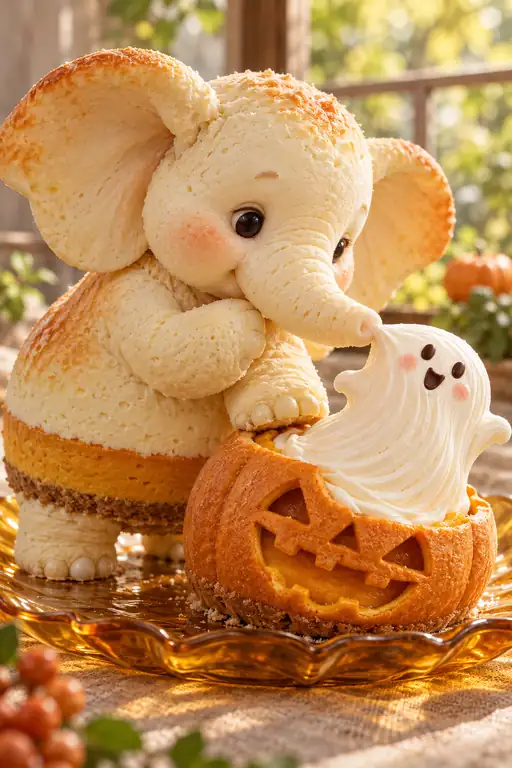 Up You Come, Little Ghost
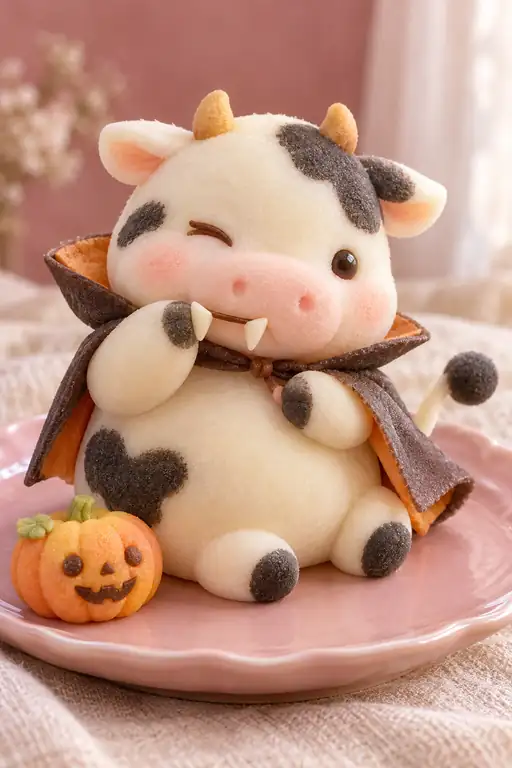 My Fangs Are Only for Smiling
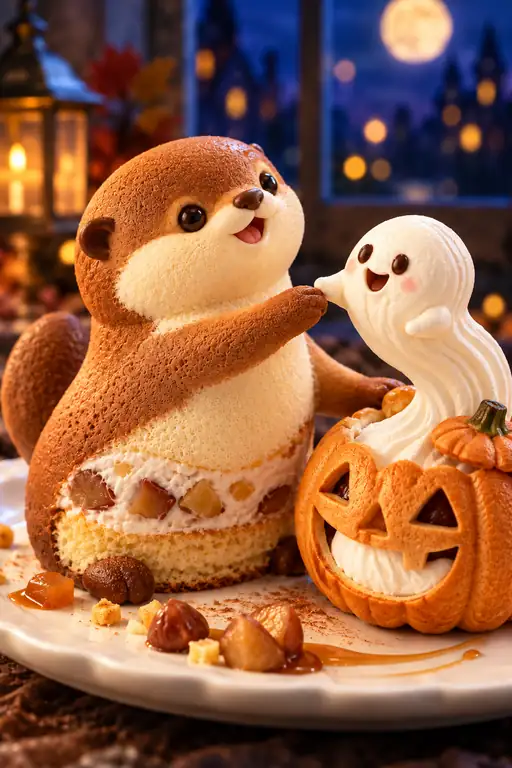 Even Ghosts Need a Hand to Hold
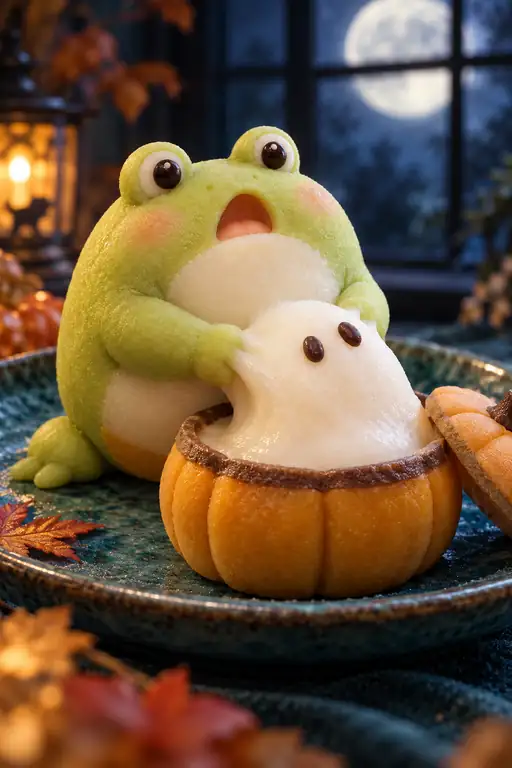 Oh, It Was You All Along
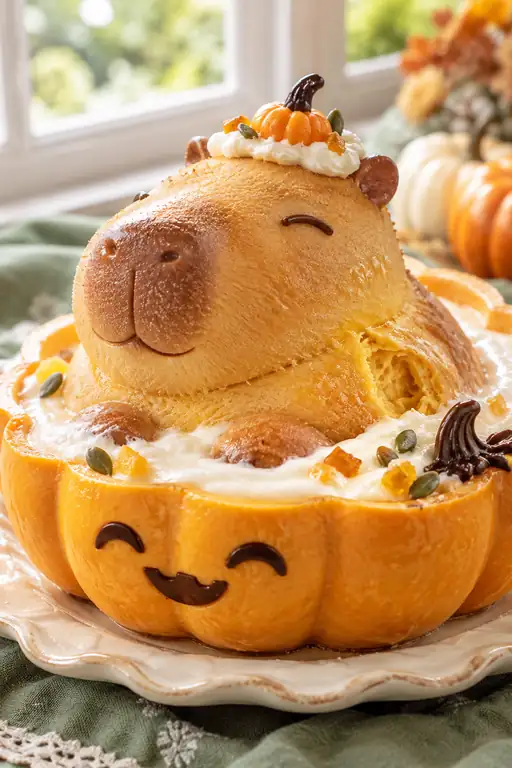 An Autumn Bath with a Smile
 I'll Meet Your Little Paws Halfway