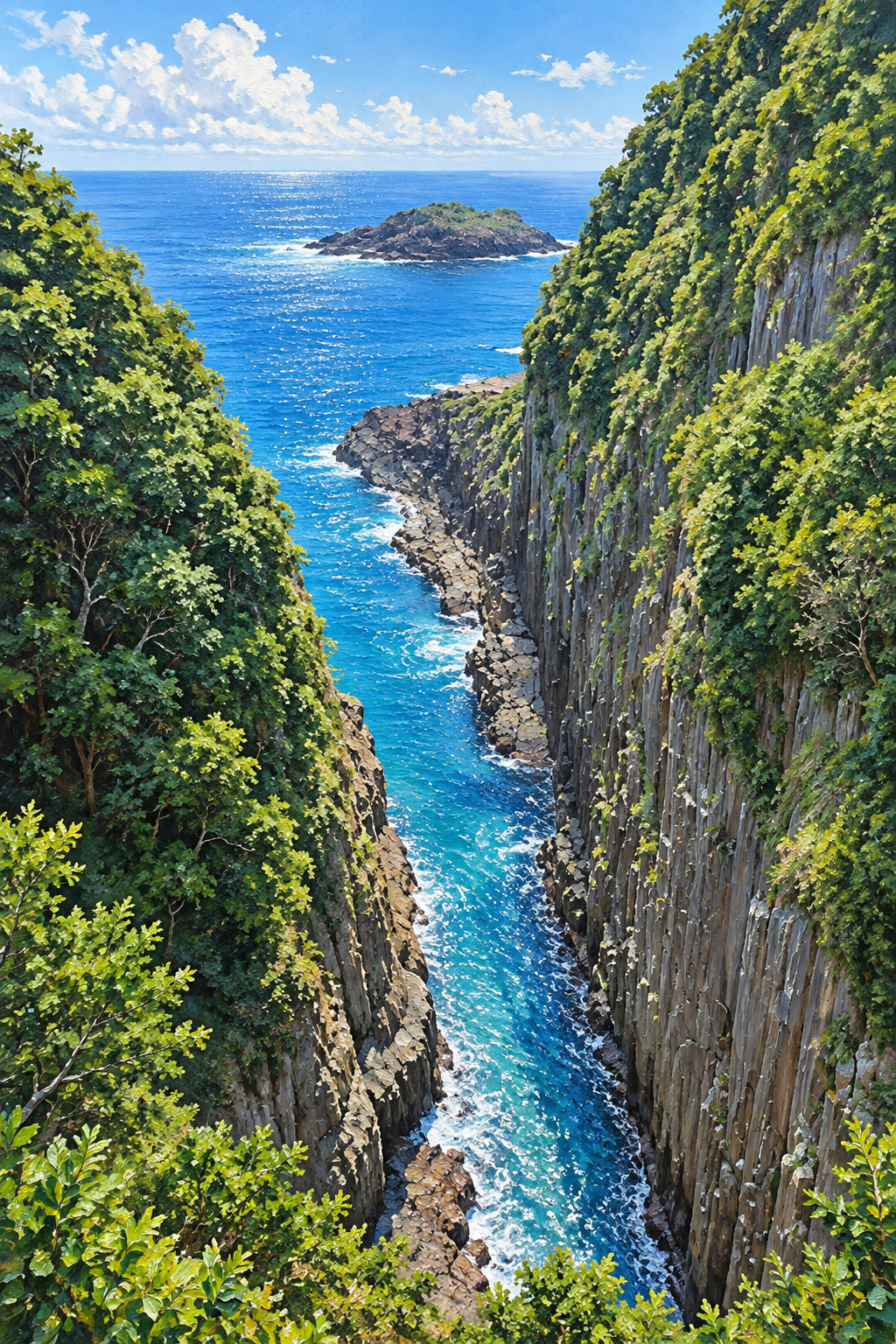
The Blue the Cliffs Could Not Hold
Critique
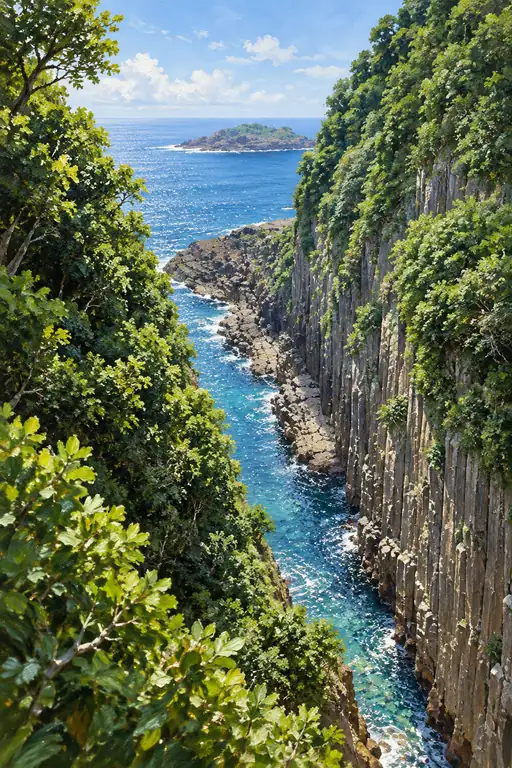
Introduction A narrow blue channel runs between steep green cliffs toward an offshore island in this painting. The right wall exposes long vertical stone formations, while the left is largely covered in trees. A high viewpoint turns the inlet into a deep passage, contrasting its enclosure with a bright horizon and open sky. Description White foam gathers along both rocky margins and becomes especially active near the lower center. The right cliff alternates gray columns, dark crevices, and trailing vegetation. On the left, branching trees emerge from dense shadowed growth. The distant island has a low green crest and angular brown edges, with a bright surf line separating it from the sea. Analysis The channel creates a strong central recession, bounded by unequal masses. The relatively exposed right face emphasizes height, while the leaf-covered left side supplies a softer contour. Small white marks repeat from foreground foam to distant reflections, linking different scales of water. The long horizon counterbalances the descending verticals and gives the eye a stable upper boundary. Interpretation and Evaluation The elevated view makes the coast feel both accessible to sight and physically difficult to enter. That tension gives the scene more interest than color alone. Stone divisions and overlapping foliage are carefully differentiated, and the changing width of the water clarifies depth. The vivid blue is highly unified, but subtle shadow shifts preserve the inlet's volume and direction. Conclusion The first impression of abundant green and brilliant sea becomes a study of enclosure opening into distance. The island provides a destination for the channel's movement without closing the horizon. Through clear scale changes and contrasting surface rhythms, the painting makes a narrow coastal space feel extensive.
Same Subcategory
Similar Artworks
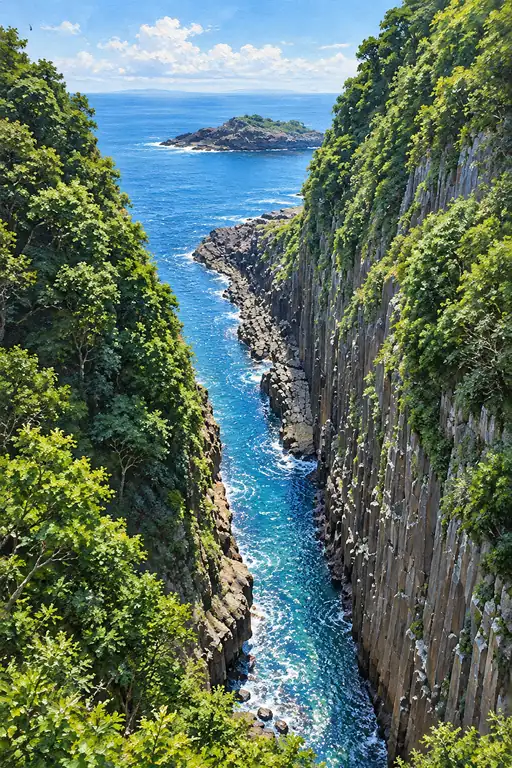 My Breath Returns to the Horizon
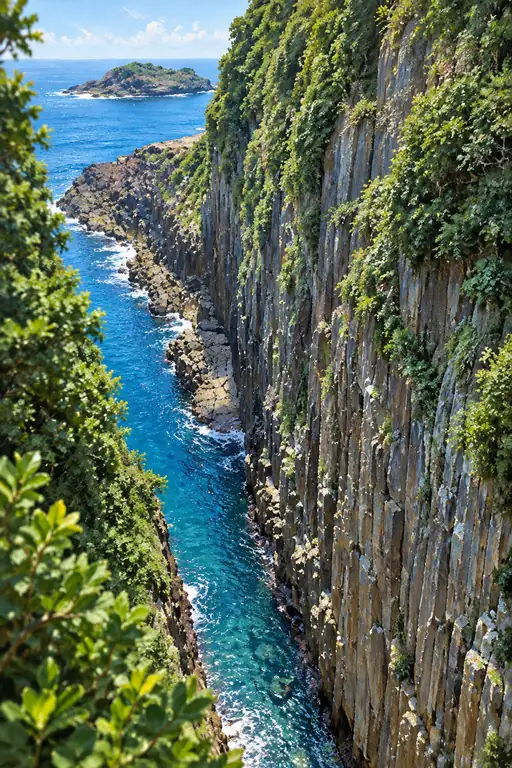 Stone Remembers, Water Answers
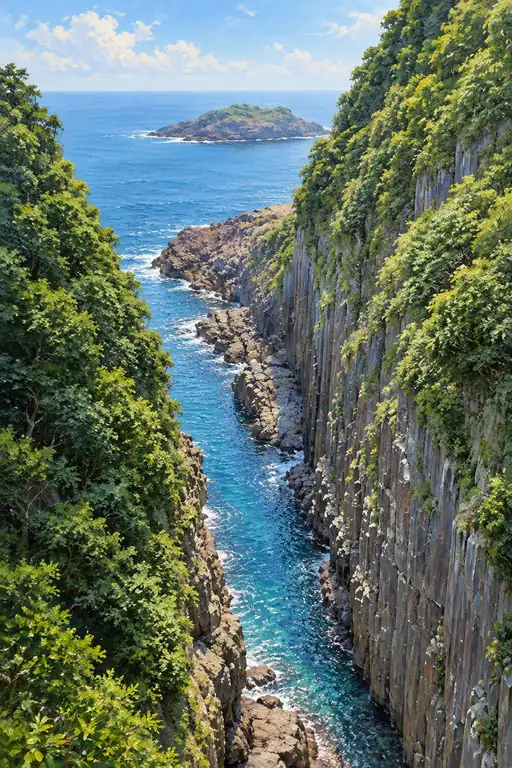 An Island Beyond the Green Embrace
 Through Green, the Sea Calls
 The Pure Land's Eternal Gaze
 Blossoms at the World's Edge
 Sanctuary of the Sapphire Waters
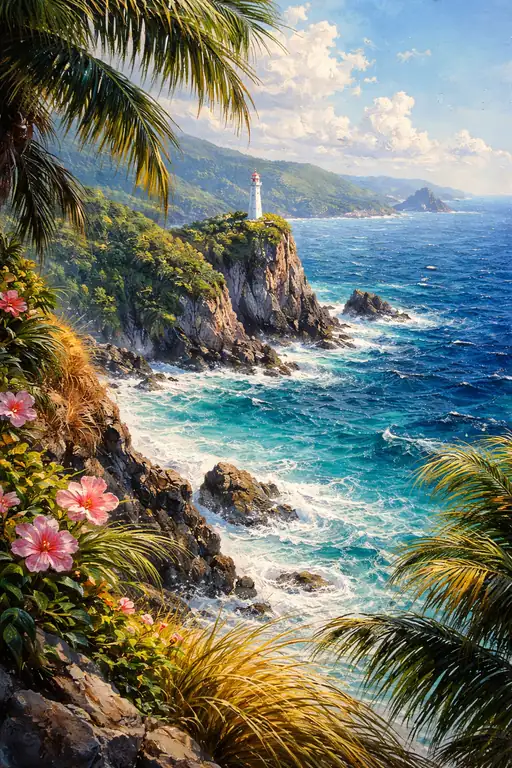 Sentinel of the Sapphire Sea: The Cliffside Lighthouse
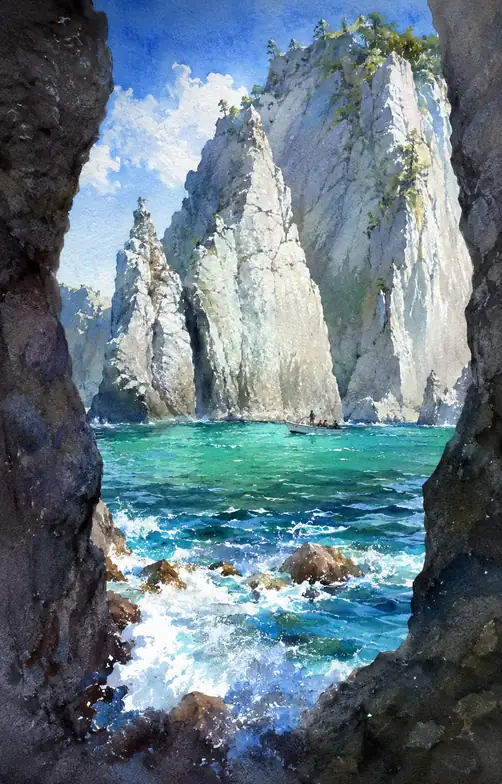 The Sea Opens Its Cathedral
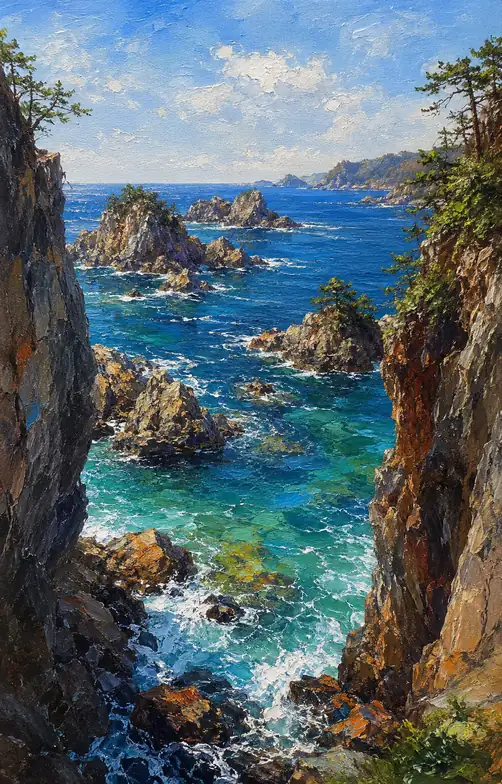 Between the Cliffs, the Sea Turns Clear