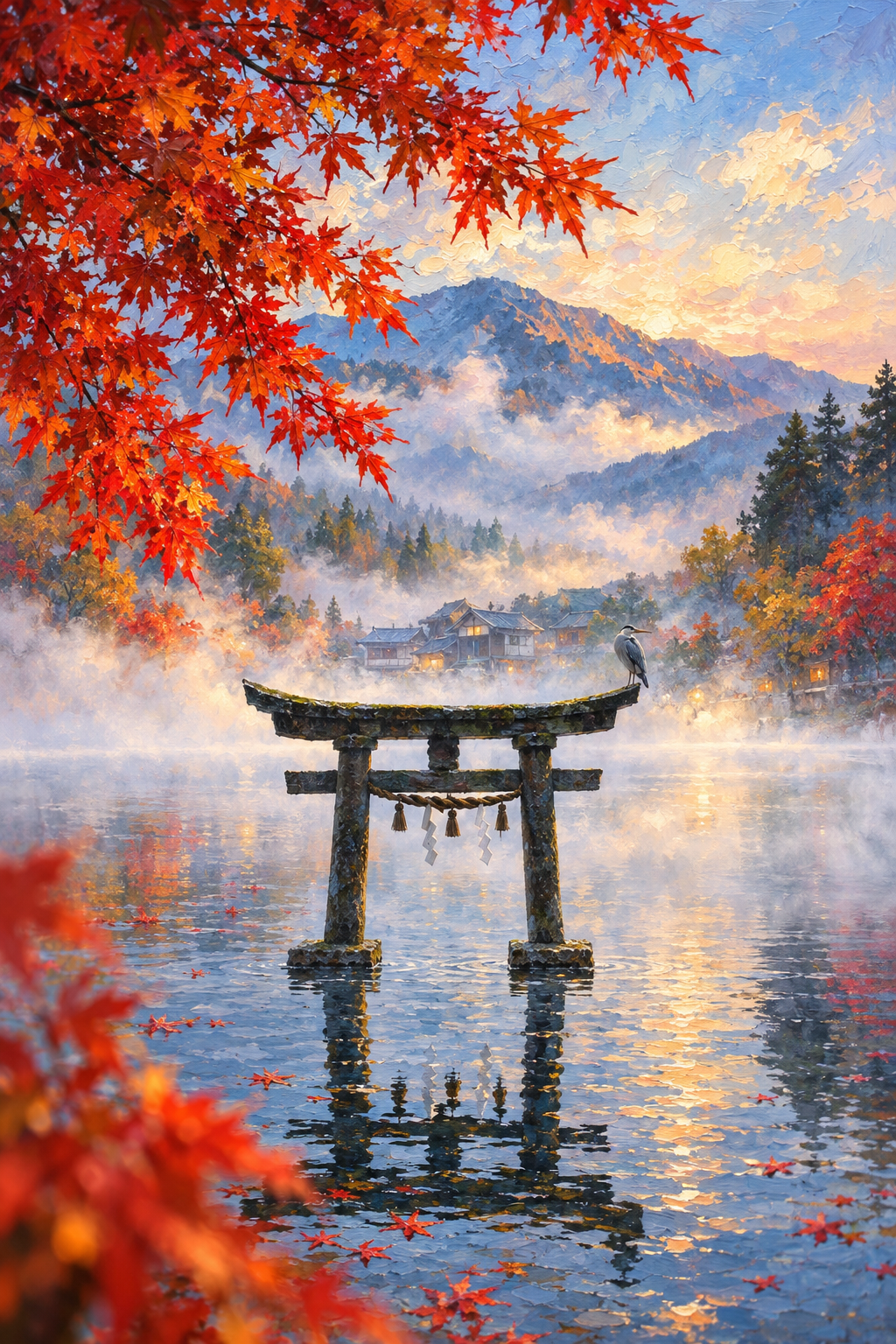
Light Finds the Old Prayer
Critique
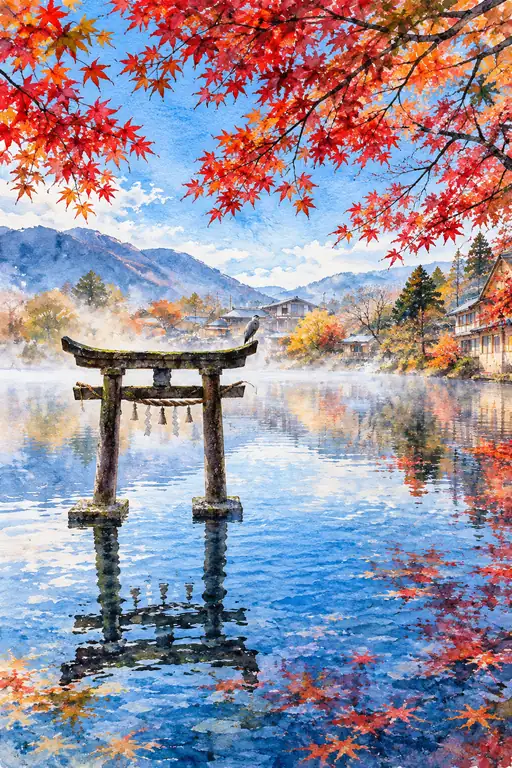
Introduction A stone torii rises from blue water beneath a canopy of red maple leaves, with a heron perched above its right pillar. Behind it, golden mist surrounds houses at the foot of a mountain. The painting combines a dark central structure with luminous atmosphere, making light as important as the autumn foliage. Description Moss covers parts of the curved lintel, and a rope with tassels and white paper hangs below. Windows glow among the distant roofs. The mountain's ridges catch warm light, while lower slopes dissolve into pale haze. Red leaves float on the foreground water, and a blurred cluster at the lower left overlaps the sharper reflected gate. Analysis The upper-left canopy and lower-left blur form a close frame that contrasts with the clear middle distance. A golden vertical passage in the water leads toward the bright mist behind the torii. Its dark pillars establish a stable interval within this changing light. Thick-looking marks across sky and water produce a more tactile surface than the delicate leaves alone would suggest. Interpretation and Evaluation The scene's quiet depends on the relationship between still architecture and distributed movement: ripples, drifting mist, and scattered leaves. The heron concentrates that stillness into a small readable form. Warm reflections and windows connect distant human shelter with the open water. The intense reds remain persuasive because they are balanced by broad cooler areas and atmospheric depth. Conclusion The initial attraction of autumn color develops into a study of illumination passing through several distances. The gate anchors the composition without blocking the bright space behind it. Varied focus and textured color handling give the familiar waterside subject an especially layered and inviting presence.
Same Subcategory
Similar Artworks
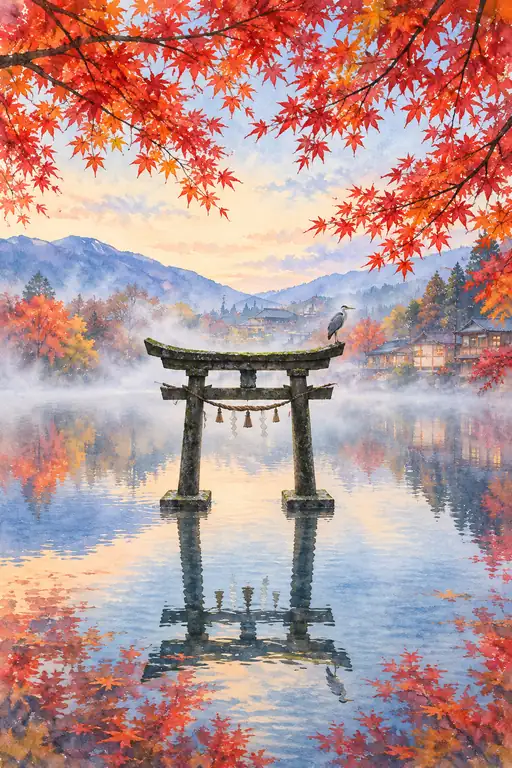 Morning Holds Two Autumns
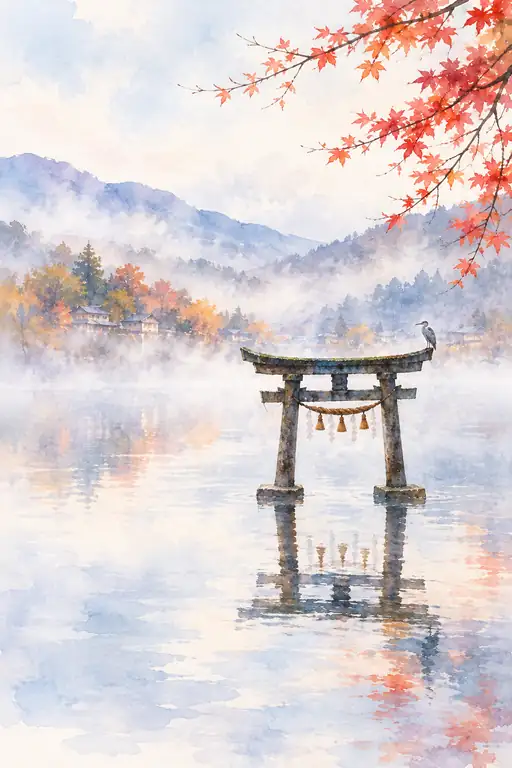 Room for the Silence to Pass
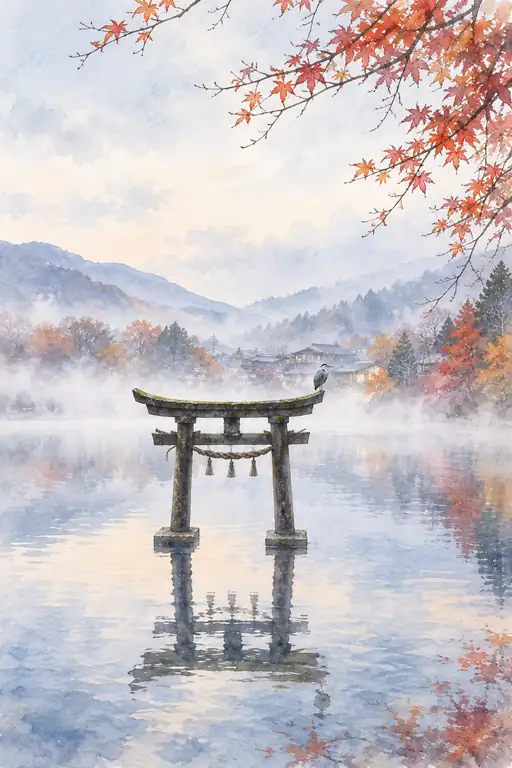 The Mist Leaves One Place to Rest
 Where Scarlet Keeps the Water Still
 The Light Through Which I Pray
 The Sun Waits inside the Torii
 The Gate Between This Morning and the Next
 Two Prayers at the Edge of Winter
 The Threshold of Silence
 Prayer Floating in the Golden Sea