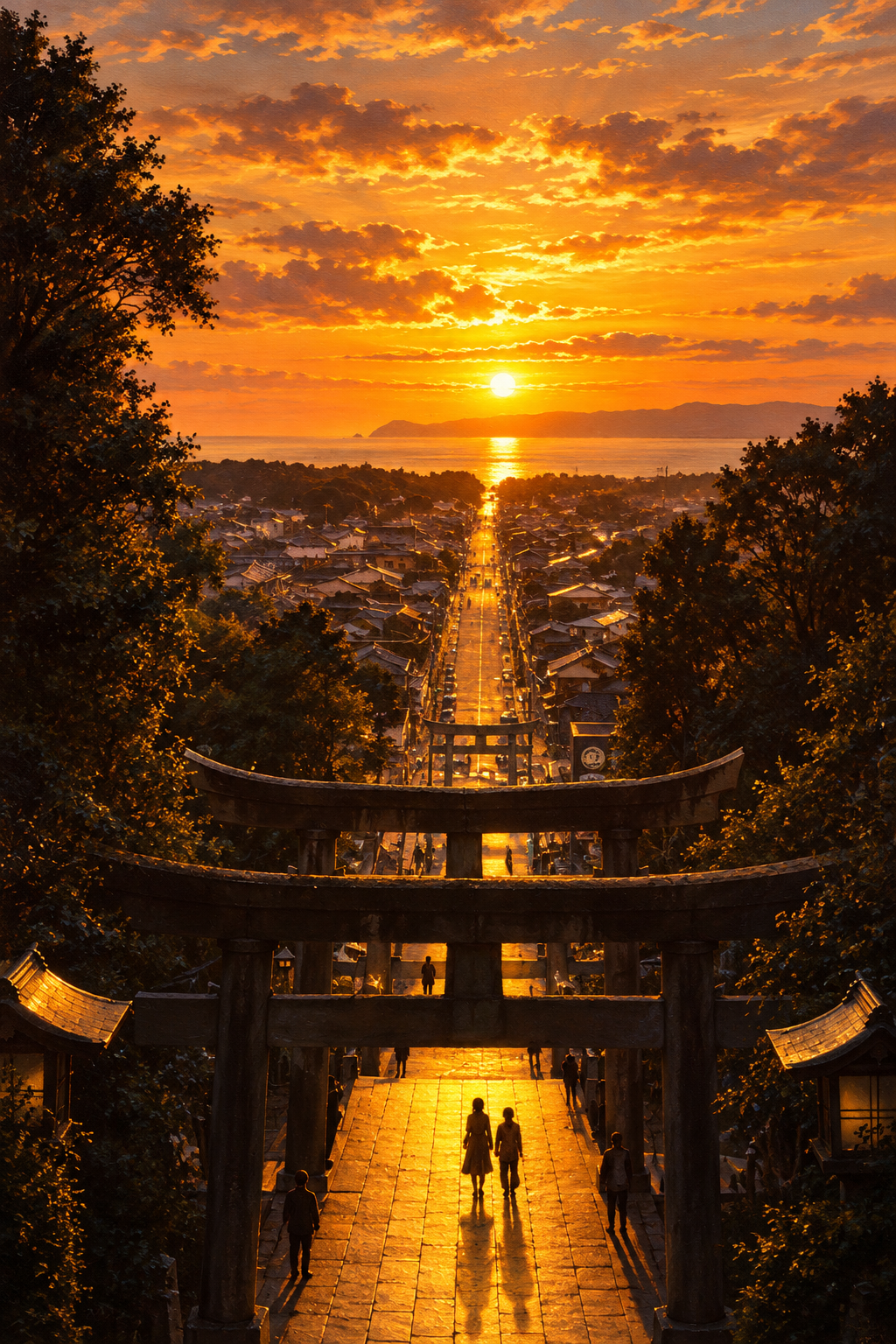
The Sunlit Path to the Sea
Critique
Introduction A long avenue runs through a town toward the sea and a low setting sun. Several dark gates cross the foreground path, while trees frame both sides. The view joins a human route, closely packed roofs, and a glowing horizon along one central axis. Description Two broad gate beams span the lower half, with smaller gates descending along the avenue. Figures walk on the stone paving, casting long shadows toward the viewer. Rows of buildings cluster on either side of the straight street. Beyond them, the sea reflects a vertical strip of sunlight beneath distant hills. Dense orange clouds fill the upper sky, and dark tree masses border the scene at left and right. Analysis The central avenue narrows toward the sun, giving the image a strong one-point perspective. Horizontal gate beams interrupt this recession at several distances and create measured stages along the route. The dark trees and structures frame a narrow golden corridor. Warm reflections on the paving repeat the bright path across the water, linking town and sea. Small walking figures provide scale, while their elongated shadows establish the light's low angle. Interpretation and Evaluation The gates make the walk appear purposeful, but the image leaves each figure's destination open. Repeated thresholds connect the immediate foreground with the distant horizon. Intense orange light could overwhelm the scene, yet dark silhouettes and detailed roofs hold its spatial order. The composition's symmetry, controlled contrasts, and clear recession give the sunset both grandeur and a human scale. Conclusion The fiery sky yields to a path shared by buildings, gates, and walkers. A central line of light carries the eye from paving across water to sun.
Same Subcategory
 Everyday Hands beneath Sacred Light
Similar Artworks
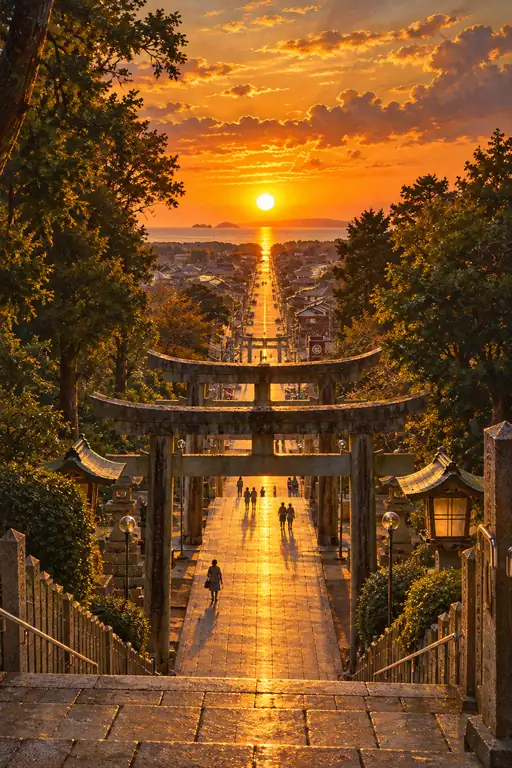 Stairway of Light Opening to the Sea
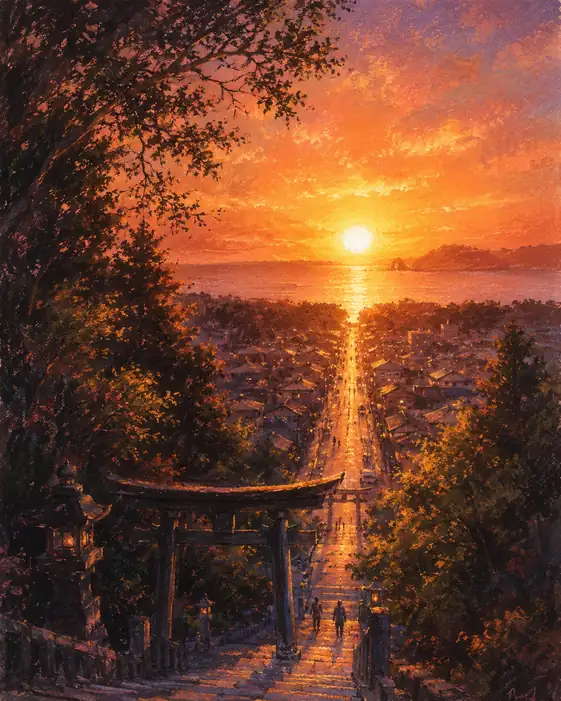 Avenue of Golden Divinity
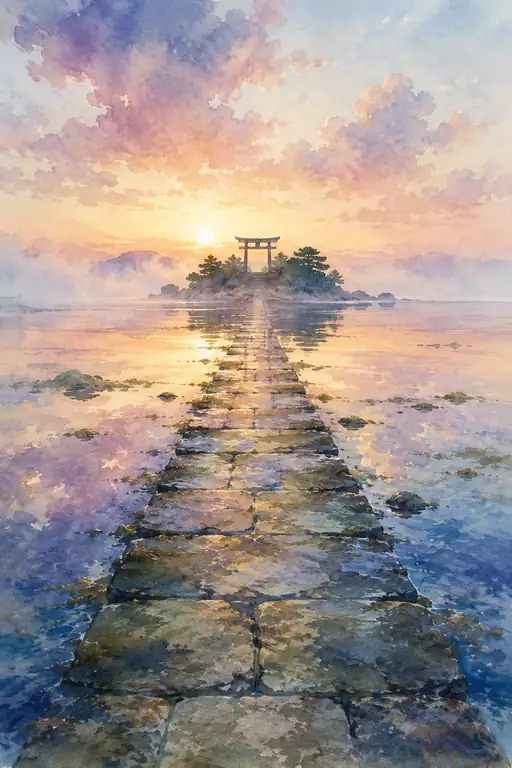 Pathway to the Dawn's Whisper
 The Light Through Which I Pray
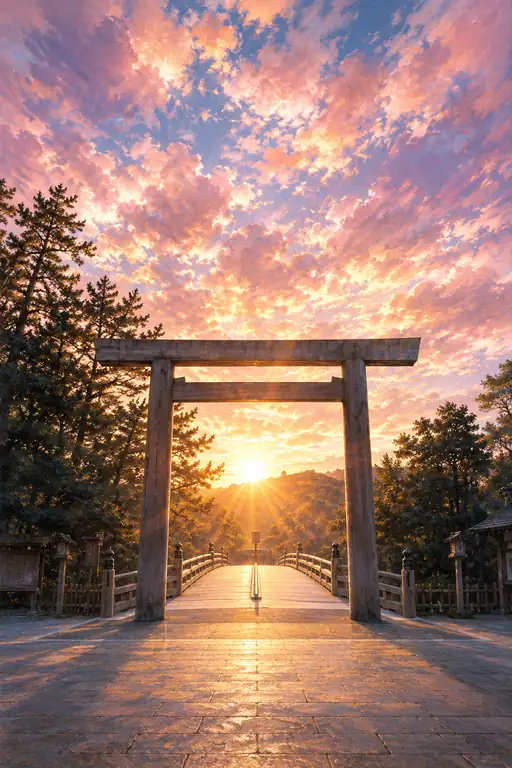 At the Threshold of Wonder
 Gateway to the Sacred Sun
 Sanctuary of the Eternal Twilight
 Crimson Path to the Glittering Shore
 Twilight Over the Crimson Pavilion
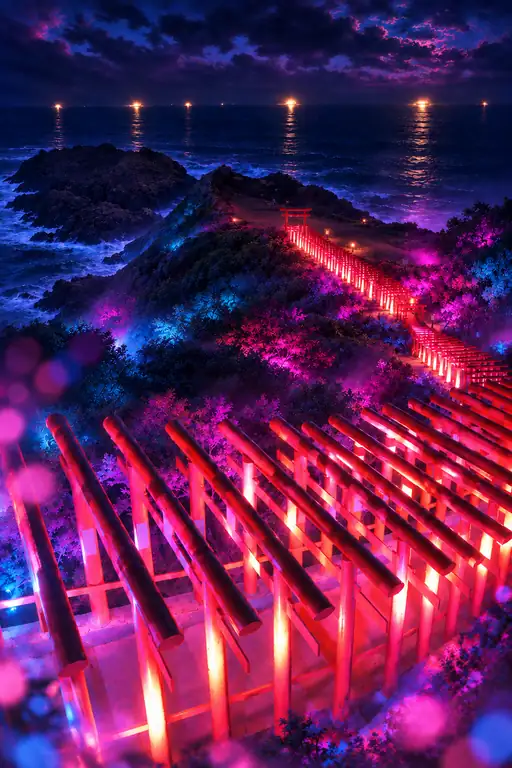 Night Chant at the Vermilion Gates