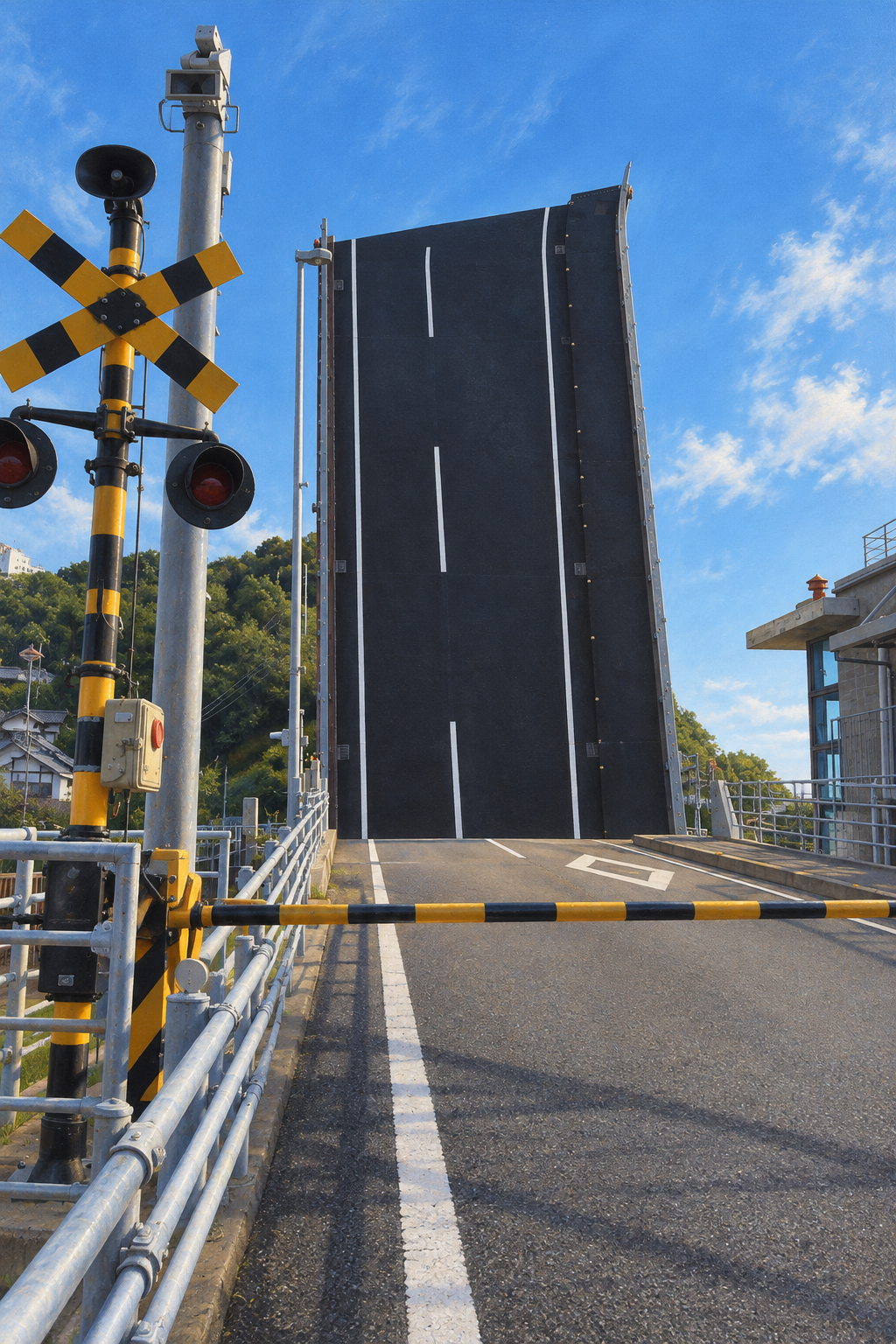
The Vertical Path to the Heavens
Critique
Introduction A raised road stands beyond a barrier and left-foreground crossing signal. Its black span interrupts the road beneath blue sky. The low viewpoint gives signal and obstruction equal force. Description A yellow-and-black cross fills the upper left above dark circular lamps. Behind it stands a tall pale control pole. The striped barrier extends horizontally across the lower middle. White railings run along the left edge toward the upright road, whose pale lane markings now appear vertical. A building with a projecting roof and metal fence occupies the right. Green trees rise beyond the bridge, while broken clouds drift through the blue sky. Analysis Foreground railings converge toward the foot of the raised span, establishing strong depth before the journey is cut short. The crossing cross introduces diagonals against the span's dominant verticals and the barrier's horizontal line. The black road surface absorbs light; white stripes and metal edges reflect it sharply. Yellow repeats in cross and barrier, joining the near signal to the distant obstruction. The large area of sky leaves the mechanical forms clearly separated. Interpretation and Evaluation The image makes a temporary interruption feel monumental through scale and viewpoint. The signal is close enough to reveal its lamps and control box, while the upright road shows the reason for stopping. The crisp geometry of rails, stripes, and poles produces a coherent structure. Weathered dark surfaces and bright sunlight give the scene more material specificity than a diagram of the mechanism would have. Conclusion The first impression of a giant black wall becomes an understanding of coordinated signals and barriers. The foreground cross, rails, and vertical road guide the eye through a stopped passage.
Same Subcategory
Similar Artworks
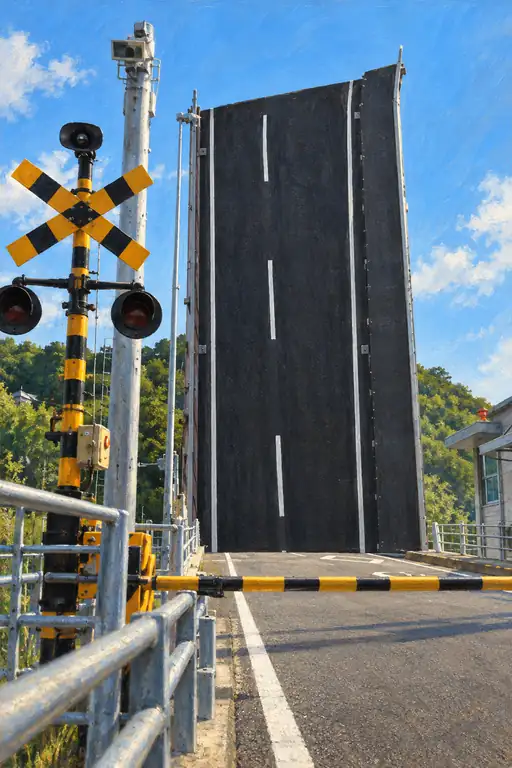 The Skyward Road
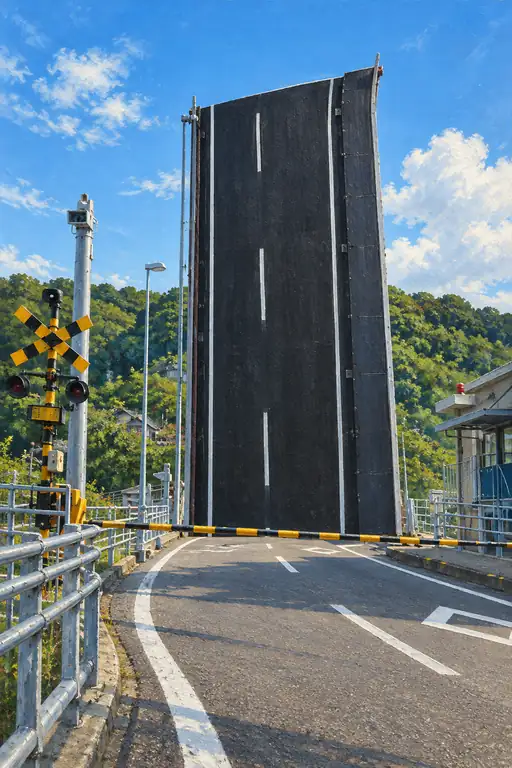 Vertical Horizon on a Curved Way
 The Wind's Path to the Summit
 A Path Through the Patchwork Dreams
 The Road to the Silent Giant
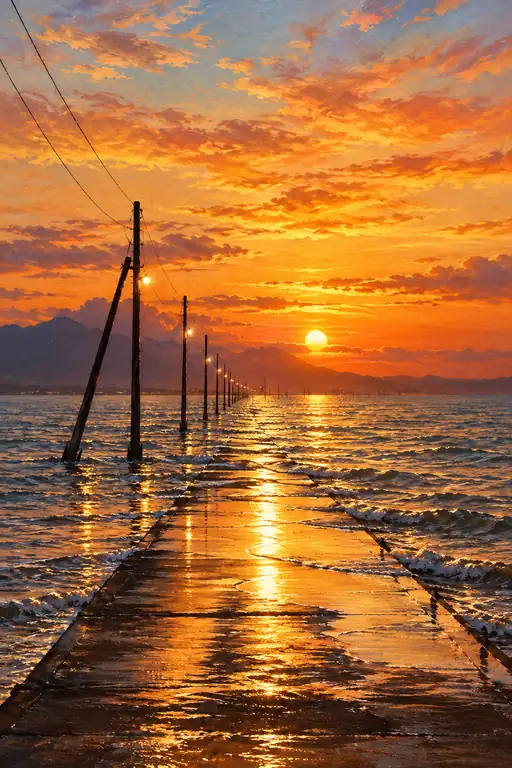 Ocean Road to the Setting Sun
 Bridge Above the Flowered Riverbank
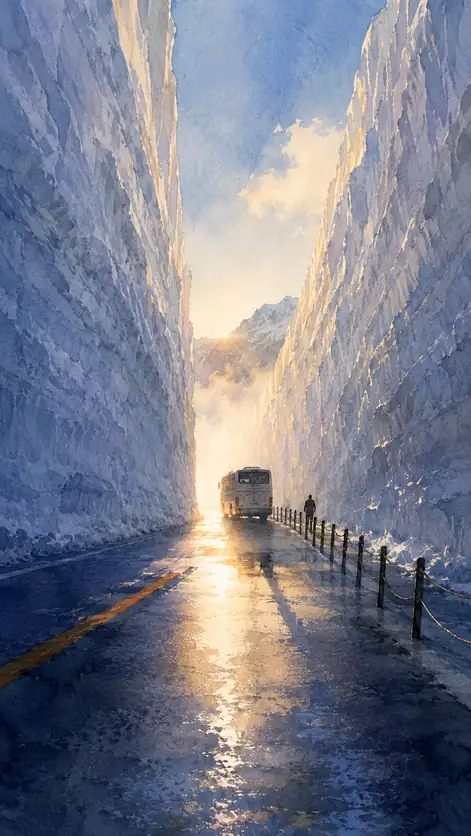 The Sun Waits Beyond the Walls of Snow
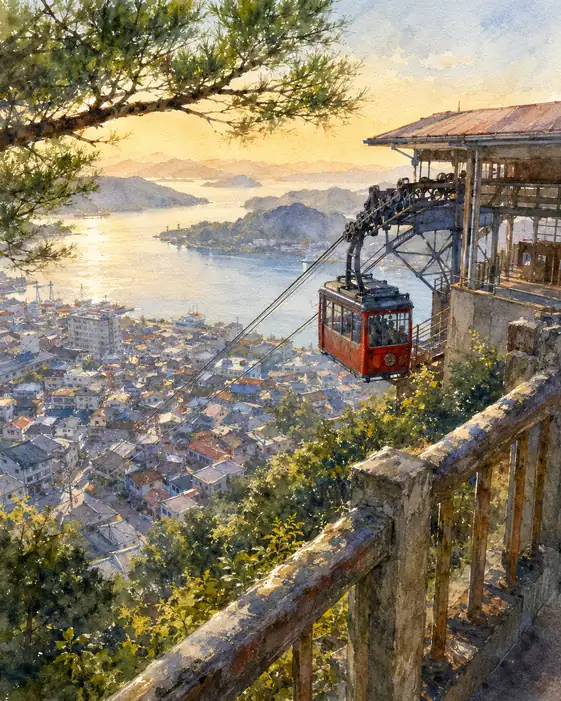 Where the Red Bird Flies Over a Sea of Light
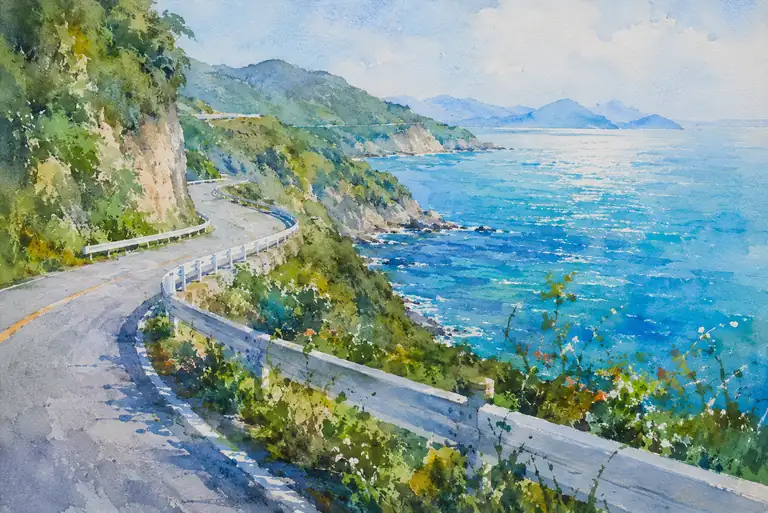 Journey Toward the Azure Light