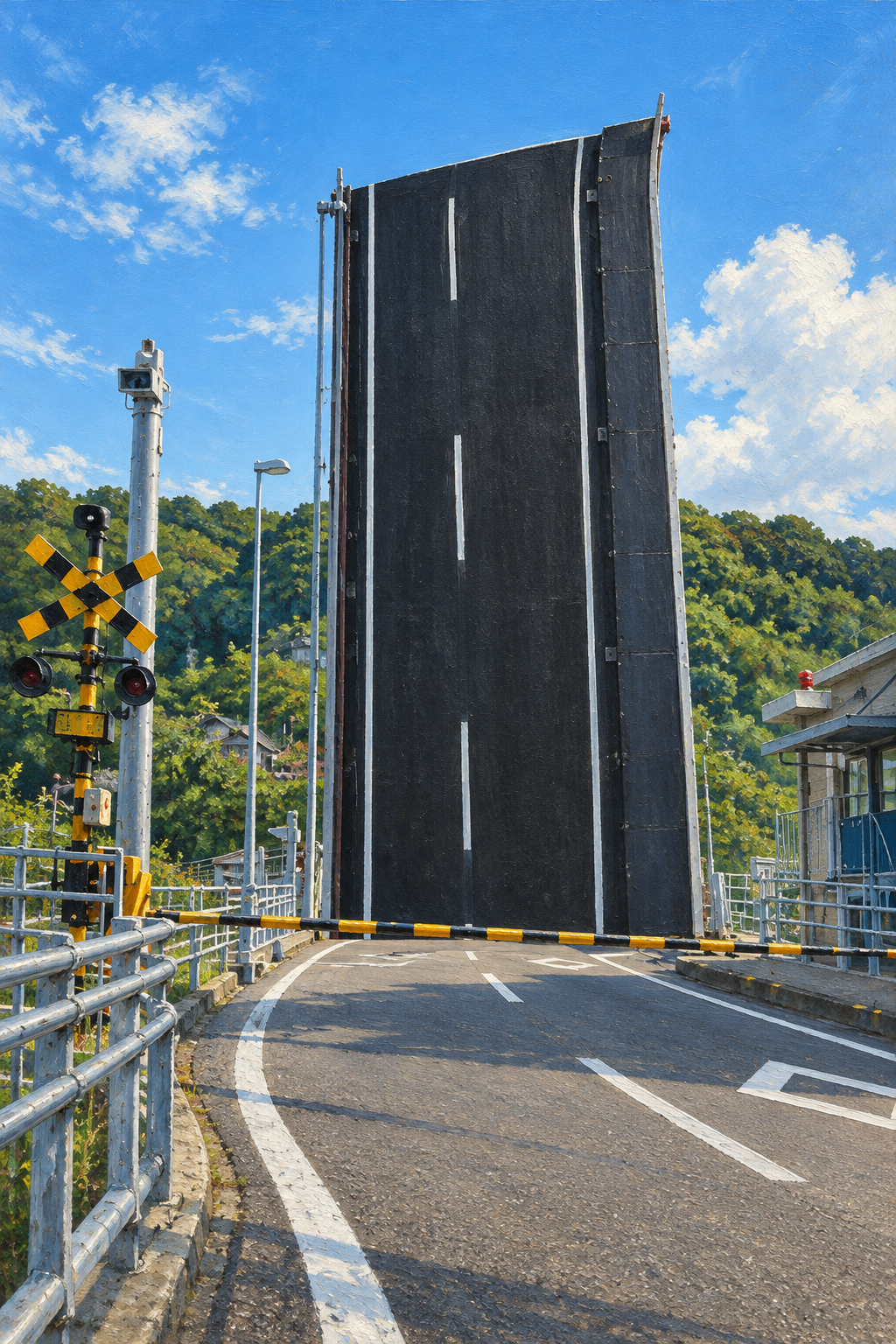
Vertical Horizon on a Curved Way
Critique
Introduction A raised roadway stands beyond a curved approach under blue sky. The crossing sign sits far left, leaving the road bend visible. The broad landscape emphasizes the interruption's scale. Description The upright span carries three broken white lane markings and a slightly rising top edge. A striped yellow-and-black cross, paired signal lamps, and a pale utility pole occupy the left side. A lowered barrier stretches across the road near the span's base. White guardrails run along both sides, while a low building and tree-covered hills extend to the right. Fluffy clouds appear on either side of the dark surface, and long shadows fall across the asphalt. Analysis Curving road markings and rails converge toward the barrier, then stop abruptly at the vertical plane. The black surface divides the sky, while the small crossing sign gives a clear measure of its height. Horizontal railings and barrier counter the upright rectangle. Strong sunlight sharpens the white painted lines and the edges of metal structures; the hills remain softer. Yellow warning stripes repeat at the sign and barrier, linking foreground and distance. Interpretation and Evaluation The empty approach suggests halted travel, yet the open hills and sky keep the setting expansive. The composition's power comes from the contradiction between a road meant to recede and one raised into a wall. Clear perspective, varied scale, and economical warning colors make the mechanism legible. The broader view gives surrounding landscape and station building a stronger role than in a tighter framing. Conclusion The upright road reveals how the barrier orders the approach. Curving lines, hills, and sky place the stopped route within a larger landscape.
Same Subcategory
Similar Artworks
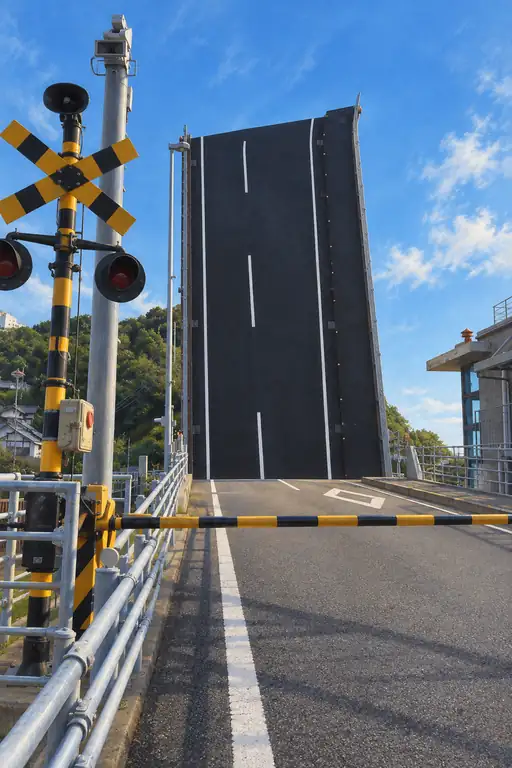 The Vertical Path to the Heavens
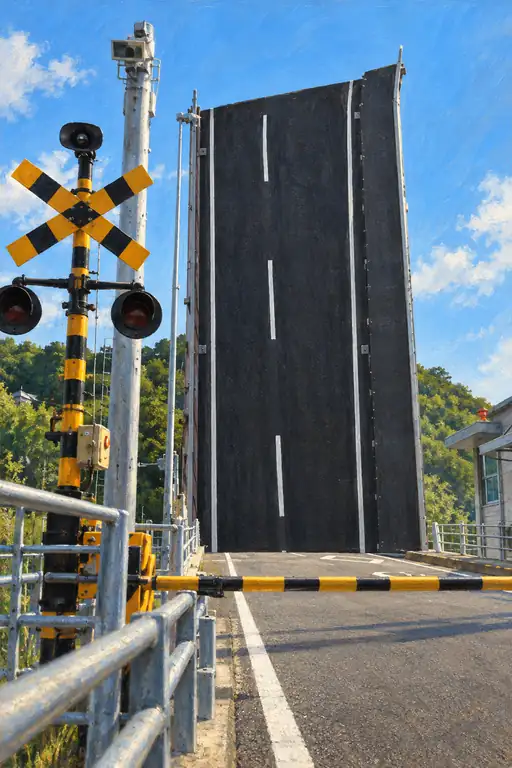 The Skyward Road
 The Road to the Silent Giant
 The Wind's Path to the Summit
 A Path Through the Patchwork Dreams
 Bridge Above the Flowered Riverbank
 The Mountain Waiting Beyond the Circle
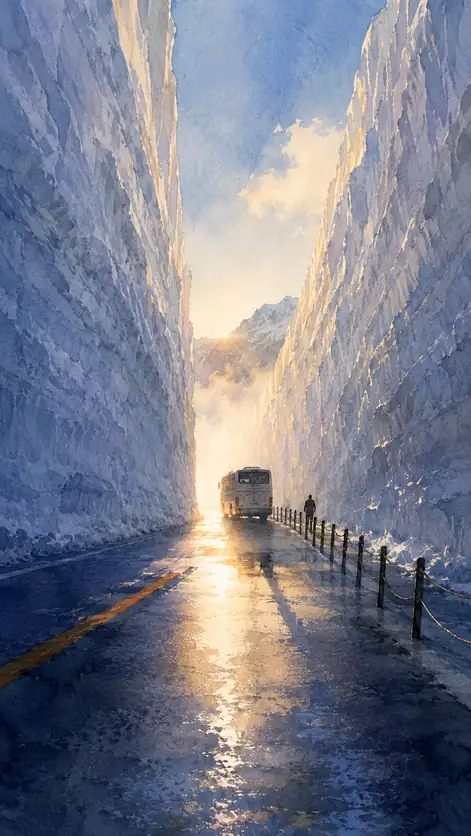 The Sun Waits Beyond the Walls of Snow
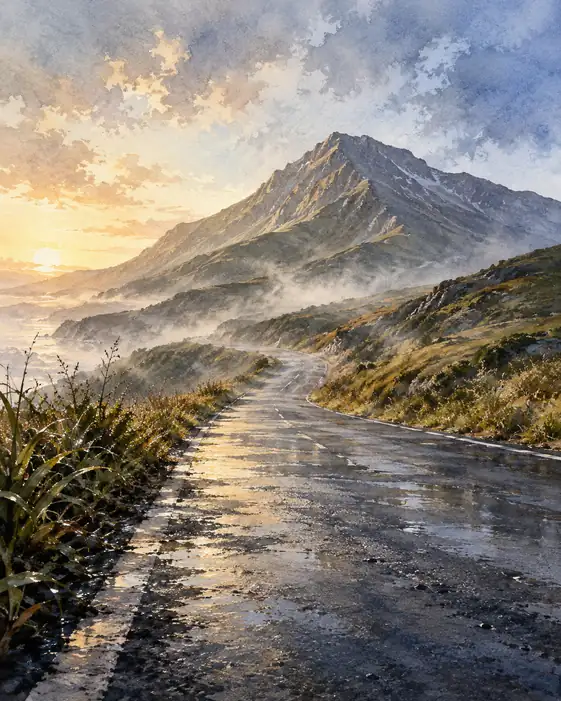 Winding Road to Mount Rausu under Sunset Light
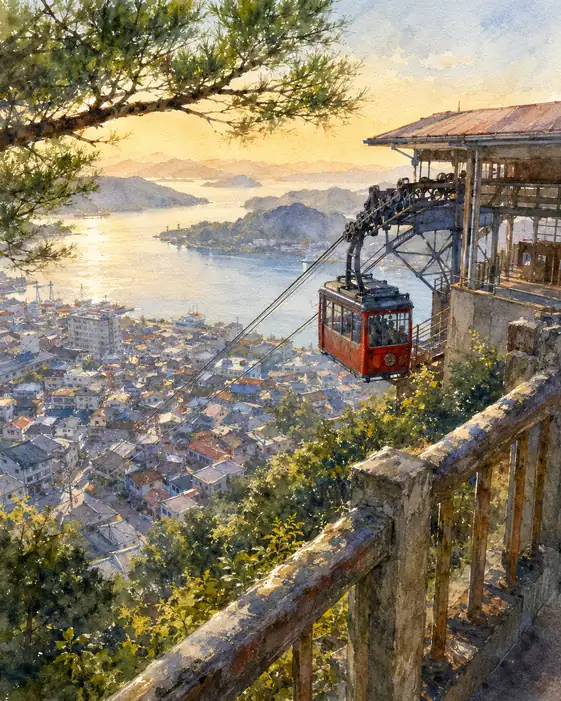 Where the Red Bird Flies Over a Sea of Light