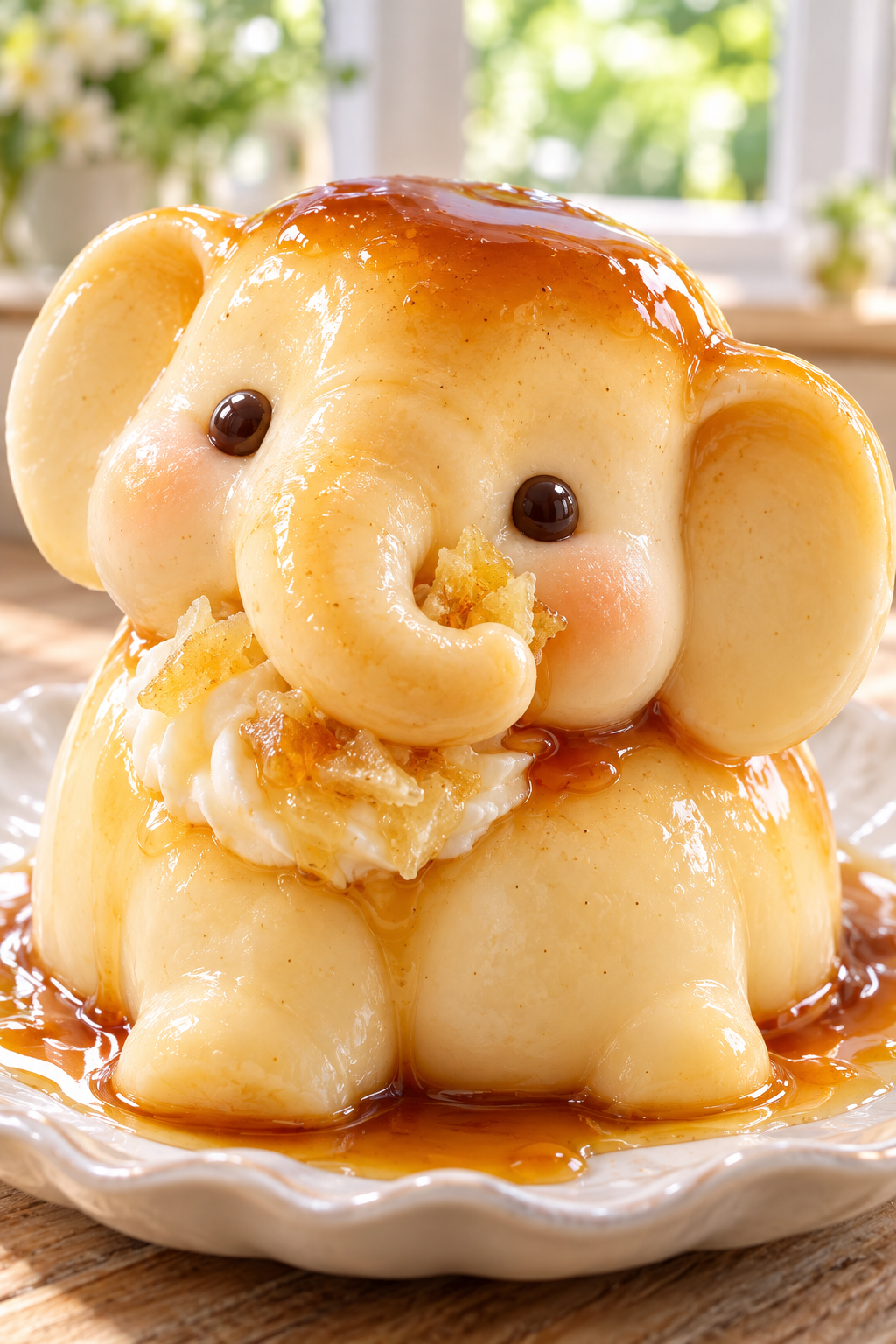
Caramel Tears of a Little Elephant
Critique
Introduction An elephant dessert sits beneath amber glaze. Broad ears and a curling trunk frame cream and golden fragments. The frontal figure displays flowing syrup and rounded mass. Description Two large ears extend beyond the head, their inner curves catching light. Dark eyes sit above pink cheeks, and the trunk bends inward toward the mouth. Golden, irregular pieces rest in white cream under the trunk. The animal's body is pale and smooth, with two stout front legs set apart on the plate. Amber glaze coats the crown, runs down the face and chest, and pools around the feet. A softly lit window and flowers appear behind it. Analysis The ears establish a wide upper span, while the legs provide a stable lower base. The trunk's curve pulls the eye from the face toward the small central filling. Broad syrup highlights describe the head's rounded surface; narrow drips reveal gravity and connect it to the pool below. The pale matte body contrasts with the transparent brown glaze and crumbly golden fragments. Side light accentuates both ear edges and liquid reflections. Interpretation and Evaluation The trunk appears to reach for the filling, giving the figure a modest action. Yet the image's strongest interest lies in how glaze changes the perception of the form beneath it. Restrained cream and caramel colors keep the large silhouette coherent. The contrast of smooth body, wet syrup, and uneven morsel is carefully rendered, while the nearly symmetrical ears hold the composition steady. Conclusion The elephant first reads as a playful character; the flowing glaze then becomes the central visual event. Its path from crown to plate unifies the entire figure.
Same Subcategory
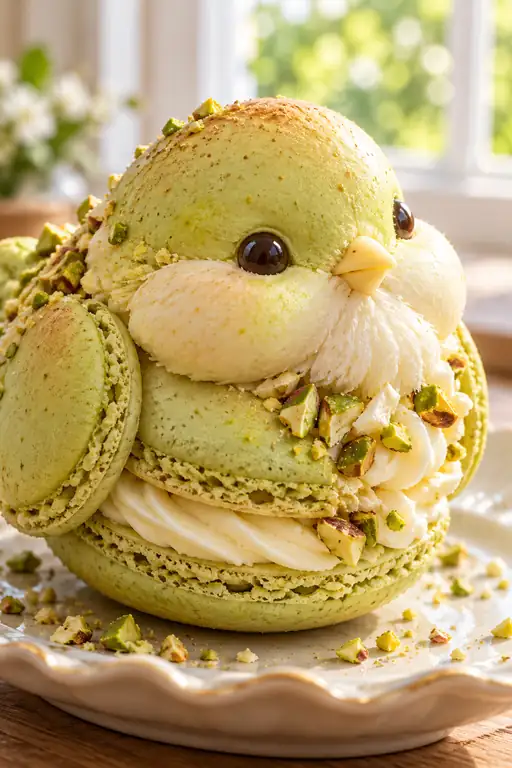 Song of Pistachio Plumage
 Color of a Contented Dusk
Similar Artworks
 Unwinding in a Sea of Amber Caramel
 Caramel Slumber in Golden Waters
 Caramel Gleam of the Striped Wanderer
 Hours Drifting in Warm Waters
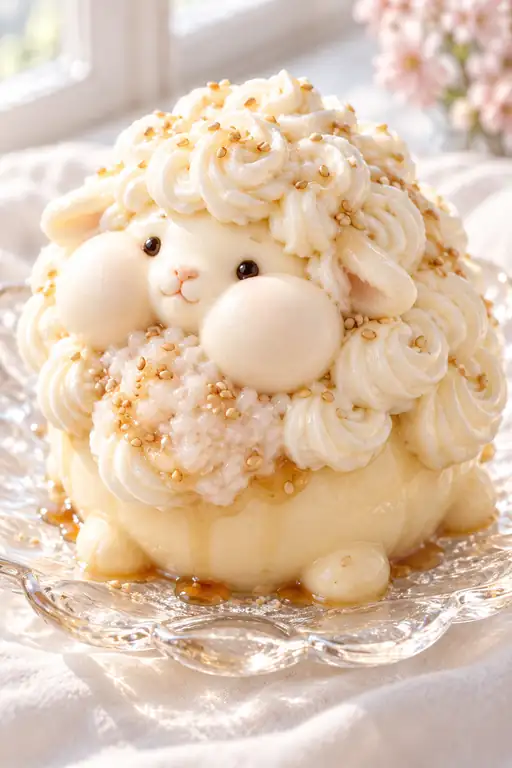 Sweet Drops on White Wool
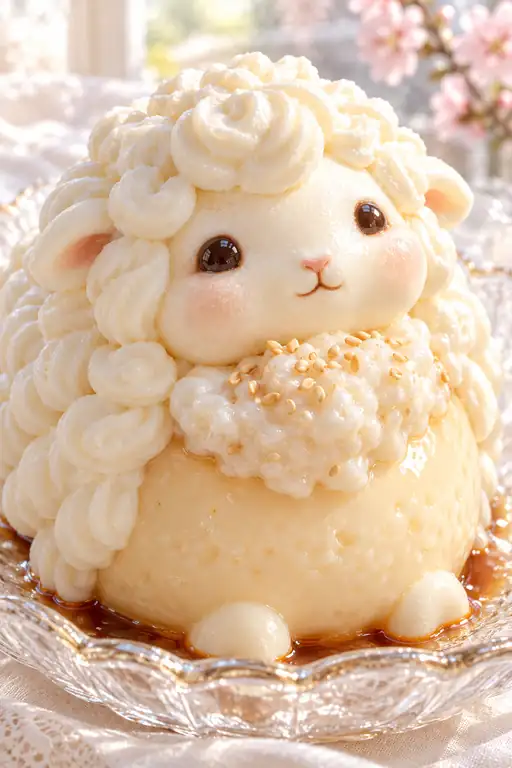 Lambkin of Cream and Amber Lullaby
 A Chick Crowned in Sunlight and Honey
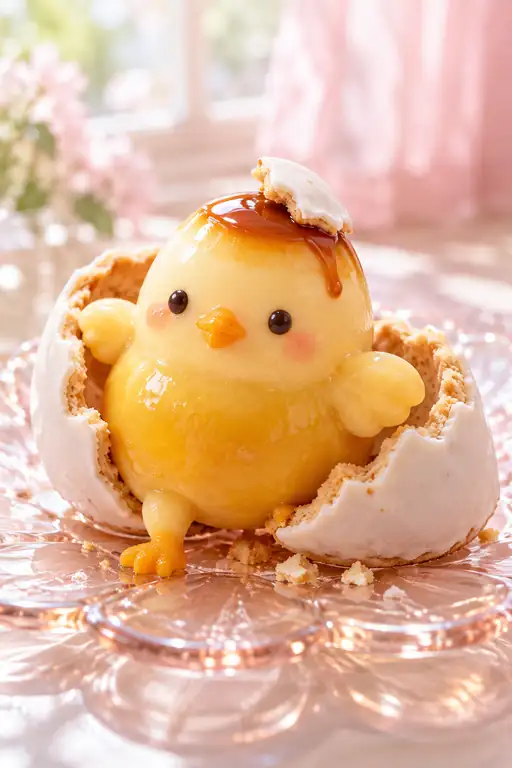 The World Just Beyond My Shell
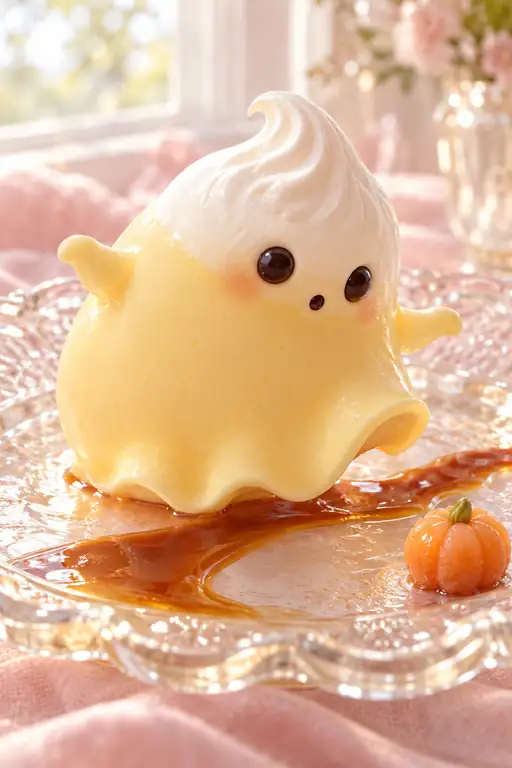 A Sweet Encounter Across the Amber Stream
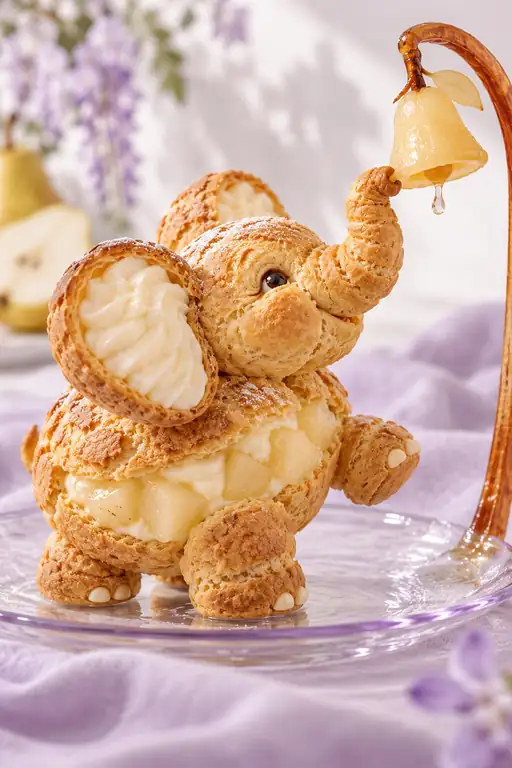 A Small Step into Wonder