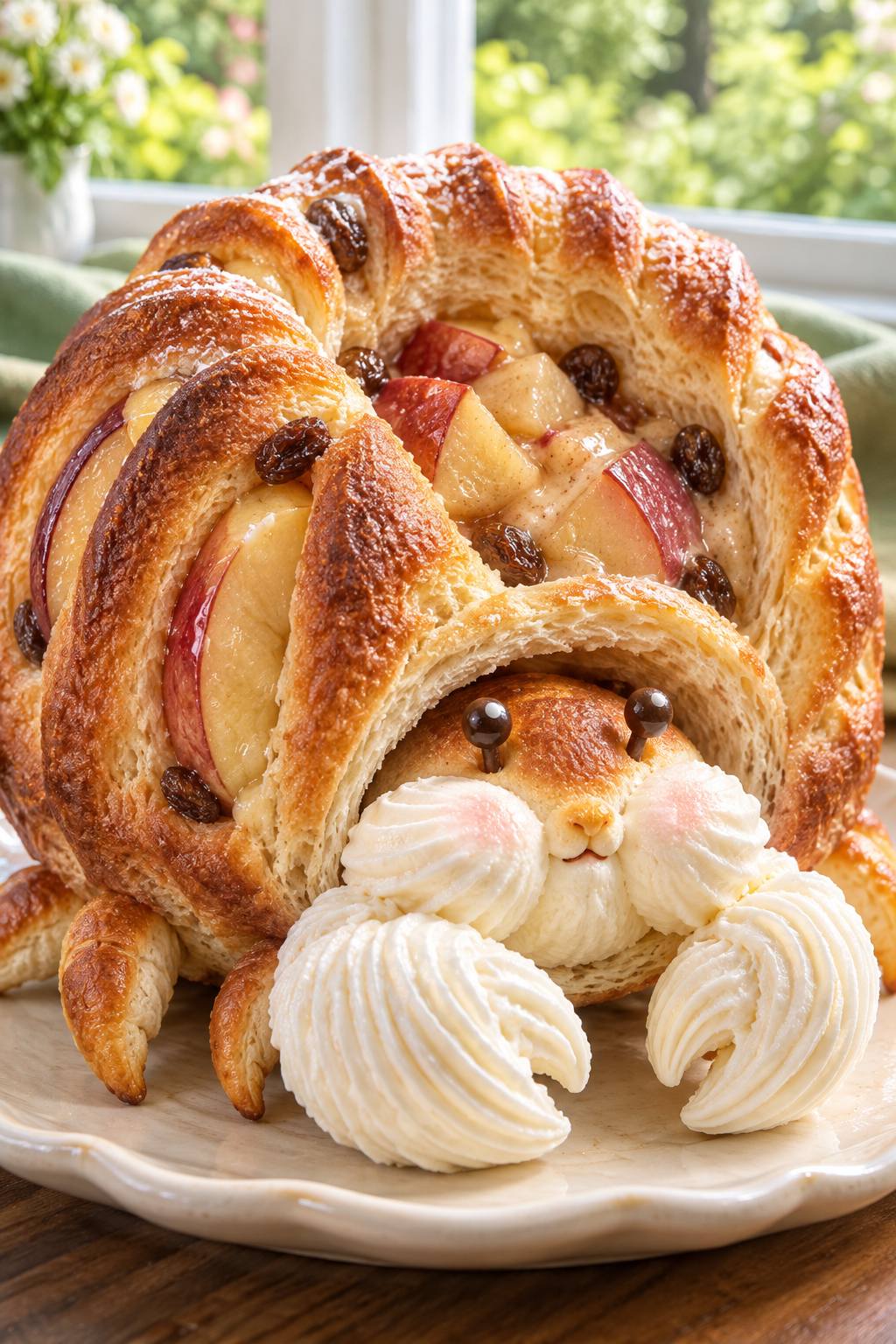
The House That Grew Too Sweet
Critique
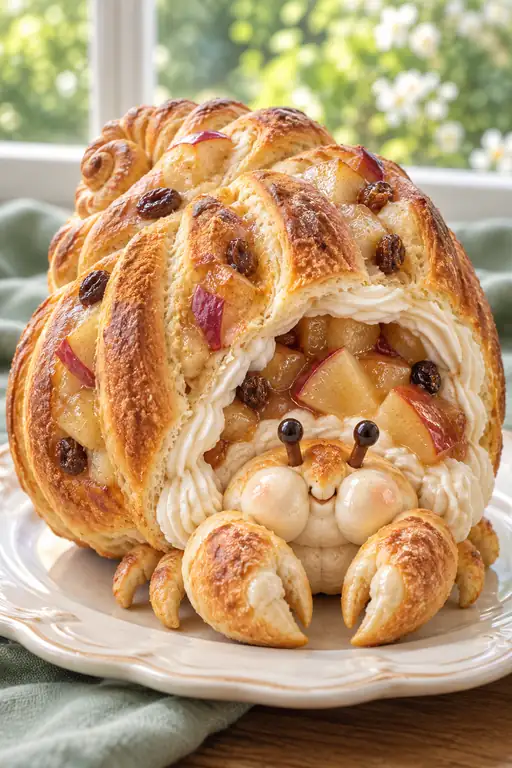
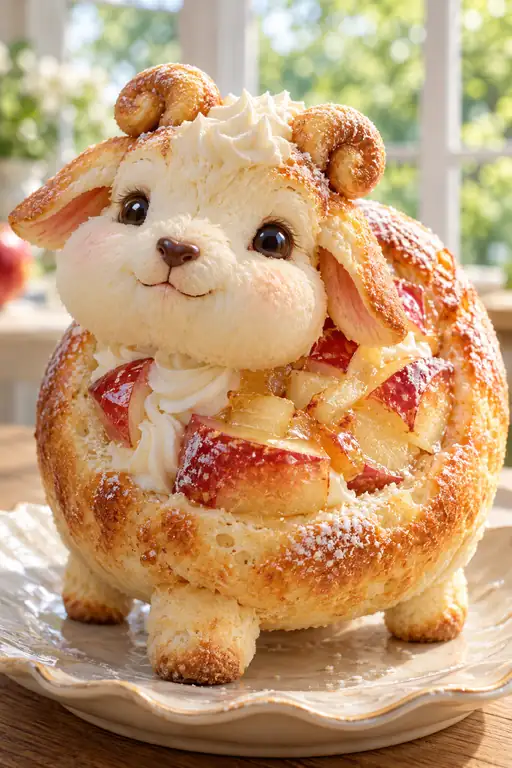
Introduction A hermit crab appears to inhabit a monumental shell of baked pastry. The image turns an abundant fruit filled bread into a character, using the little face and broad cream claws to anchor its huge form. Description Glossy pastry rises behind the creature. The open center holds pale fruit chunks with red skins, cream, and dark raisins. Beneath the front arch, a small brown face peers out with two round eyes raised on short stalks. A tiny pale muzzle sits between two large piped white cream claws; short baked legs rest near the white plate. White flowers and green foliage blur beyond a sunlit window. Analysis The shell occupies most of the frame, its layered arcs leading downward to the face. Deep baked edges define each curve, while the fruit and cream soften the cavity. The white claws are brighter and closer than the shell, so they pull the character forward despite its small head. Their ridges echo the bread folds. Red fruit skins and dark raisins punctuate the broad field of gold and cream. Interpretation and Evaluation The modest animal seems almost hidden within a shelter much larger than itself. That imbalance makes the pastry feel both protective and extravagant. The filling is not confined to a cut slice; it lives within the shell's opening, giving the animal's home an edible interior. The small eyes and softly shaped muzzle prevent the visual richness from becoming impersonal. The composition succeeds through the clear path from towering shell to quiet face and finally to the oversized claws. Conclusion Its most memorable contrast is between the lavish pastry shelter and the tiny occupant. Repeated folds make their different materials feel connected.
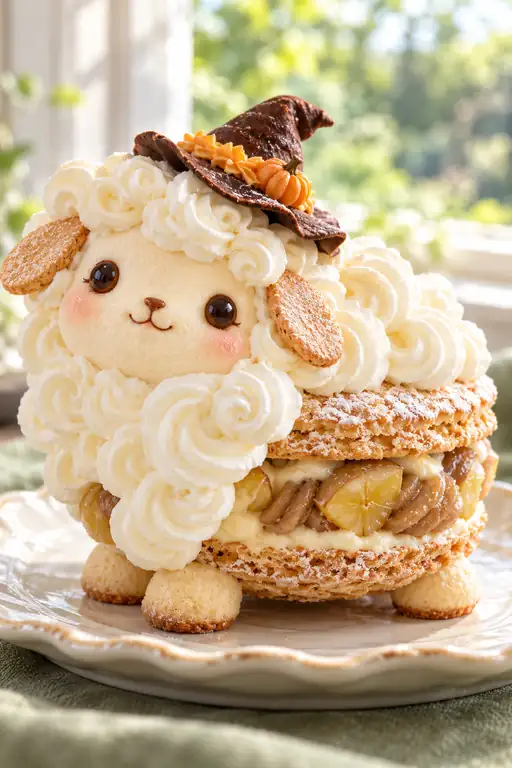 Little Curls of Autumn Magic
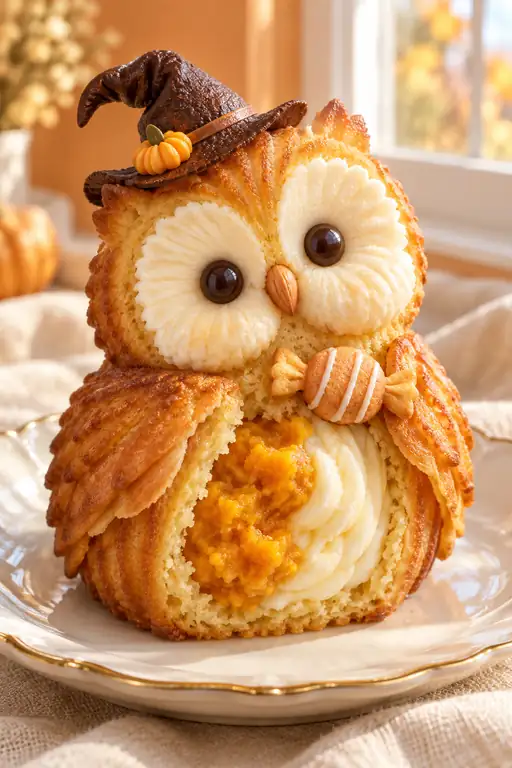 The Bright Secret Between My Wings
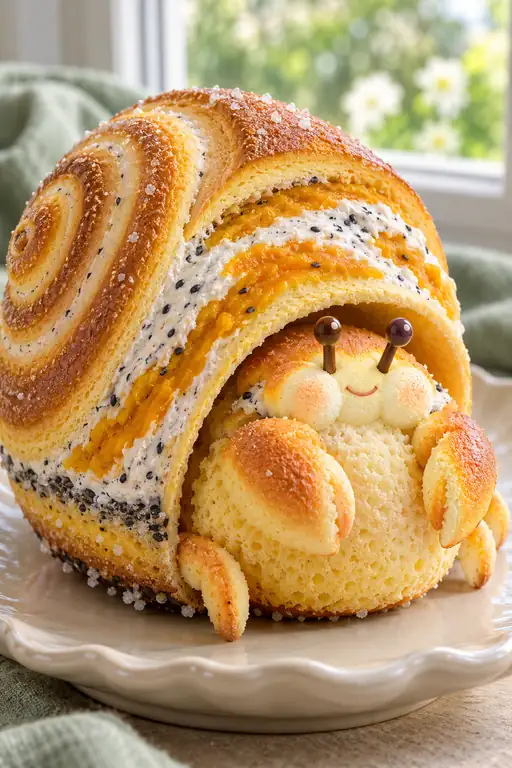 Home in an Amber Spiral
 An Orchard Beneath My Shell
 Carrying an Orchard Home
 The Little House I Carry
 The Honeycomb Wanderer
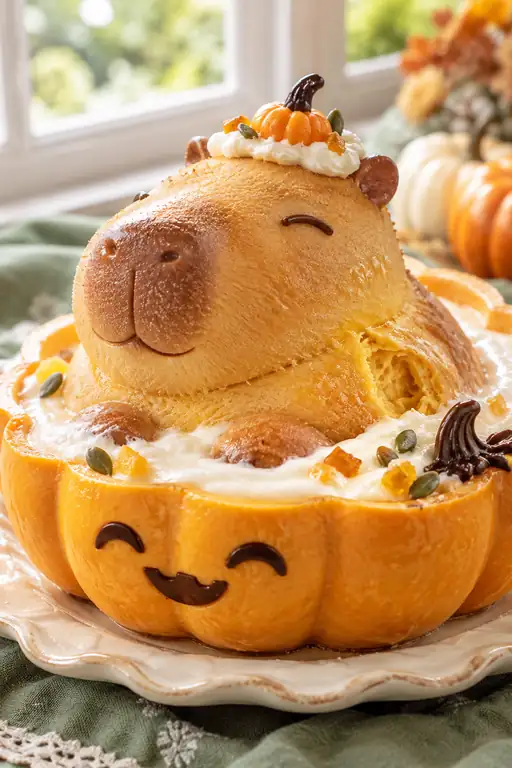 An Autumn Bath with a Smile
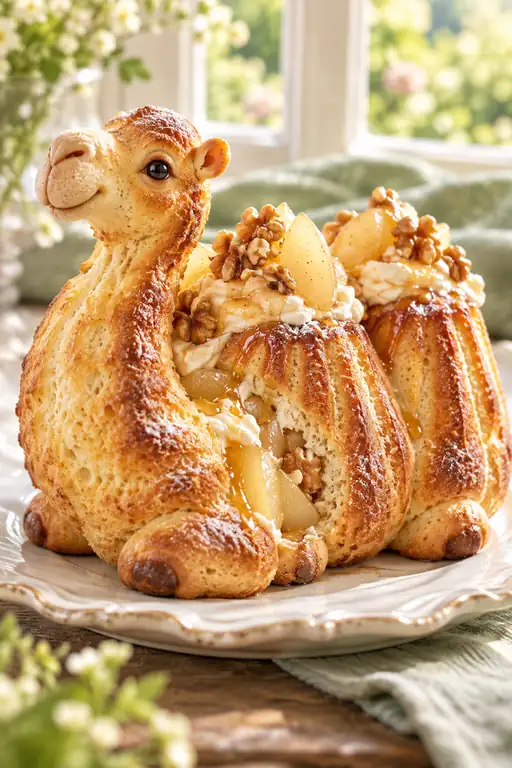 Caravan Bearing the Amber Orchard
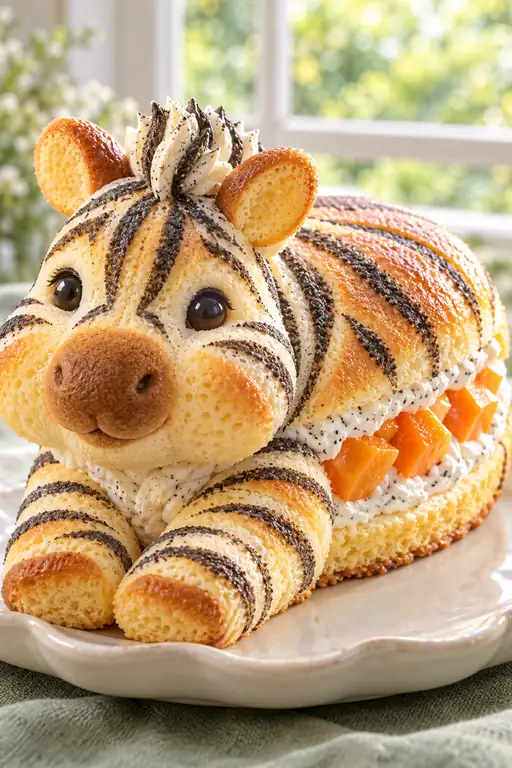 Amber Resting along the Zebra Plains
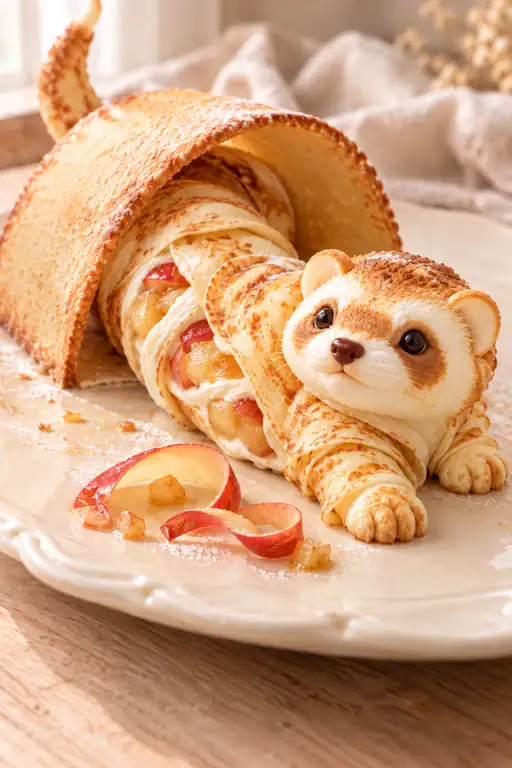 Curiosity Unwrapped
 Proud with Nectar of the Crimson Apple