The Little House I Carry
Critique
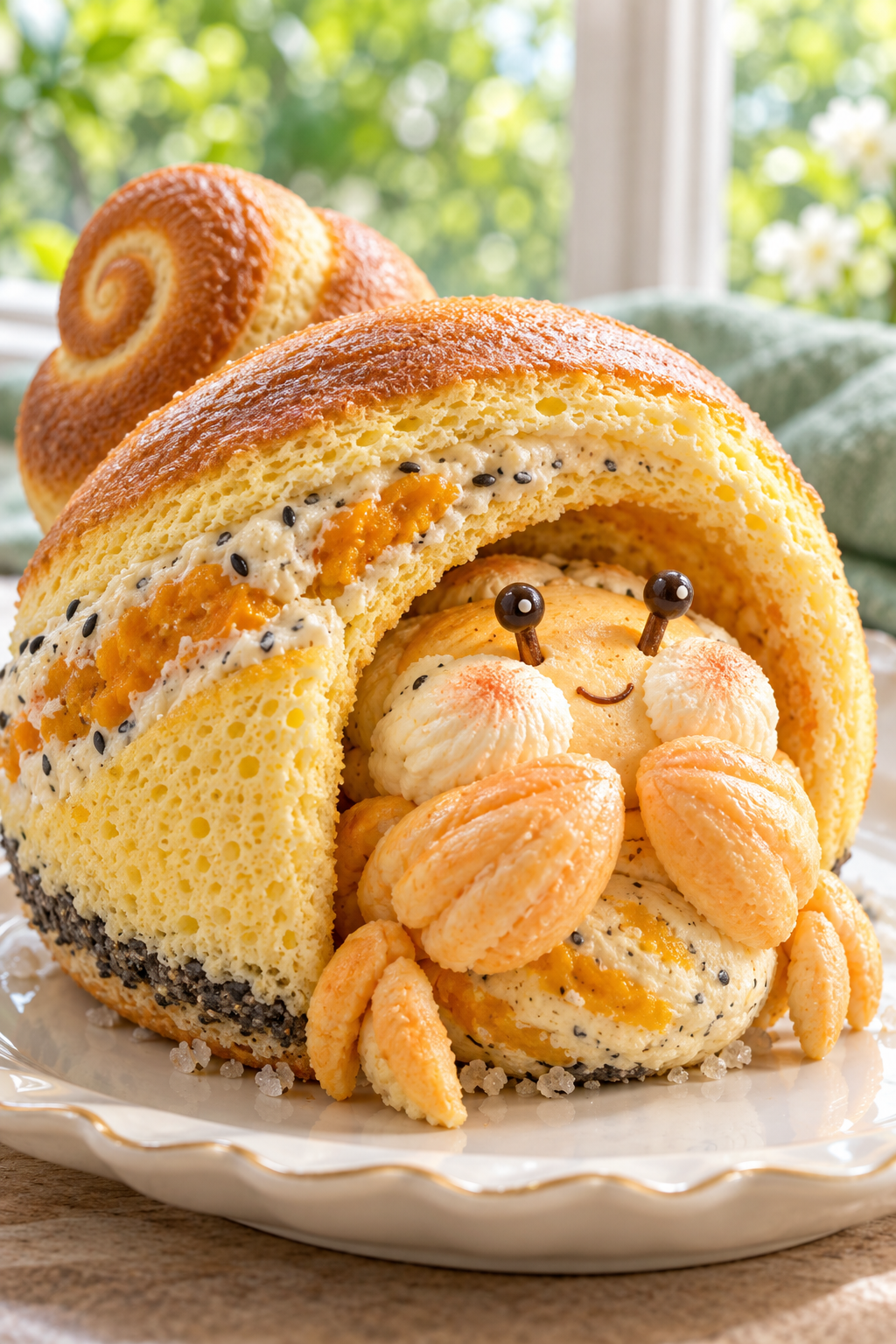
Introduction This hermit-crab-shaped pastry places a tiny smiling creature beneath an oversized spiral shell. The shell's cut edge is filled with orange and black-speckled layers, making the animal's shelter an unusually clear display of cake construction. Description On a white scalloped plate, the crab has two raised dark eyes, blushed cheeks, a small smile, broad pale claws, and short side legs. A huge golden shell arches over it, curling into a spiral at the back left. The exposed shell edge reveals airy sponge, a pale filling dotted with black seeds, and vivid orange material. A dark seeded band marks the lower curve. Small pale grains lie near the crab's feet. Bright foliage shows through a window behind the plate. Analysis The shell's arch frames the face and draws attention into the hollow beneath it. Its spiral gives a second, smaller curve at the rear. The claws project into the foreground and balance the heavy shell. Orange filling follows the shell's inner contour, while the black seed band reinforces the outer base. Sponge pores, smooth cream, and granular seeds provide distinct textures. Interpretation and Evaluation The crab appears to inhabit a shelter built from edible layers. This makes the cutaway integral to the scene rather than an added sample. The size difference between shell and animal creates gentle humor, yet the broad claws keep the little figure from being lost. The dark seeds are important because they give the pale sponge a strong lower boundary. The spiral, arch, and orange band form a coherent sequence of curves. Conclusion The crab in its shell leads to a reading of patterned filling. Its architecture gives the dessert narrative and order.
 An Orchard Beneath My Shell
 Two Smiles by Lantern Light
 Spines of Sunshine, Heart of Gold
 The Sweetest Roar
 Carrying an Orchard Home
 The Brightest Gift of Fall
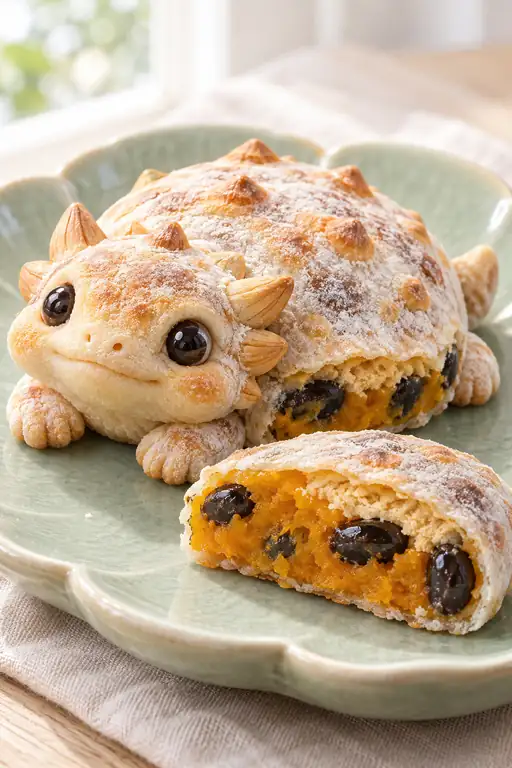 A Brave Little Heart of Gold
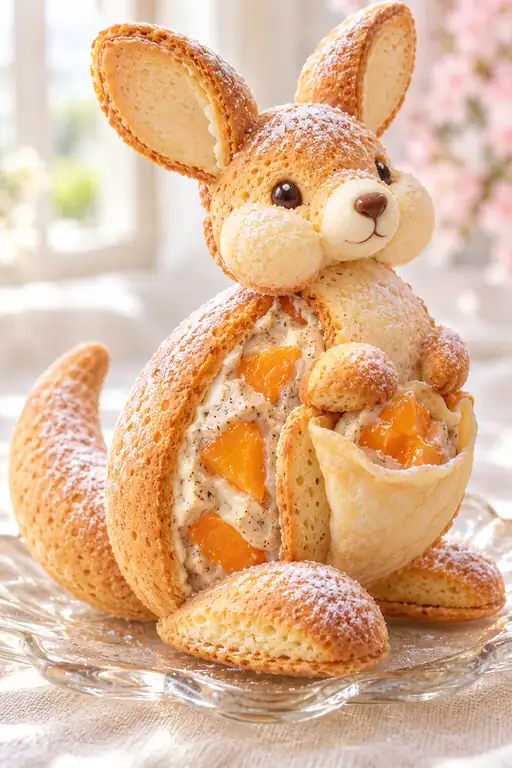 Autumn Tucked in My Pocket
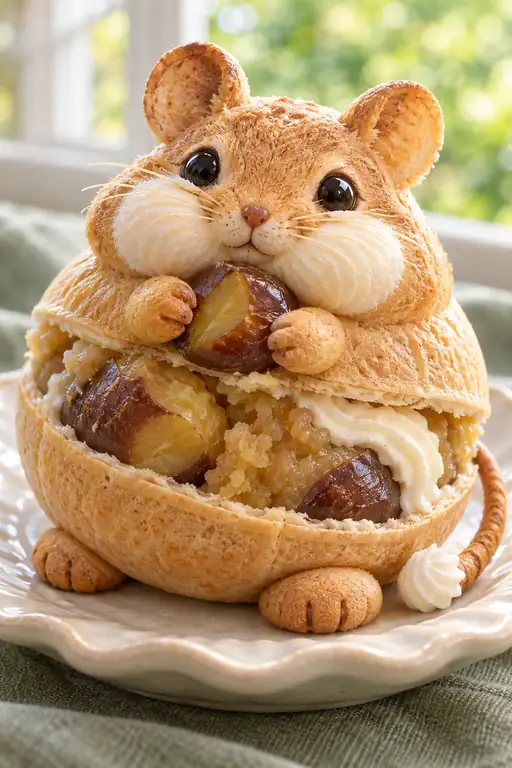 Keeper of the Glazed Chestnut Bounty
 The Bright Secret Between My Wings
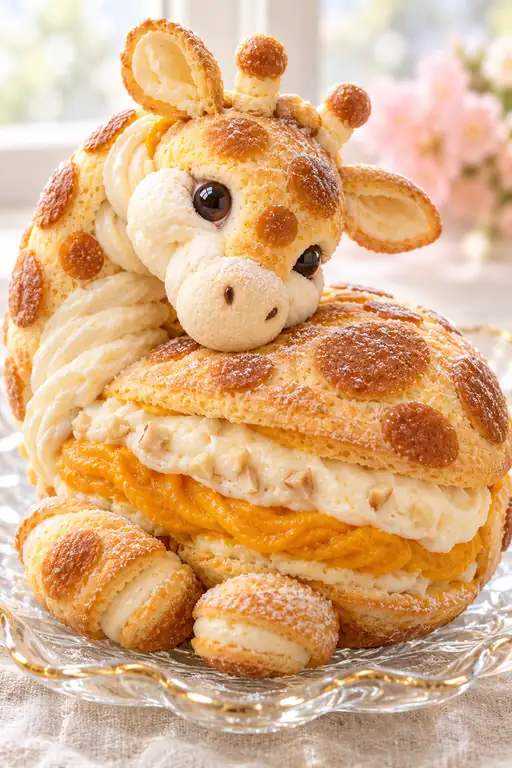 A Gentle Lean Toward Autumn