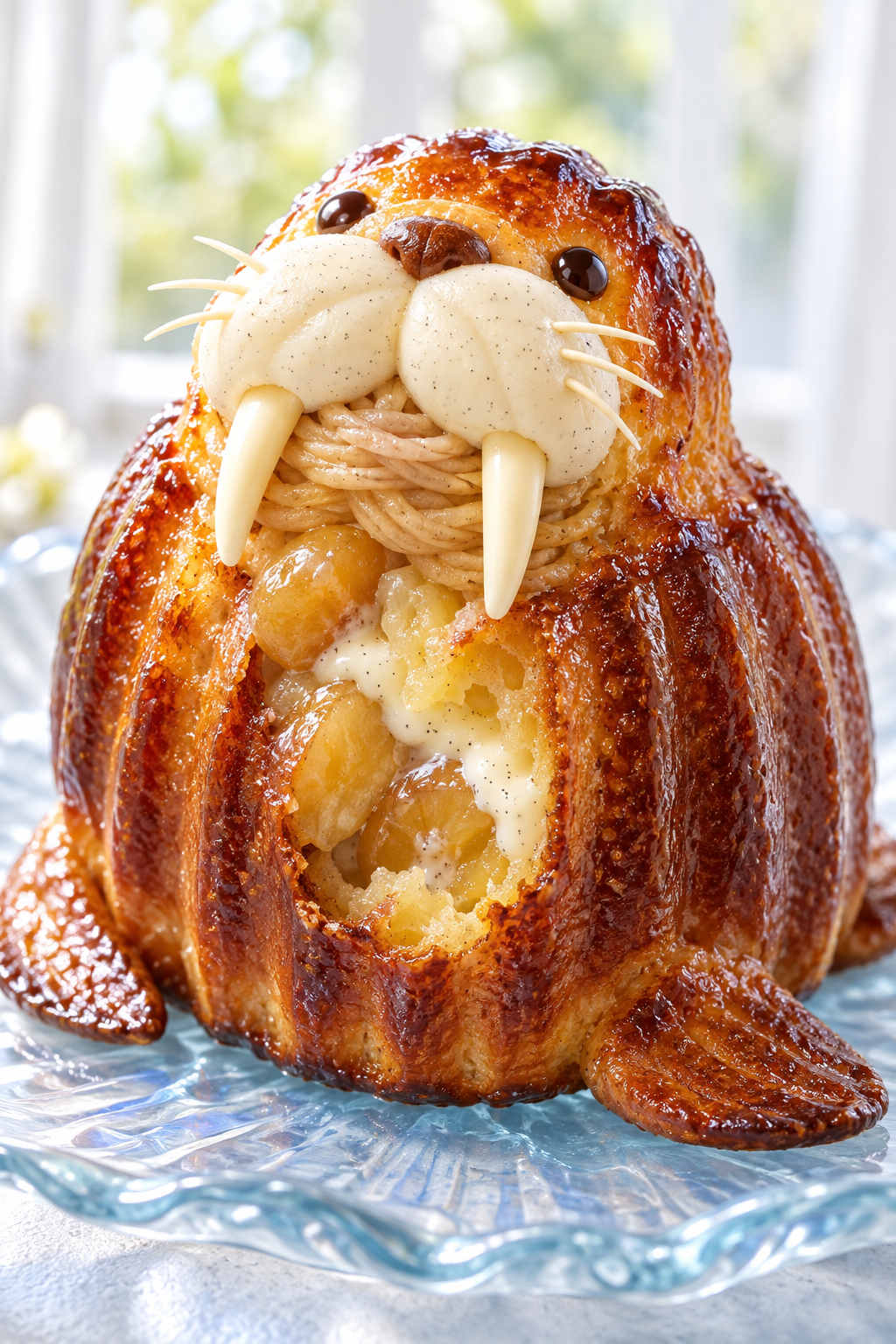
Frosty Tusks over Autumn Chestnut Groves
Critique
Introduction A browned walrus shaped cake sits on a blue glass plate with a large opening in its belly. Pale fruit and cream inside contrast strongly with the glossy crust and assert the dessert's construction. Description The walrus has small dark eyes, a brown nose, large pale whisker pads, fine white whiskers, and two long ivory tusks. Brown cream coils beneath the muzzle. The rounded body is glazed in deep golden brown, with broad flippers extending to the sides. Its front opening exposes pale fruit pieces, cream, and irregular cake fragments. The blue plate has a wavy transparent edge against a bright window setting. Analysis The tusks and central opening align along a vertical axis, guiding attention from face to filling. Brown cream between them forms a transitional band. The wide flippers give the rounded body a stable base, while the glaze carries strong highlights along its curved sides. Smooth whisker pads and shiny fruit contrast with the coarse exposed interior. Cool blue glass sets off the warm brown body and suggests a distinct ground beneath it. Interpretation and Evaluation The walrus seems to display the contents of its own body. Its imposing tusks might dominate, but the large opening keeps the material center equally visible. This balance is effective. The animal is recognizable through a few precise facial features, while the varied fruit and cream prevent the form from becoming only a glossy sculpture. The flippers and plate anchor its considerable mass. Conclusion The tusks identify the animal immediately, yet the cutaway becomes the sustained point of interest. Warm glaze and cool glass sharpen the contrast between surface and interior.
Same Subcategory
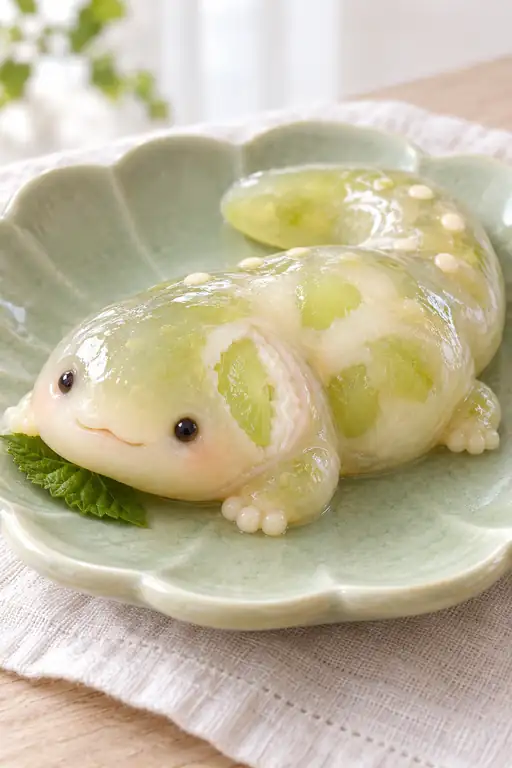 Green Light Under Clear Skin
Similar Artworks
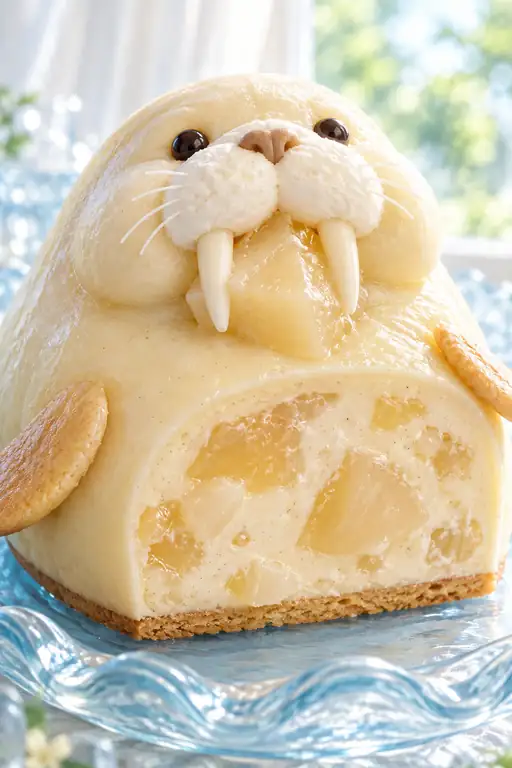 Ivory Tusks over Glacial Pear
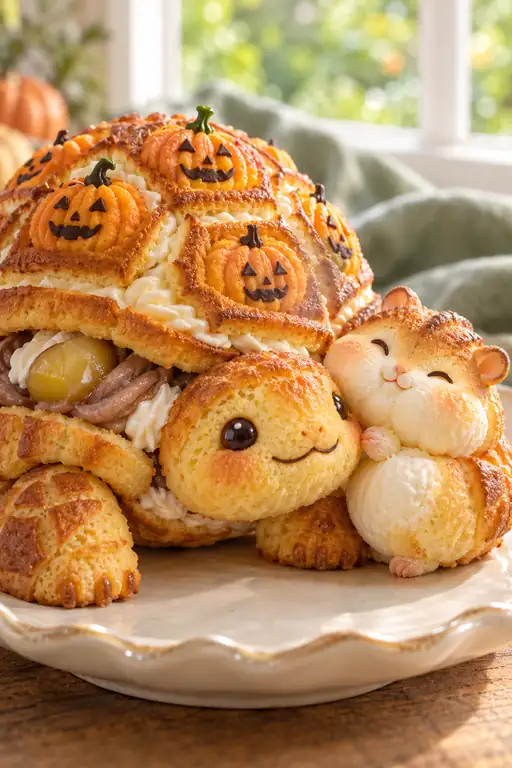 The Autumn We Carry Together
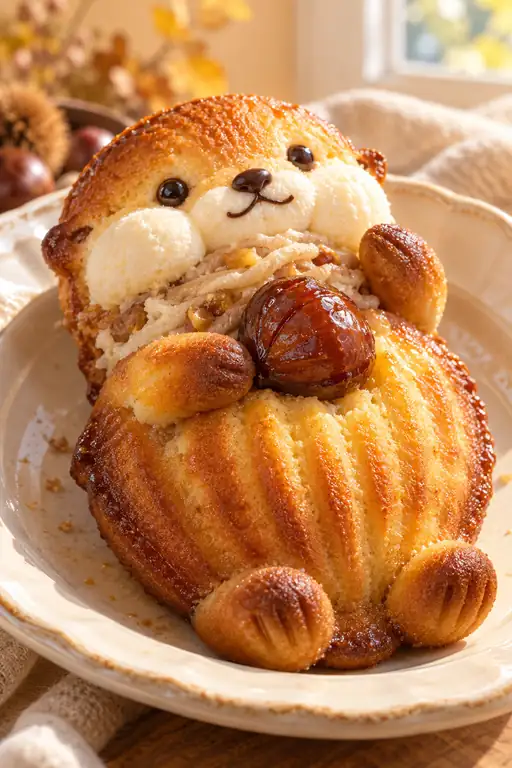 Warm Embrace of Autumn Chestnut
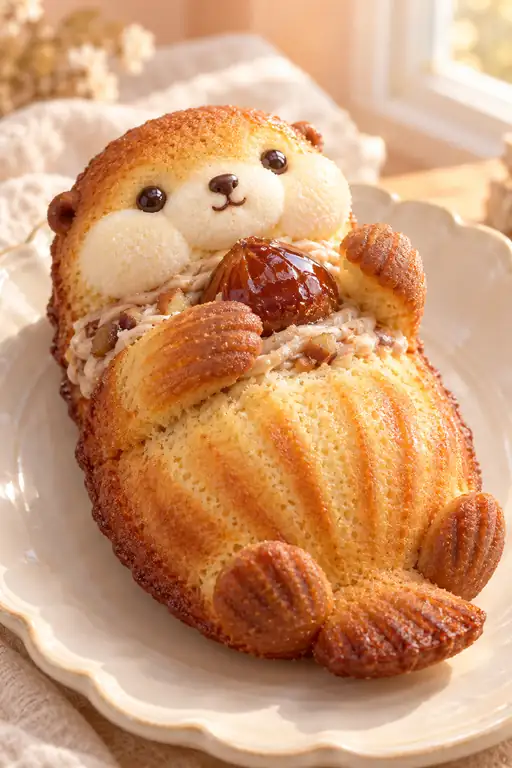 Floating in Gentle Warmth with an Autumn Gem
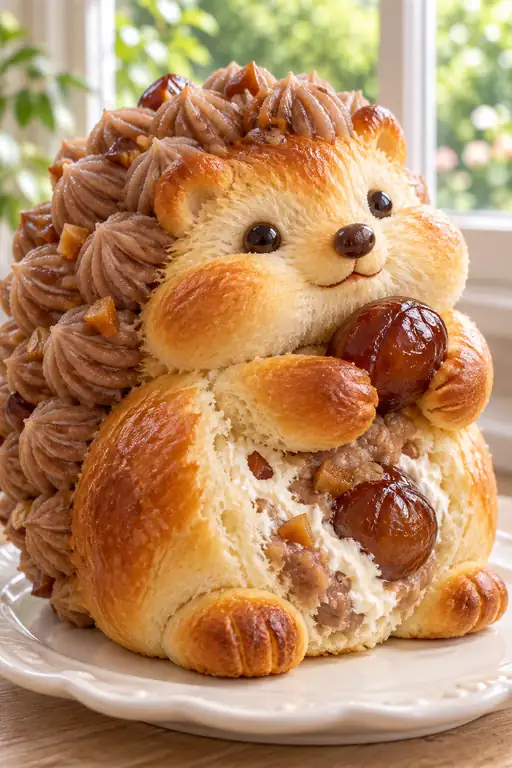 Keeper of the Glossy Chestnut
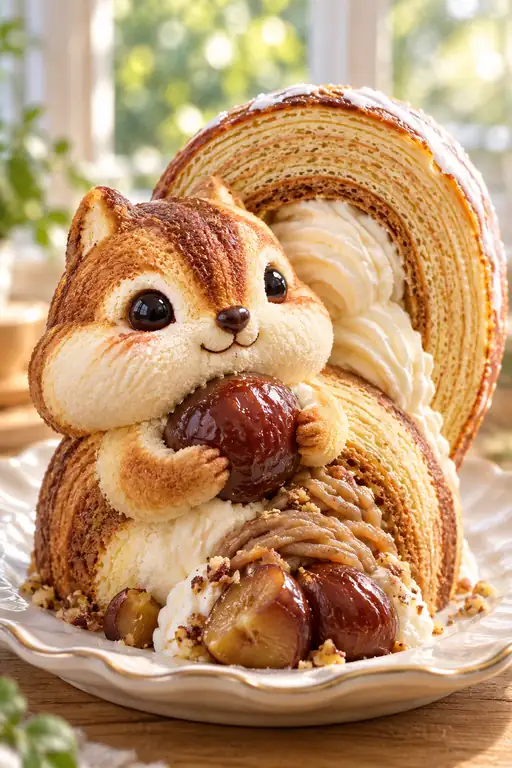 The Harvest Moon and the Autumn Treasure
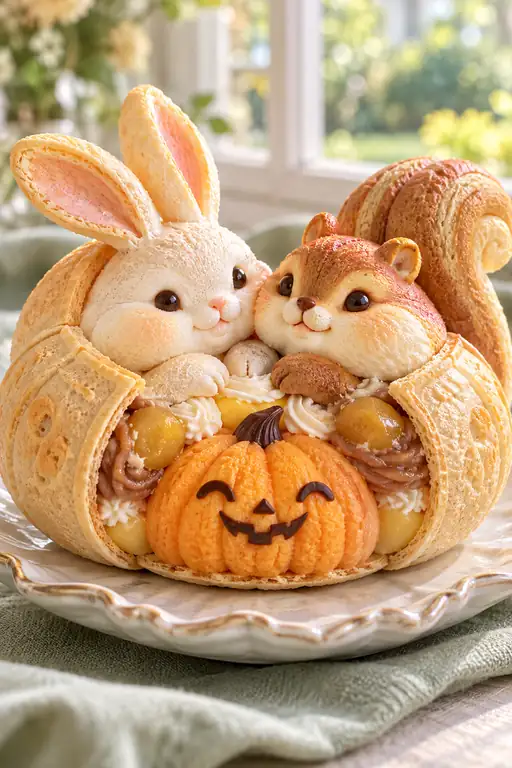 Autumn Is Better Beside You
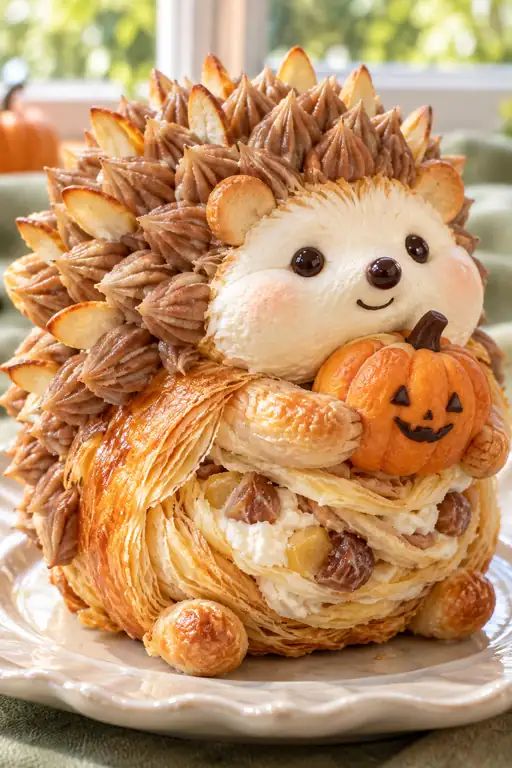 I Carried Autumn Through My Spines
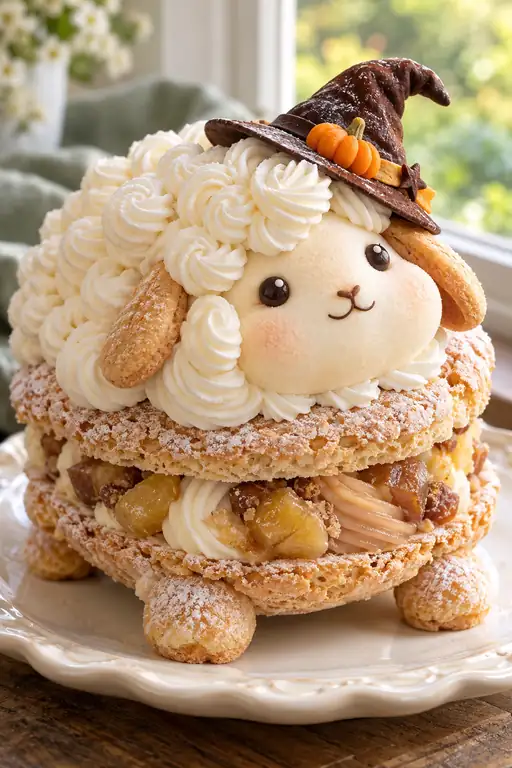 The Softest Spell of Autumn
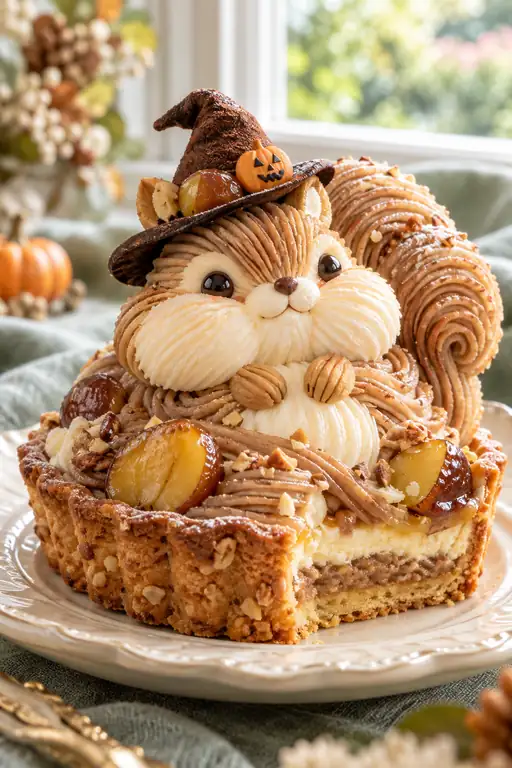 The Tail That Gathered Autumn