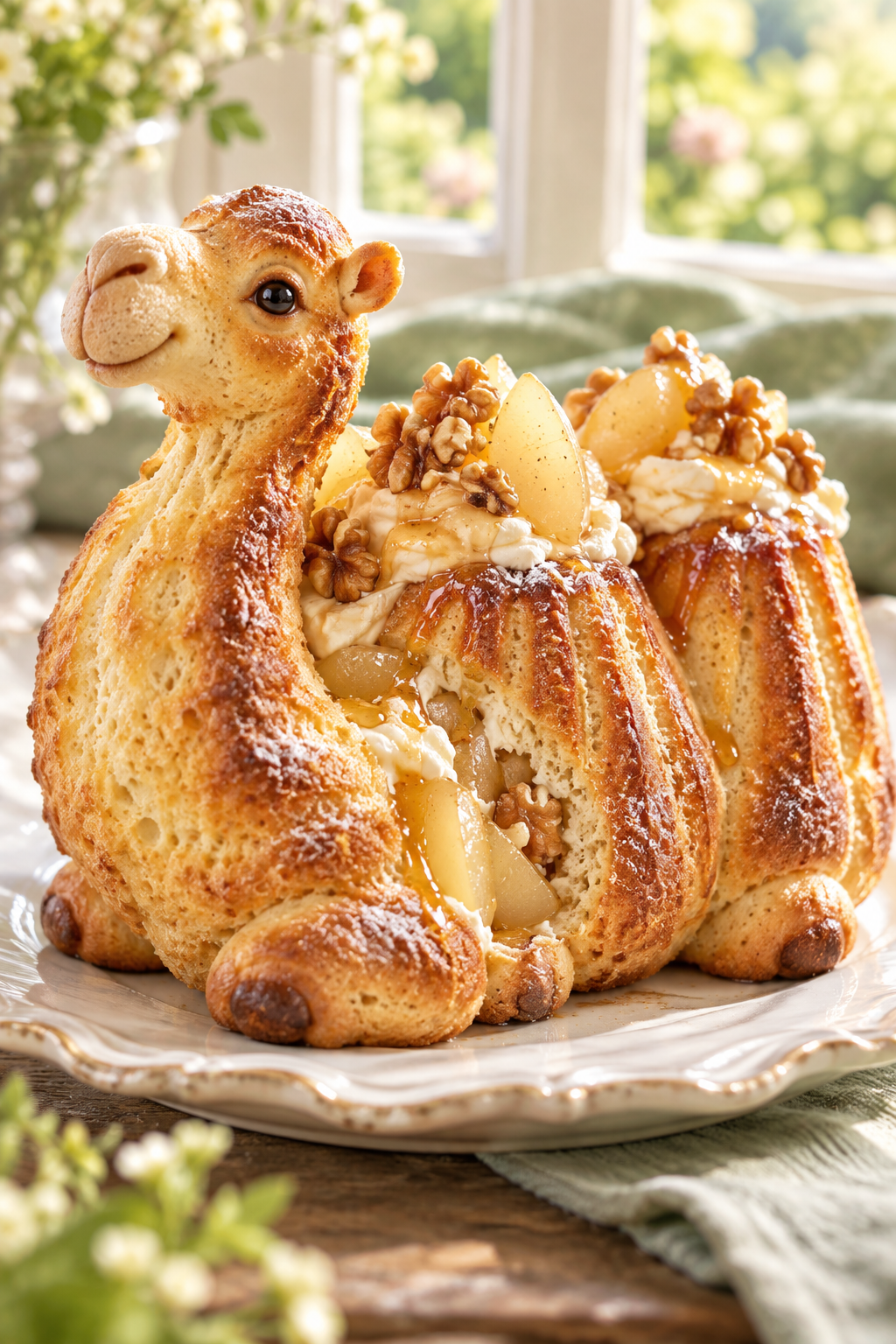
Caravan Bearing the Amber Orchard
Critique
Introduction A camel shaped browned cake stands beside two deep ridged humps filled with fruit, nuts, and cream. Its long neck gives an animal identity to a dessert whose open center remains visually abundant. Description The camel's head turns slightly left, with a small dark eye, rounded ear, long muzzle, and a gently curved mouth. Its neck rises from a broad body with short feet. Behind it, two ribbed cake sections form high humps. Pale cream, yellow fruit pieces, walnuts, and syrup crowd the opening between and below them. The warm pastry sits on a white scalloped plate before a bright window. Analysis The long neck and two high humps create an uneven, rising silhouette. The cut opening runs down the center and gives depth to the heavy pastry walls. Toasted ridges frame the pale cream and glossy fruit; walnuts add rough brown shapes at the top. Syrup traces a vertical line through the middle toward the base. The small head remains readable because it is separated from the crowded filling by open space. Interpretation and Evaluation The camel's humps become containers for a generous mixture rather than simple surface decorations. This is the image's central invention. The design works by matching the animal's distinctive outline to the cake's ridged architecture. The fruit and nuts are plentiful, but the tall neck provides a clear point of entry and the white plate steadies the warm colors. Conclusion The camel is recognized through its neck and humps, then the exposed ingredients draw sustained attention. Its silhouette and the split cake structure support one another.
 One Warm Ember in the Snow
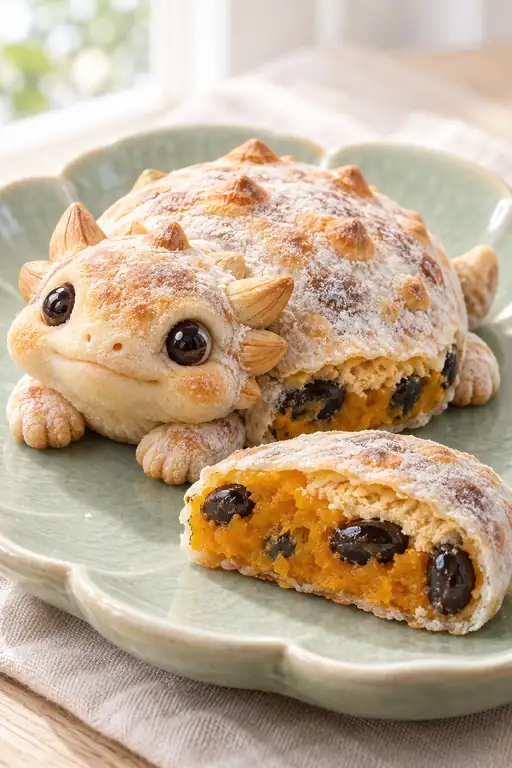 A Brave Little Heart of Gold
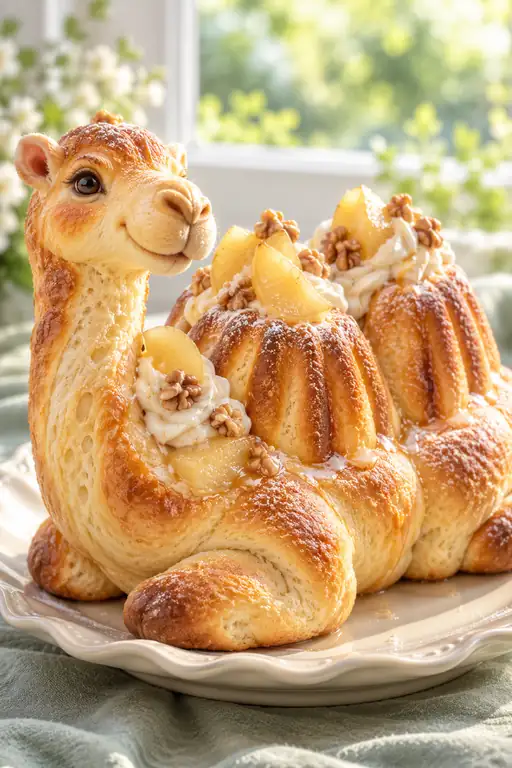 Carrying an Orchard Home
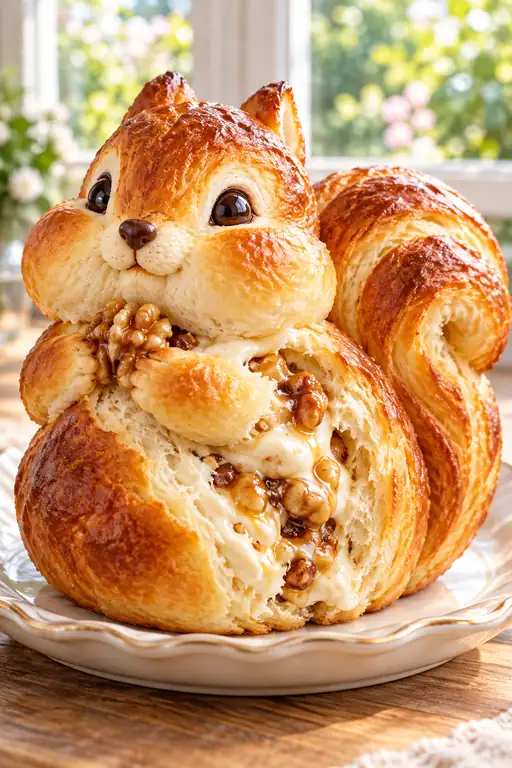 Woodland Bounty in a Coiled Tail
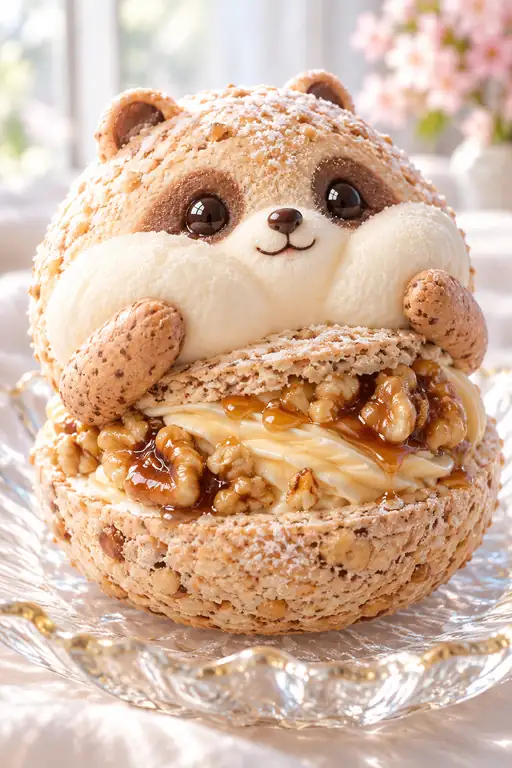 Nutty Melody in Autumn Woods
 The Nut-Cracker's Amber Secret
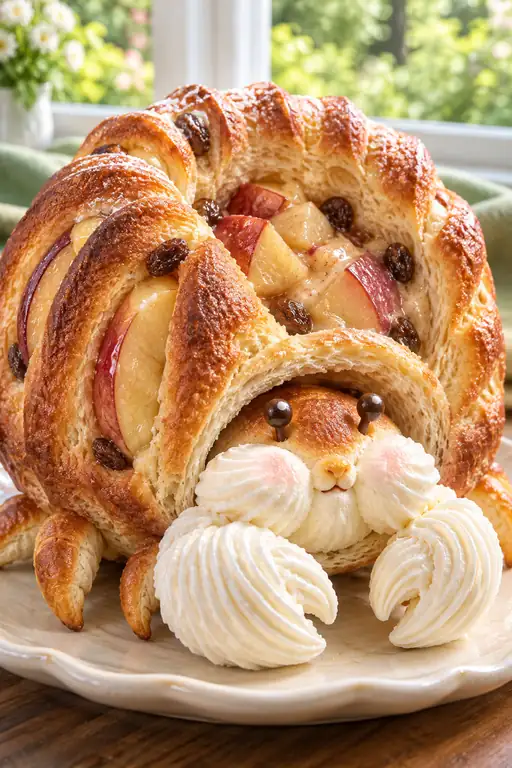 The House That Grew Too Sweet
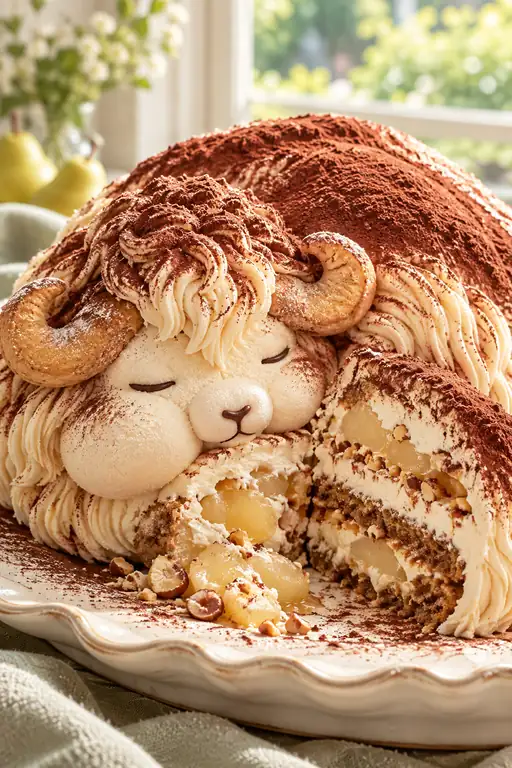 Dream beneath the Cocoa Hill
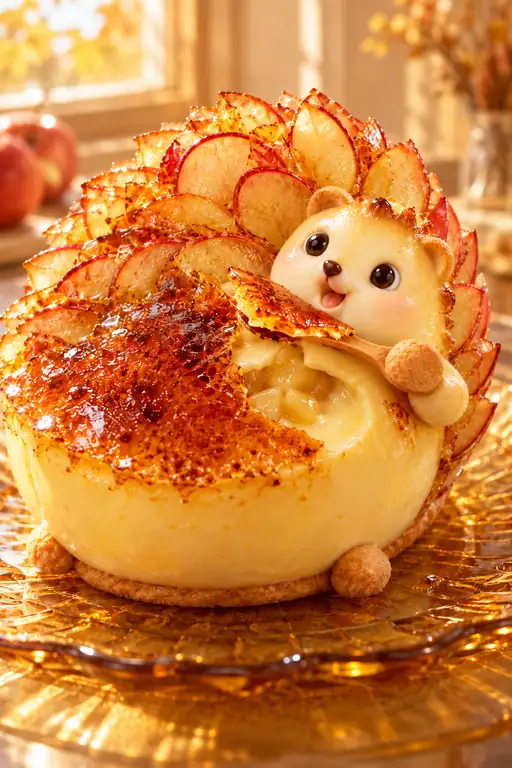 A Spoonful of Amber Joy
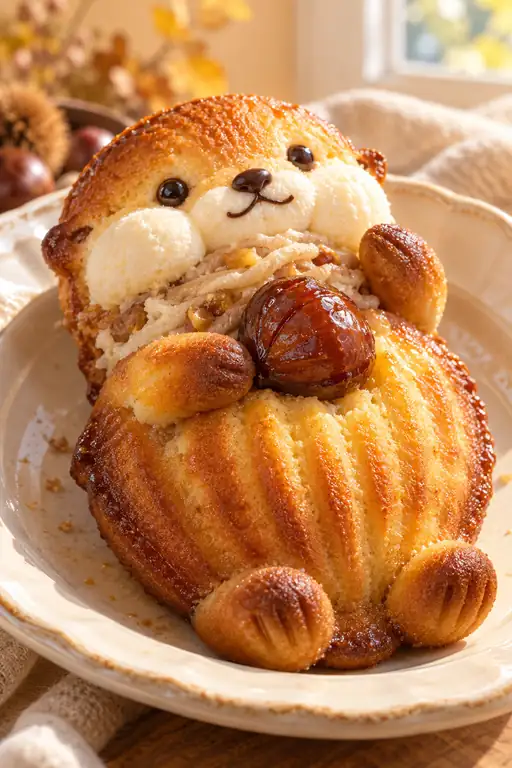 Warm Embrace of Autumn Chestnut
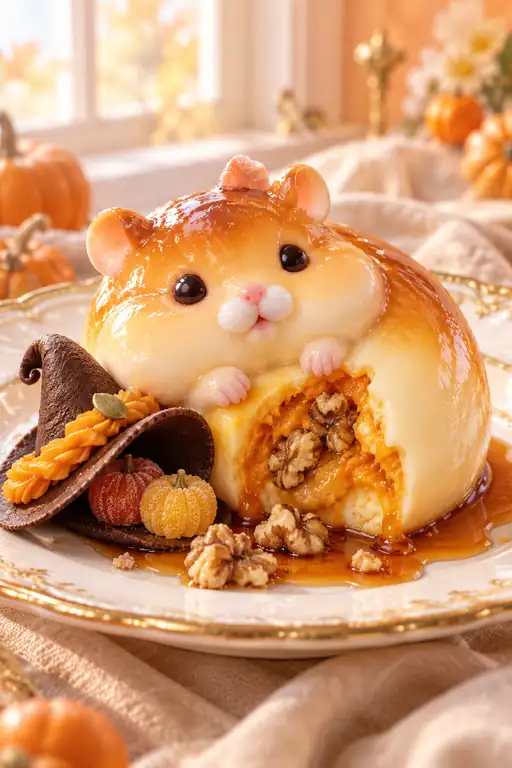 My Hat Fell Into the Golden Hour
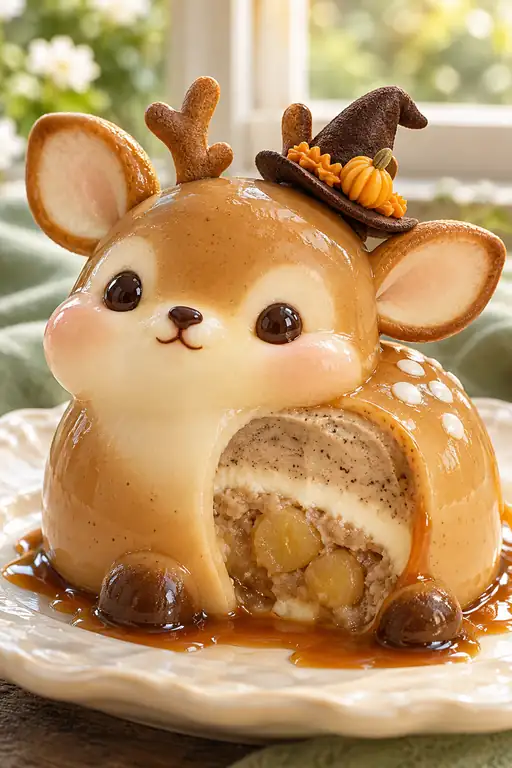 The Gentle Gaze Beneath the Glaze