Gold Beneath the Amber Coat
Critique
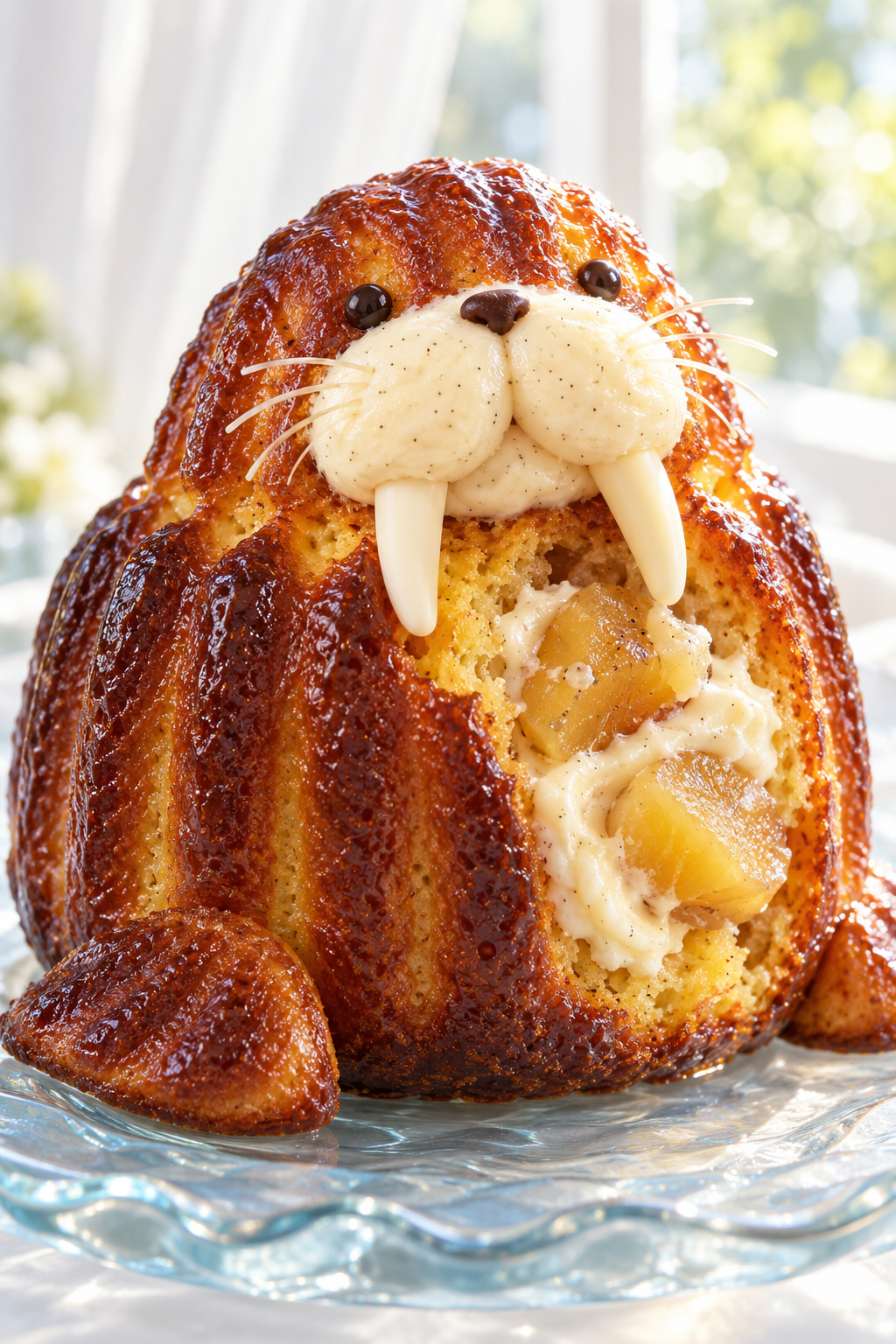
Introduction This walrus-like cake turns a dark, glazed dome into a lively animal portrait. Its pale muzzle and long tusks stand out immediately, while an opening below the face reveals the soft fruit filling concealed by the rich crust. Description The round body has a glossy amber-brown surface with deeper toasted ridges. Two dark eyes sit above a cream-colored, speckled muzzle bearing a small brown nose, fine white whiskers, and two long pale tusks. Broad flipper-like pieces rest at either side of the body. A large opening at the front exposes yellow sponge, pale cream, and translucent golden fruit chunks. The figure stands on a clear blue-tinted glass plate near a bright window. Analysis The symmetrical eyes and tusks give the upper center a strong focal structure. Whiskers extend horizontally, balancing the vertical tusks. The open filling interrupts the continuous rounded crust just below the face and creates a second center of attention. Light glances off the sticky-looking glaze but sinks into the porous yellow sponge. The pale muzzle bridges these extremes. Interpretation and Evaluation The tusks and flippers make the walrus identifiable with few details. Their clear placement allows the cake to maintain a broad, simple outline despite the large cutaway. The opening provides an appealing change from dark exterior to bright interior; the fruit cubes give scale and substance to the cavity. The whiskers are especially effective as thin lines set against the heavy, rounded body. The design is playful, yet its contrasting textures remain the main visual interest. Conclusion The comical walrus face leads to a closer view of layered filling. The image turns that discovery into part of the frontal pose.
Same Subcategory
 Morning Light in a Little Chest
Similar Artworks
 The Soft Secret of the Sea
 A Taste Held at the Edge of Flight
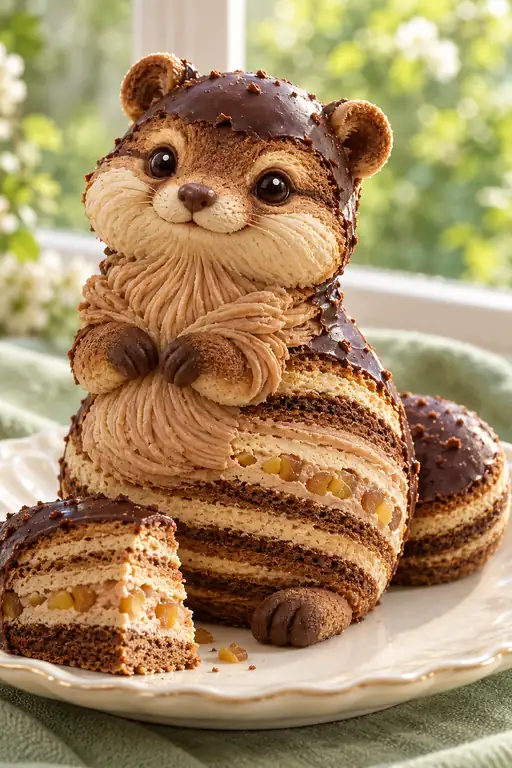 A Small Heart in Many Layers
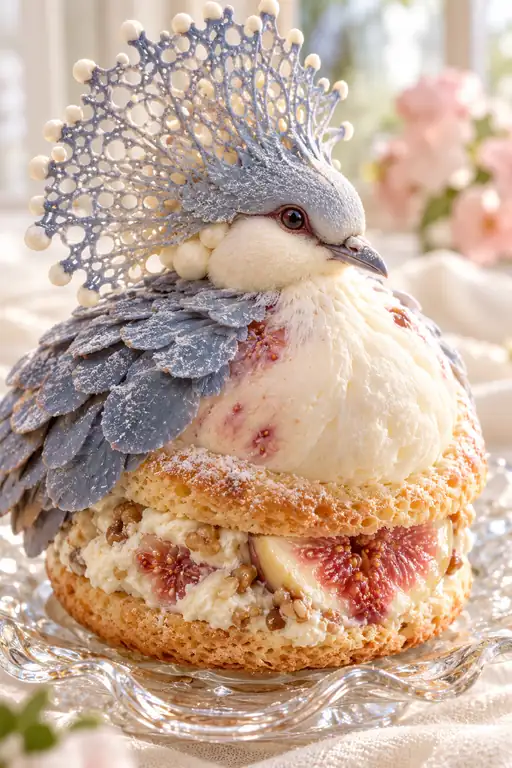 The Quiet Feast Beneath My Crown
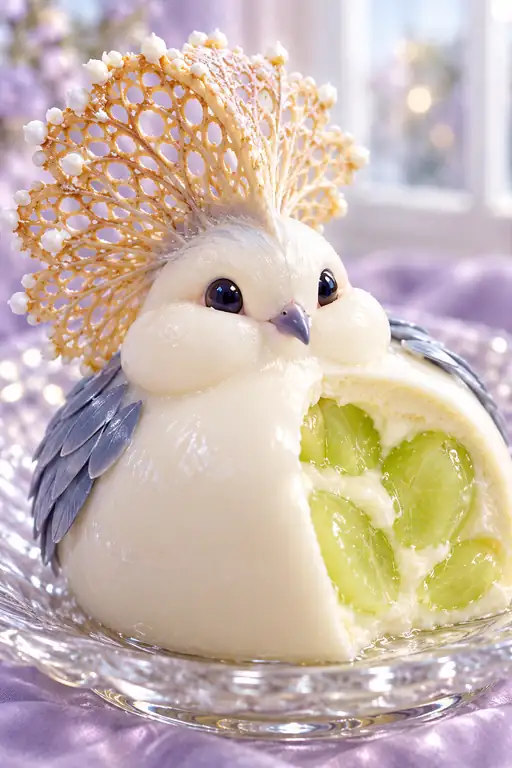 A Crown Above the Green Secret
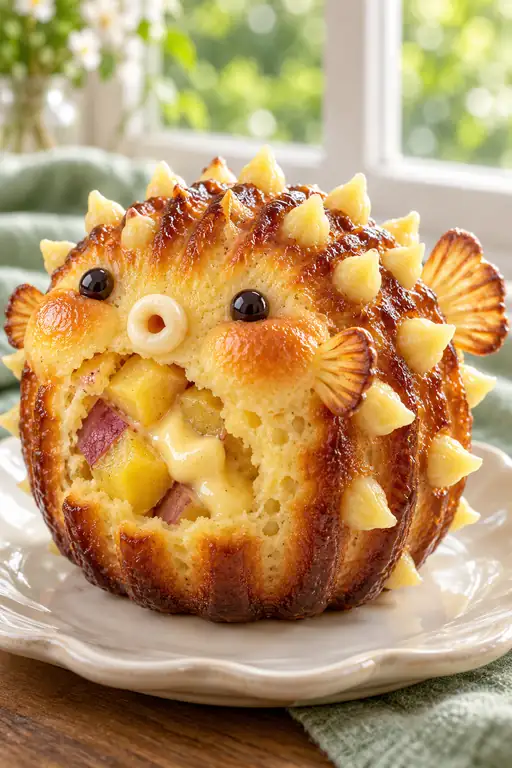 Spines of Sunshine, Heart of Gold
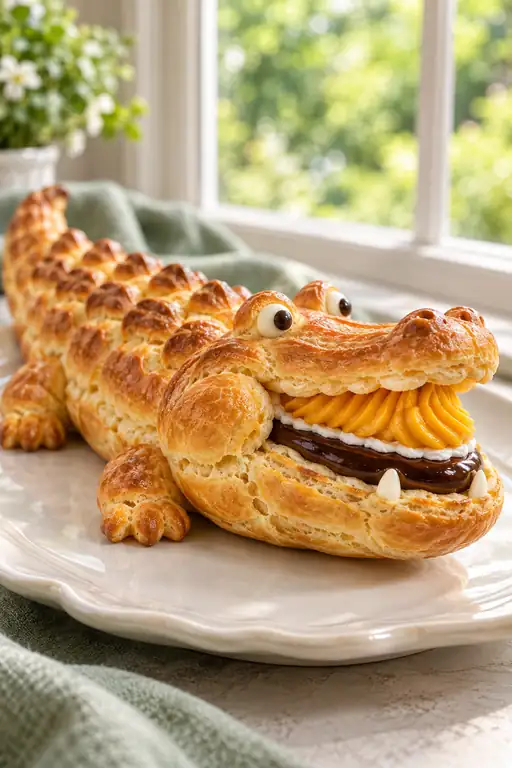 The Sweetest Roar
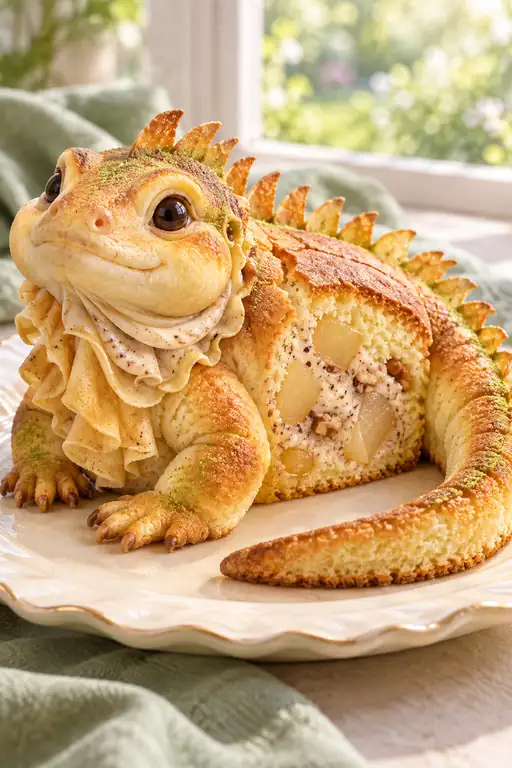 A Slow Walk Through Orchard Light
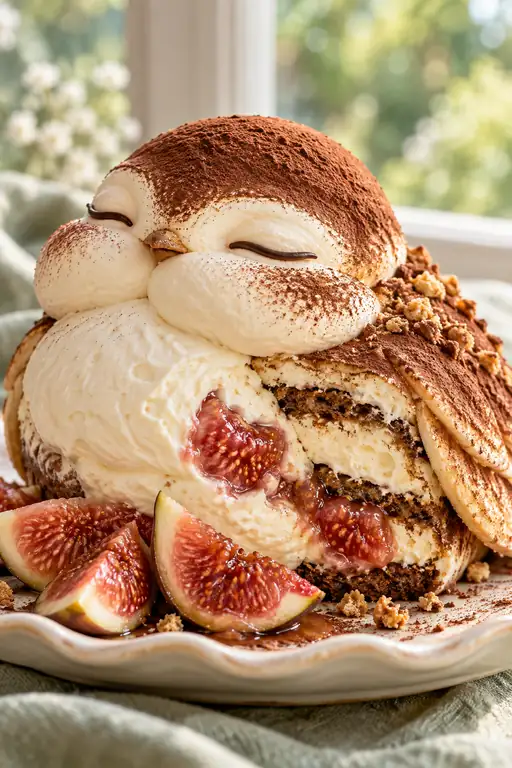 The Fig Dream Beneath Cocoa Snow
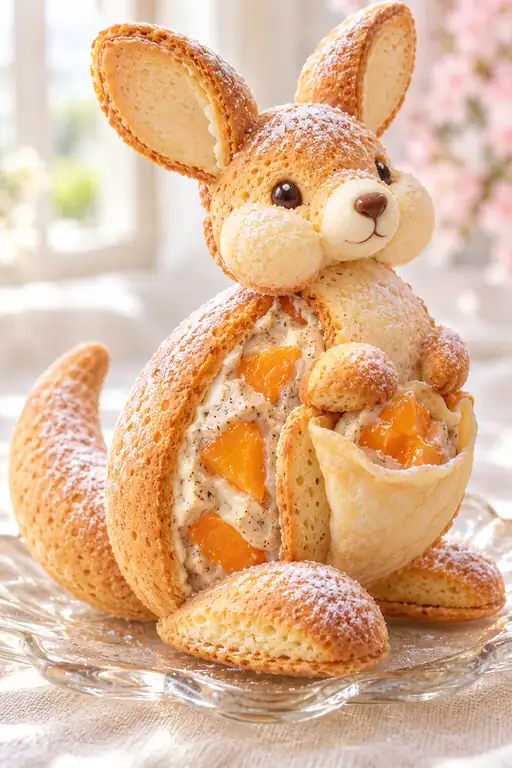 Autumn Tucked in My Pocket