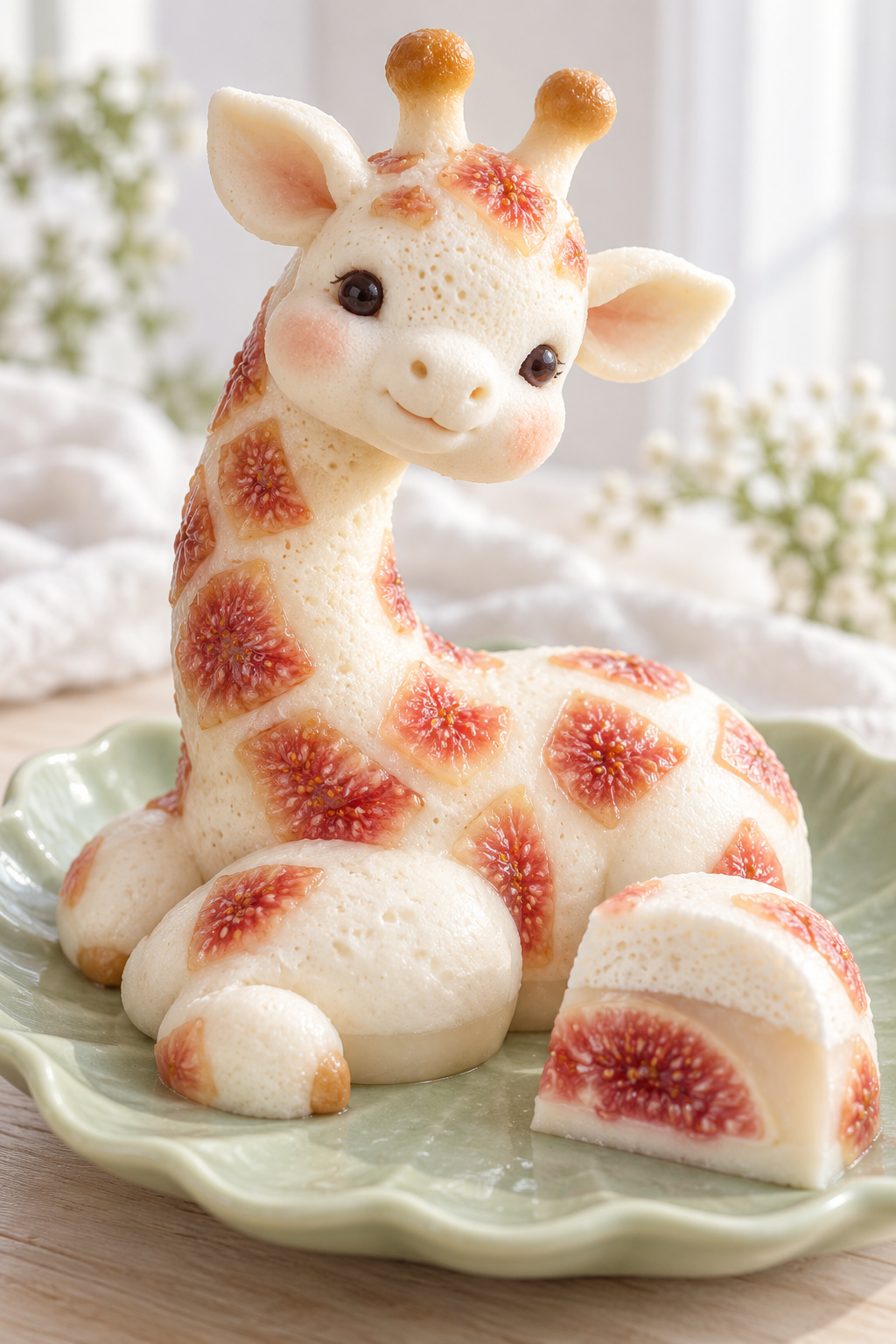
Little Constellations of Fig
Critique
Introduction This pale giraffe-shaped sweet replaces ordinary spots with visible fig sections. The animal remains gentle and recognizable, while the fruit pattern invites the viewer to compare its surface with the cut piece beside it. Description The seated figure has a long neck, broad pink-lined ears, two short golden-tipped horns, dark eyes, a small muzzle, and rosy cheeks. Red-centered fig slices are embedded across its white body and neck. A separate section rests at the front right of a pale green scalloped plate, showing a large fig wedge enclosed by a thick light layer. The surface has fine pores and a soft sheen. White fabric and small blossoms recede in the bright background. Analysis The raised head makes a vertical accent above the low, rounded body. Repeated red fig centers guide the eye down the neck and across the back. Their irregular seed patterns provide intricate detail against the otherwise smooth, light surface. The cut piece repeats the same red center at a larger scale, clarifying how fruit and coating meet. Interpretation and Evaluation The fig slices perform the work of a giraffe's markings without pretending to be conventional brown spots. This choice makes the ingredient visible throughout the animal rather than only at its cut end. The small face is restrained, allowing the fruit pattern to remain central. The front piece is a useful counterpart: it turns a decorative-looking motif into evidence of the sweet's actual construction. The pale palette and close view support careful inspection of the seeds and porous surface. Conclusion The giraffe impression develops into a study of repeated fruit forms. Its design succeeds because anatomy, pattern, and interior rely on the same ingredient.
Same Subcategory
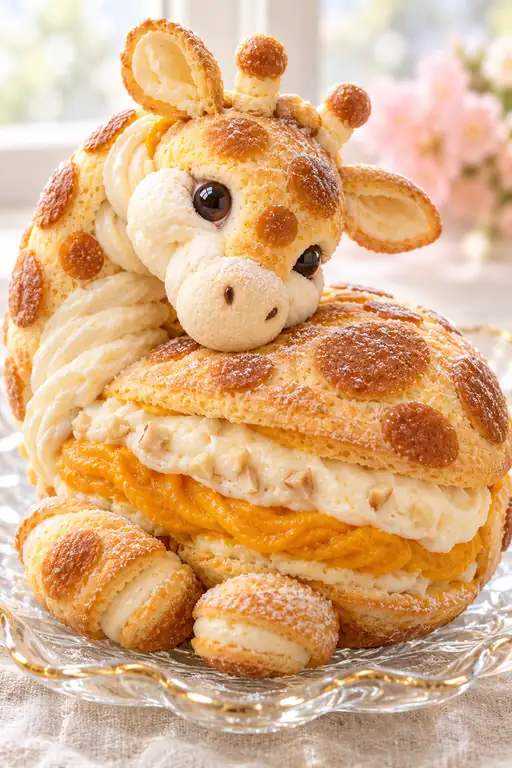 A Gentle Lean Toward Autumn
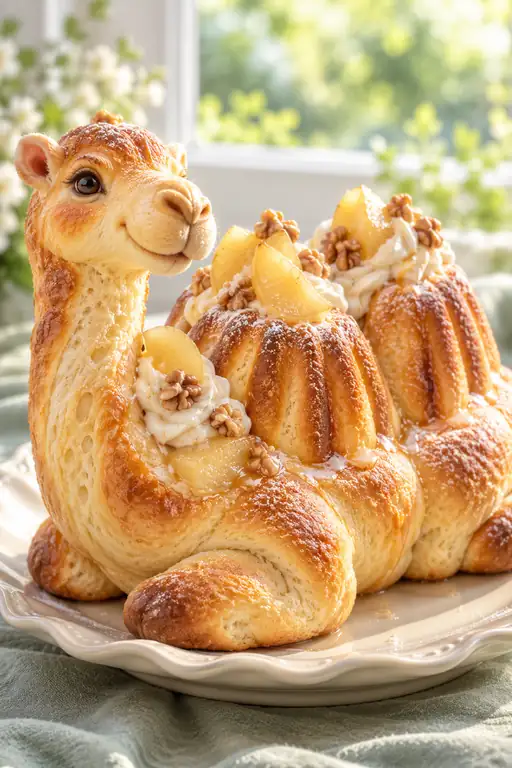 Carrying an Orchard Home
Similar Artworks
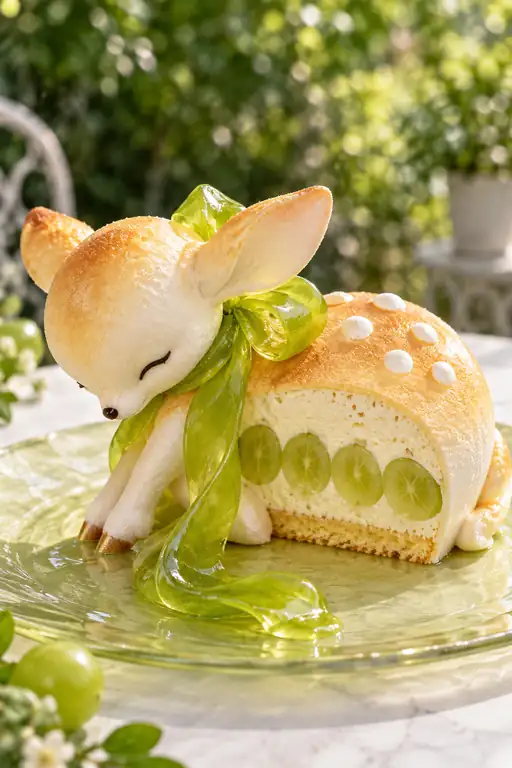 Dreaming Beneath the Green Ribbon
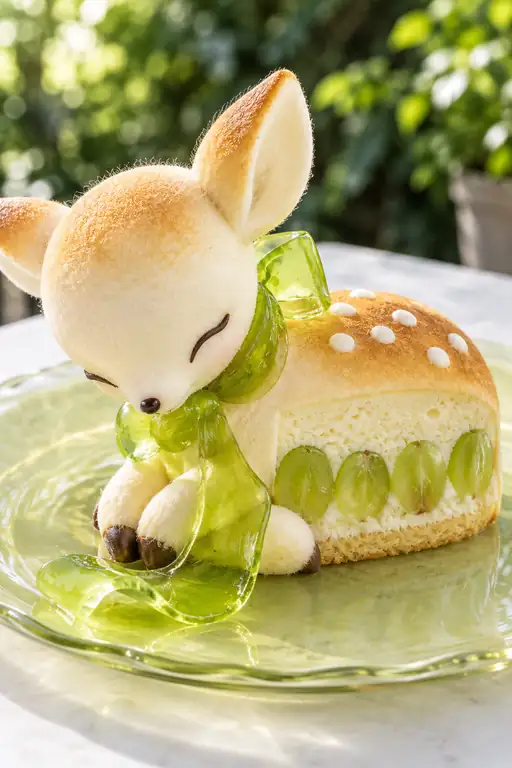 The Ribbon Dreams in Sunlight
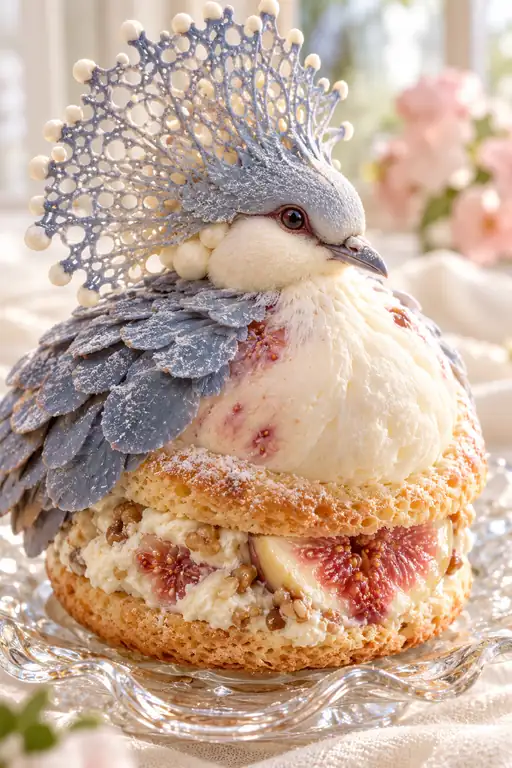 The Quiet Feast Beneath My Crown
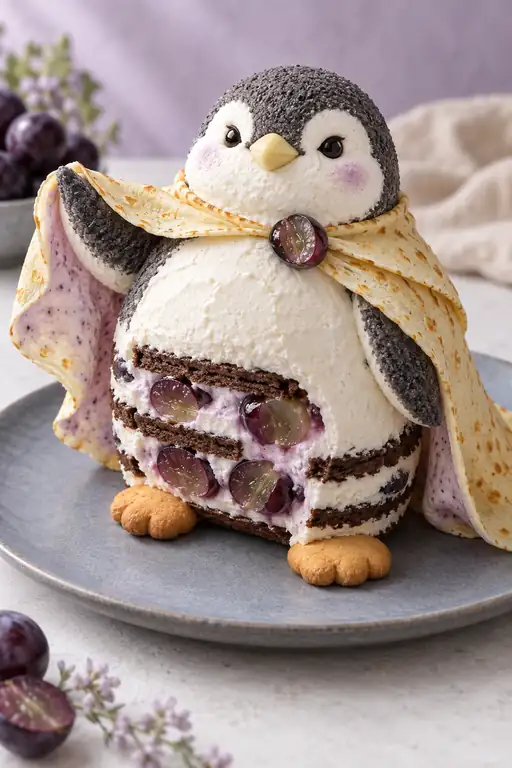 Let Me Show You My Grape Cape
 One Warm Ember in the Snow
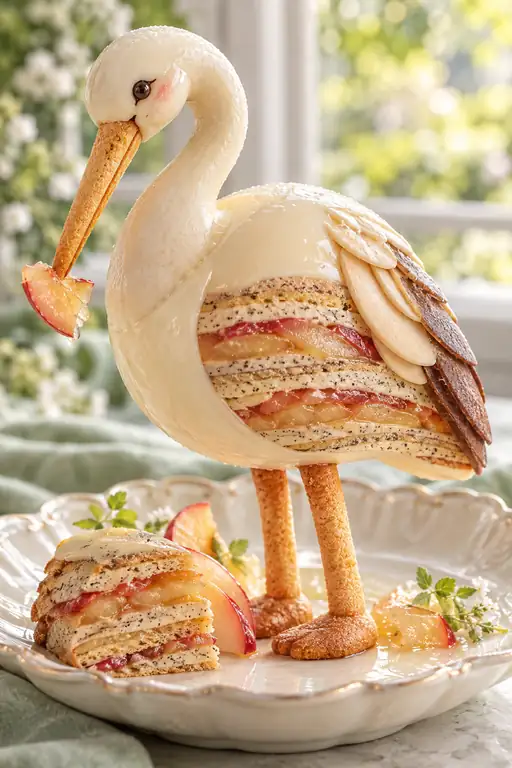 A Taste Held at the Edge of Flight
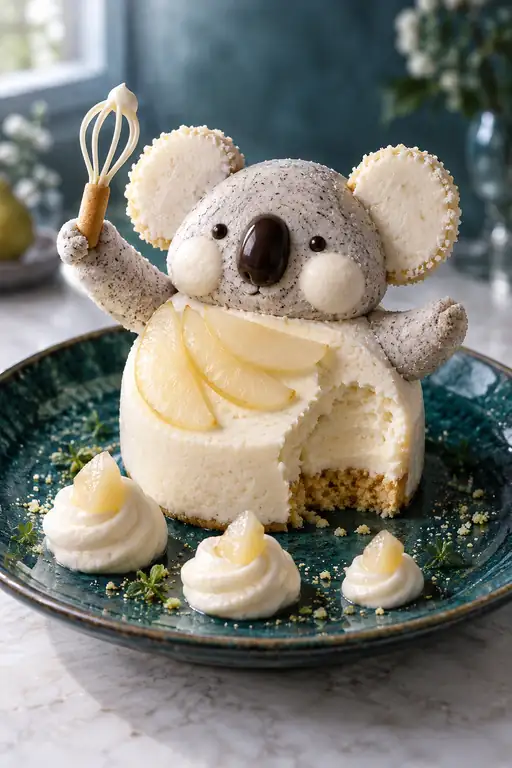 The Little Chef's Pear Creation
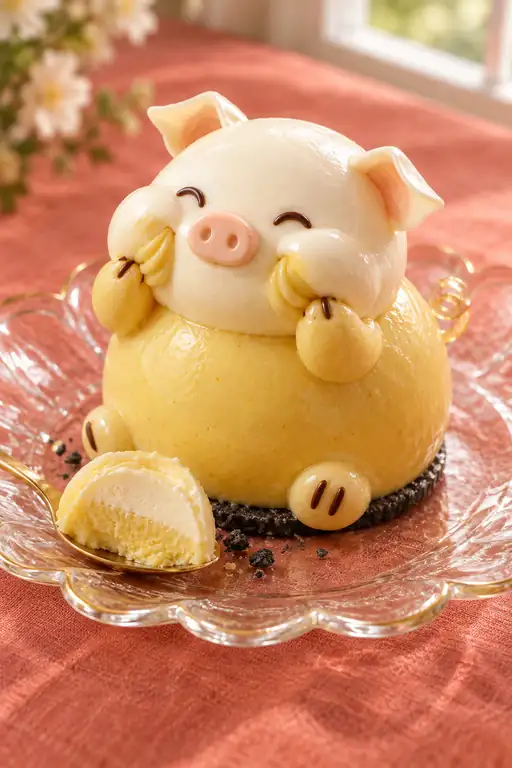 I Can Taste the Smile Already
 I Washed It Just for You
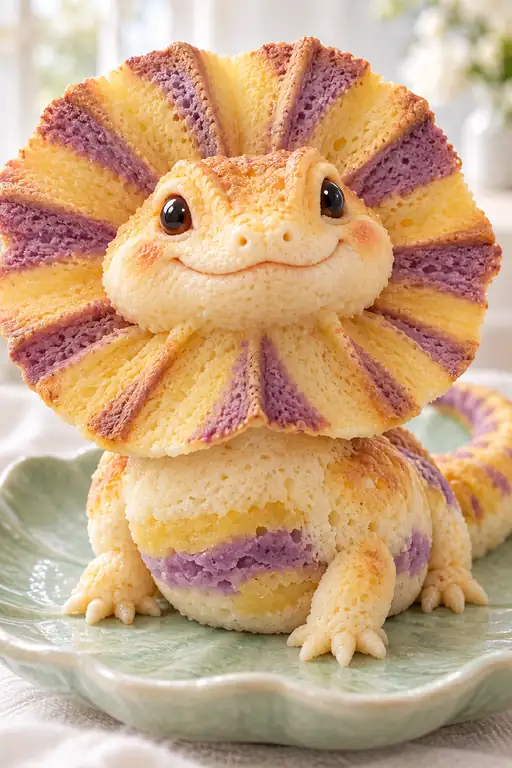 The Purple Sun Around My Face