
Where the Stripes Turn Green
Critique
Introduction A zebra-shaped rolled cake turns a familiar striped pattern into a way of reading its layers. The smiling head attracts attention, but the broad cut face of the body reveals the image's central play between animal marking and dessert structure. Description The pale head carries upright ears, round brown eyes, a softly projecting muzzle, and a small dark bow at the neck. Alternating white and brown cream forms a short mane. Dark cocoa stripes curve across the head and the cylindrical body. The near end of that cylinder is cut open, showing green grape sections, pale cream, thin almond-like flakes, and scattered small seeds. Everything stands on a transparent glass cake plate, with purple flowers and soft lights in the background. Analysis The upright head interrupts the body's strong horizontal cylinder, creating a clear point of entry. Curved exterior stripes lead the gaze toward the circular cut face, where the pattern changes into fruit and cream. Green grapes provide the only saturated color within the beige and brown cake. Their rounded sections echo the circular end of the roll. The glass plate and pale background leave the dark stripes crisp. Interpretation and Evaluation The stripes serve two purposes: they identify the zebra and advertise the layered character of the cake. The large opening makes the fruit arrangement unusually legible, preventing the smiling face from becoming the sole attraction. The mane's alternating cream reinforces the same visual rhythm at a smaller scale. Conclusion The initial animal likeness leads into an examination of pattern, roll, and filling. This is a coherent dessert portrait because its external markings prepare the viewer to appreciate the interior layers.
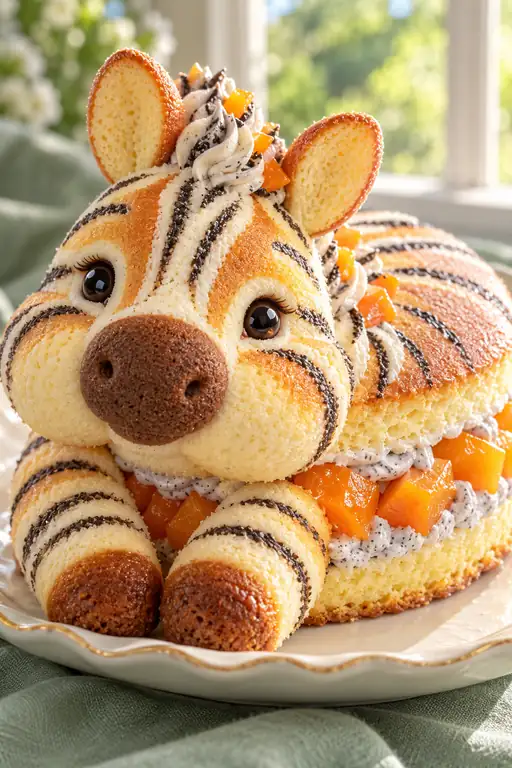 Sunshine Between the Stripes
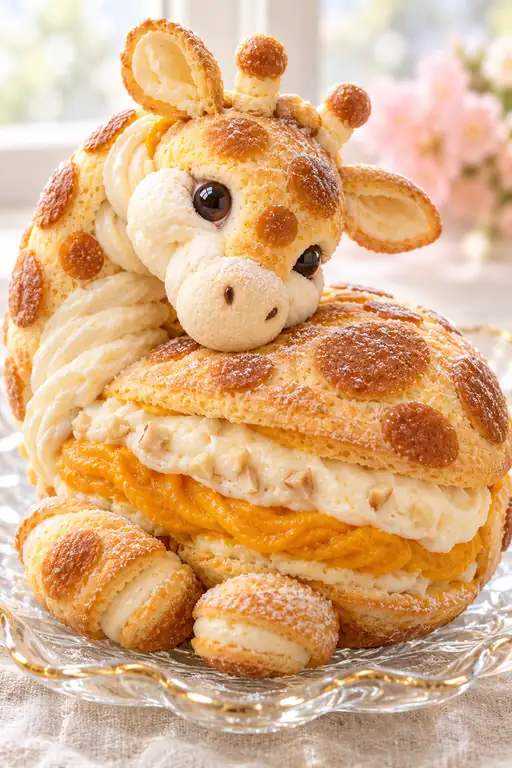 A Gentle Lean Toward Autumn
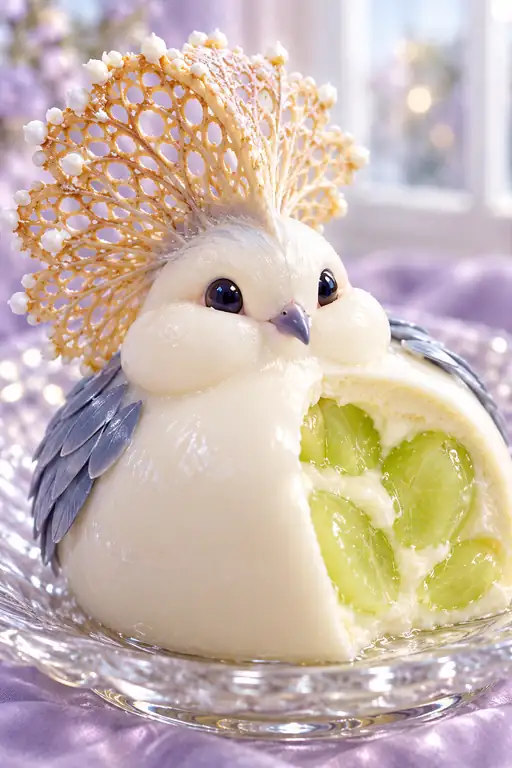 A Crown Above the Green Secret
 The Soft Secret of the Sea
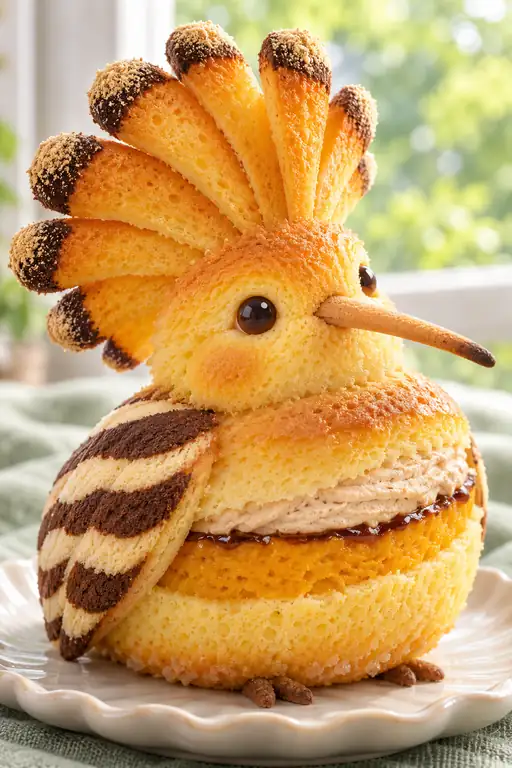 Wearing the Last Rays of Autumn
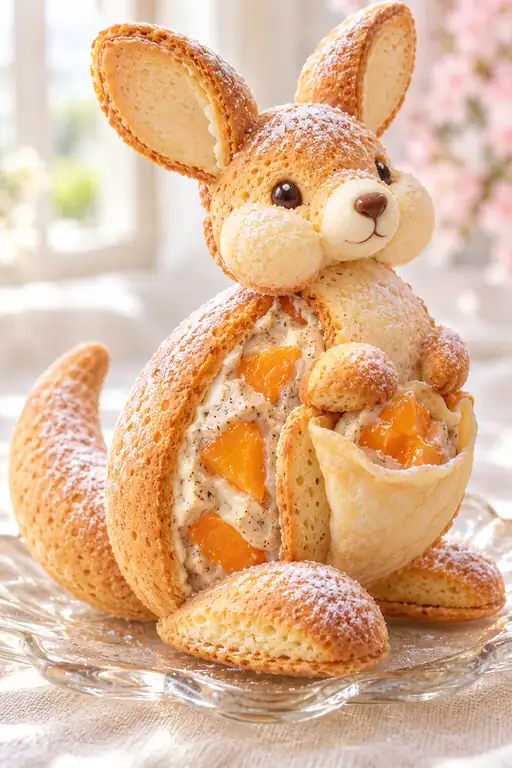 Autumn Tucked in My Pocket
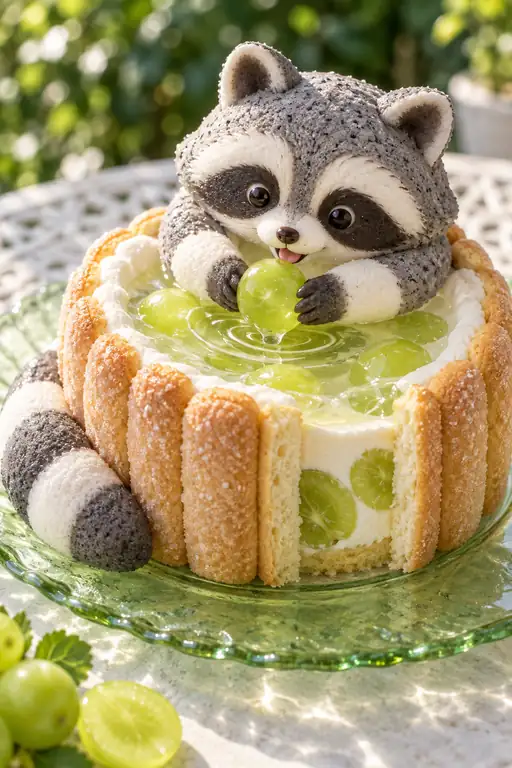 Ripples in a Little Green Pond
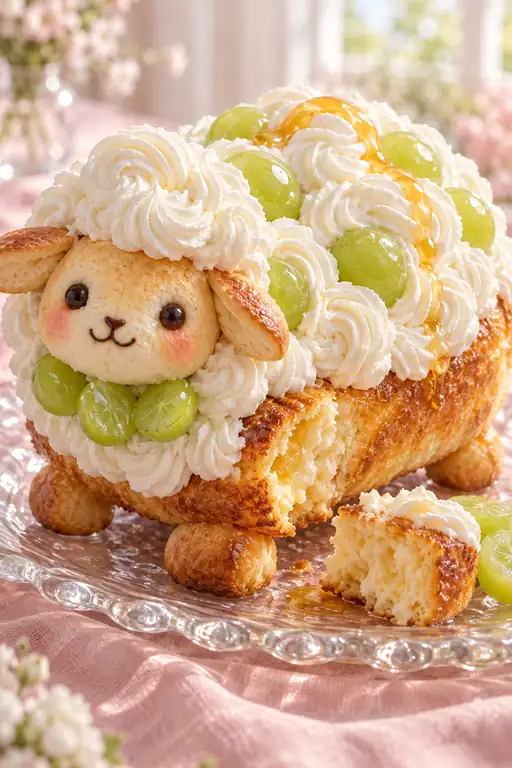 A Cloud That Learned to Graze
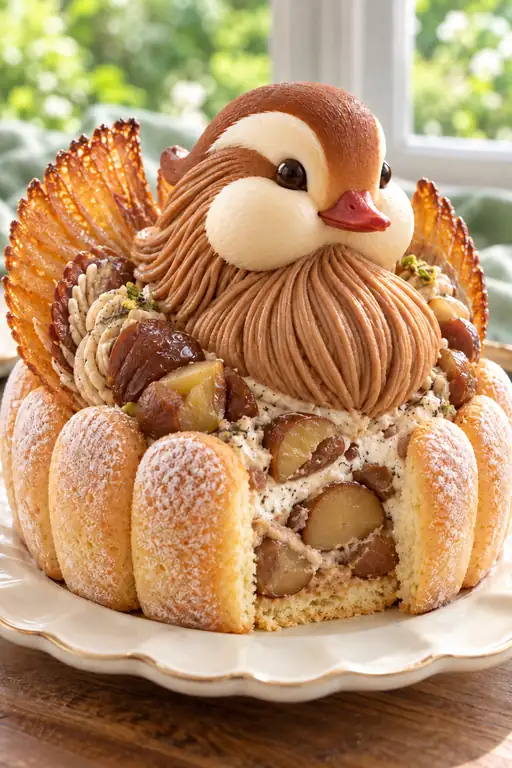 Chestnut Season in Full Plumage
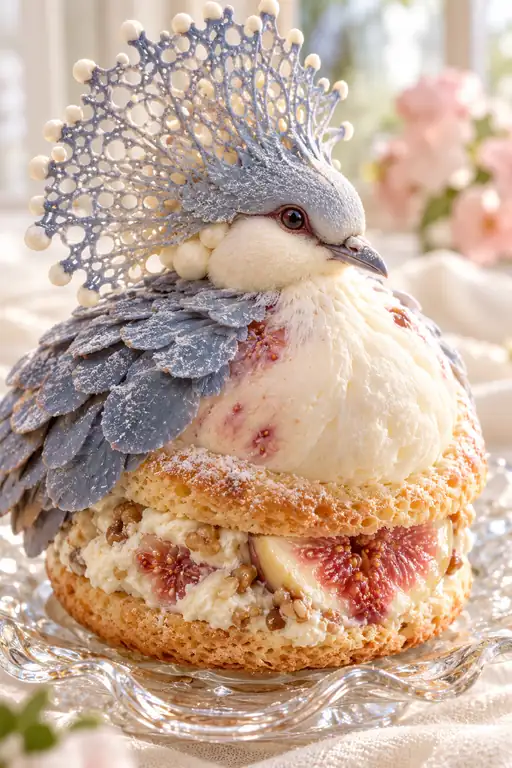 The Quiet Feast Beneath My Crown
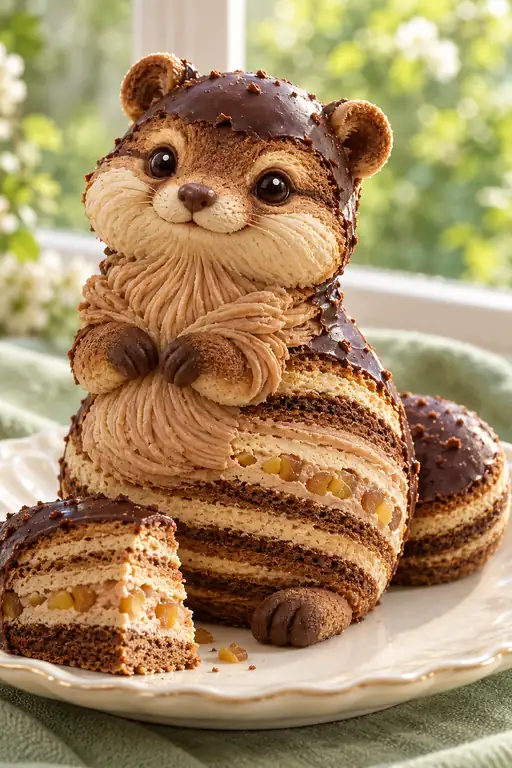 A Small Heart in Many Layers