The Warmth Beneath the Fleece
Critique
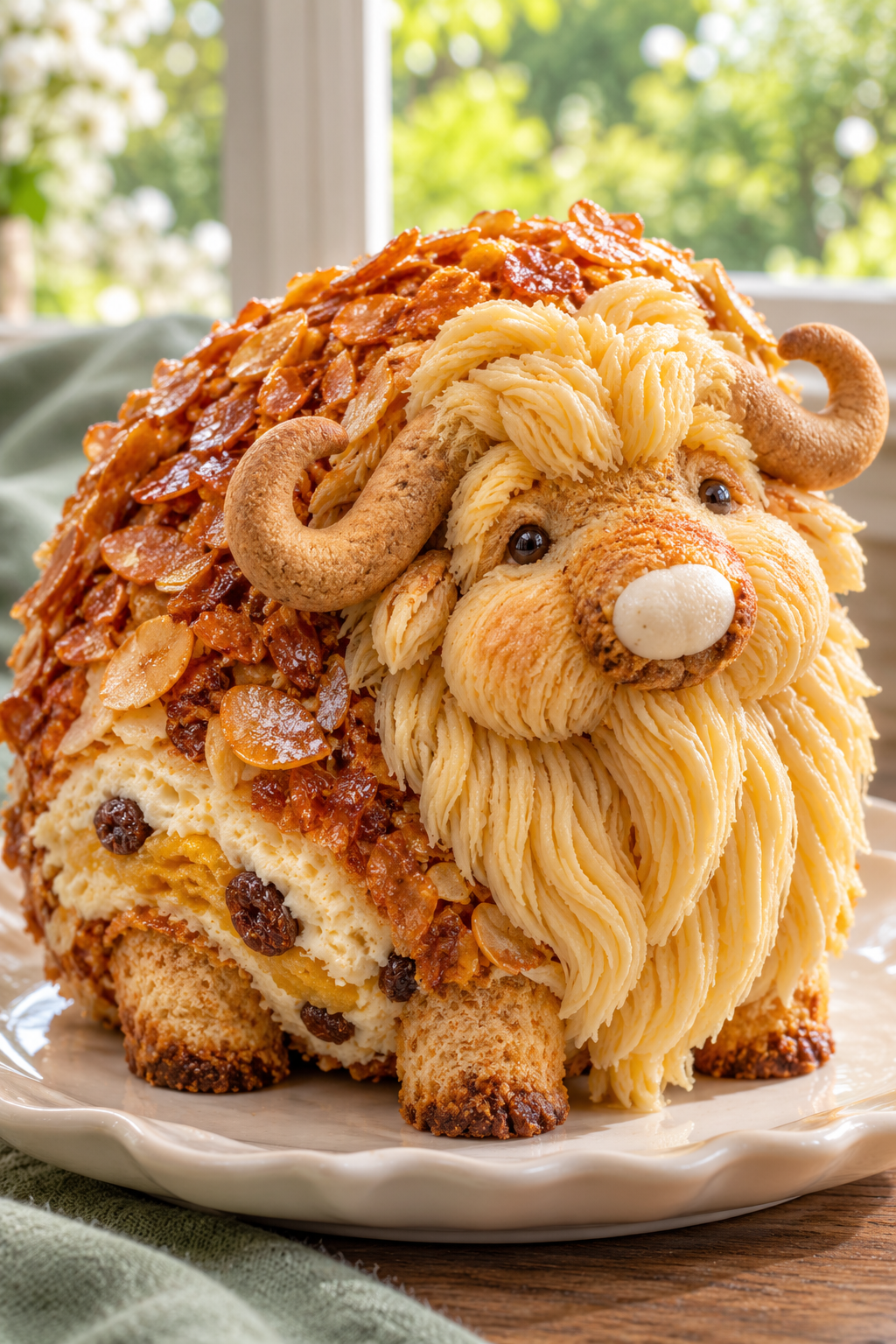
Introduction This ram-shaped cake uses its own ingredients to construct a richly textured coat. The sturdy animal silhouette is immediately legible, but the image rewards closer attention to the distinct ways pastry, cream, and sliced nuts describe its body. Description The figure stands on four short, browned legs upon a white scalloped plate. Two curled brown horns flank a broad face with dark eyes, a pale nose, and layered cream-colored strands forming a heavy fringe and beard. Behind the head, overlapping glossy almond-like slices cover the rounded back. At the lower left, an exposed section reveals pale sponge, a yellow filling, cream, and dark dried-fruit pieces. Daylight enters through a window beyond the plate. Analysis The forward-facing head anchors the right half, while the sloping nut-covered back extends to the left. Curved horns frame the face and echo the round body. Thin cream strands supply a soft, linear texture against the flatter, crisp-looking slices; the open filling adds a third, porous register. Warm amber browns dominate, yet white cream and plate keep the surface pattern readable. Interpretation and Evaluation The cake does more than decorate an animal outline. Its chosen materials imitate different parts of a ram: curled pastry for horns, fine strands for wool, and scales of nuts for the broader coat. This correspondence gives the construction both humor and formal coherence. The exposed section is important because it interrupts the densely worked exterior and confirms the cake's layered substance. Conclusion What first appears as a charming creature becomes a study of how edible textures can define anatomy. The composition holds its elaborate surfaces together through a clear head, compact stance, and repeated warm color.
 Dreaming in Fig and Cream
 As the Cocoa Hills Sleep
 Round Whispers of Autumn Waffle
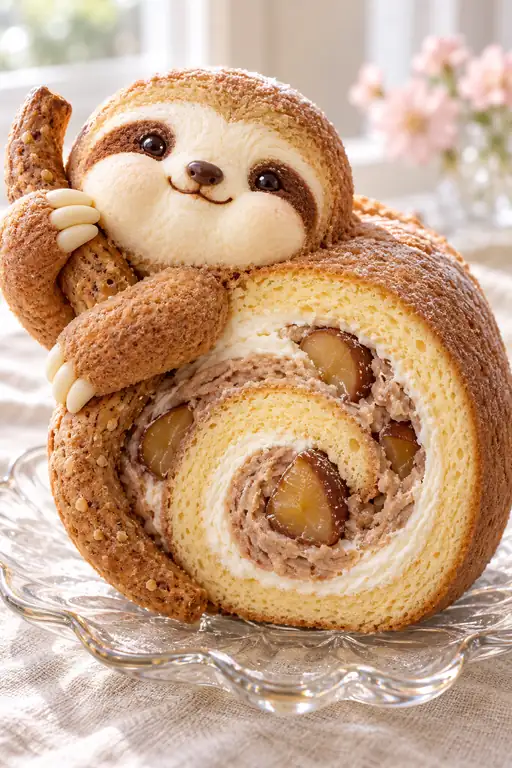 Clinging to the Chestnut Roll
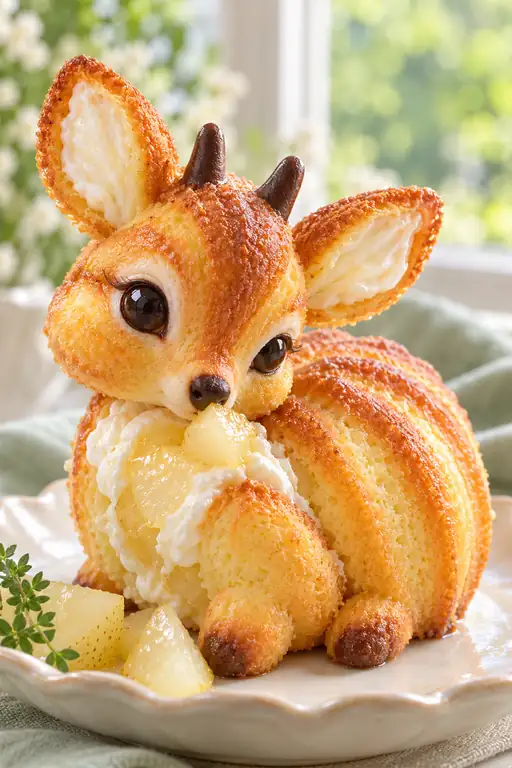 The Moment Before a Taste
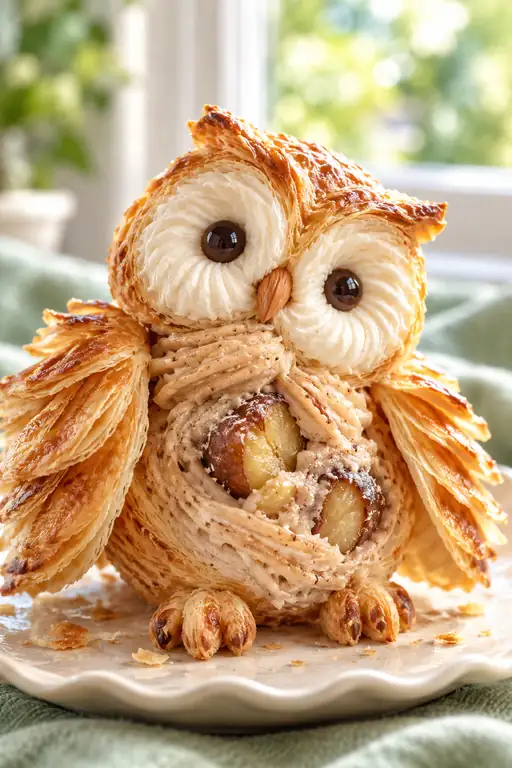 Vigil of the Chestnut Nest
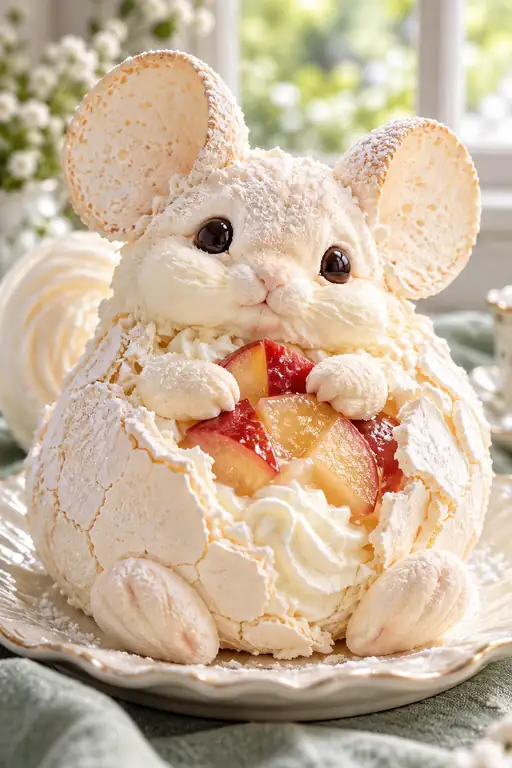 Embrace of the Orchard Meringue
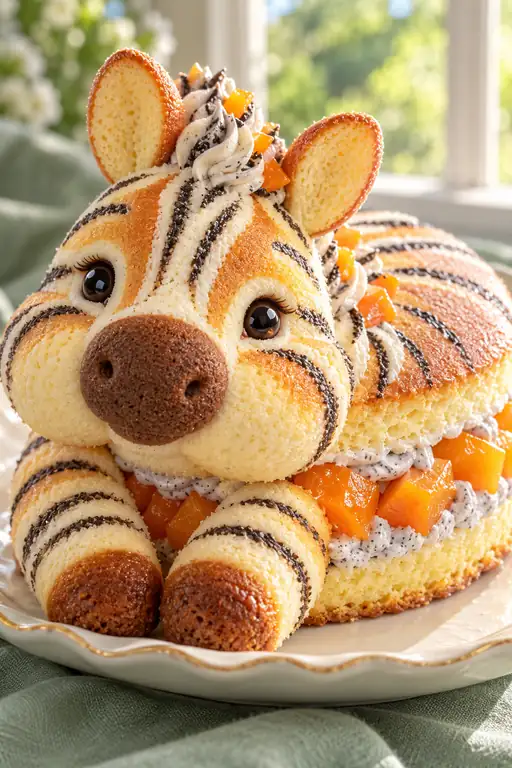 Sunshine Between the Stripes
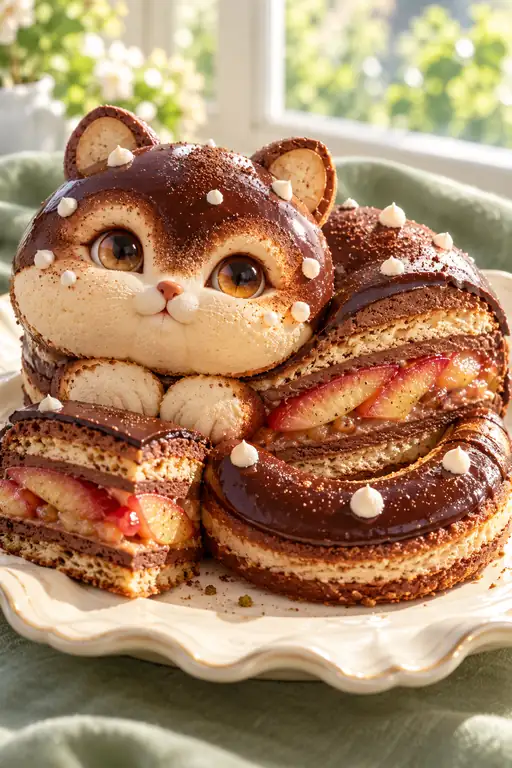 Beneath the Chocolate Stars
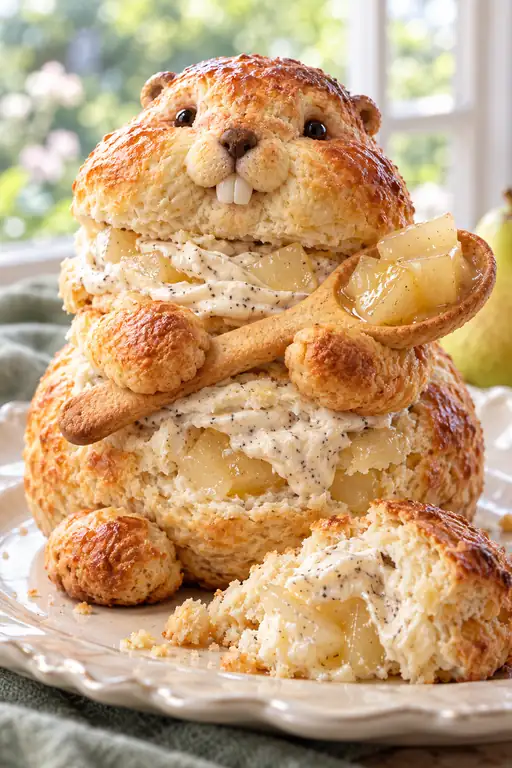 One Spoonful of Golden Afternoon