Wings of Autumn Gold and Indigo
Critique
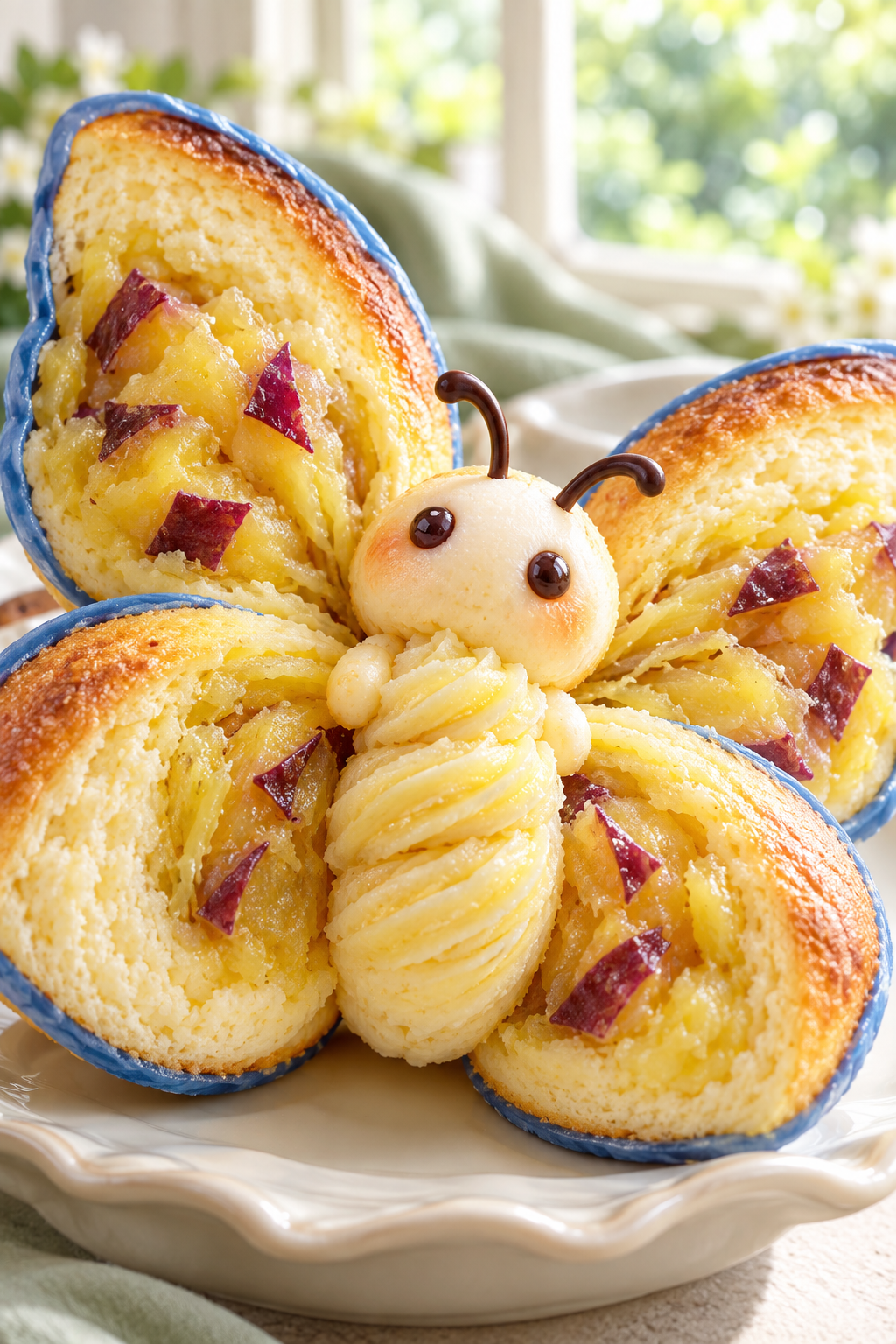
Introduction A small butterfly-shaped pastry sits between four opened wings filled with yellow fruit and purple-skinned pieces. Blue-edged browned shells spread across a white plate. The close view makes the insect's delicate body a center for large, edible wing structures. Description The pale round head has glossy dark eyes, rosy cheeks, and two curved brown antennae. Below it, a ridged cream-colored body narrows toward the plate. Four broad wing sections open around it, their golden cake edges marked in blue. Within each section, soft yellow filling surrounds small purple-red fragments. The plate's wavy rim rests on cloth before a bright green window. Analysis The wings form a loose four-part symmetry, but each cut face has a different tilt and amount of filling. The body provides a vertical center through their broad diagonals. Blue outlines clarify the boundaries among golden cake, yellow fruit, and cream. The smooth face contrasts with the fibrous filling and porous browned crust. Window light brightens the upper wings, while the lower sections gain weight through deeper shadows. Interpretation and Evaluation The open wings suggest a butterfly paused in display, yet their exposed interiors make the pastry construction unavoidable. The small head and antennae give a clear identity without competing with the abundant wing forms. The composition uses scale effectively: a narrow center holds four large sections together. Careful color separation and texture differences keep the image readable. The asymmetry of the individual wings adds life to the underlying pattern. Conclusion The butterfly shape is apparent at once, but closer inspection finds varied fruit arrangements in each wing. The work joins decorative symmetry to the tangible irregularity of cut food.
Same Subcategory
 Veil of Persimmon Sunset
 The Little Secret Beneath the Smile
Similar Artworks
 Home Is Where the Sweetness Hides
 Bite of the Chestnut Riverbank
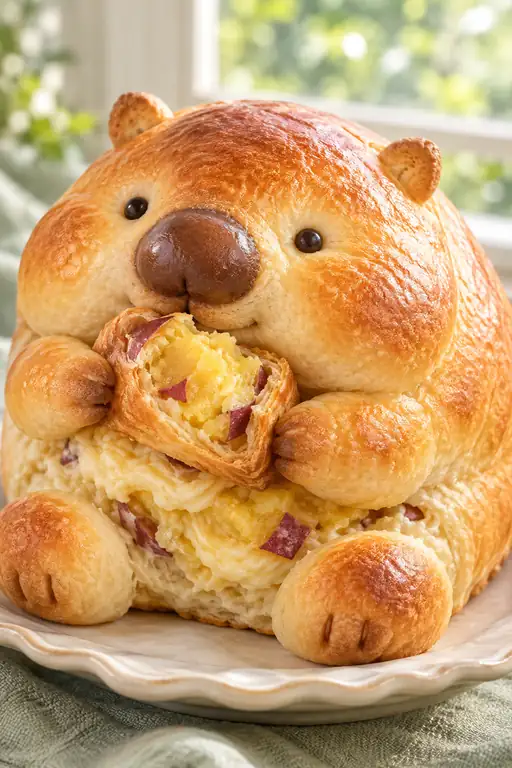 Savoring the Roasted Gold
 Joyful Bite of the Autumn Hearth
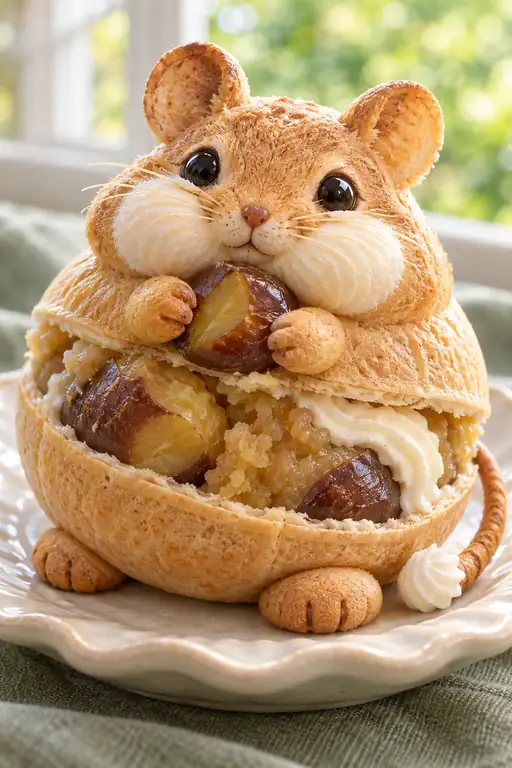 Keeper of the Glazed Chestnut Bounty
 An Autumn Treasure, Held Close
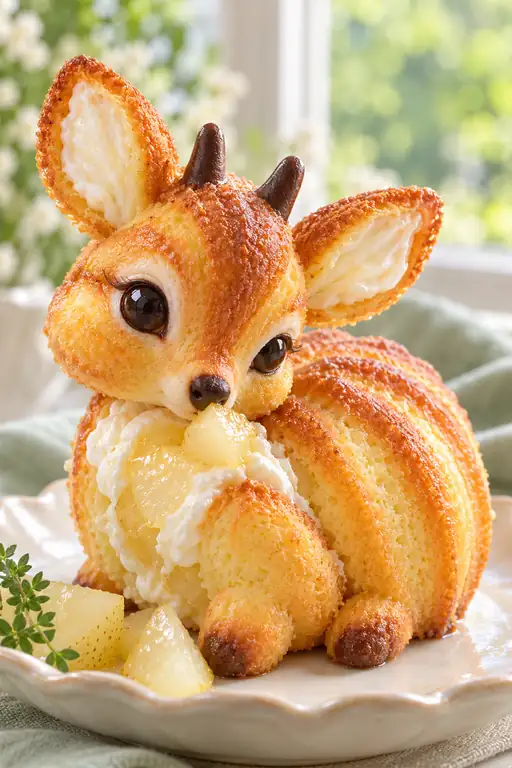 The Moment Before a Taste
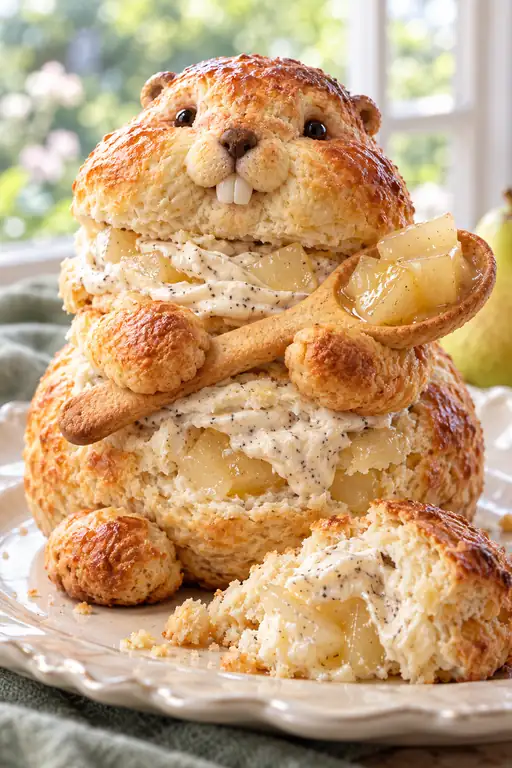 One Spoonful of Golden Afternoon
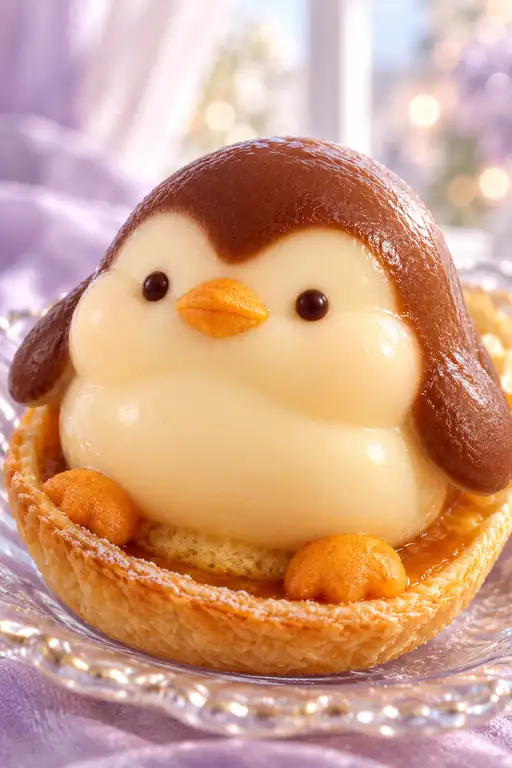 Nestled in the Pastry Cradle
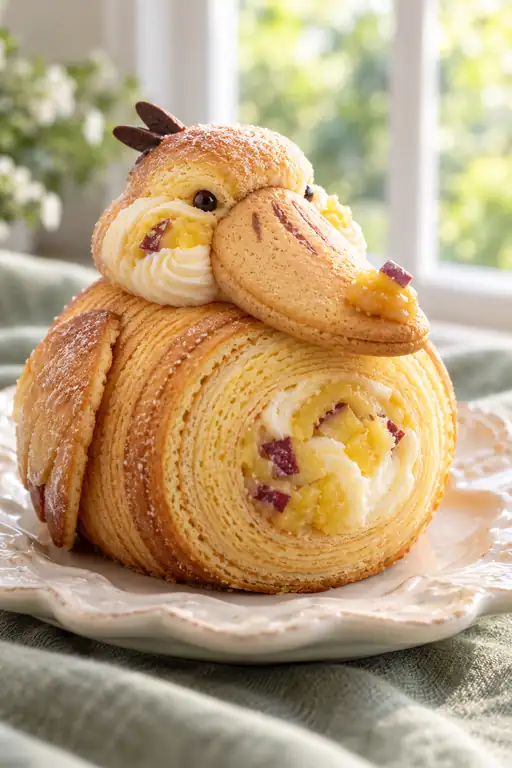 Ripples of Yam and River Slumber