
Slumber in the Golden Cradle of Autumn
Critique
Introduction A small squirrel appears to rise from a folded crepe filled with orange fruit. The dessert treats the crepe's open edges as part of the animal's space rather than a separate container. Description The squirrel's round face has large dark eyes, a pink nose, pale muzzle, and tiny paws resting above the filling. Behind it, a curled tail rises with white cream visible in its spiral. Two thin, browned crepe flaps open to either side. Glossy orange fruit pieces and thick white cream fill the broad pocket below. Window light reaches the scalloped plate and blurred background. Analysis The face sits near the visual center, surrounded by the diagonal crepe edges. Those edges form a shallow cup, holding the bright fruit while also suggesting a sheltered place for the creature. Orange links the fur, filling, and tail, whereas cream marks the transitions between them. The crepe's tiny pores contrast with the fruit's wet shine and the smoothness of the eyes. The high curled tail restores vertical movement after the lower fan of the crepe. Interpretation and Evaluation The squirrel seems to peek out from an abundant store of food. Its paws at the rim make that relationship legible with very little narrative detail. The composition is successful because the animal does not conceal the dessert: the open crepe exposes both fruit and cream. Warm color, varied textures, and the expressive tail give the figure character while preserving the clarity of its edible components. Conclusion The first attraction is the bright-eyed face; the longer interest lies in the crepe's transformation into a protective enclosure. The fruit and curled tail connect the character to its pastry setting.
Same Subcategory
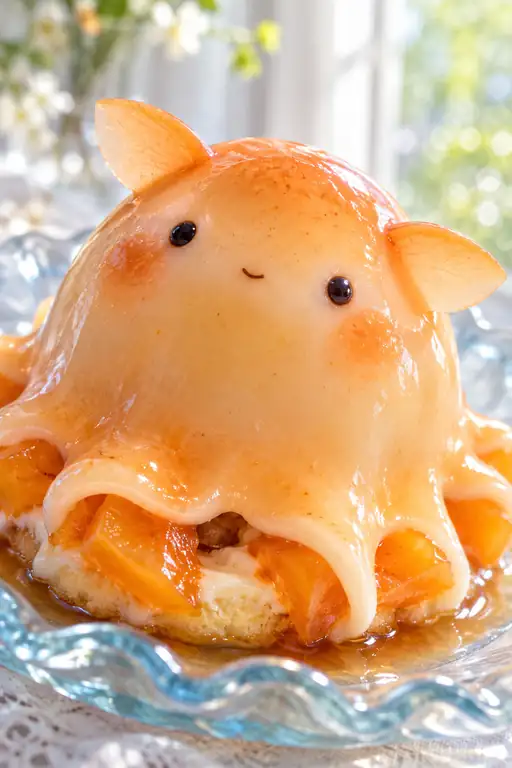 Veil of Persimmon Sunset
Similar Artworks
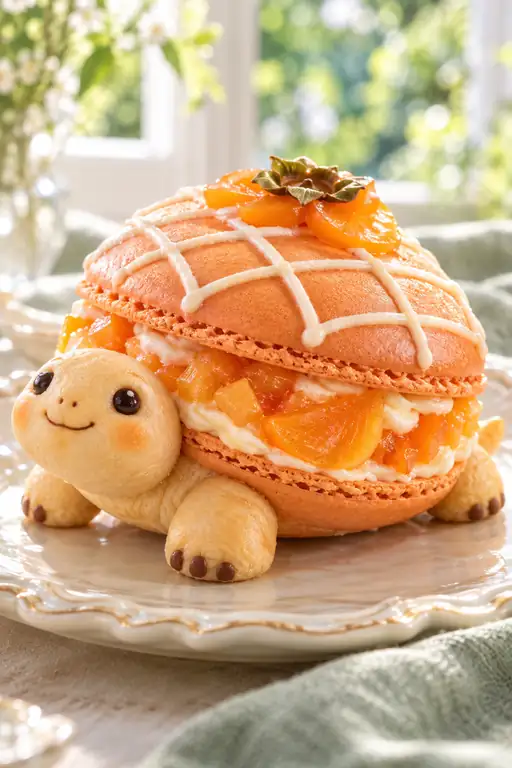 Journey with the Autumn Shell
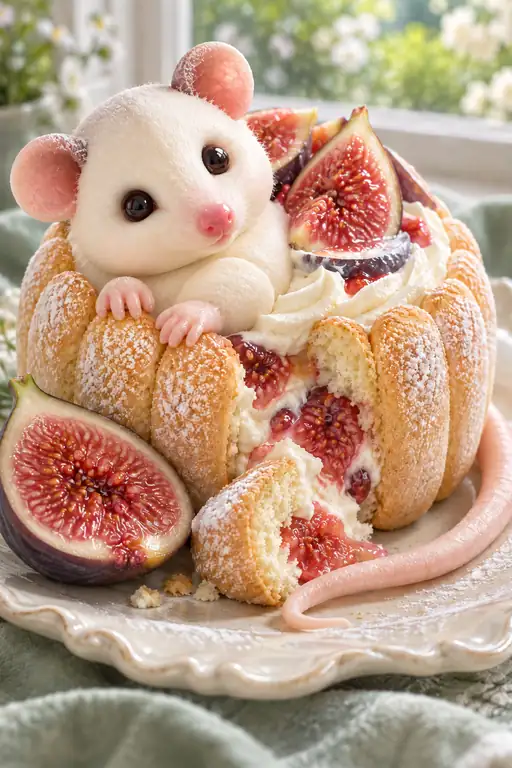 Sanctuary of the Ruby Fig
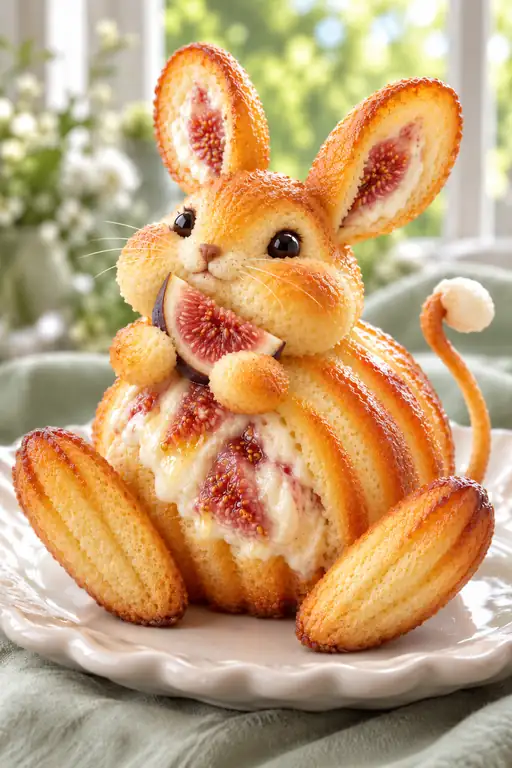 Crimson Bloom of the Autumn Fig
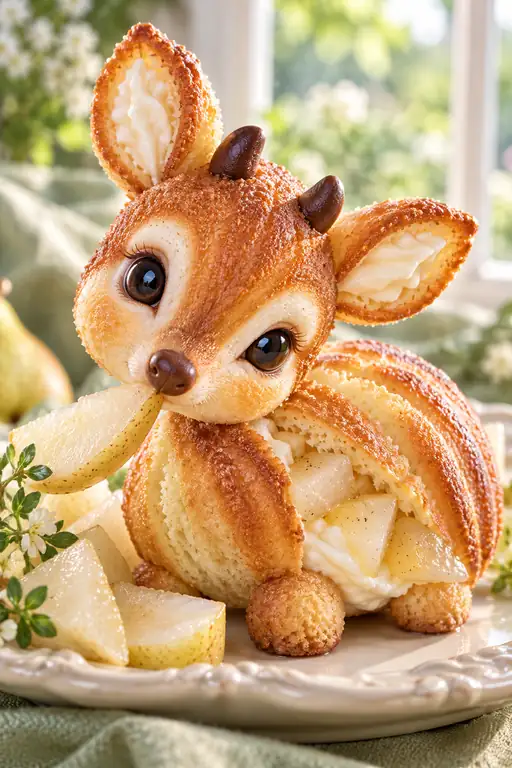 Fragrance of Pear upon the Gentle Breeze
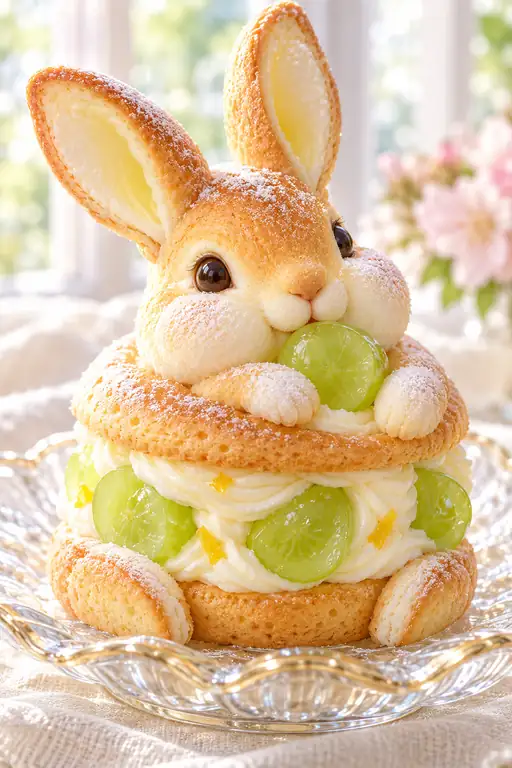 Jade Drops Held in Gentle Paws
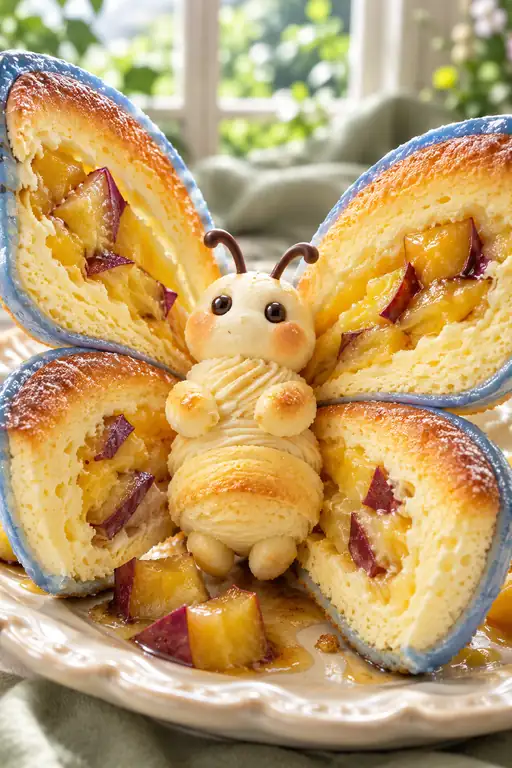 Blue Horizon Wings of Harvest
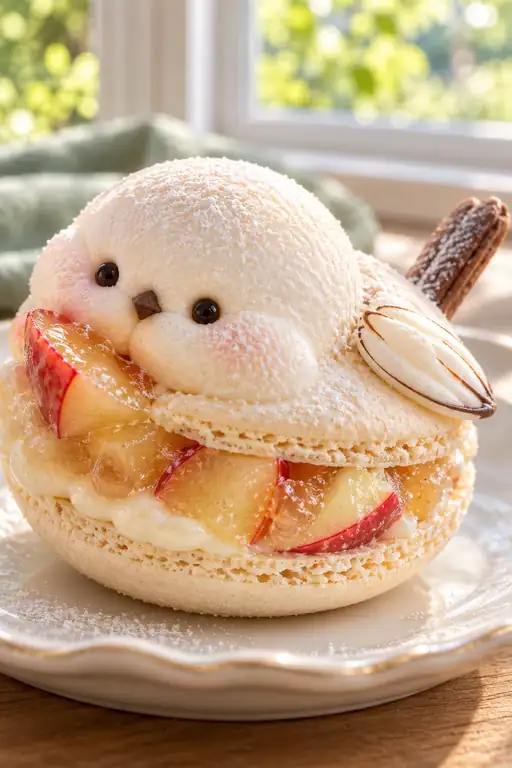 Crimson Apple by the Soft Cheek
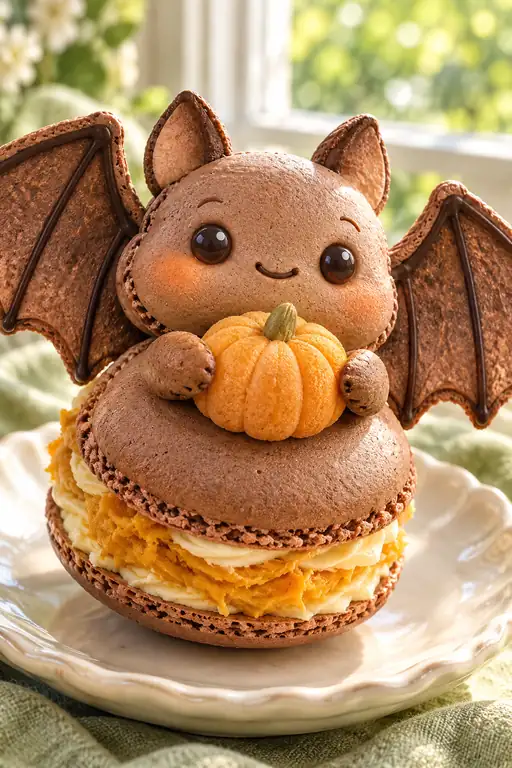 Sweet Secret of the Velvet Wings
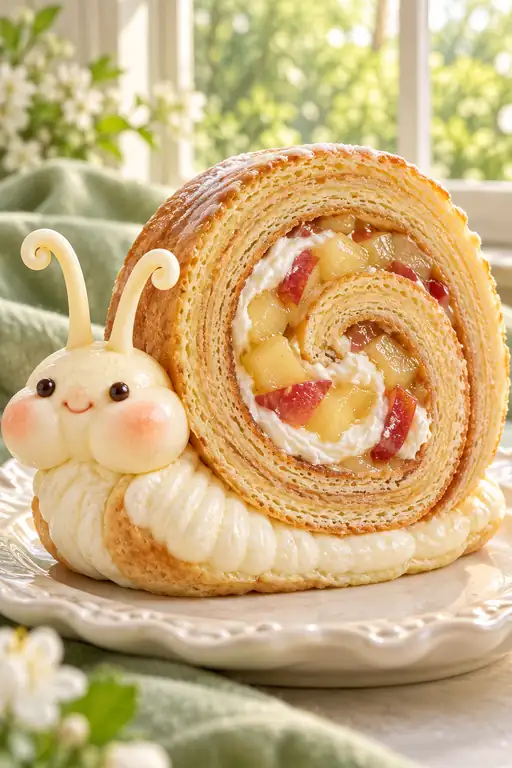 House of Sweet Apple Rings
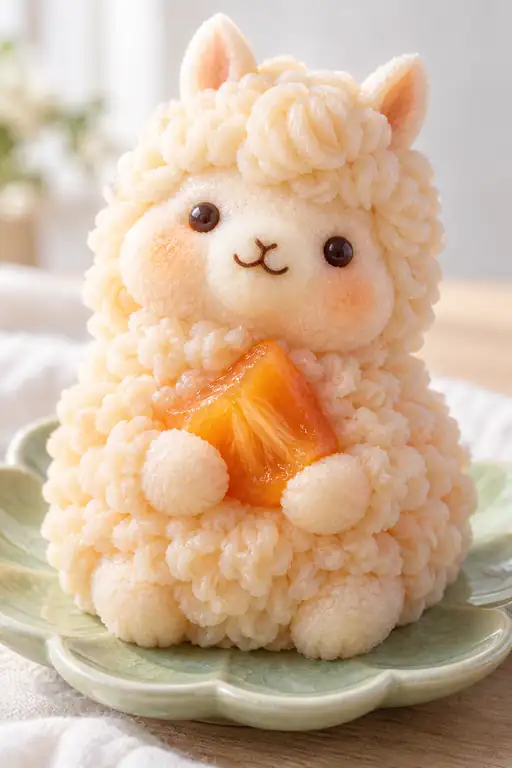 Amber Light Held Close to the Woolen Heart