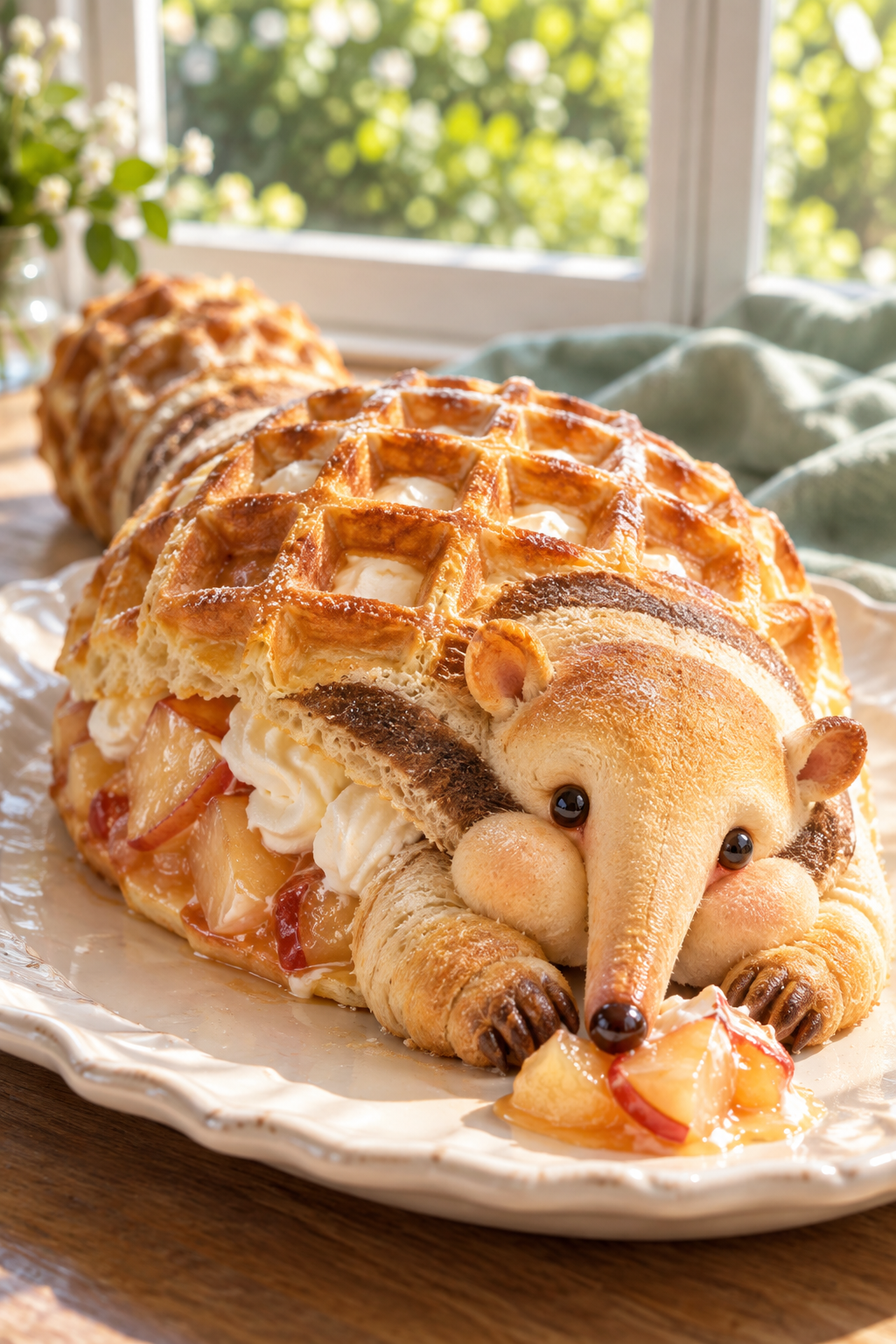
The Honeycomb Wanderer
Critique
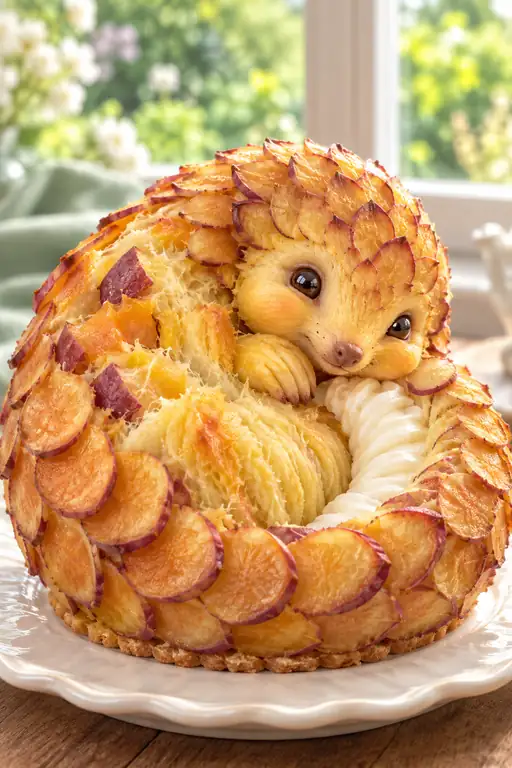
Introduction A long nosed animal fashioned from pastry lies beneath a woven golden crust on a white plate. Its face projects toward a small pile of glazed fruit, while cream and more fruit fill the body behind it. Window light gives the dessert an airy setting. Description The animal has tiny round ears, glossy dark eyes, full cheeks, and a narrow snout ending in a dark nose. Short curled front feet rest beside the fruit on the plate. A lattice of browned pastry covers its back and continues toward the rear. Cream and red edged fruit emerge from baked layers at left. Glossy pieces collect before the nose. Analysis The snout establishes a strong diagonal toward the lower right, opposed by the elongated body receding to the upper left. The lattice orders the cream and fruit beneath. Warm golden crust, dark markings, and red edged slices stand out against the white plate and muted green cloth. Side light brings out both the raised woven ridges and the moist fruit, making the difference between crisp and soft surfaces legible. Interpretation and Evaluation The animal seems to investigate fruit at its nose. Yet the exposed left edge openly displays the dessert's layered construction. The design is inventive in the way a woven top becomes an animal's back. Its busy ingredients remain coherent because the head and directed snout provide a clear focal route. Texture and color strengthen that organization. Conclusion The first impression follows the long face to the fruit; closer observation returns to the lattice and filling behind it. The composition joins a forward gesture to a receding body. Crisp crust, cream, and glaze make the form persuasive.
Same Subcategory
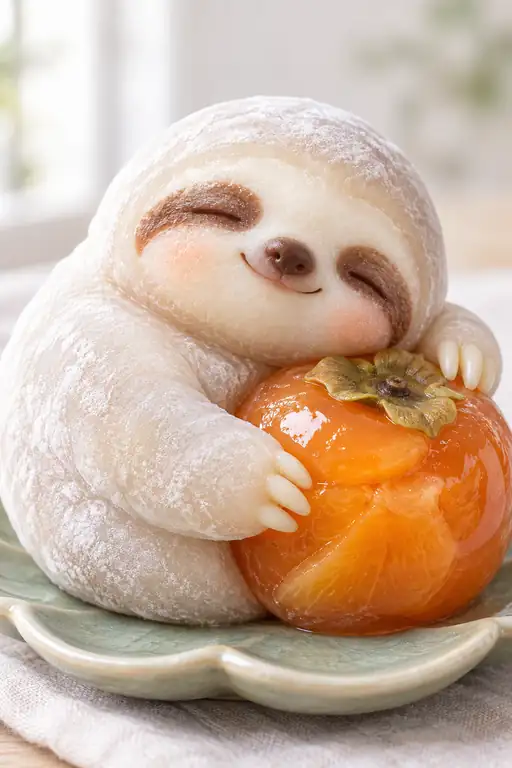 Slow Whispers in the Autumn Bower
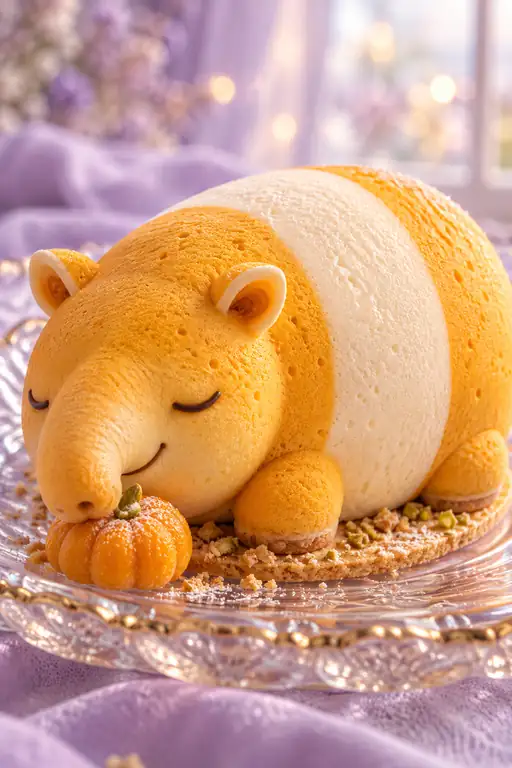 Slumber of the Sunset Tapir
Similar Artworks
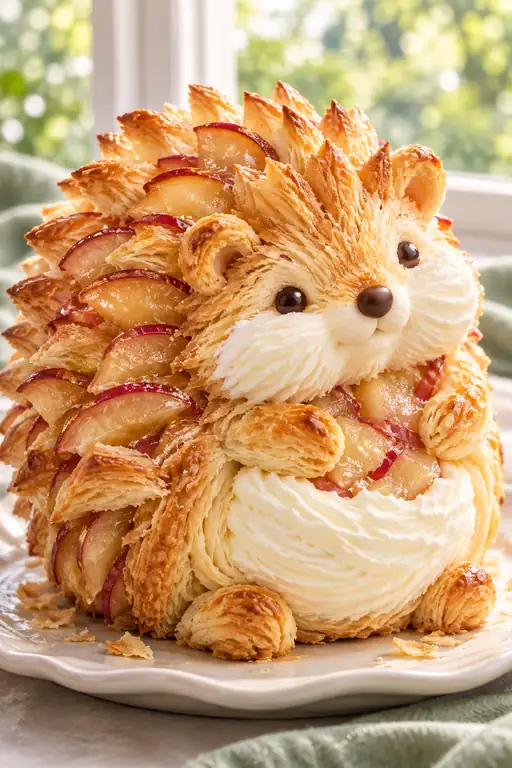 Spines of Crisp Layers and Sweet Orchard Wind
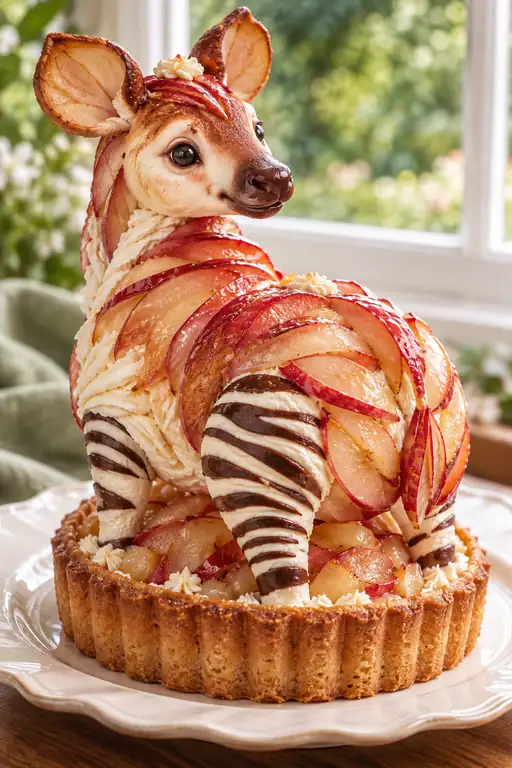 The Forest Mirage in Apple Armor
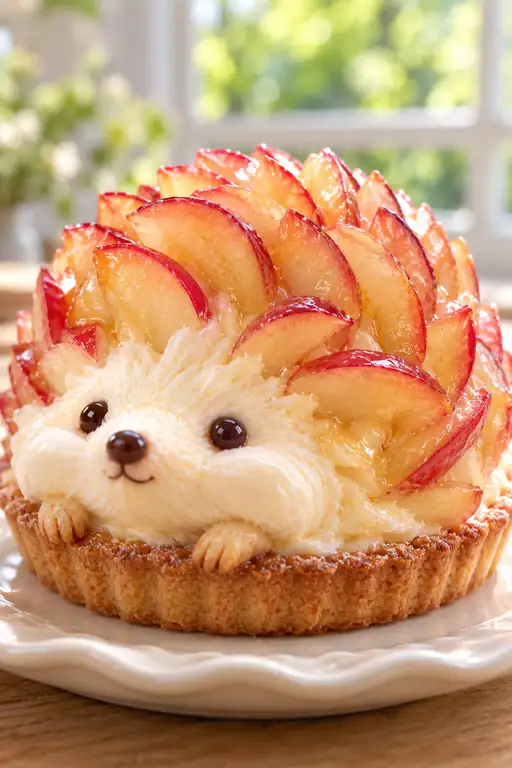 Sunlight Between My Crimson Quills
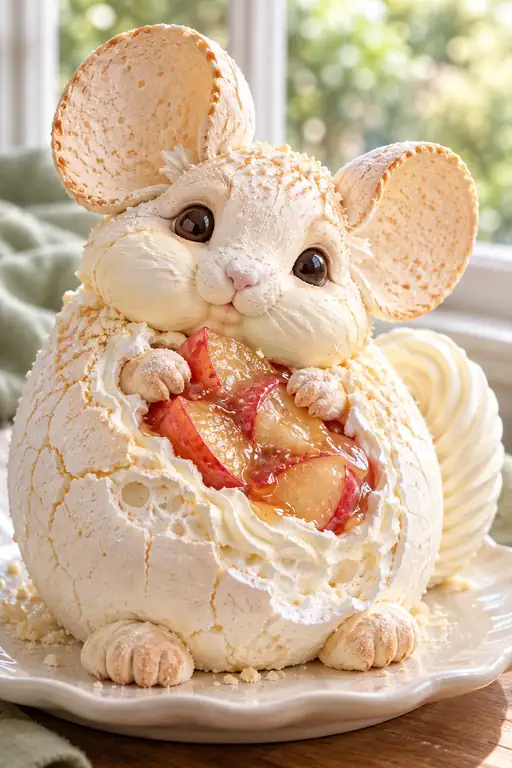 Apple Heart Beneath the Sugar Shell
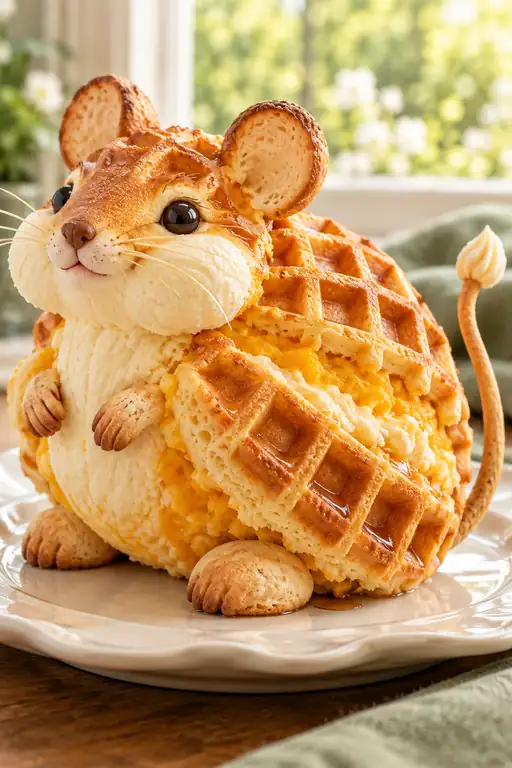 Honeycomb Armor of the Morning Light
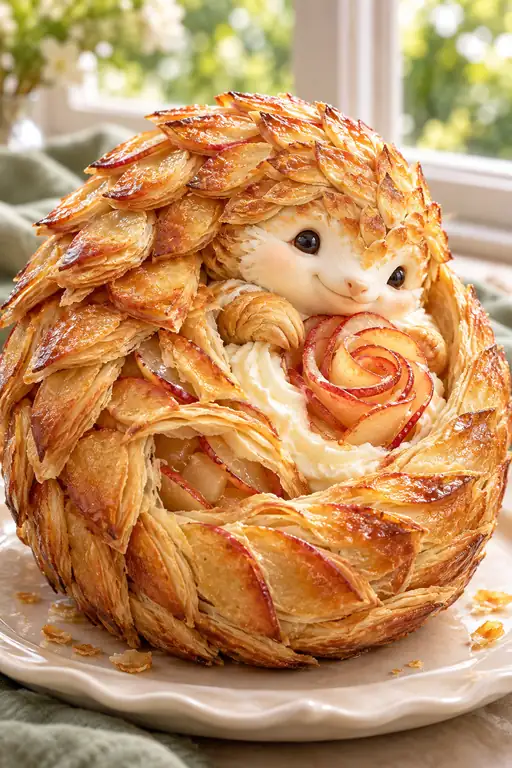 The Pastry Thorn and the Apple Rose
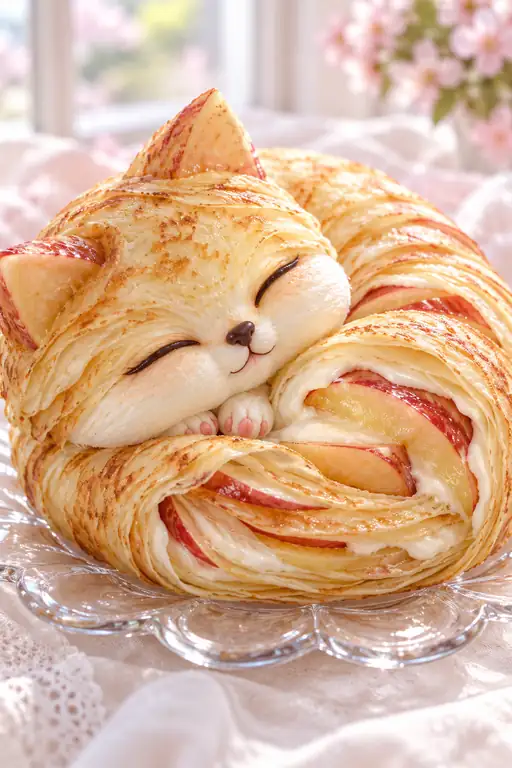 Slumber in the Apple Spiral
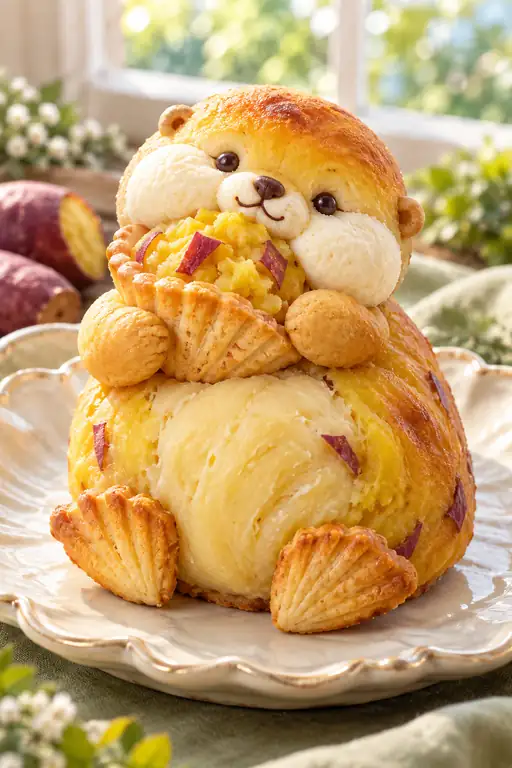 Golden Harvest in the Baker's Paws
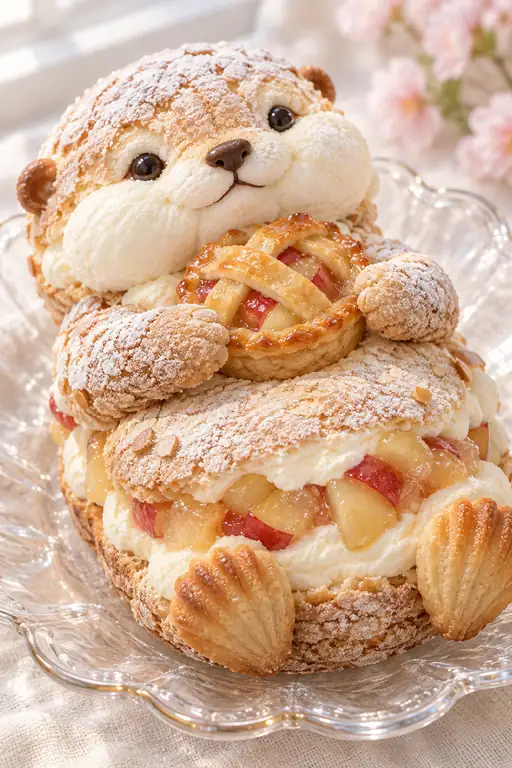 Tender Slumber with the Apple Jewel
 Golden Scales of the Harvest Earth