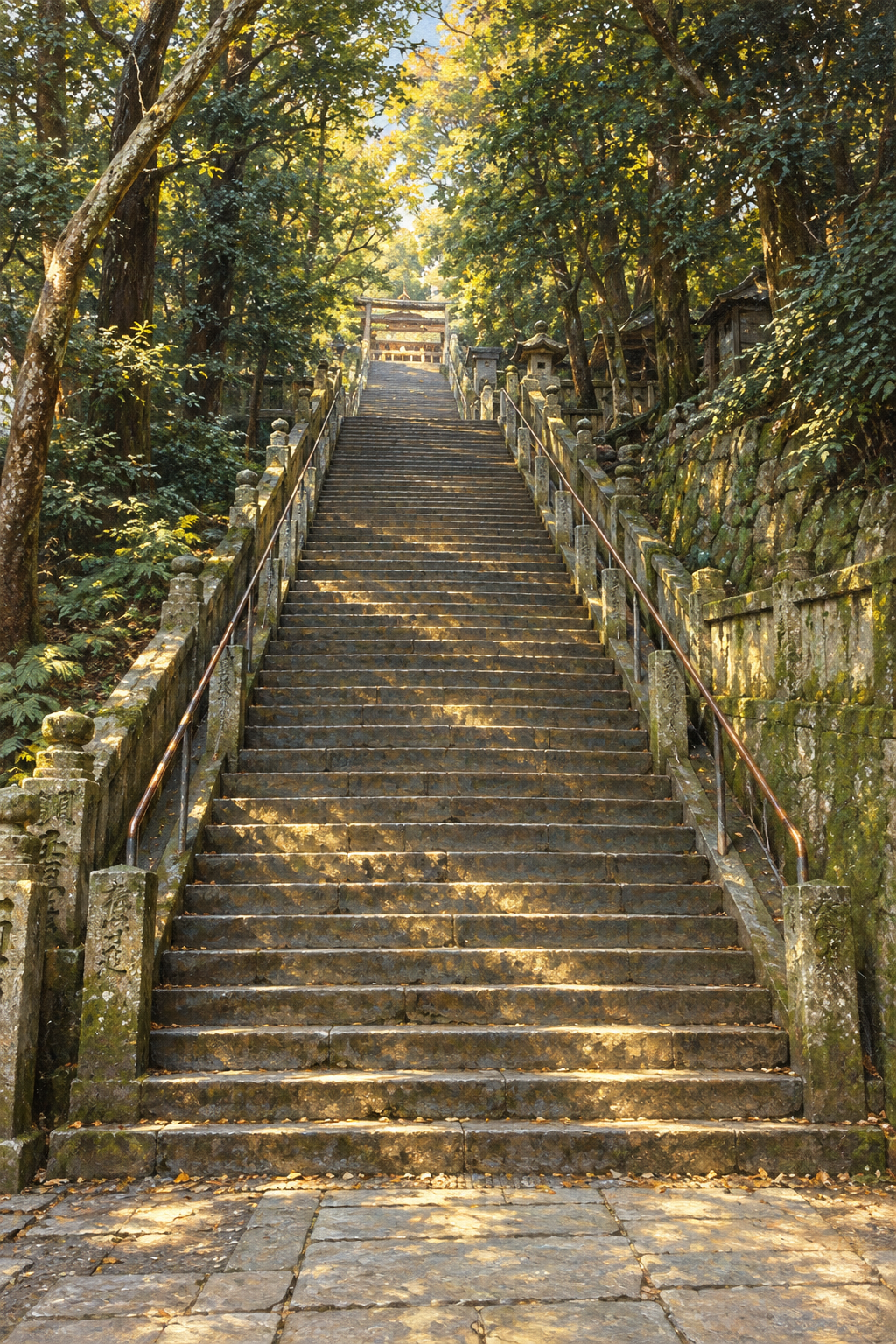
Ascent Through Ancient Sunbeams
Critique
Introduction A stone staircase rises through trees toward a distant gate. Repeated steps and parallel railings draw the eye upward. Shaded stone contrasts with patches of warm sunlight. Description The lower steps fill the foreground and narrow gradually toward a second rise beneath the gate. Stone posts line both sides, joined by slender brown handrails. A high mossy wall borders the right, with lantern-like stone structures and dark buildings partly visible among trees. Branches arch overhead, leaving a luminous opening at the top. Fallen leaves and irregular stone surfaces mark the path below. Analysis Strong perspective lines converge near the gate, making the ascent the organizing form. The repeated horizontal treads slow the gaze even as the railings pull it forward. Broken sunlight forms small warm shapes across cool gray stone. Dense foliage encloses the sides, while the central opening offers a bright release. Moss and weathered edges soften the masonry; the fine network of leaves contrasts with the steps' regular geometry. Interpretation and Evaluation The empty stairway invites the viewer to imagine a gradual passage from the shaded foreground toward the light. Its sense of duration comes from the many visible steps, not from a depicted figure. The composition balances strict symmetry with uneven light and irregular trees. Careful differences among worn stone, moss, wood, and leaves give the setting depth. The restrained green, gray, and gold palette sustains a quiet mood. Conclusion At first the gate seems to be the destination, but closer attention turns the staircase itself into the subject. The image gains its force from repeated ascent, shifting light, and the patient texture of the surrounding forest.
Same Subcategory
 Sanctuary Beneath the Violet Flare
Similar Artworks
 Whispering Lanterns of the Cedar Stair
 Stairway to the Mountain Shrine
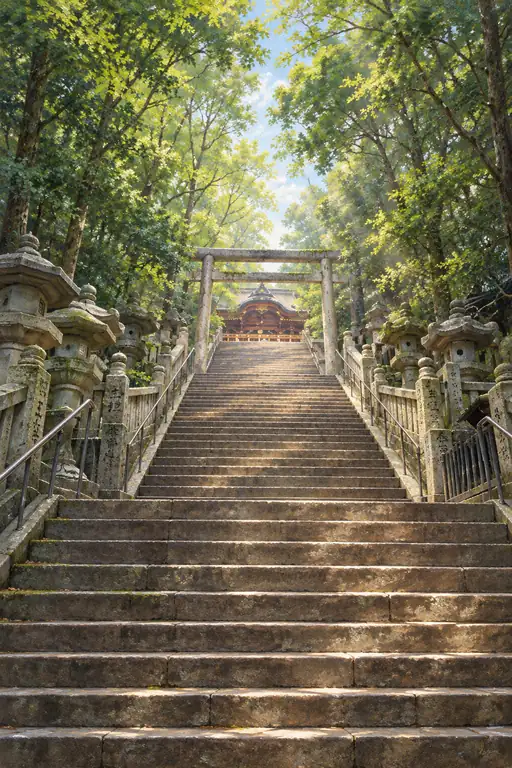 Gateway of Sunlit Devotion
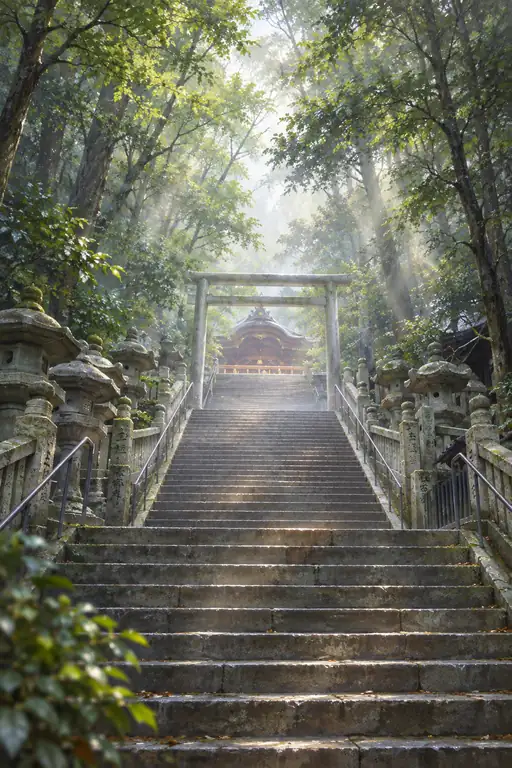 Beams of Light upon the Ancient Stair
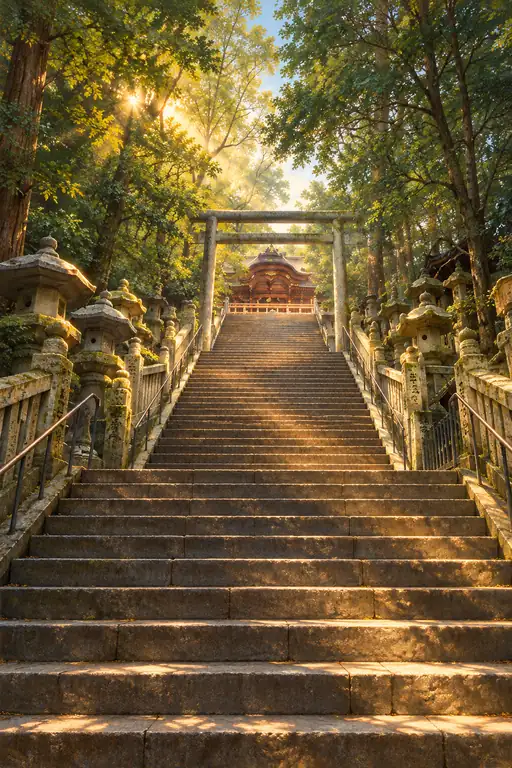 Dawn Piercing the Sacred Canopy
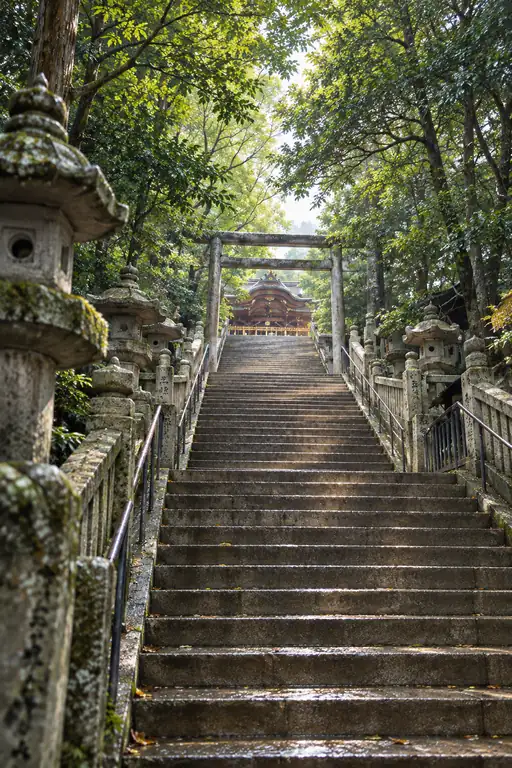 Dew-Kissed Steps to the Shrine
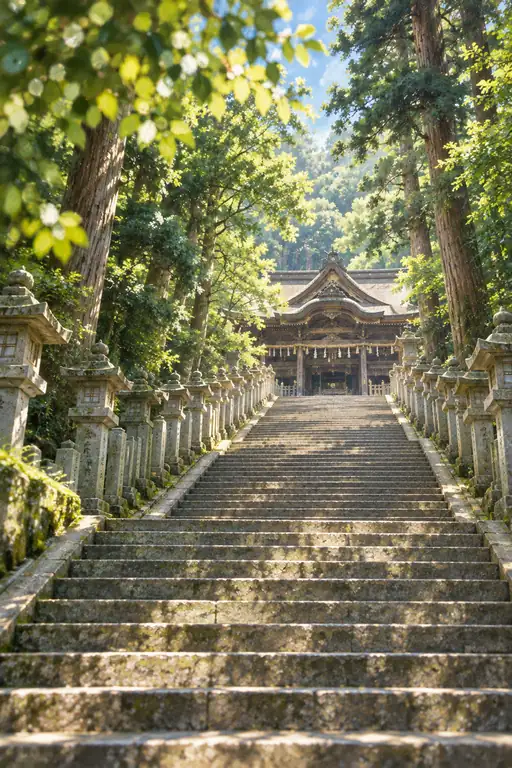 Pathway of Stone Lanterns to the Sacred Peak
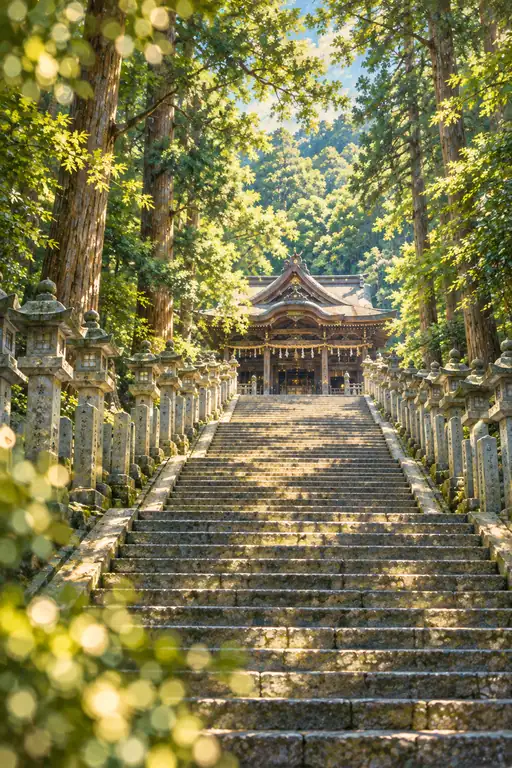 Sunlit Sanctuary in the Cedar Grove
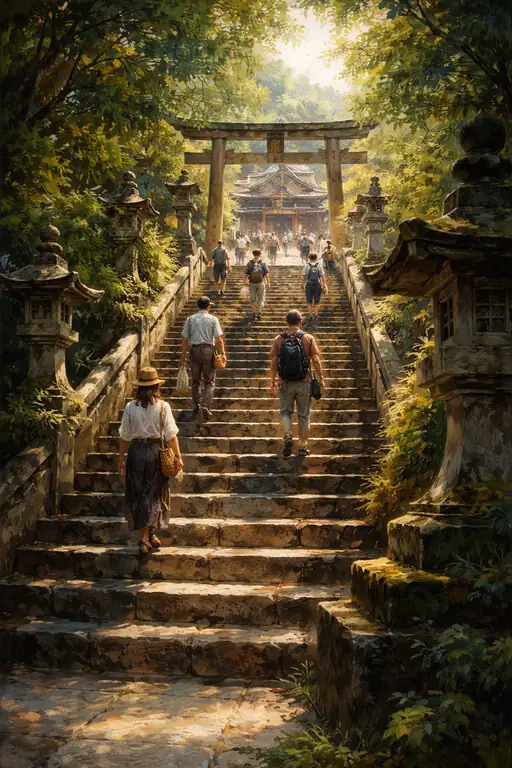 Path to the Sacred Light
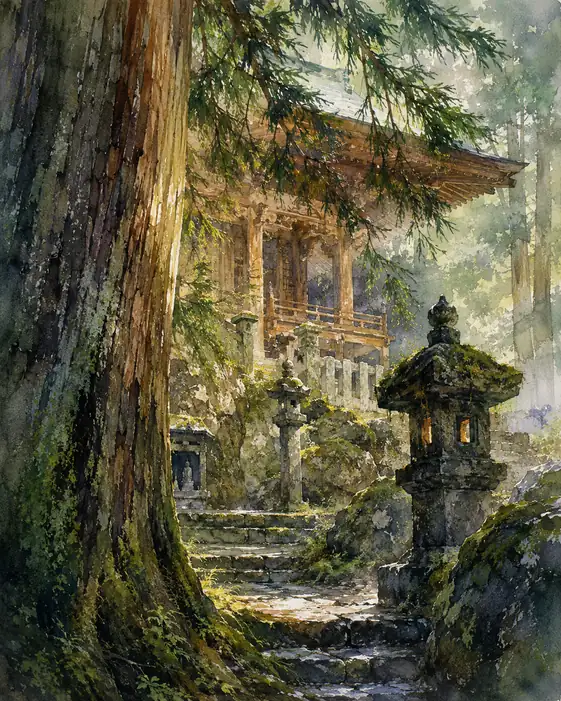 Sanctuary of the Ancient Cedars