Pilgrim of the Persimmon Hills
Critique
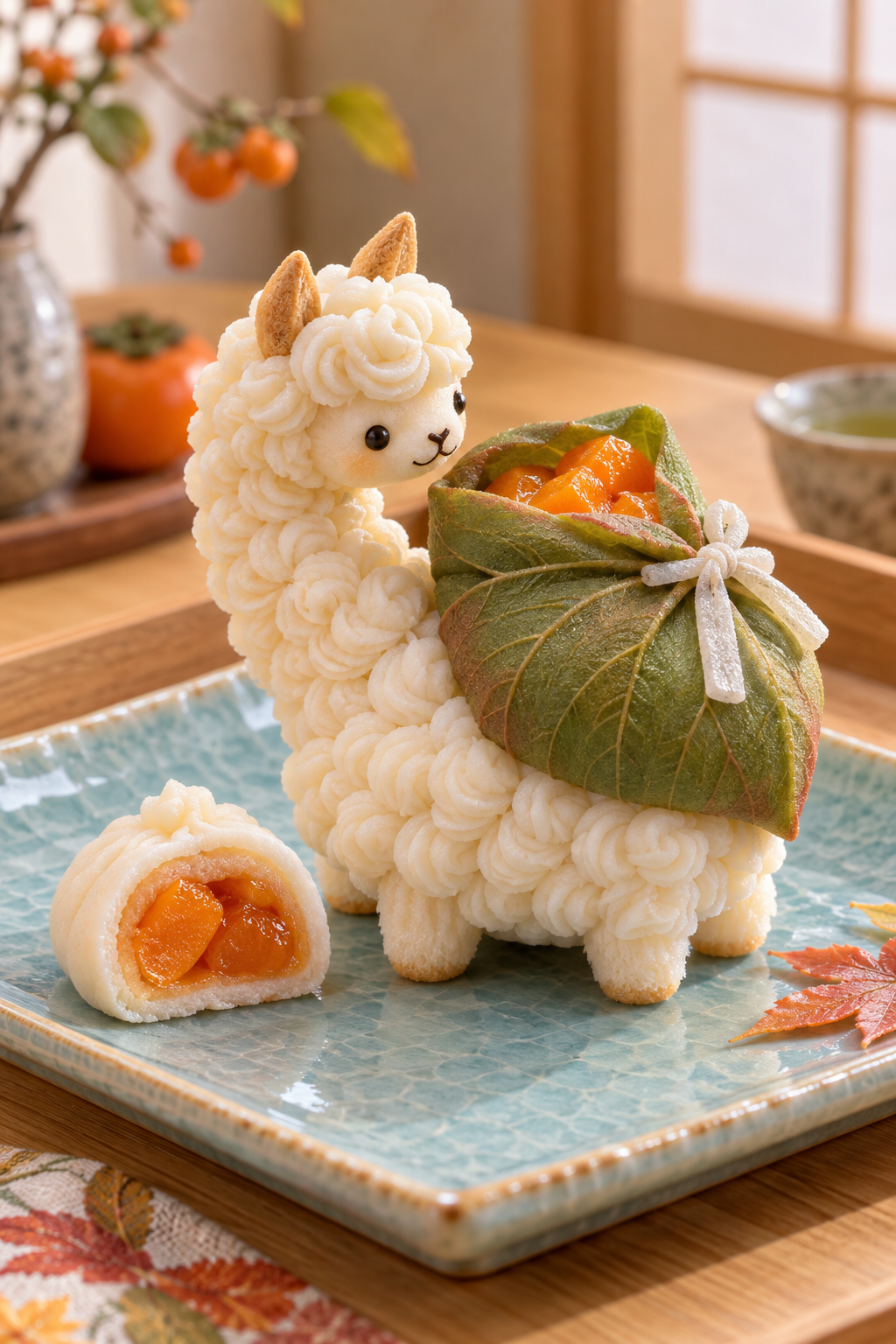
Introduction A white lamb confection stands on a turquoise plate, carrying a green bundle of orange fruit. A cut piece reveals the same filling. Wood and autumn leaves give the dessert a seasonal atmosphere. Description Piped white curls cover the animal's neck and body, while a smooth face carries dark eyes and a slight smile. Two brown biscuit ears rise above its head. The broad green wrapper rests across its back, with visible veins, reddish edges, and a pale bow at the right. Orange fruit glistens in the opening. At left, a pale slice exposes fruit inside a thin casing. Analysis The lamb's upright neck draws the eye upward, then its gaze and the diagonal bundle redirect attention to the orange center. Repeated white spirals contrast with the wrapper's broad veined surface. Warm orange is concentrated in the bundle and cut slice, while the cool plate provides a quiet base. Side light picks out the cream ridges and the fruit's gloss, separating soft, dry, and wet textures. Interpretation and Evaluation The bundle resembles a carried gift, giving the animal a purposeful gesture. The exposed slice clarifies that the visible load is food, and it lets the viewer compare the casing with the fruit inside. The simple silhouette keeps its detailed design readable. Composition, restrained color, and precise surface rendering work together to maintain a clear hierarchy. Conclusion The first impression is a small animal bearing a parcel; closer looking reveals how the parcel and sample slice display the dessert's materials. The arrangement makes a seasonal association through its leaves and warm fruit without needing an elaborate setting. Its appeal lies in the measured link between narrative form and visible texture.
 Autumn Warmth in Cream and Wool
 Slumber of the Amethyst Peacock
 Smiling Treasure of the Autumn Bough
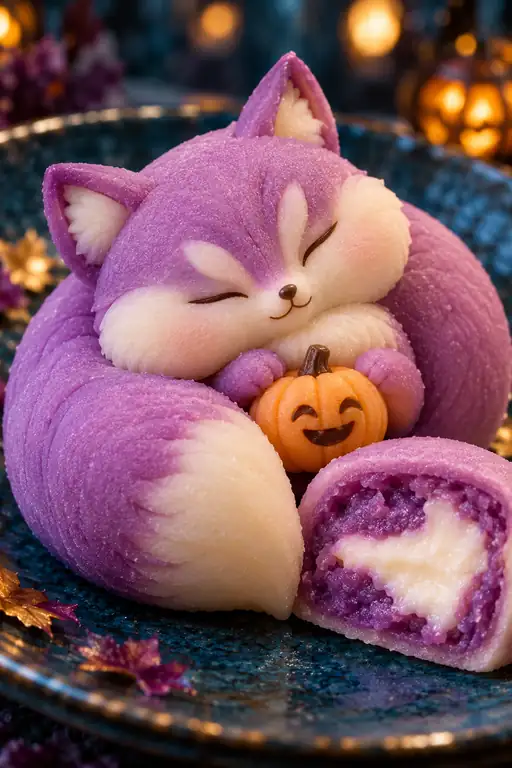 The Lantern I Keep in My Dreams
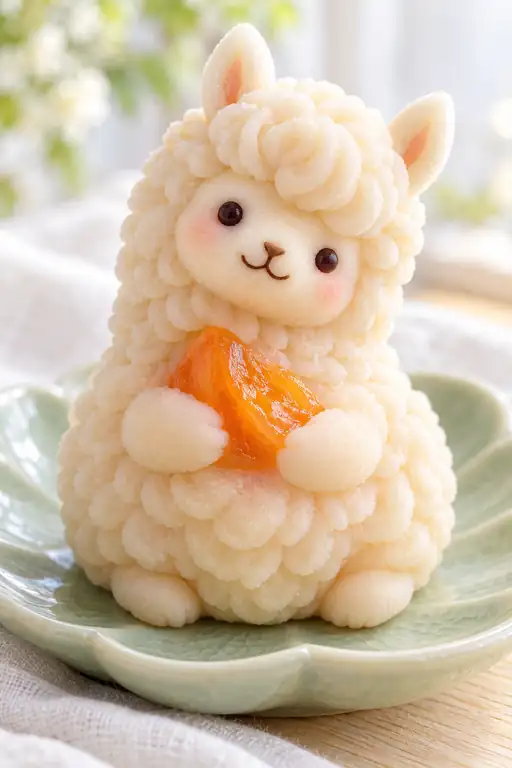 Embrace of the Golden Persimmon
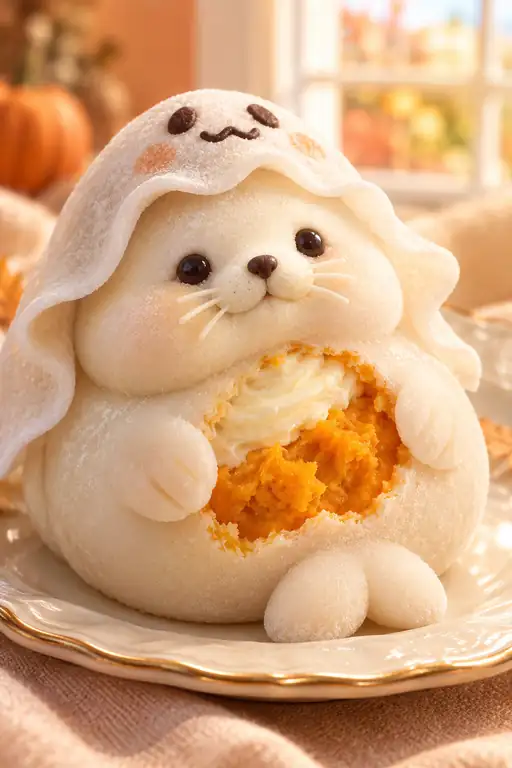 Peekaboo, Little Ghost
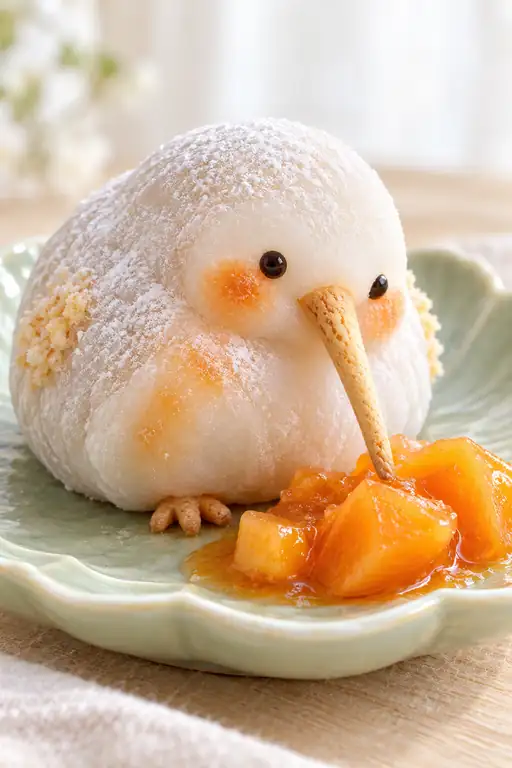 Tasting the Amber Nectar
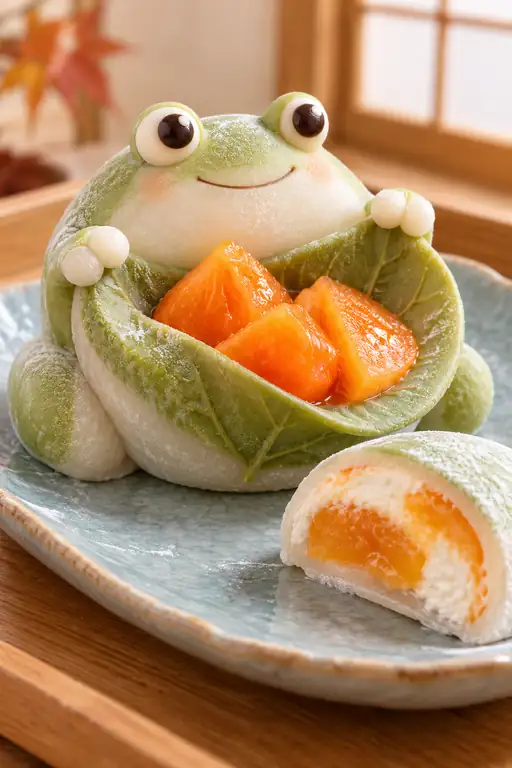 Offering of the Amber Harvest
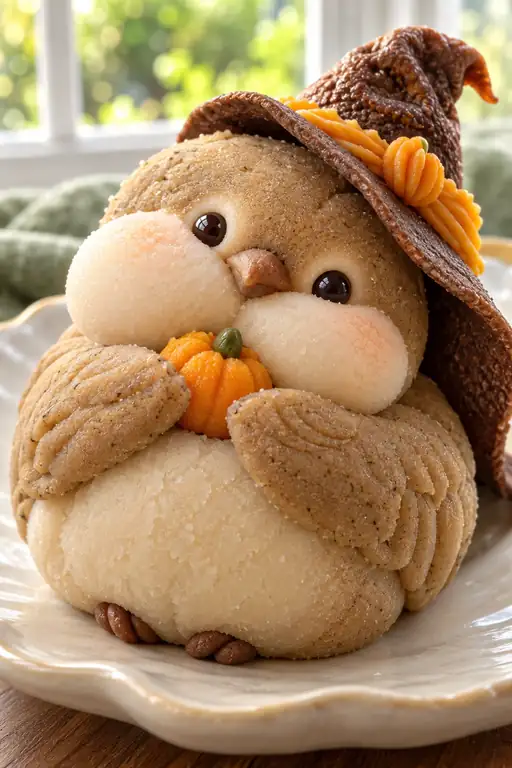 The Harvest Beneath My Wings
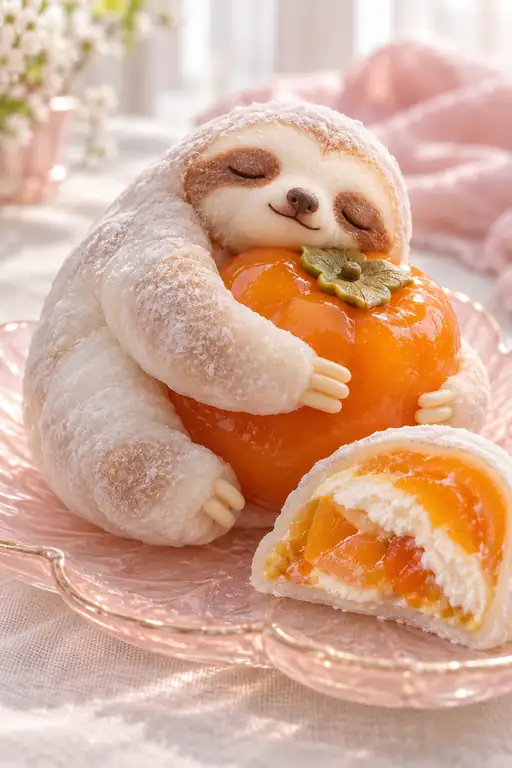 Embrace of the Autumn Fruit
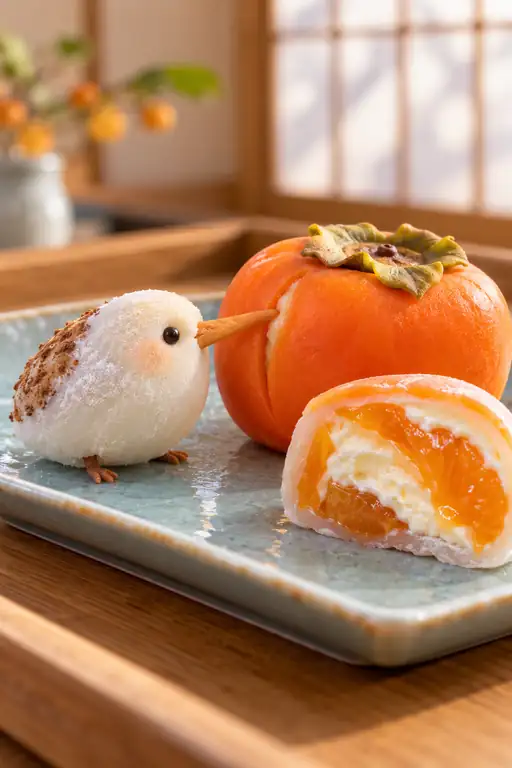 Tasting the Autumn Hearth
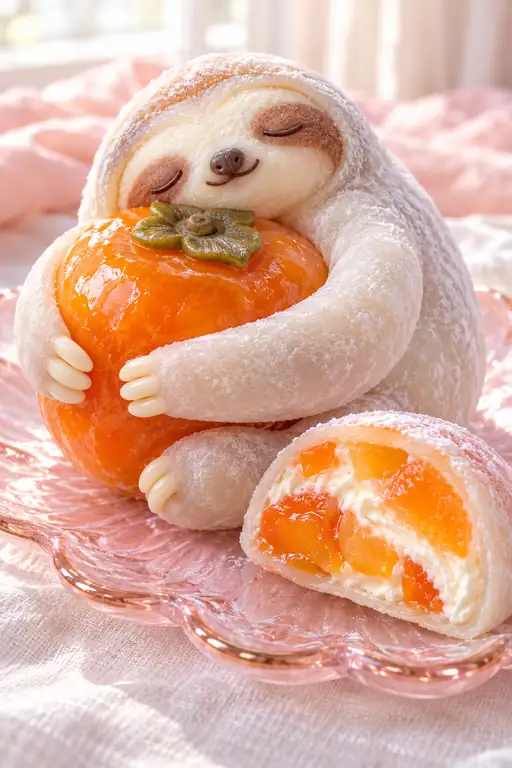 Quiet Embrace in Autumn Light