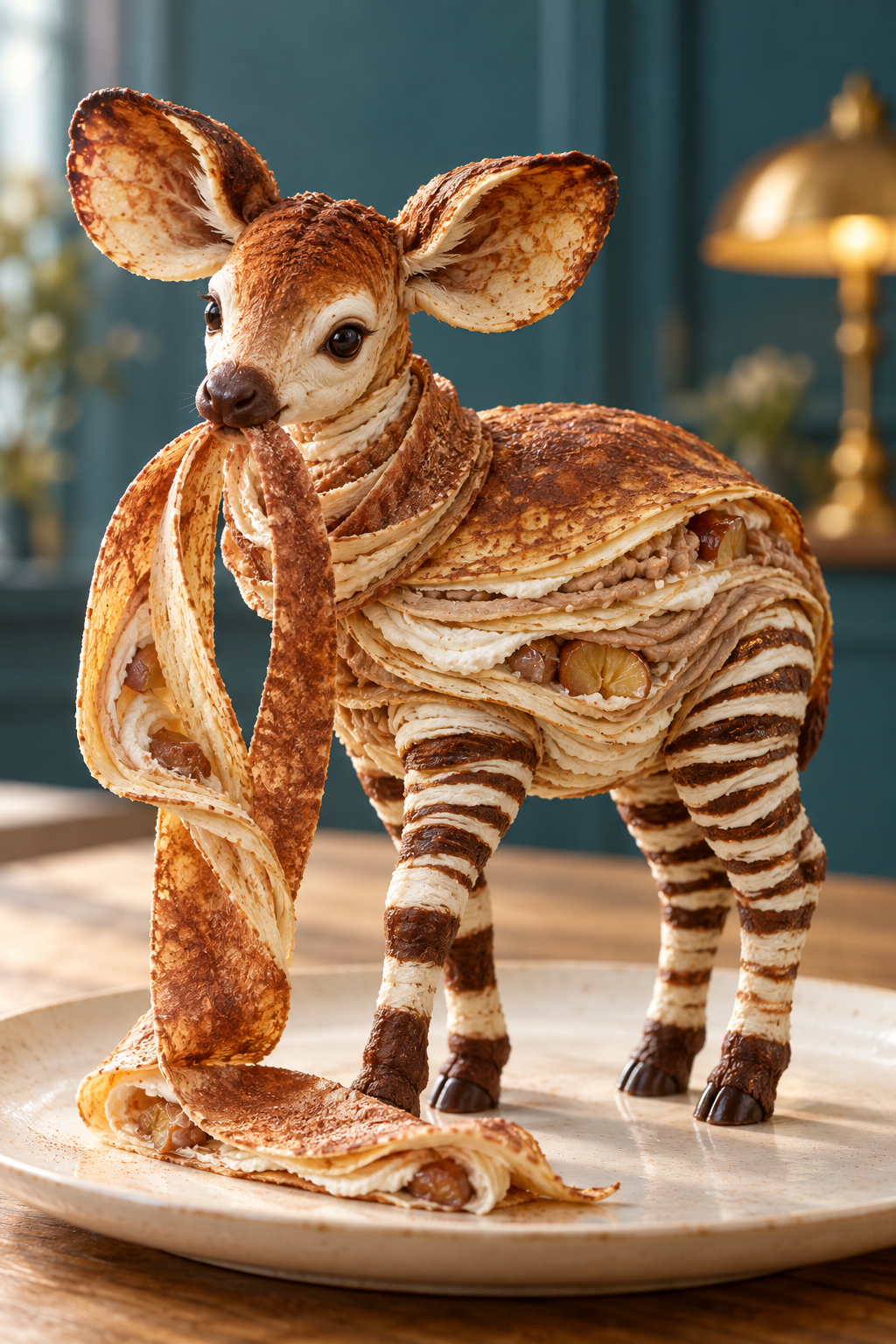
The Forest Wanderer's Ribbons
Critique
1. Introduction A young deer shaped pastry stands on a white plate, its body built from many folded, filled layers. A loose strip hanging from its mouth reveals how the pastry construction can unfold. 2. Description The deer has glossy dark eyes, a brown nose, pale facial markings, and two wide ears with browned interiors. Layers of cream colored pastry wrap around its neck and broad torso, with brown filling and small fruit pieces visible between them. Four slim legs carry alternating dark and pale bands and end in dark hooves. A long baked strip drops from the mouth to the plate, where its cut end shows cream and fruit. 3. Analysis The horizontal torso contrasts with the narrow vertical legs, while the large ears widen the upper silhouette. Repeated brown and white bands connect the legs to the layered body. The dangling strip leads the eye from the face down to the plate, displaying the material's thinness. Side lighting picks out toasted edges, pale cream, and glossy fruit. The plain plate gives the intricate figure a stable visual floor. 4. Interpretation and Evaluation The hanging strip suggests the deer is nibbling at the substance from which it is made. This playful action gives a complex pastry sculpture a clear narrative. The composition remains readable through distinct head, torso, and legs. Detailed rendering differentiates crisp browned sheets, soft cream, and filling. Warm pastry tones stand out against the cool wall, while the striped legs lend the design unusual coherence. 5. Conclusion The animal's graceful stance attracts the first glance; closer study reveals repeated folded layers throughout its body. The image succeeds by making construction visible within a lively character.
Same Subcategory
 1791026580994
Similar Artworks
 Hanging Slumber in the Chestnut Grove
 Stripes of the Autumn Meadow
 The Night Watchman's Chestnut Lamp
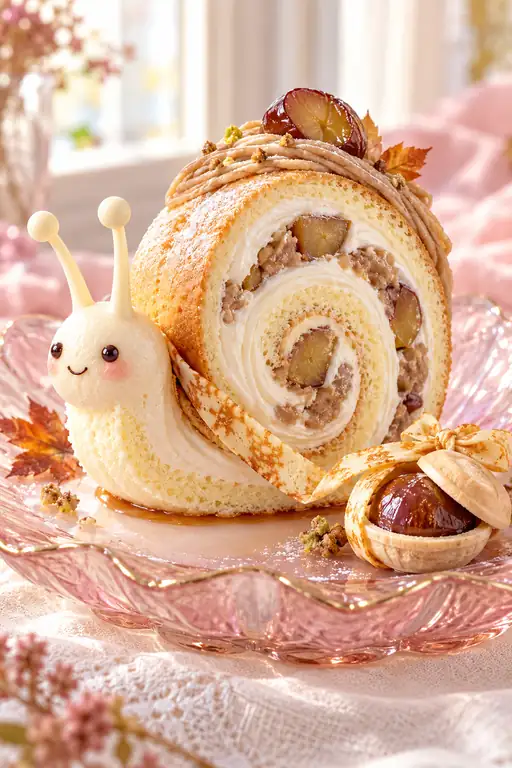 The Slow Traveler of Chestnut Hills
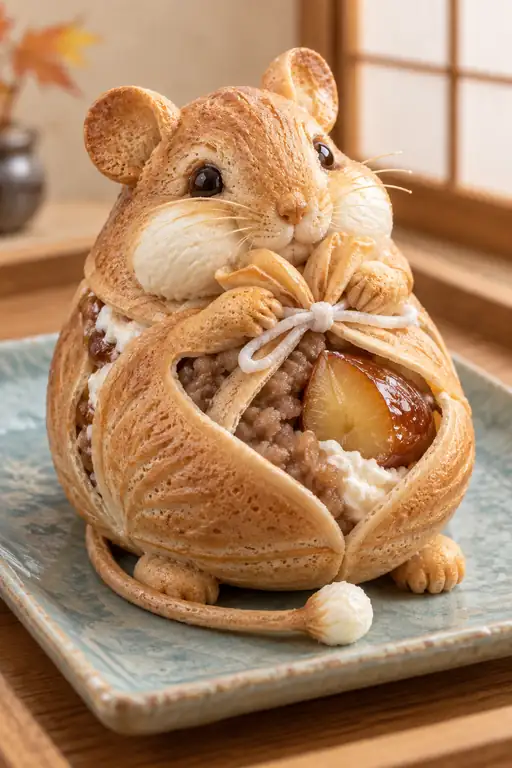 Keeper of the Glazed Chestnut
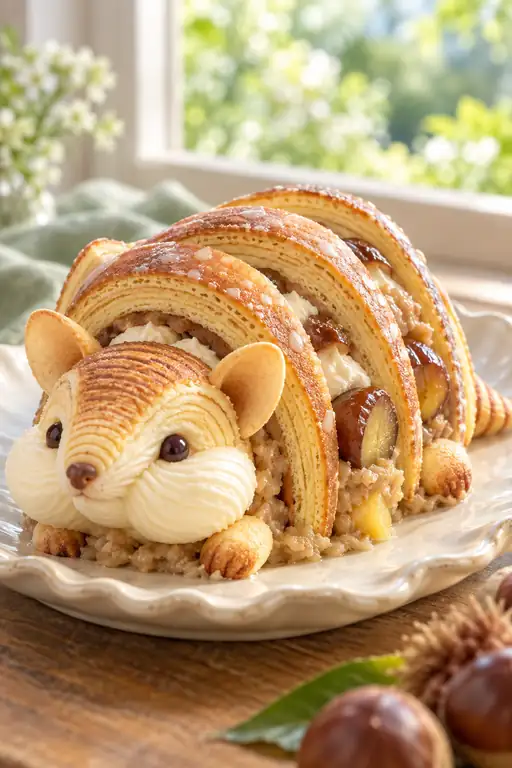 Armor of Layered Chestnut Groves
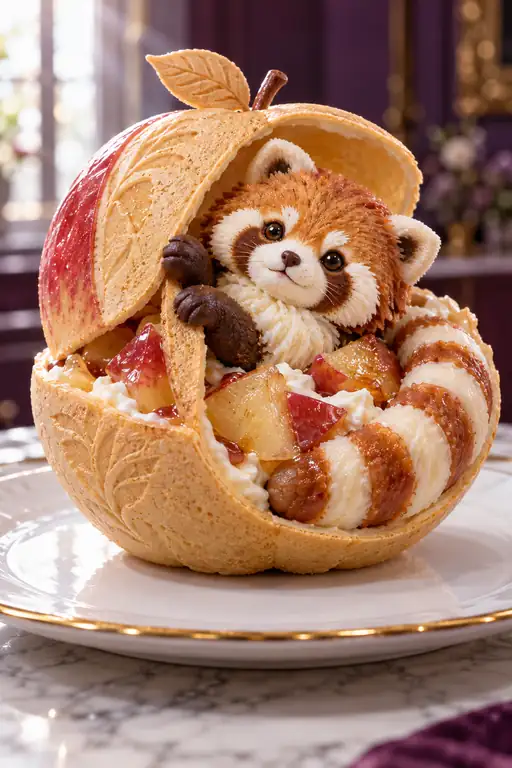 The Little Thief of Apple Orchard
 Treasure in Layered Ribbons
 Repose upon the Rolled Pastry
 Dream Eater's Sweet Slumber