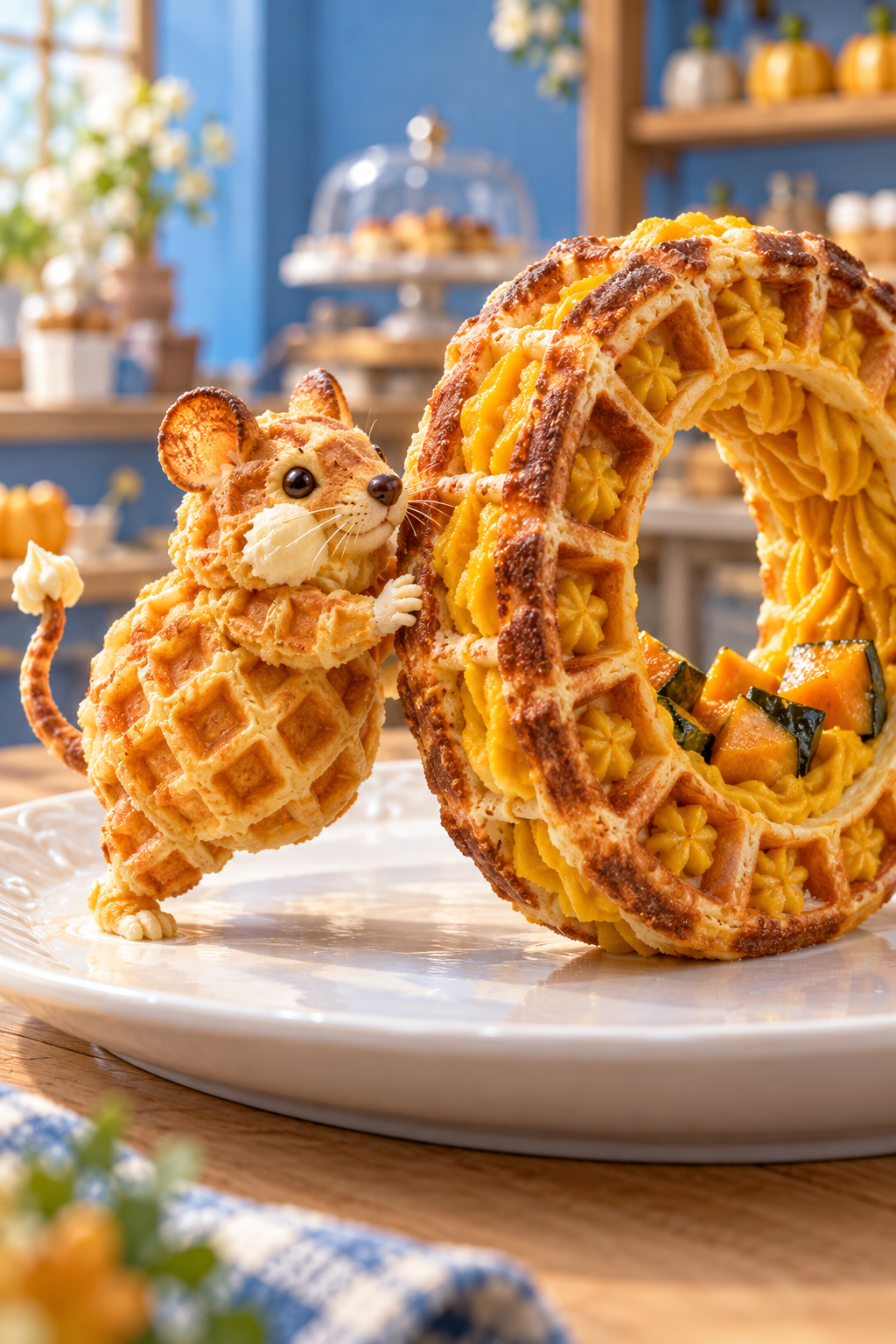
Turning the Autumn Wheel
Critique
1. Introduction A small golden mouse shaped pastry stands beside an enormous upright wheel of baked pastry and orange filling. One paw reaches toward the wheel, linking the creature to the dessert beside it. 2. Description The mouse has dark eyes, a pointed nose, white cheeks, fine whiskers, and rounded toasted ears. Its body shows a wafflelike grid, and a thin tail curves left with a pale tip. The tall wheel has browned crossbars over many orange cream rosettes. Its open center contains orange cubes with patches of dark green skin. Both forms rest on a white plate; shelves, a glass cake stand, and a blue wall blur behind. 3. Analysis The wheel dominates the right side, while the mouse's reaching paw provides a bridge across the gap. Repeated grid squares connect its body to the wheel's crossbars. Orange cream inside the wheel is more saturated than the mouse's golden crust, establishing a focal contrast. Strong light picks out browned edges and ridged filling. The white plate stabilizes the upright forms, and the cool blue background emphasizes their warmth. 4. Interpretation and Evaluation The mouse appears to examine or push a dessert far larger than itself, giving the image a playful action. The composition relies on unequal scale but keeps both figures legible. Rendering differentiates crisp waffle texture, piped cream, and firm orange cubes. Blue and white surroundings restrain the vivid orange and brown palette. Repeating the baked grid in animal and wheel is an inventive way to unite separate forms. 5. Conclusion The small character catches the eye, then the monumental wheel reveals the image's central formal idea. Their shared texture and contrasting scale create a coherent, lively scene.
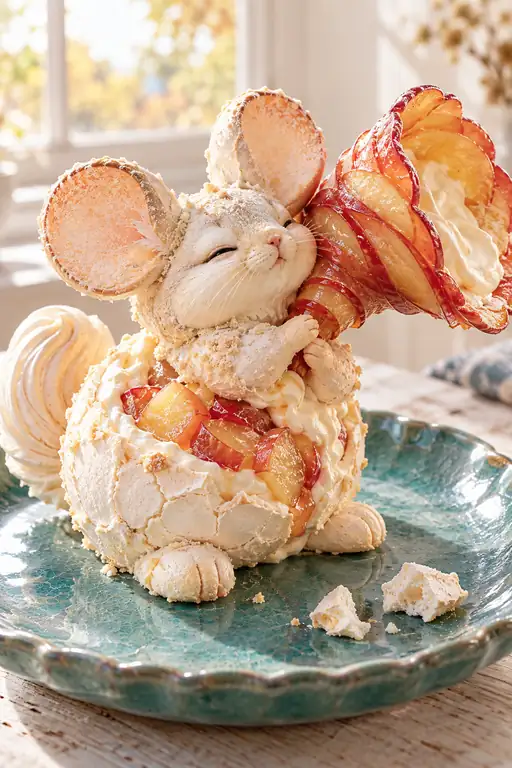 An Apple Tune in Golden Light
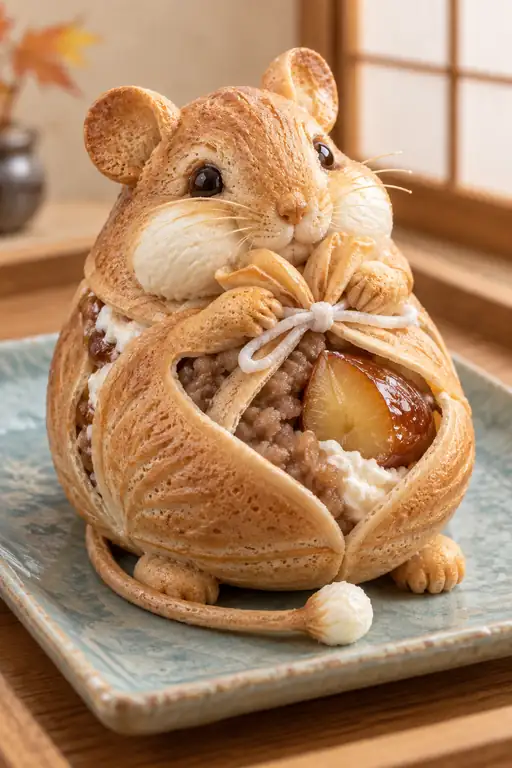 Keeper of the Glazed Chestnut
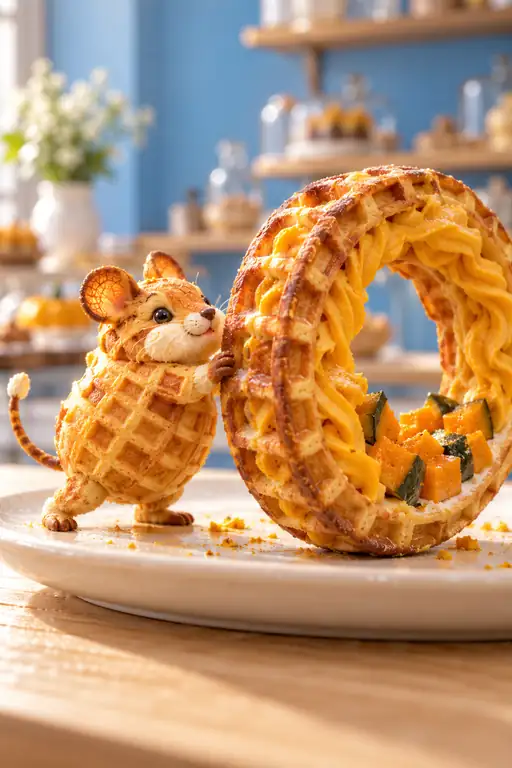 Rolling the Golden Harvest Wheel
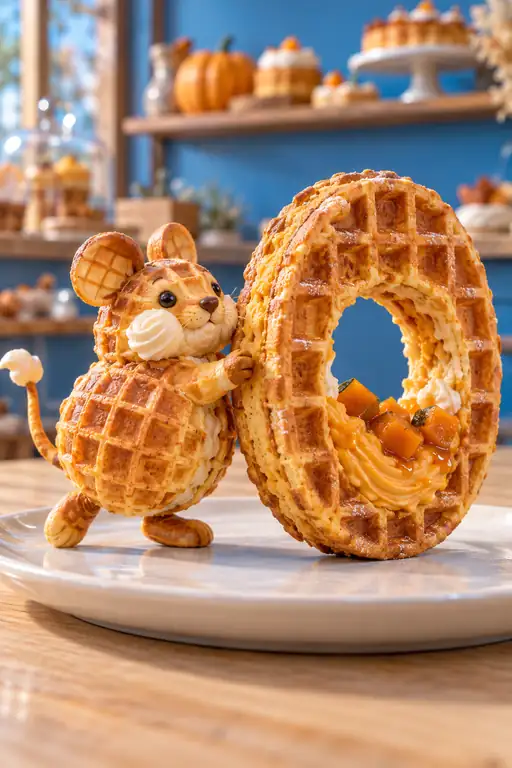 Rolling the Golden Harvest
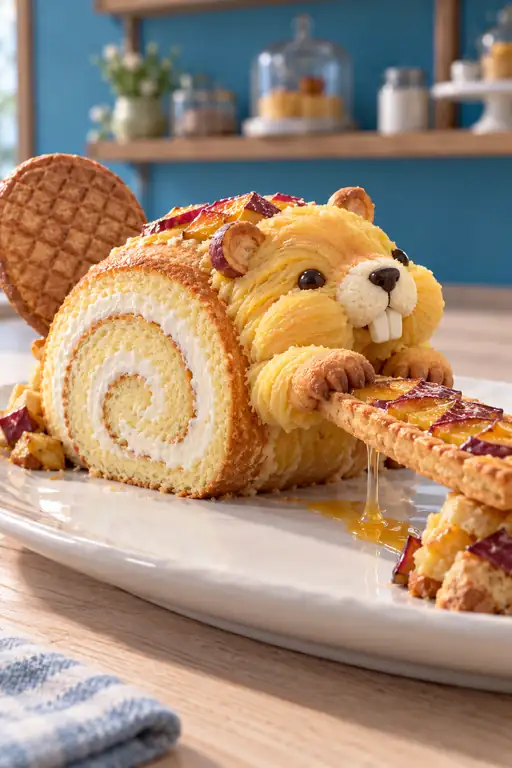 Architect of the Golden River
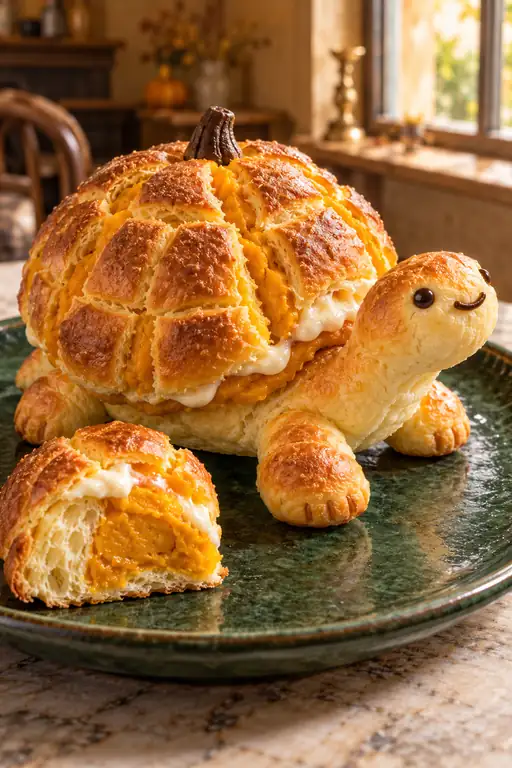 The Gentle Pumpkin Wanderer
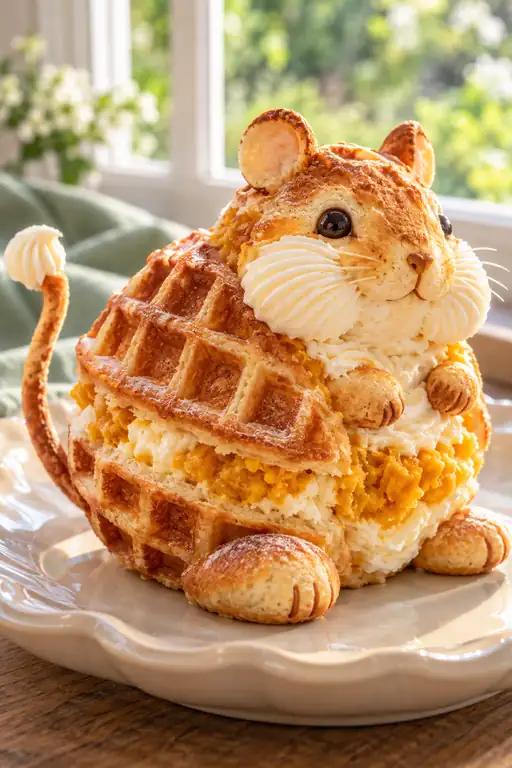 Round Whispers of Autumn Waffle
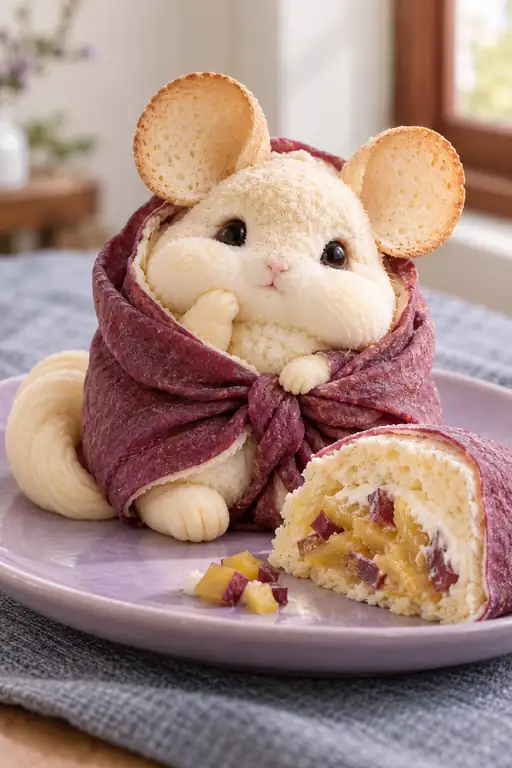 Wrapped in the Violet Shawl
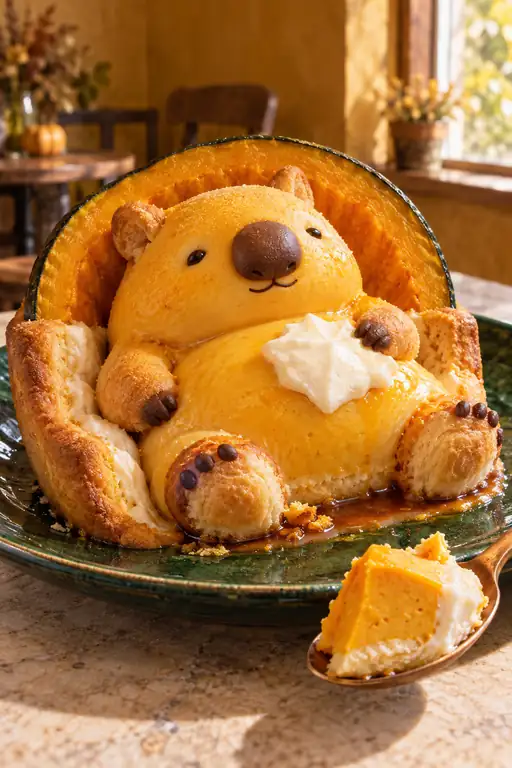 Throne of the Autumn Squash
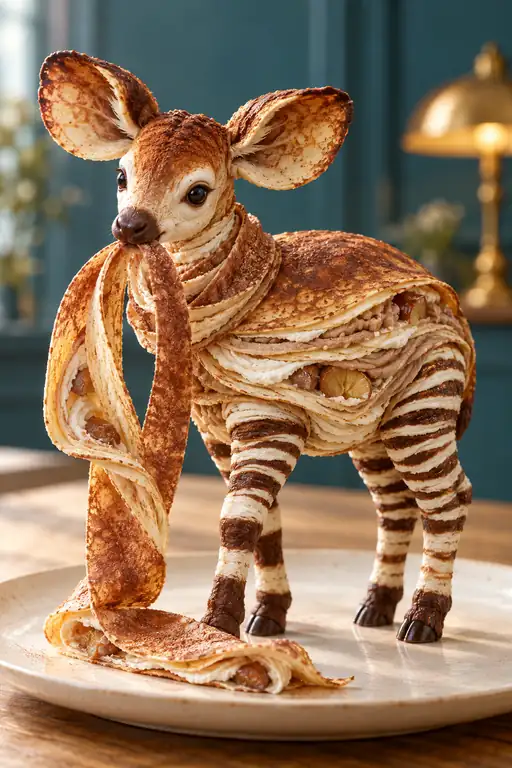 The Forest Wanderer's Ribbons
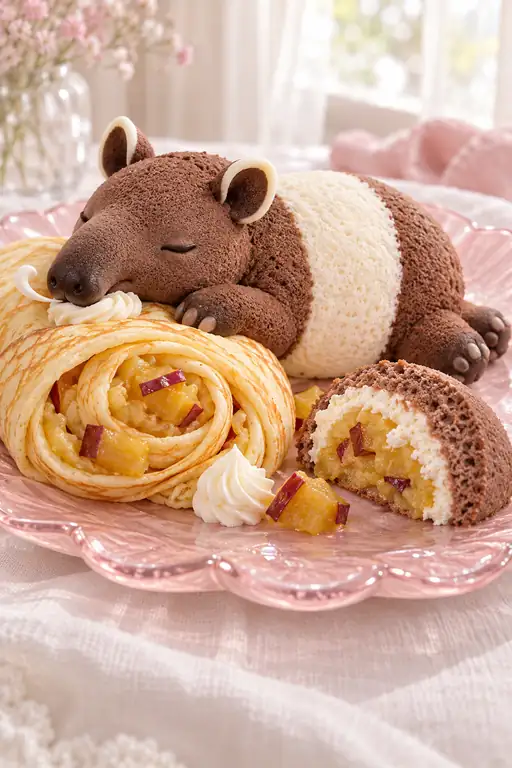 Repose upon the Rolled Pastry
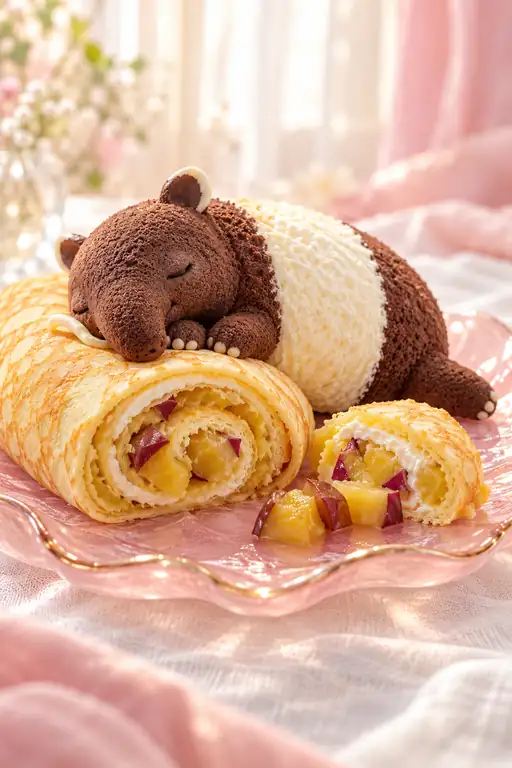 Dream Eater's Sweet Slumber