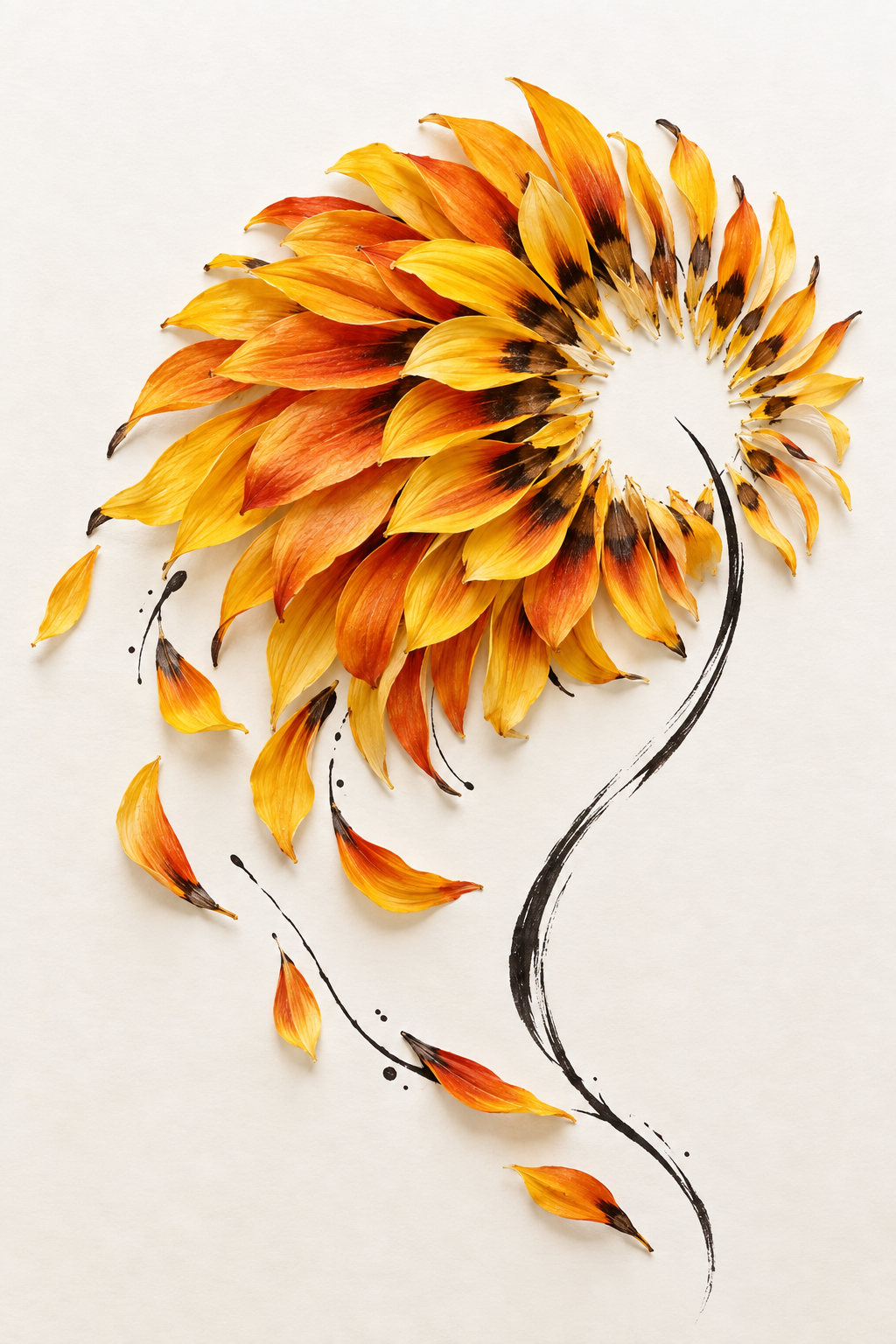
The Turning of Light
Critique
Introduction Yellow and orange petals form an asymmetric circular bloom above a long black curve. The flower's center remains open, exposing the pale ground rather than a seed head. Detached petals descend along the left, so the composition combines the coherence of a large blossom with a visible process of dispersal. Description The densest layers occupy the upper left and middle of the flower. Slender petals radiate around the right side, many marked by dark brown areas near their bases. Below, separate curved petals accompany small black droplets and fine strokes. A broader black line bends twice before narrowing near the bottom edge. Analysis The off-center opening draws attention toward the upper right, while the heavier orange layers pull it back leftward. This unequal distribution makes the circular arrangement appear to turn. Warm color gradients and soft shadows articulate each overlapping petal. The black curve provides continuity through the otherwise sparsely occupied lower half. Interpretation and Evaluation The image suggests a flower changing shape as its parts loosen, although no single moment of motion is fixed. Its effectiveness rests on the relationship between layered abundance and isolated fragments. Dark petal markings echo the drawn strokes, allowing botanical detail and linear gesture to belong to the same visual structure. Conclusion What initially reads as a bright bloom becomes an arrangement concerned with rotation, release, and continuity. The empty center and long curved line are as important as the colored surfaces. By varying density rather than multiplying subjects, the work gives a simple floral motif a sustained sense of movement.
 Spiral Melody Woven from Celestial Petals
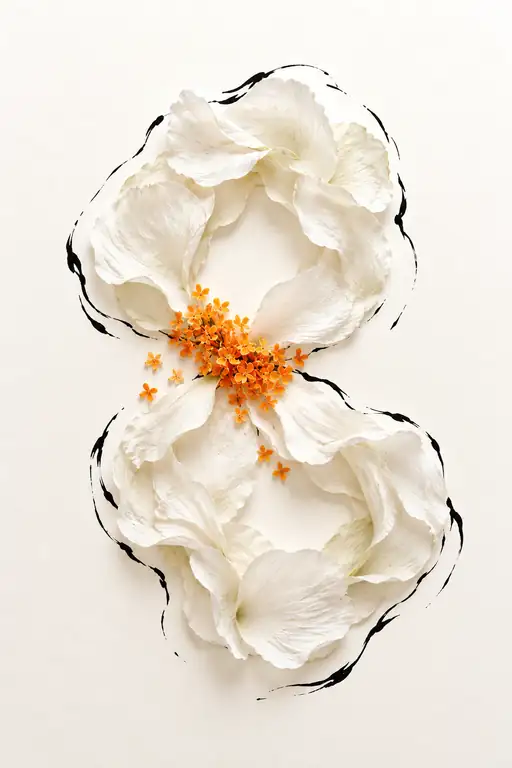 Between Two Silences
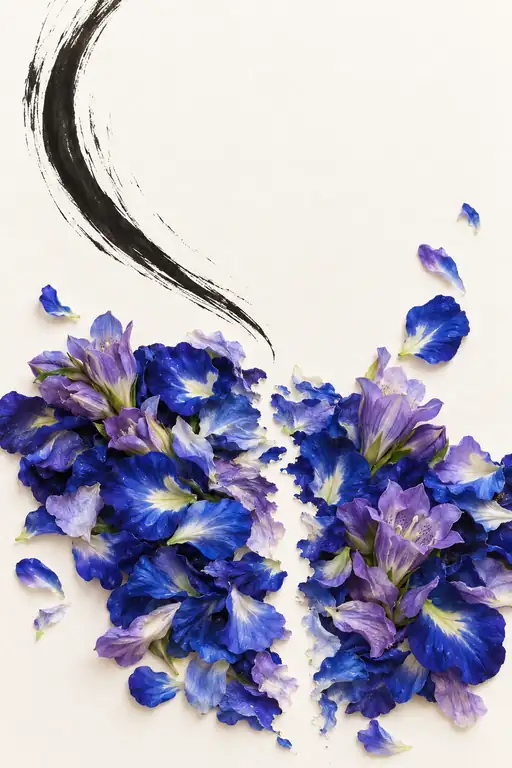 Where Blue Makes Room
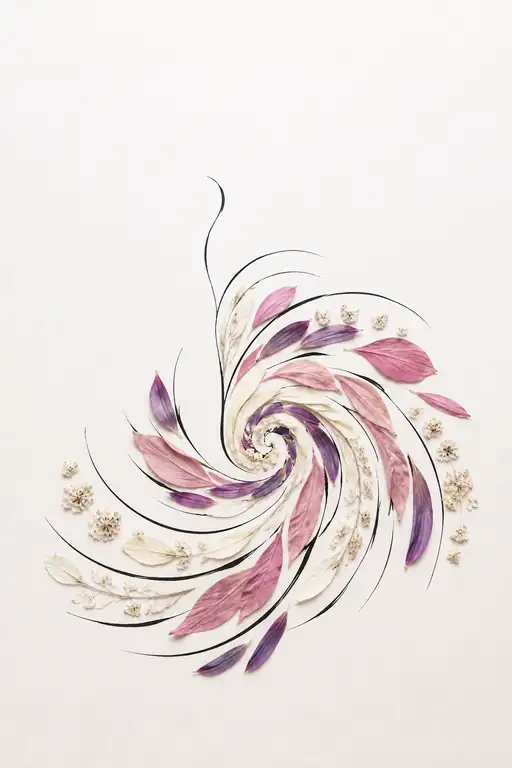 Spiral of the Amethyst Gale
 Genesis of a Color Storm
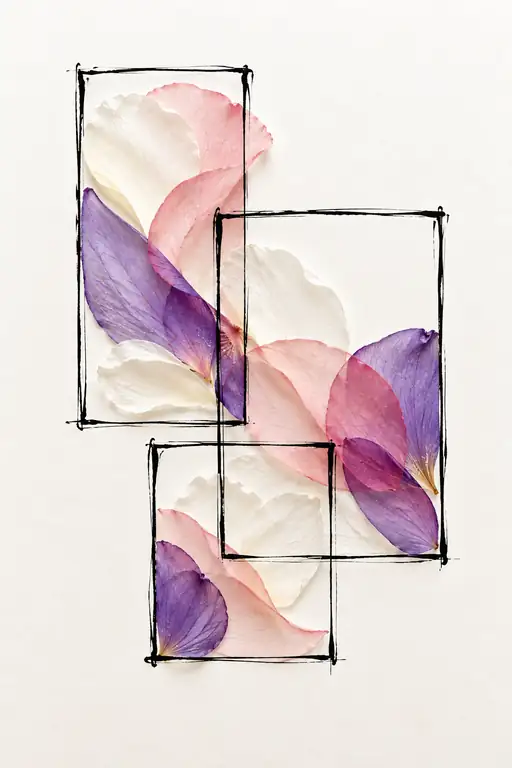 What the Frames Cannot Hold
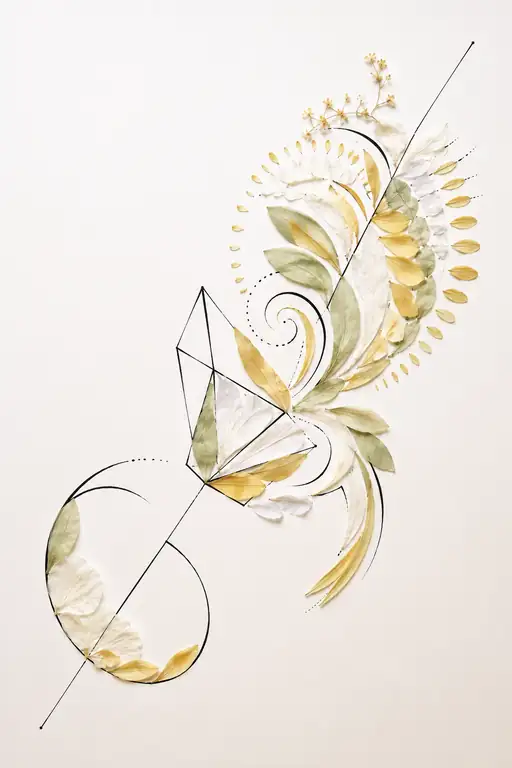 Spiral Ascendance of Form and Growth
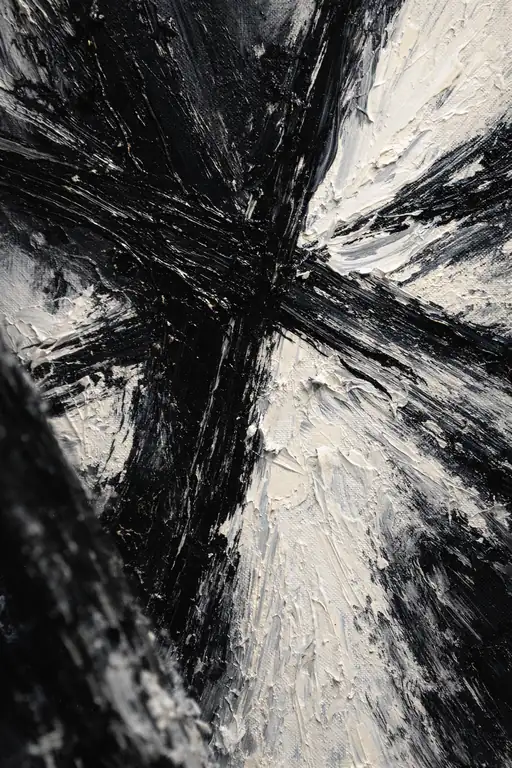 Silence in Monochrome
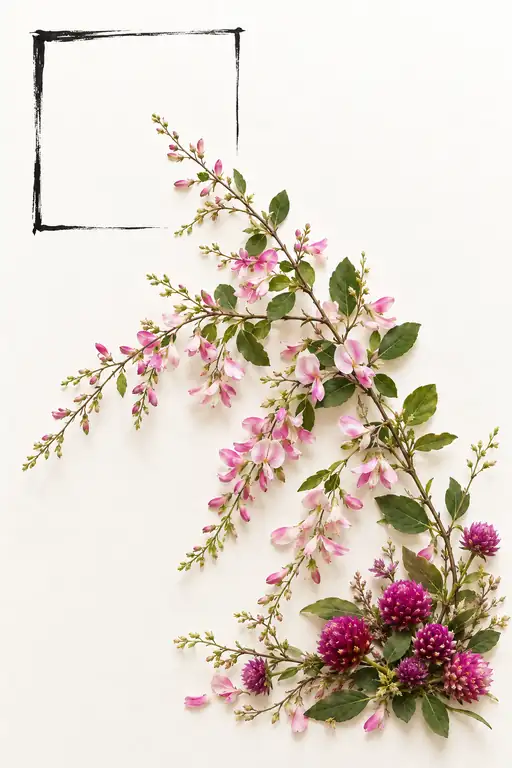 The Corner Left Open
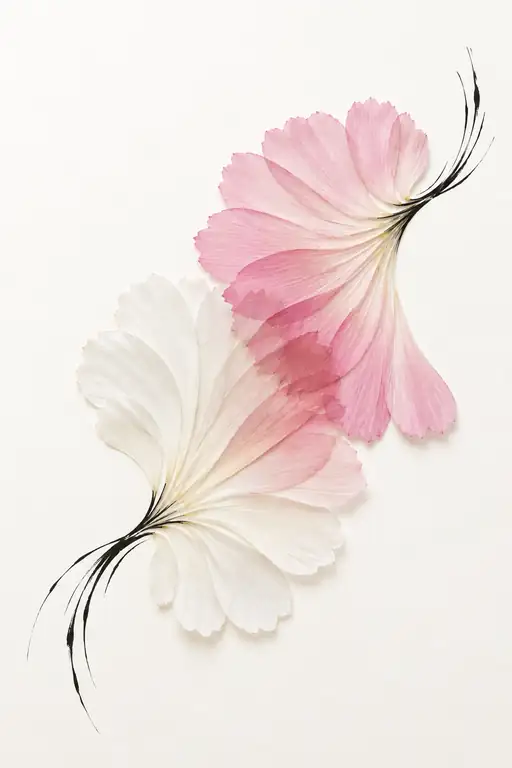 Two Soft Currents, One Turning