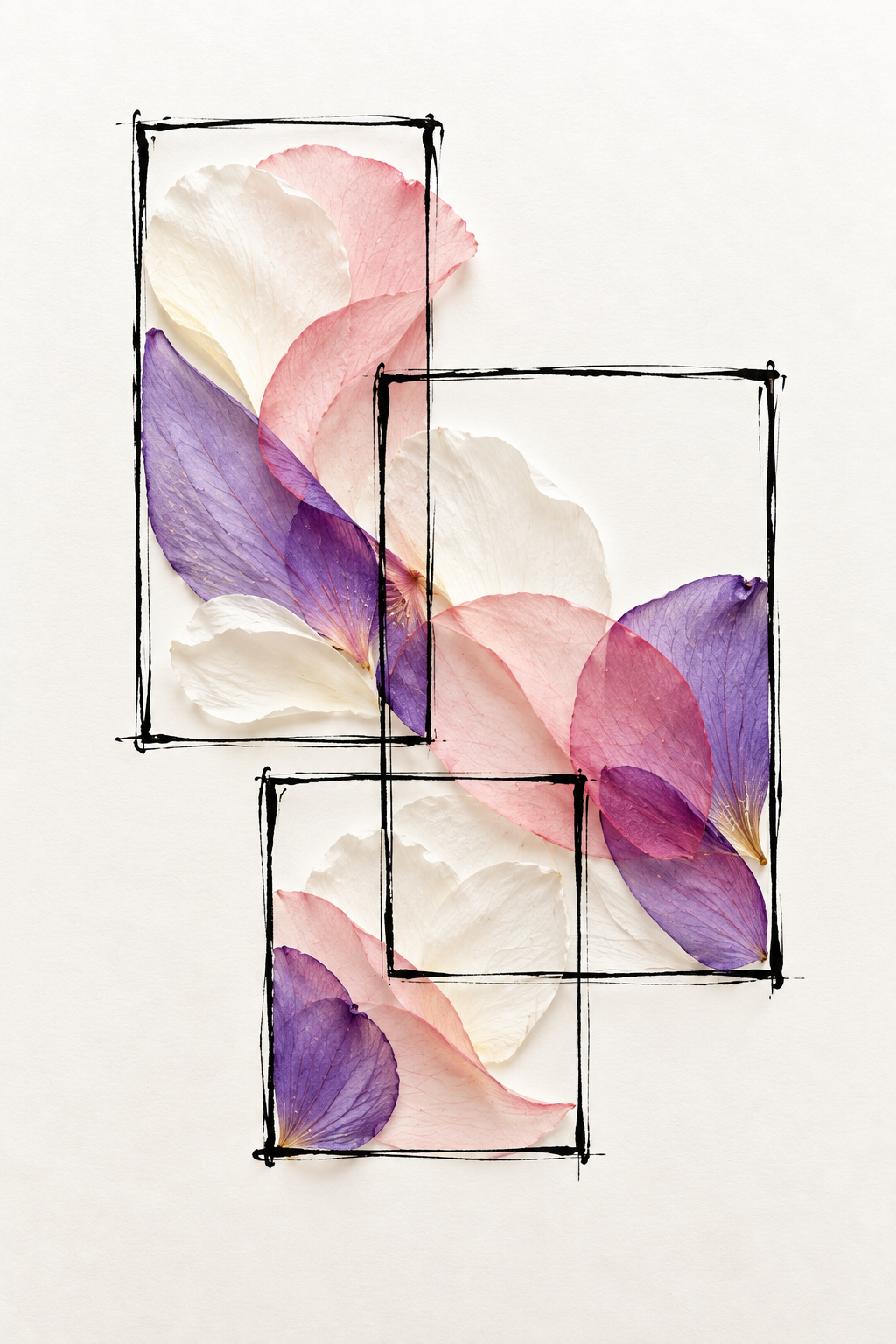
What the Frames Cannot Hold
Critique
Introduction Three overlapping black rectangles organize large white, pink, and violet petals on a pale surface. The composition is abstract, yet the veins, folds, and uneven edges of the petals remain distinctly botanical. Its central question concerns how organic shapes occupy, cross, and complicate a simple geometric framework. Description A tall rectangle stands at the upper left, a larger one extends through the middle right, and a smaller rectangle sits below. Petals overlap in each area, with a broad pink form near the center and violet accents along opposing edges. Several shapes approach or cross the black boundaries rather than remaining neatly enclosed. Analysis The offset frames create a descending rhythm, while slanted petals resist their vertical and horizontal directions. Rough, doubled black strokes keep the geometry from appearing mechanically exact. Pale petals emerge through shallow folds and soft shadows; darker violet forms carry visible veins. Overlapping edges produce depth without establishing a conventional foreground and background landscape. Interpretation and Evaluation The rectangles suggest acts of selection, but their intersecting boundaries make any single enclosure unstable. This tension is supported by the differing surfaces: emphatic black lines define limits, while translucent-looking pink edges and curled white petals soften them. Repeated colors provide continuity across compartments without making the arrangements inside them identical. Conclusion An initial impression of flowers within frames develops into a study of boundaries and connected surfaces. The work's strength lies in the balance between spare geometry and closely observed organic detail. Its limited palette allows small variations in layering, contour, and shadow to determine the visual rhythm.
 Geometric Harmony of Form and Pressed Petals
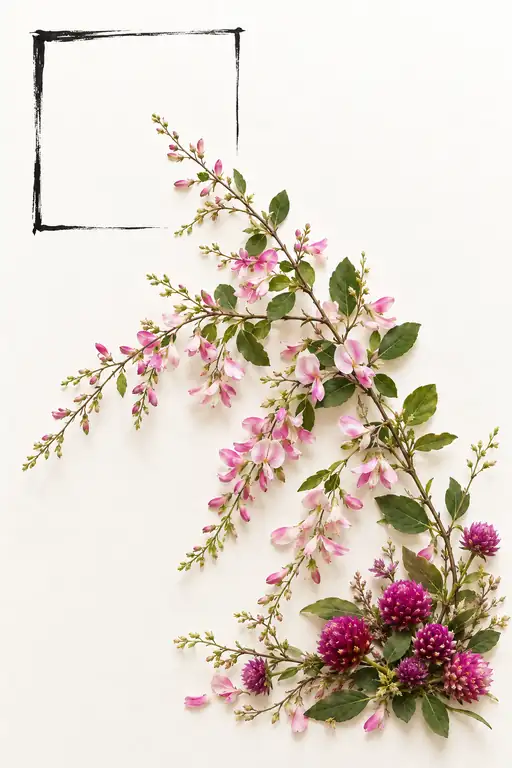 The Corner Left Open
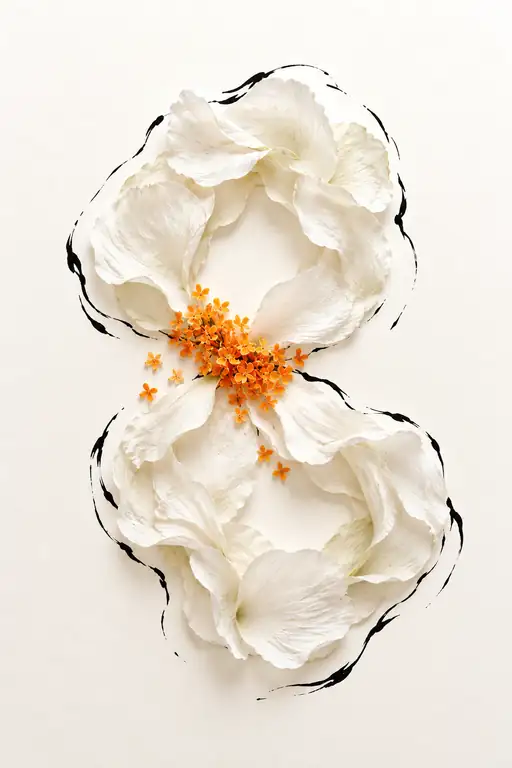 Between Two Silences
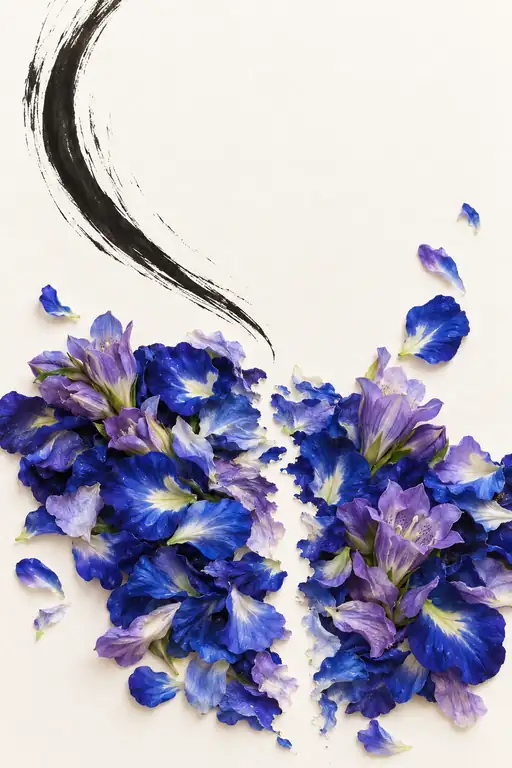 Where Blue Makes Room
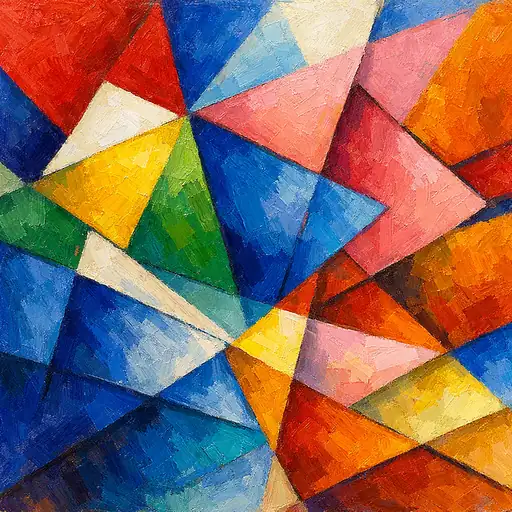 Colorful Abstract Geometry of Triangles
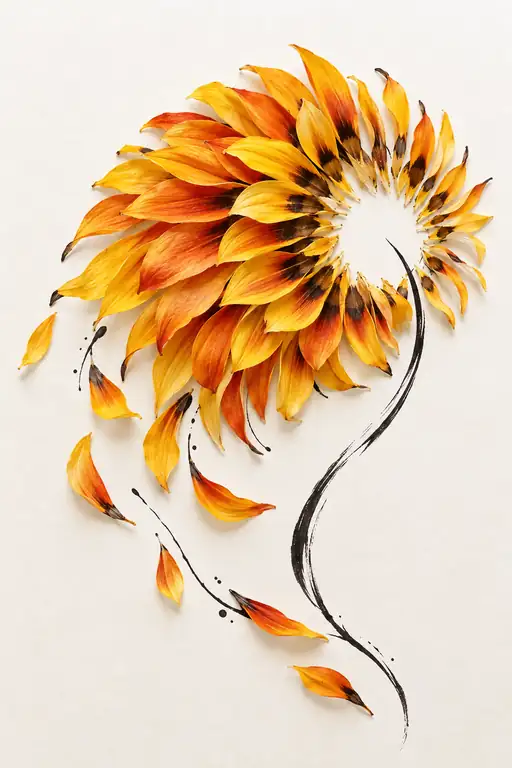 The Turning of Light
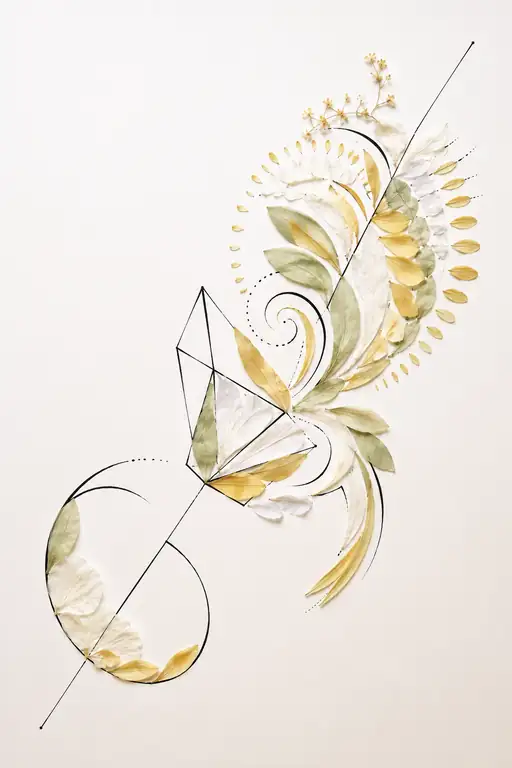 Spiral Ascendance of Form and Growth
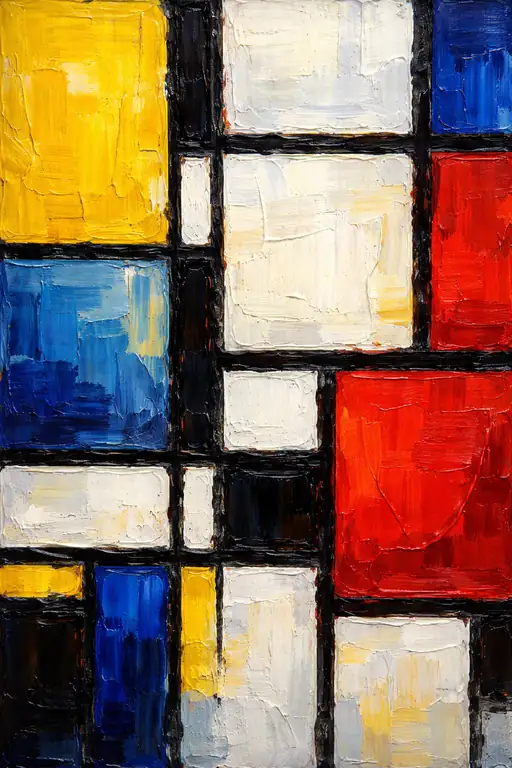 Order and Impulse
 The Moment of Choosing Blue
 A Melody Soft Enough to Remember