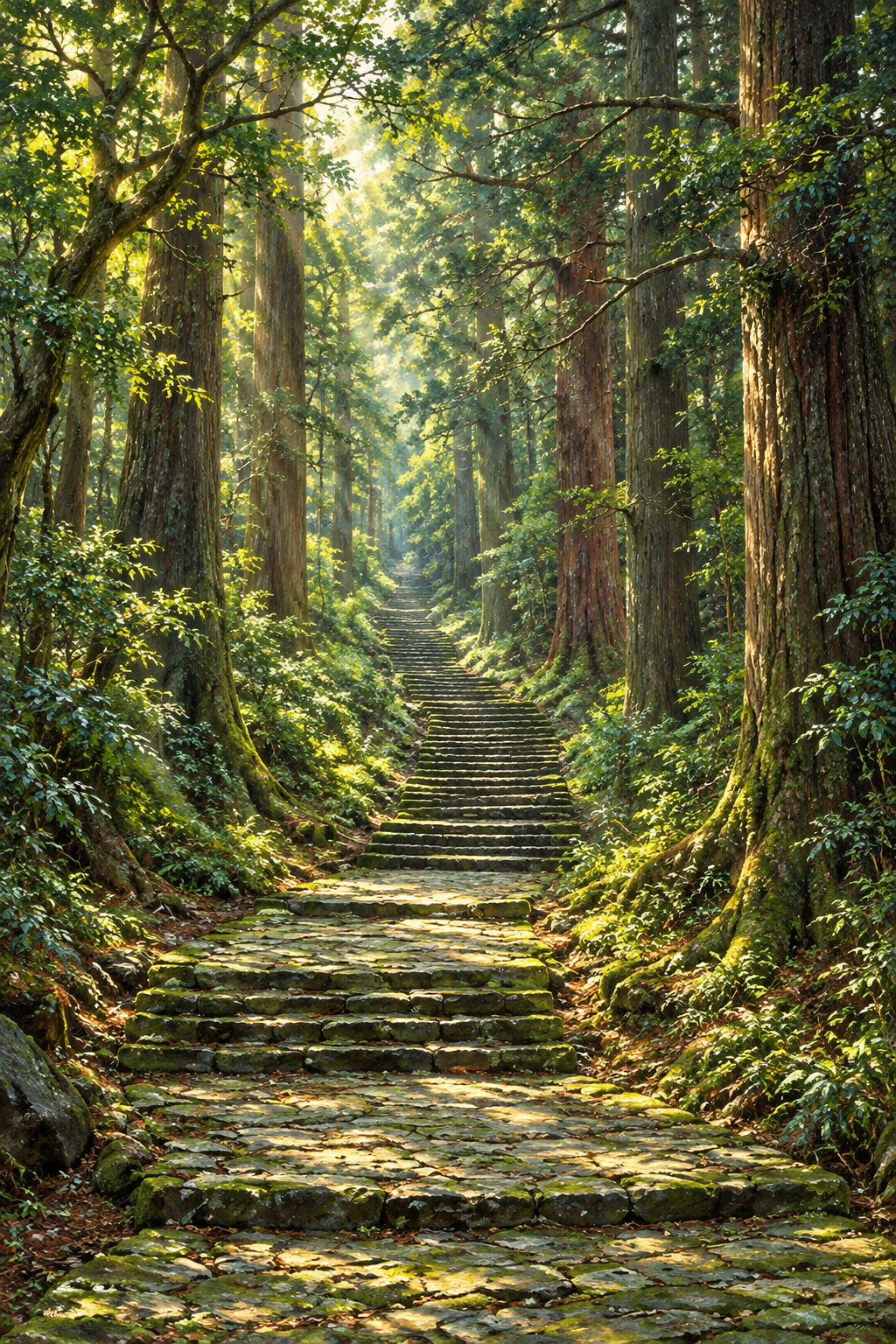
I Climb into the Listening Light
Critique
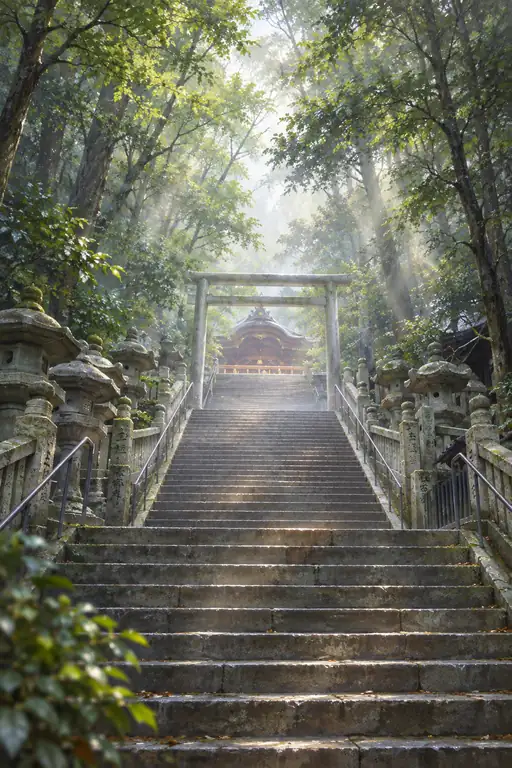
Introduction An empty stone stairway climbs between massive forest trunks toward a luminous opening in the distance. Broad landings alternate with flights of narrow steps. The scene makes a constructed route appear embedded in dense vegetation, balancing the stairway's repeated horizontal edges with the forest's strong vertical forms. Description Rough paving occupies the foreground, with irregular joints, brown leaves, and moss along the stone rims. Thick roots extend from the right bank toward the path. A branching tree at the upper left curves over the corridor, while straighter reddish trunks rise behind it. Small sunlit leaves stand out against the darker foliage beside the central ascent. Analysis The decreasing width of the steps draws attention into the distant center. Broad near landings interrupt that recession and provide intervals of visual rest. Canopy light creates yellow green patches across stones and leaves, separating surface planes without uniform shading. Overhead branches soften the vertical rhythm, while fine background foliage gradually loses the foreground's sharp texture. Interpretation and Evaluation The path suggests movement through a setting whose living surfaces continually border its ordered construction. Moss and encroaching roots support this reading through visible contact with stone. The image's spatial clarity is effective because the central passage remains legible despite dense side growth. Differentiated bark, foliage, and paving textures give the enclosure material variety rather than one continuous green wall. Conclusion The first impression of an ascending forest path develops into appreciation of alternating enclosure and openness. Near stone detail anchors the viewer, and the brighter distant corridor extends the route beyond immediate inspection. Controlled perspective and unevenly distributed light preserve both the path's direction and the surrounding forest's substantial presence.
Same Subcategory
Similar Artworks
 The Years Beneath My Feet
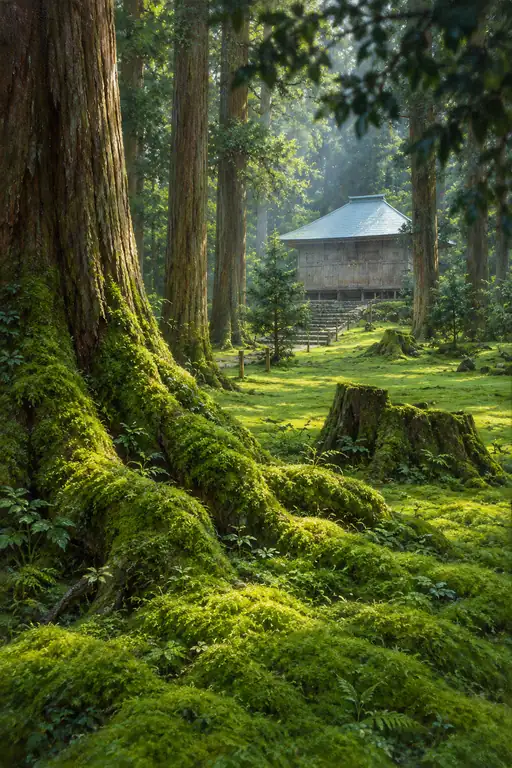 Where Cedar Roots Hold the Morning
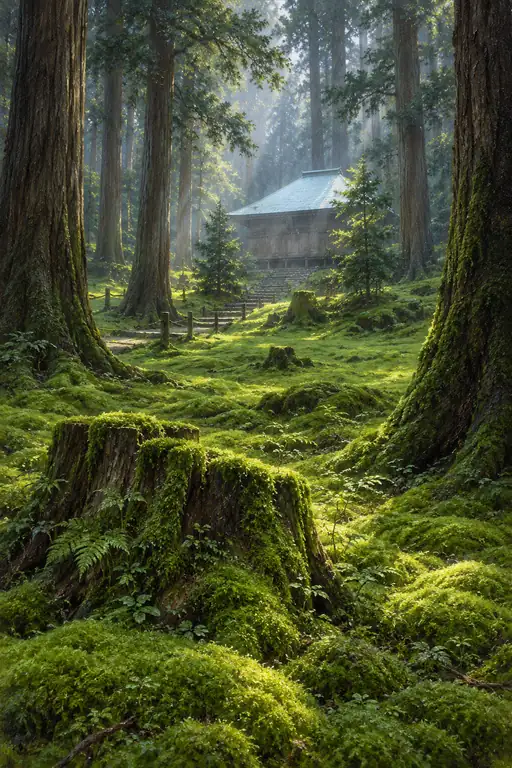 New Life Beside the Old Stump
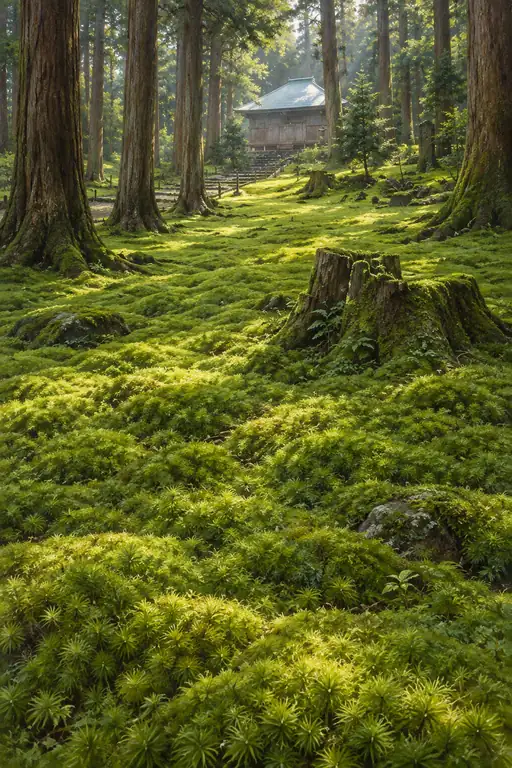 Prayer Among a Thousand Moss Stars
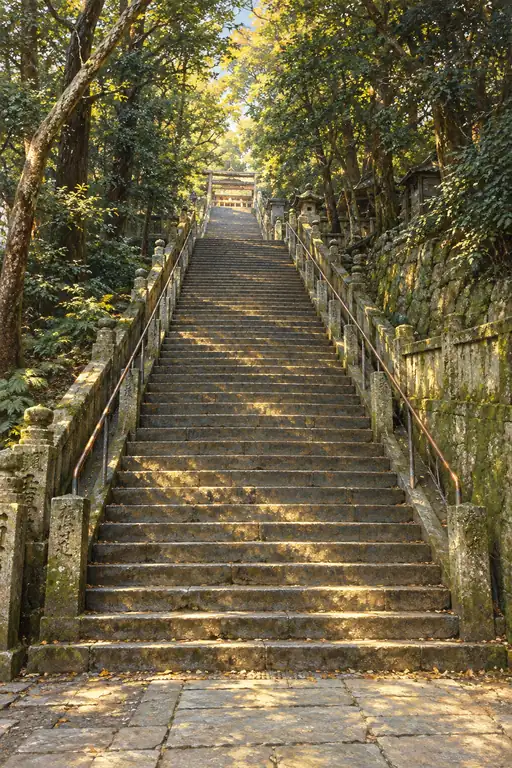 Ascent Through Ancient Sunbeams
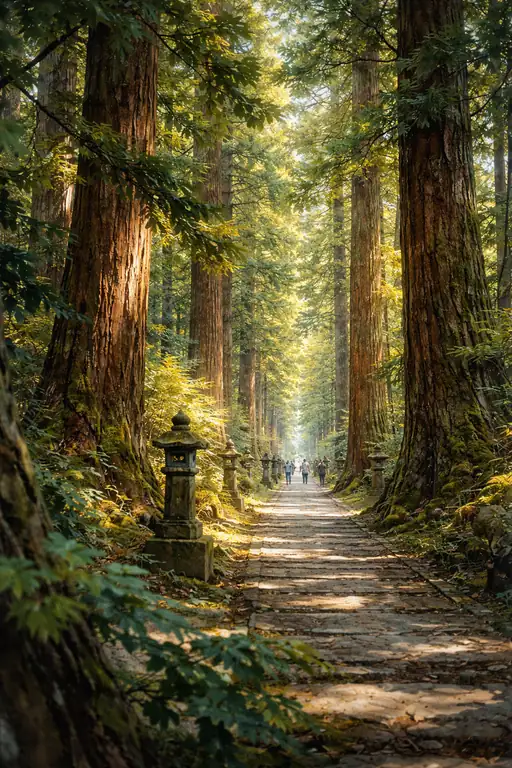 Serene Path: Ancient Stone Lanterns Illuminating a Mossy Japanese Forest
 Vertical Journey: Serenity Ascending the Bamboo Path
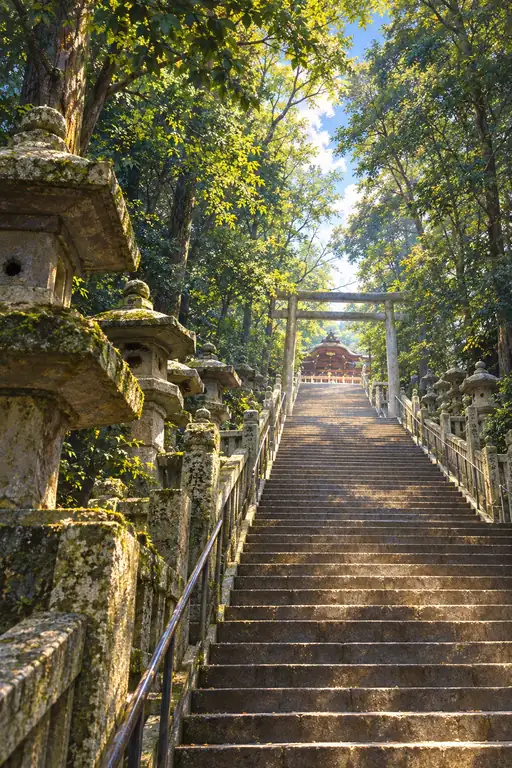 Whispering Lanterns of the Cedar Stair
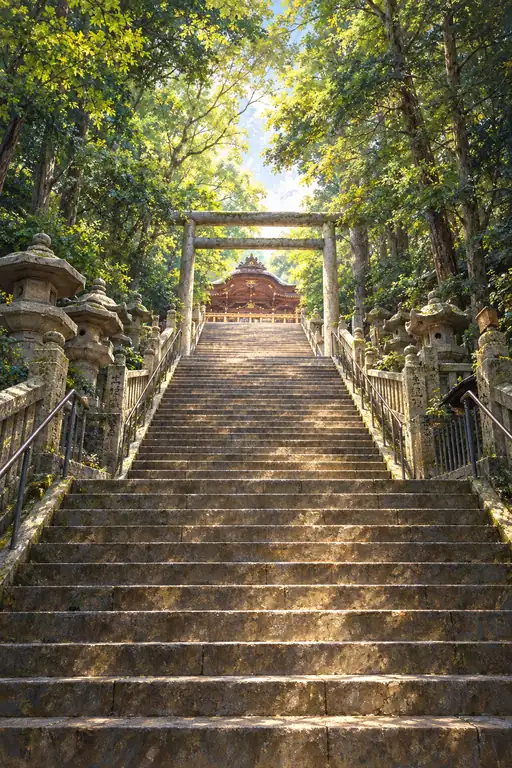 Stairway to the Mountain Shrine
 Beams of Light upon the Ancient Stair