The Years Beneath My Feet
Critique
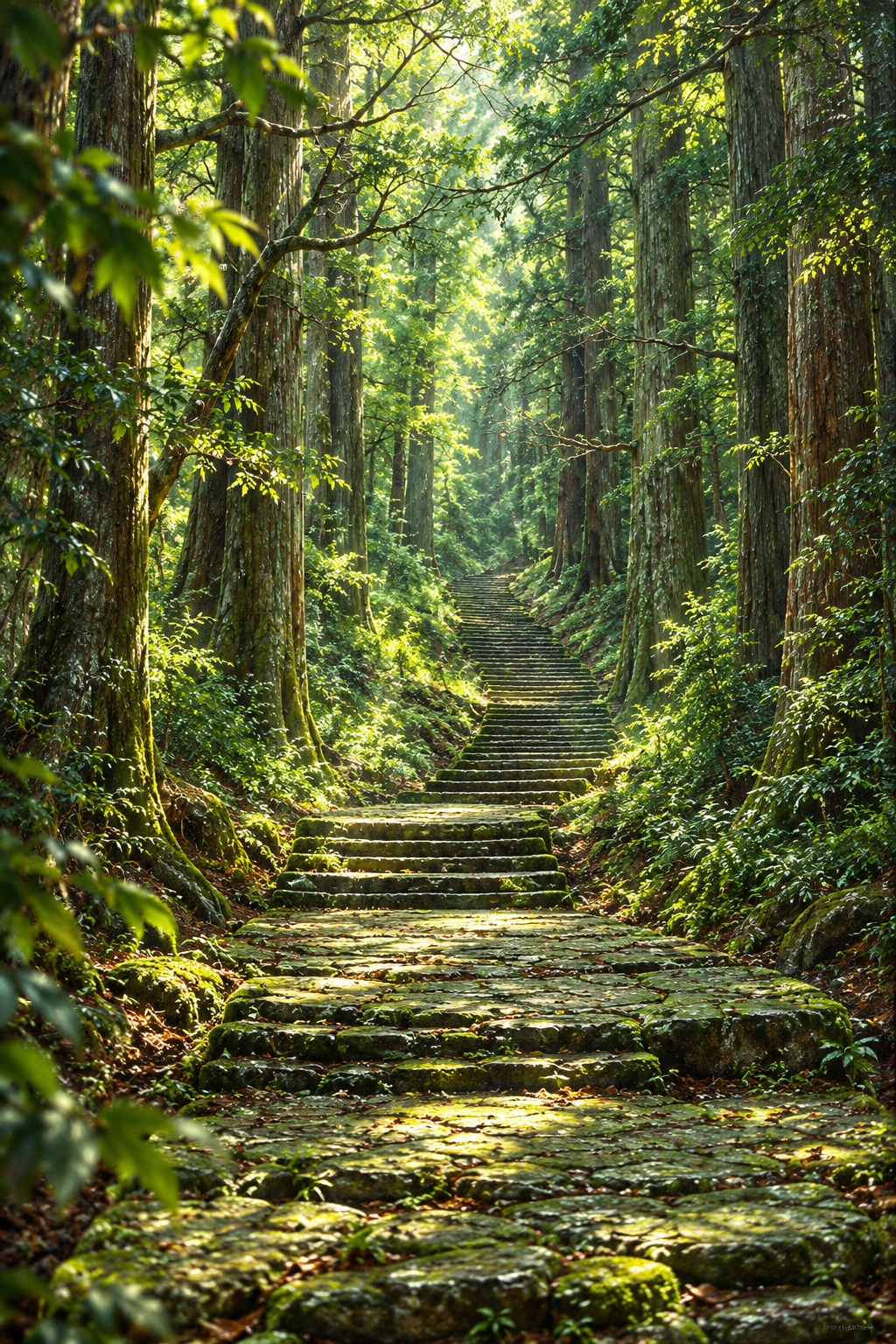
Introduction A long stone stairway climbs through a dense forest of tall straight trunks. Sunlight enters the upper canopy and falls in irregular patches across mossy steps. Unlike a fully open landscape, the scene offers depth through a narrow central route enclosed by richly described vegetation. Description Broad uneven paving fills the foreground, interrupted by shallow steps and scattered brown leaves. Farther upward, the stair becomes narrower and more continuous. Massive trunks stand on both sides, with moss around roots and thin branches crossing overhead. Softly blurred leaves intrude at the near left. The distant center is lighter and hazier than the shaded foreground. Analysis Repeated step edges guide the eye toward the central vanishing area. Vertical trunks reinforce the ascent while crossing branches add horizontal and diagonal interruptions. Yellow green highlights separate sunlit leaves from dark foliage. Sharp stone textures near the viewer gradually yield to finer, softer forms, creating depth through both scale and clarity. Interpretation and Evaluation The path suggests sustained movement through an environment that exceeds the viewer's immediate field of vision. Moss, uneven surfaces, and dense roots give the route a materially embedded character. The image is effective in balancing a clear passage with substantial enclosure. Light describes not only illumination but also the relationship between open canopy gaps and the darker forest floor. Conclusion The first impression of a secluded stairway develops into awareness of layered distance and changing surface conditions. Near stone, middle trunks, and the luminous upper corridor provide successive stages of attention. Detailed texture, restrained atmospheric softening, and carefully distributed sunlight make the forest's depth understandable without reducing its density.
Same Subcategory
 The Light That Lets Me Enter
Similar Artworks
 I Climb into the Listening Light
 Where Cedar Roots Hold the Morning
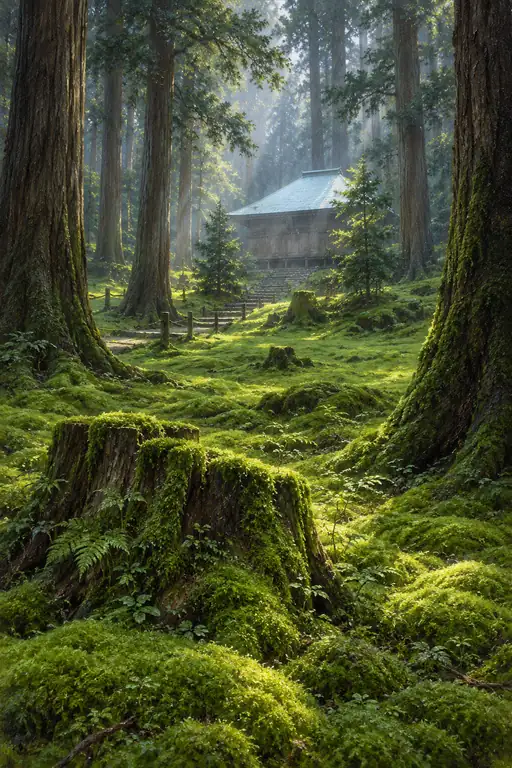 New Life Beside the Old Stump
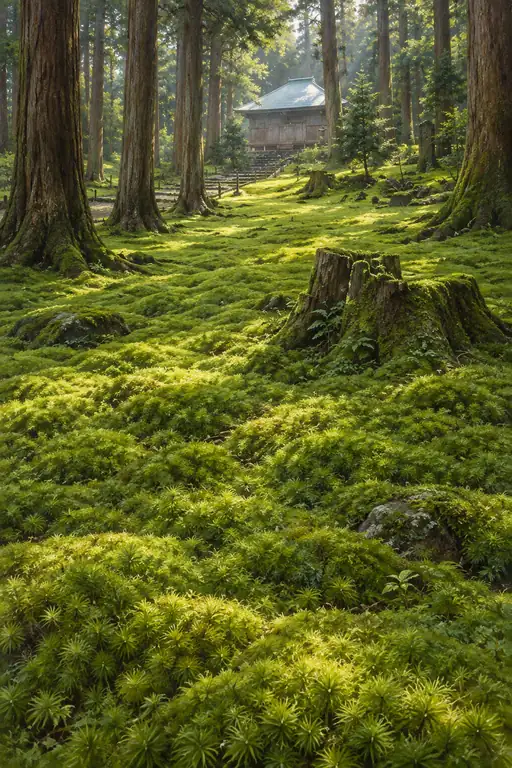 Prayer Among a Thousand Moss Stars
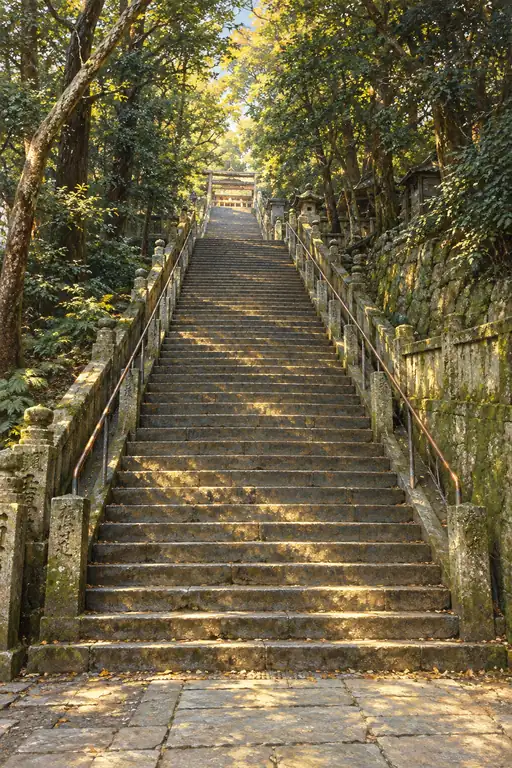 Ascent Through Ancient Sunbeams
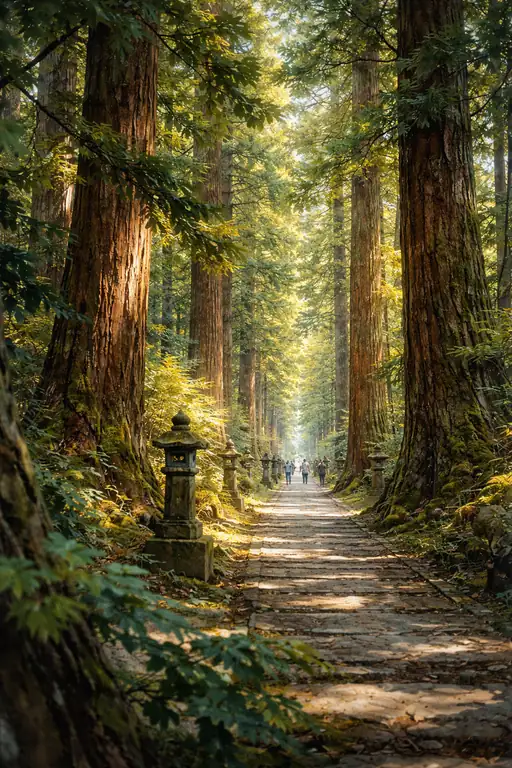 Serene Path: Ancient Stone Lanterns Illuminating a Mossy Japanese Forest
 Vertical Journey: Serenity Ascending the Bamboo Path
 Whispering Lanterns of the Cedar Stair
 Stairway to the Mountain Shrine
 Beams of Light upon the Ancient Stair