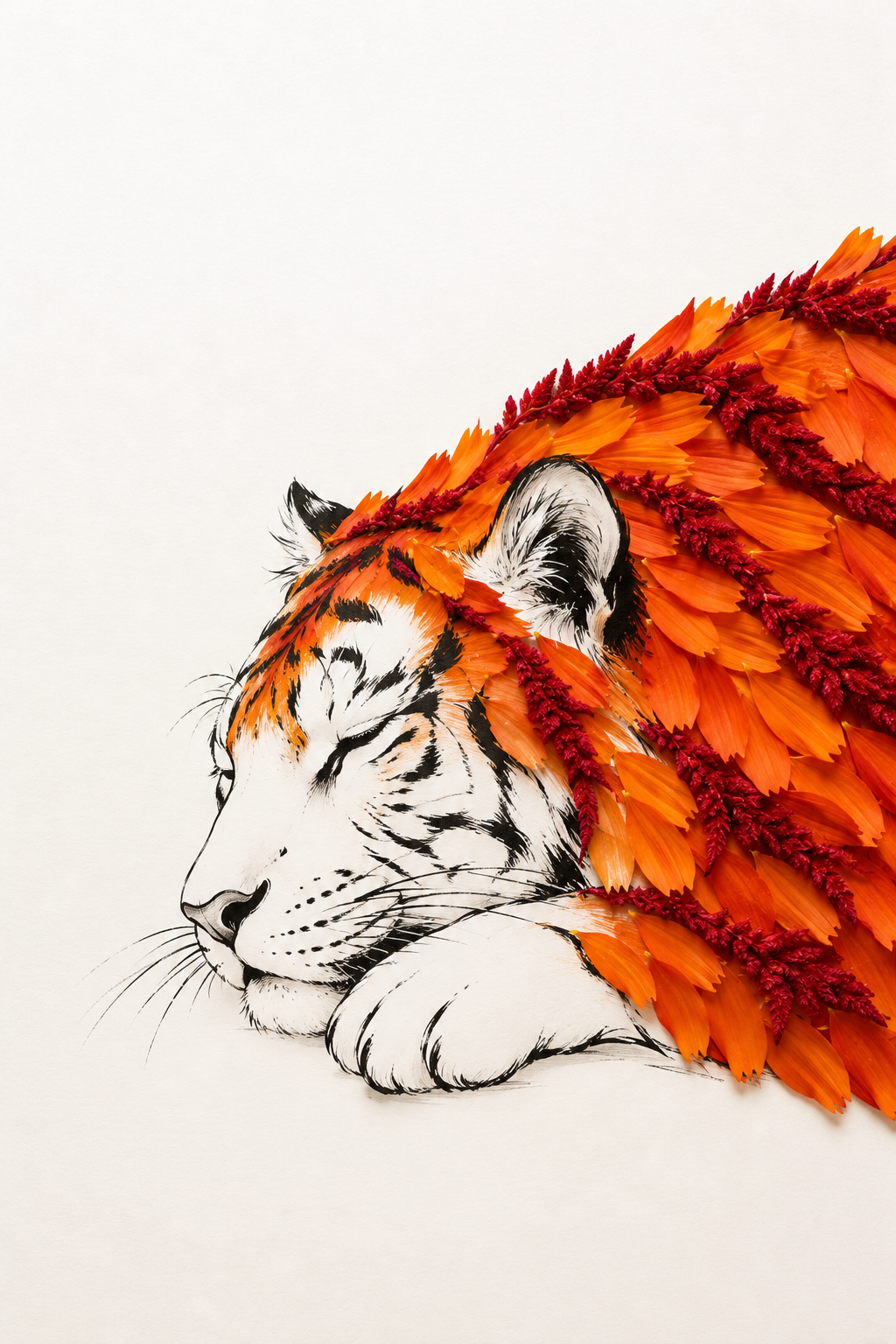
Even Fire Needs to Dream
Critique
1. Introduction A resting tiger lies with its head on a forepaw, surrounded by pale empty space. Orange petals and deep red flower spikes cover its shoulder and back. The contrast between the closed eye and the vivid botanical coat gives this powerful animal an quiet presence. 2. Description The tiger's face points left, with a dark nose, long whiskers, and black stripes around the cheek and eye. One rounded ear rises from the flower covered head. The near forepaw is curled beneath the chin. Layered orange petals spread from the forehead across the back and beyond the right edge, crossed by narrow red branching clusters. The lower face and paw remain mostly white and drawn in ink. 3. Analysis The heavy diagonal of the floral back descends toward the resting head. Bright orange surfaces occupy the upper right, while the pale muzzle and paw create a calm lower left counterweight. Red spikes interrupt the broad petals with finer repeated marks. Ink stripes preserve the tiger's facial structure at the point where flowers meet fur, so the imaginative covering still belongs to a recognizable body. 4. Interpretation and Evaluation The sleeping pose softens the associations of strength carried by the tiger's size and markings. Flower forms intensify its color while also suggesting shelter or a mantle. The close framing keeps attention on breathing stillness rather than action. Detailed petals and red clusters show varied textures, and the economical white areas around the face prevent the rich upper surface from overwhelming its expression. 5. Conclusion The striped face identifies the animal; petals extend across its back. Closed eyes and grounded paw anchor the abundant color. Floral invention balances precise animal detail.
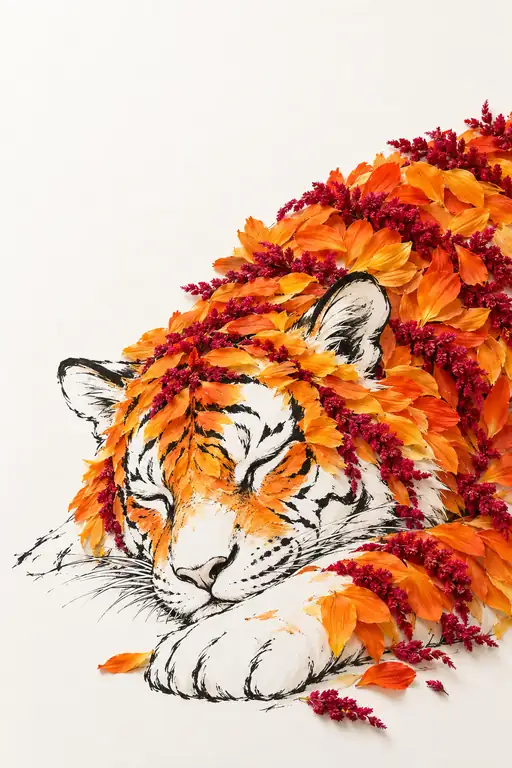 Even Fire Needs to Sleep
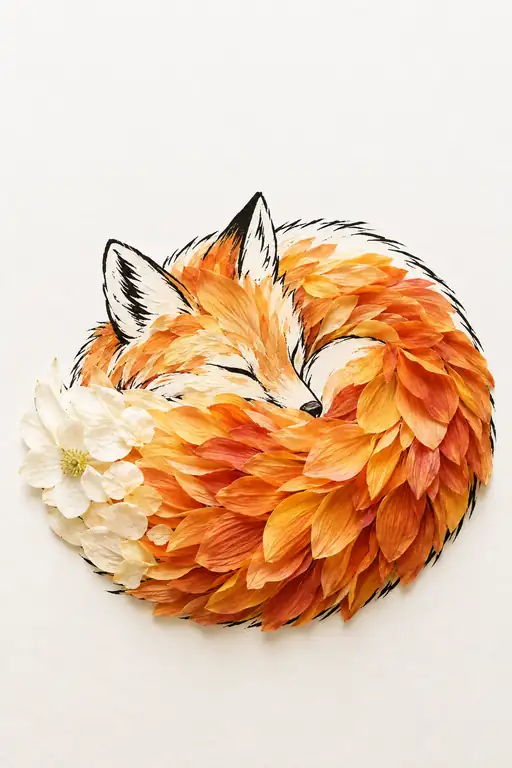 Curled Inside a Quiet Flame
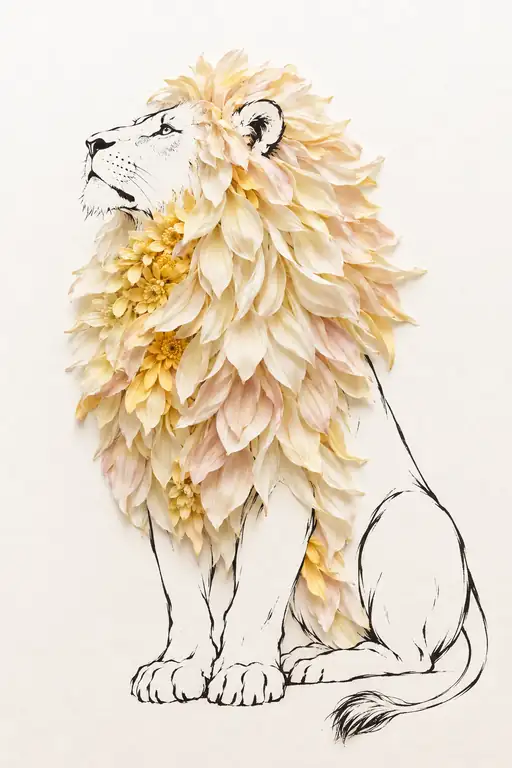 Strength Can Be Gentle
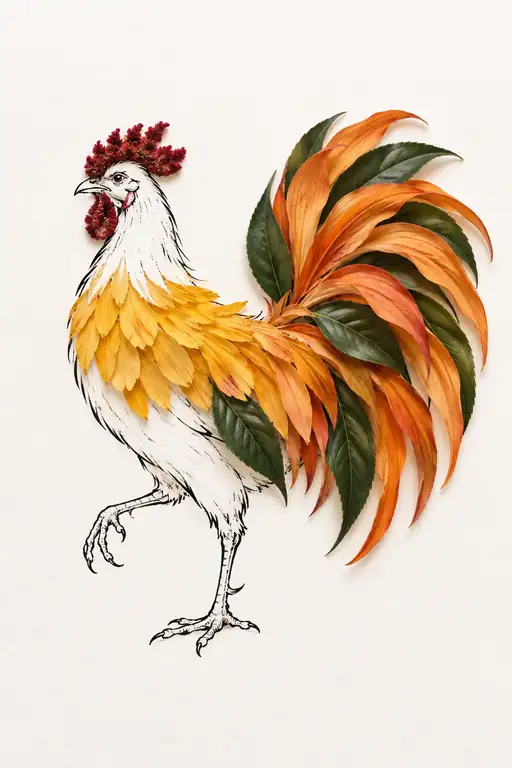 Morning Wears Its Brightest Voice
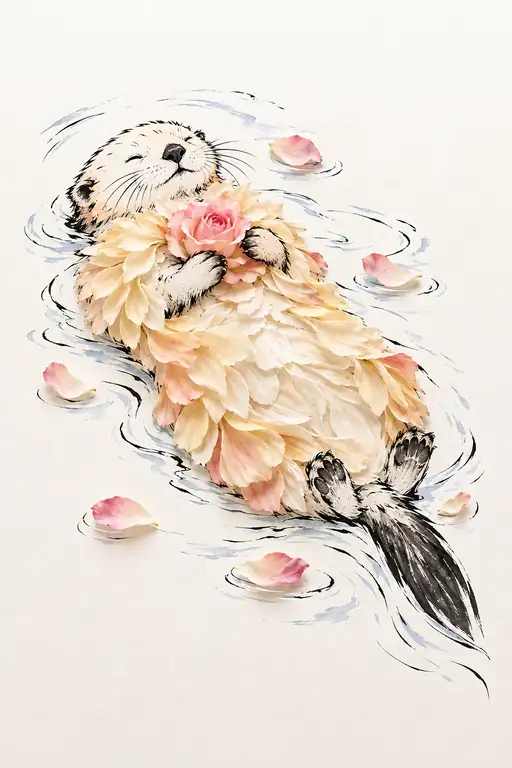 Let the Day Carry Me
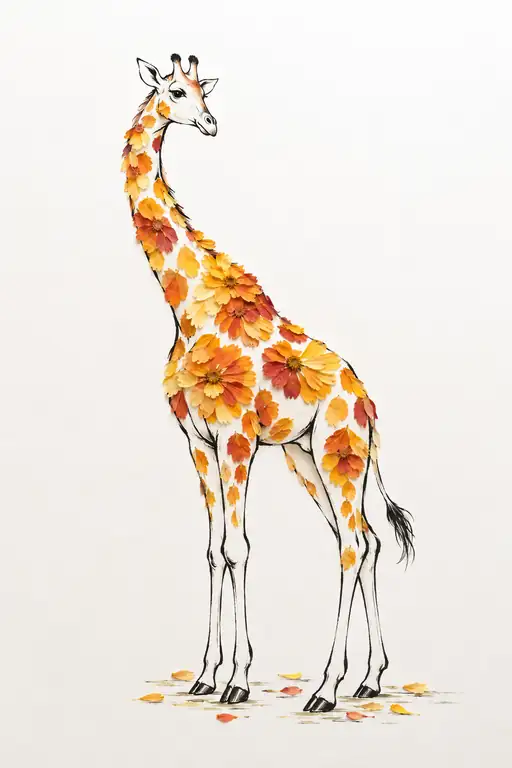 A Gentle Height Above the World
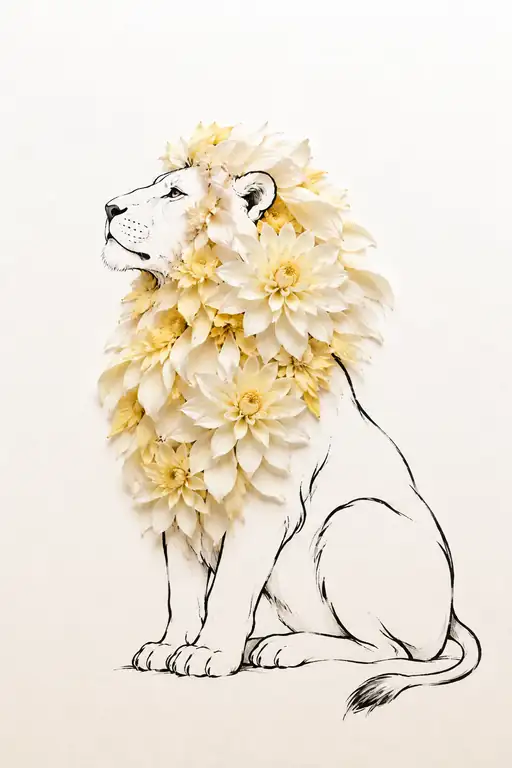 Strength at Ease in Its Own Light
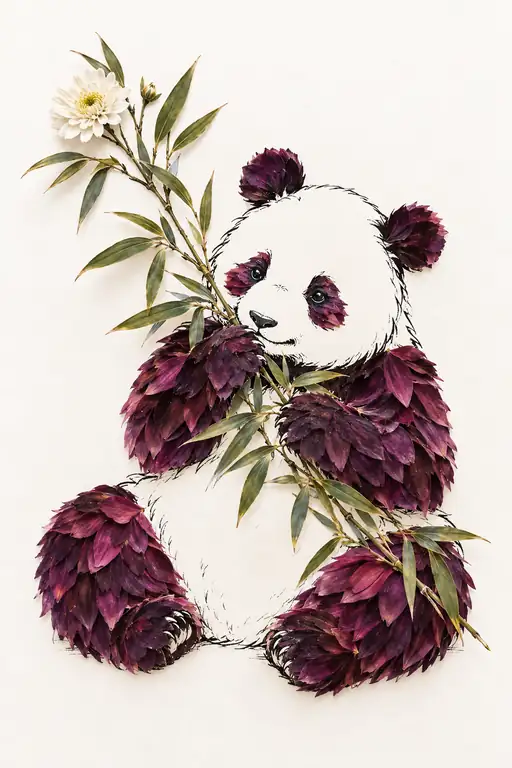 The Comfort of Enough
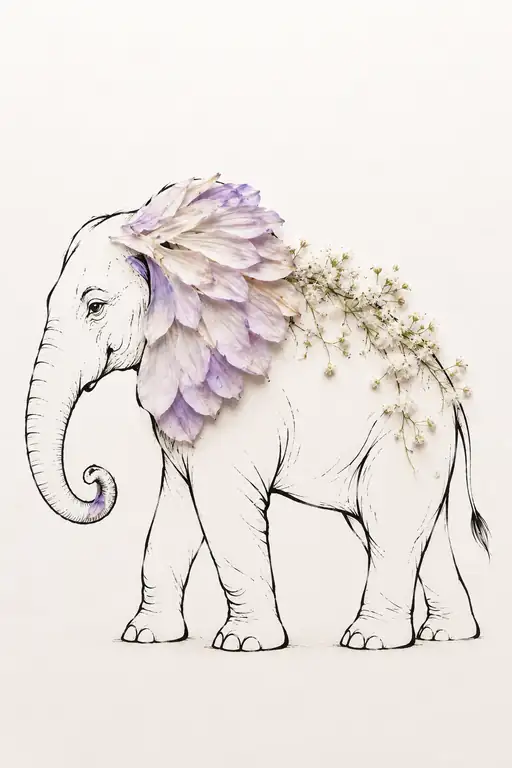 The Quiet Weight of Kindness
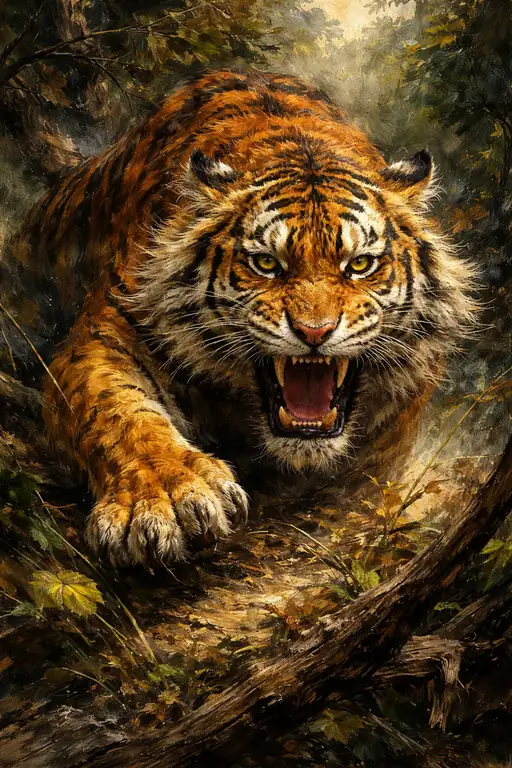 Fierce Shadows of the Untamed Forest