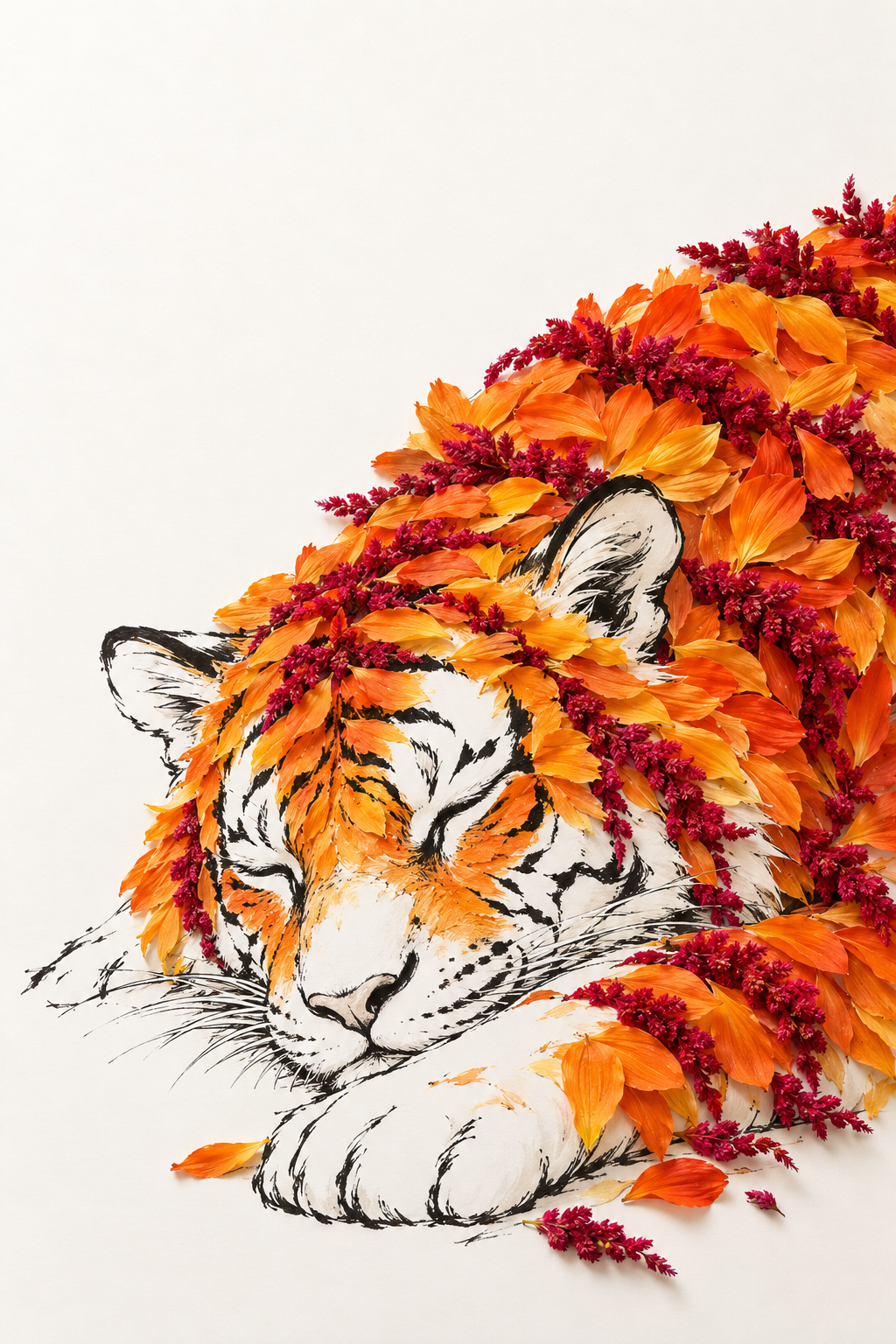
Even Fire Needs to Sleep
Critique
Introduction A resting tiger fills the lower and right portions of the image, its body covered by orange petals and fine red flowering sprigs. The closed eyes and forward paw create a calm posture. Black markings on the face maintain animal recognition within a much denser botanical surface. Description The head tilts slightly downward beside a large pale forepaw. Rounded ears, a dark nose, and long whiskers remain visible. Orange petals overlap across the forehead and back, with burgundy sprigs weaving between them. Several detached petals and a small flower branch lie near the paw. The upper left ground is left almost entirely empty. Analysis The curved back rises toward the upper right, while the broad paw establishes a low horizontal base. Petals follow the body's direction, and dark red sprigs divide their warm surfaces into smaller intervals. Facial stripes stand out against pale cheeks. The limited shadows beneath botanical layers and the paw give depth without building a complete surrounding habitat. Interpretation and Evaluation The image connects a recognizable resting pose with a transformed coat. Because the head, ears, and paw remain legible, the floral material can be understood as following the animal's volume. The contrast between large smooth petals and fine branching sprigs is particularly effective. Closed eyes reduce narrative activity and allow surface relationships to become the main subject. Conclusion The initial image of a sleeping tiger develops into a study of volume described through overlapping plants. Facial markings provide stable reference points, and loose petals continue the transformation onto the ground. Warm color, contrasting textures, and the large blank corner balance the dense body with a clear sense of stillness.
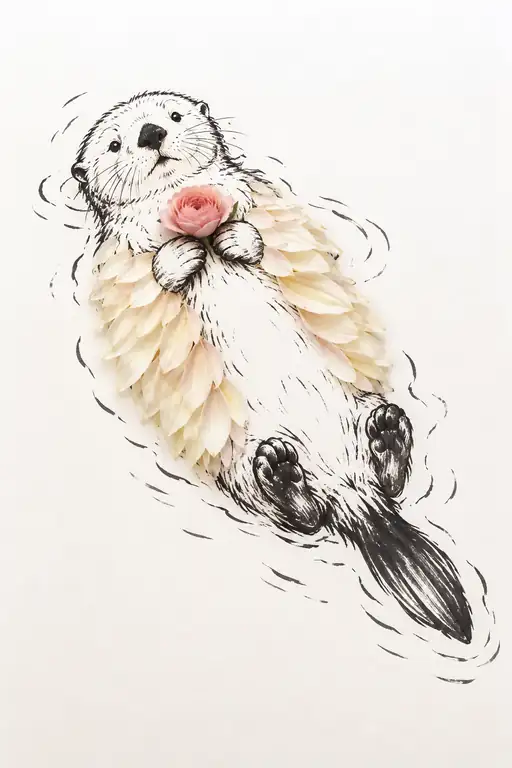 My Treasure Rests Above the Tide
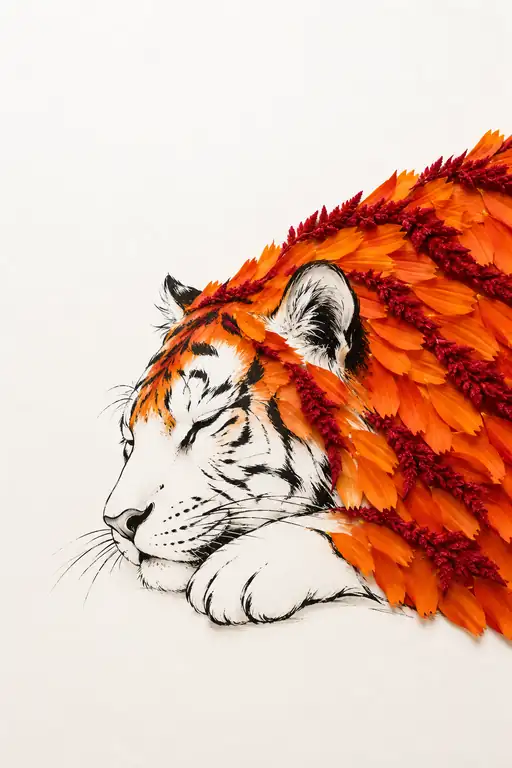 Even Fire Needs to Dream
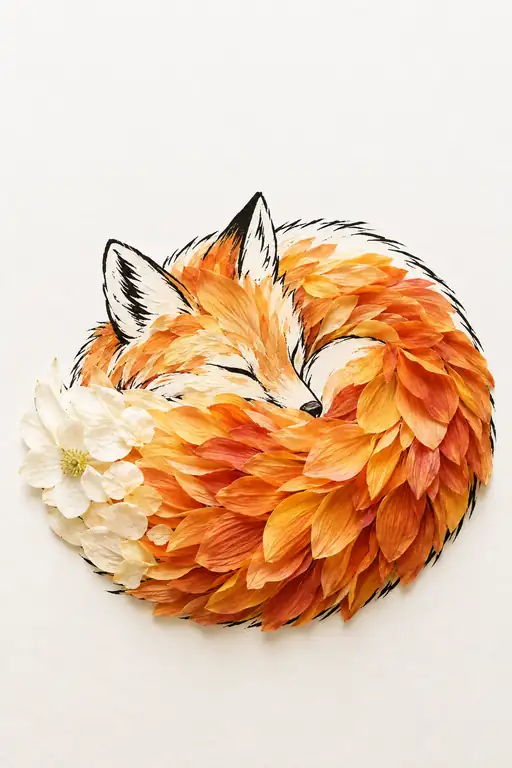 Curled Inside a Quiet Flame
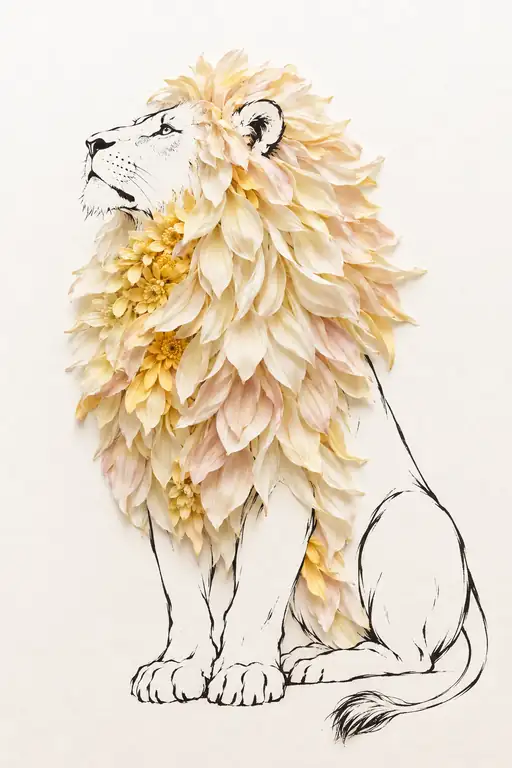 Strength Can Be Gentle
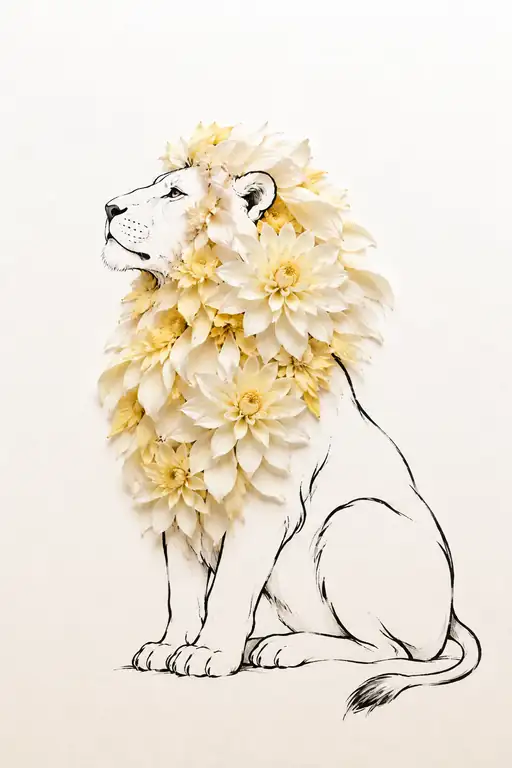 Strength at Ease in Its Own Light
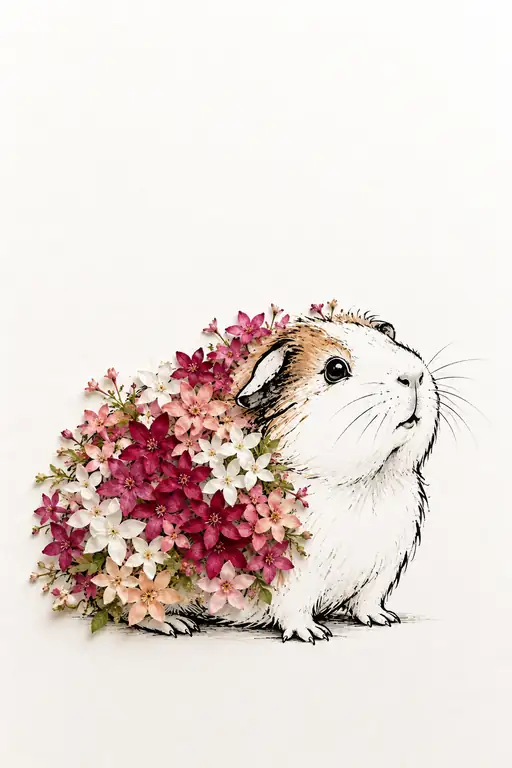 Brave Enough to Be Small
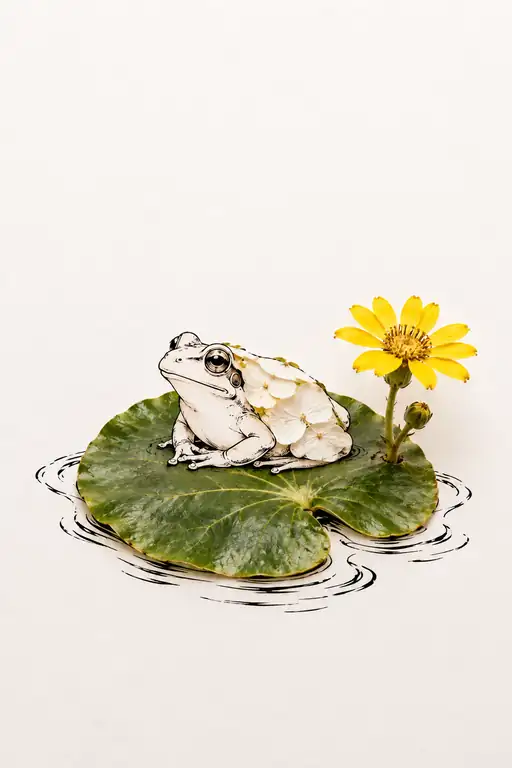 This Small Shore Is Enough
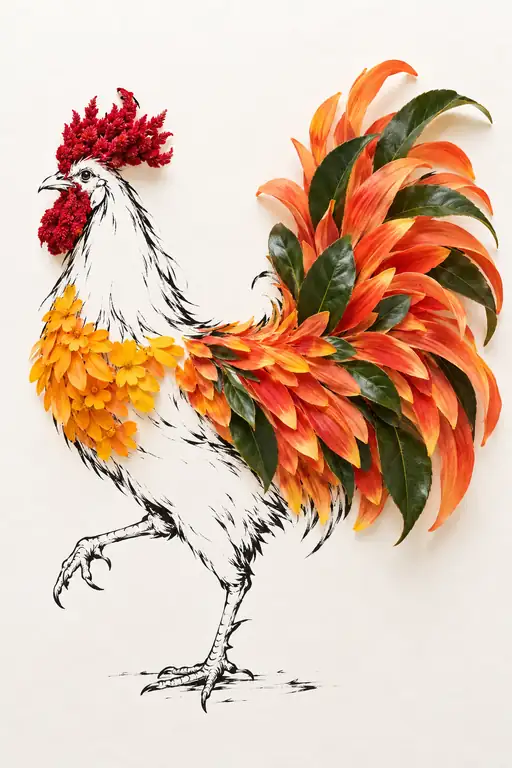 Dawn Belongs to My Next Step
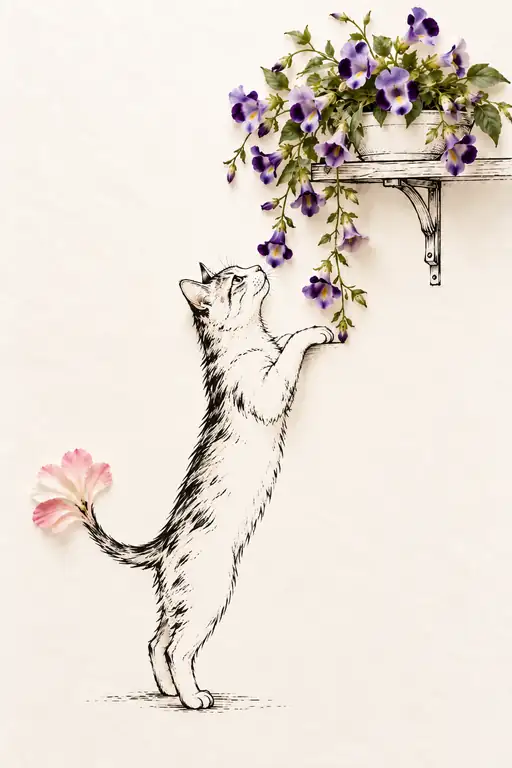 The World Is Just Above My Nose
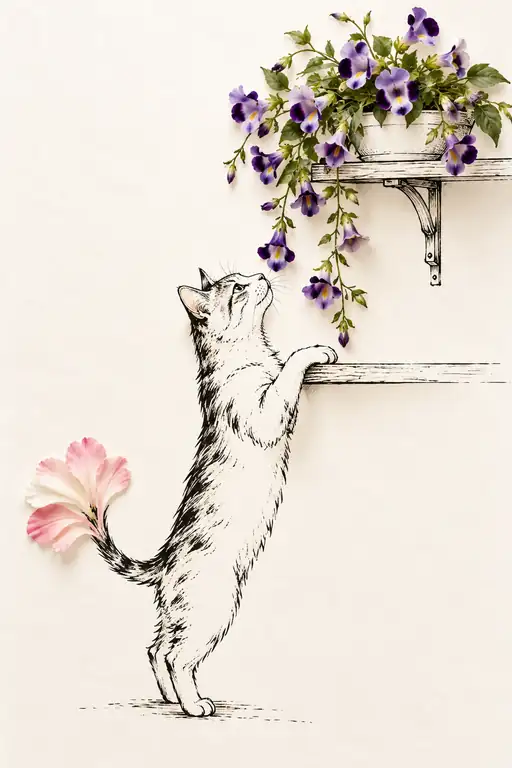 One Breath Away from Wonder
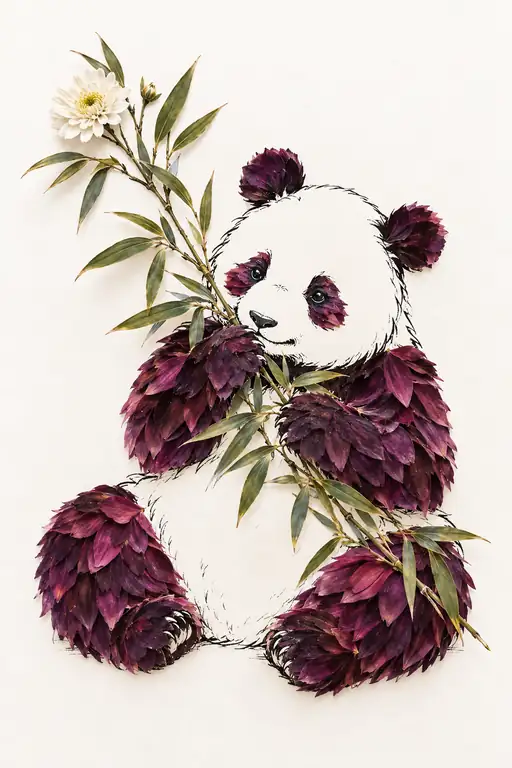 The Comfort of Enough