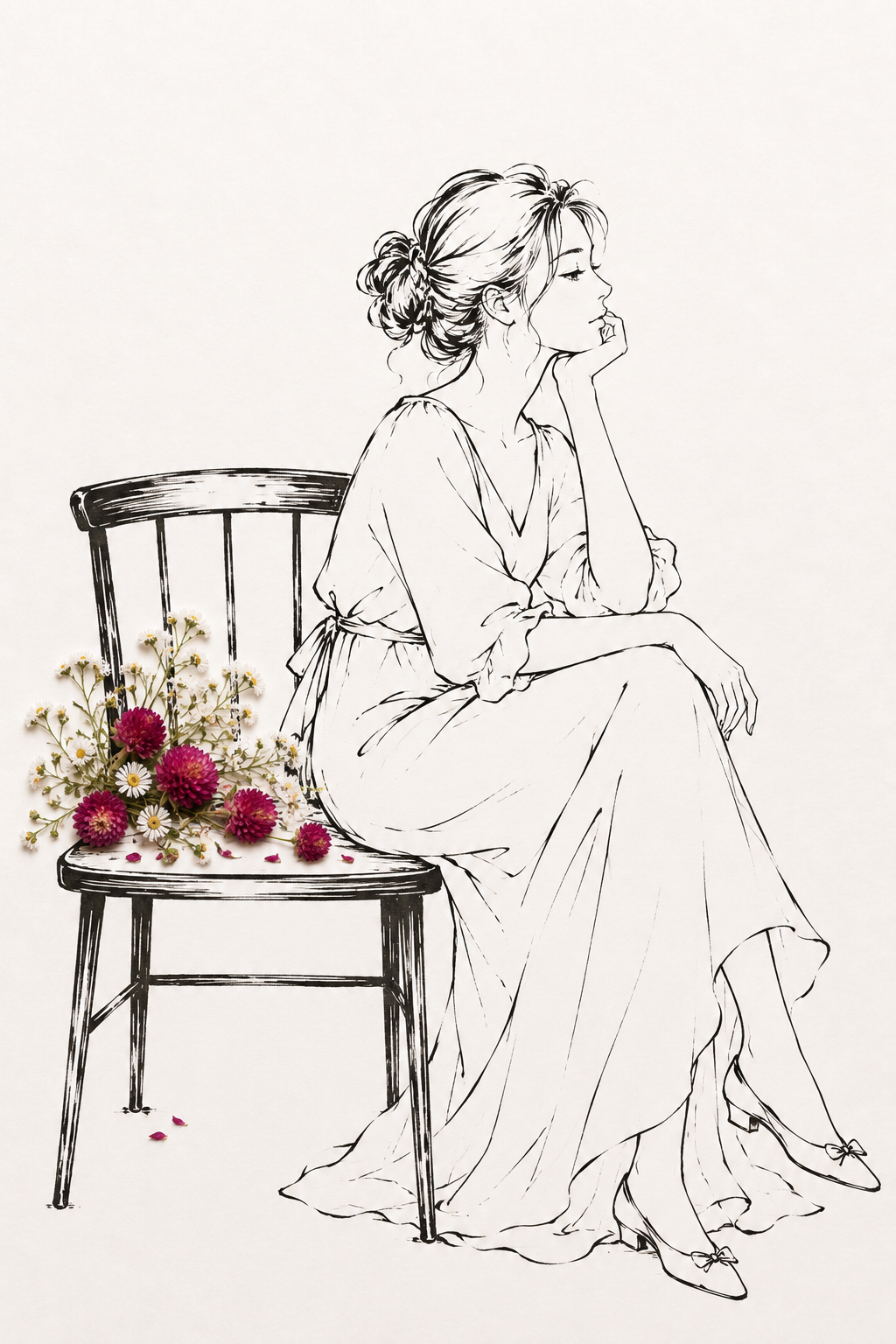
Room for One More Thought
Critique
1. Introduction A seated woman in fine black outline looks to the right, resting her chin on one hand. A small group of crimson and white flowers lies on the chair beside her. Open space emphasizes her still pose and the bouquet. 2. Description Her hair is gathered at the back, with loose strands near her face. She wears a long pale dress that folds over crossed legs and pointed shoes with tiny bows. One elbow rests on a raised knee; the other hand falls loosely. The wooden chair has a dark curved back and straight legs. Several red round blossoms, small white daisies, thin stems, and detached petals fill the unused part of its seat. 3. Analysis The woman's body forms a broad diagonal from head to lower right, while the chair stays vertical at left. Deep black strokes on its back and legs contrast with the light folds of her dress. The flowers make a compact colored counterweight to the figure's large uncolored shape. Fallen petals carry that color below the seat, linking the bouquet to the floor without adding a separate setting. 4. Interpretation and Evaluation Her lowered eyelids and supported chin suggest an inward pause. The flowers occupy the space beside her rather than being held, making them part of the quiet interval. The composition is effective because the chair and bouquet keep the solitary figure from dissolving into the pale ground. Distinct petals and stems are carefully rendered, while the economical figure drawing preserves a restrained mood. 5. Conclusion The unused seat and scattered petals gradually gain importance. Chair curves and dress folds organize the stillness. Limited color sharpens attention to the woman's posture.
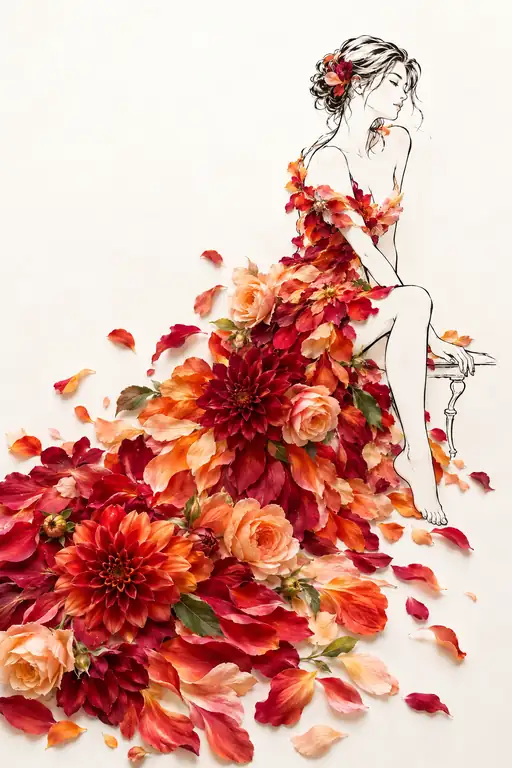 The Color of My Quiet
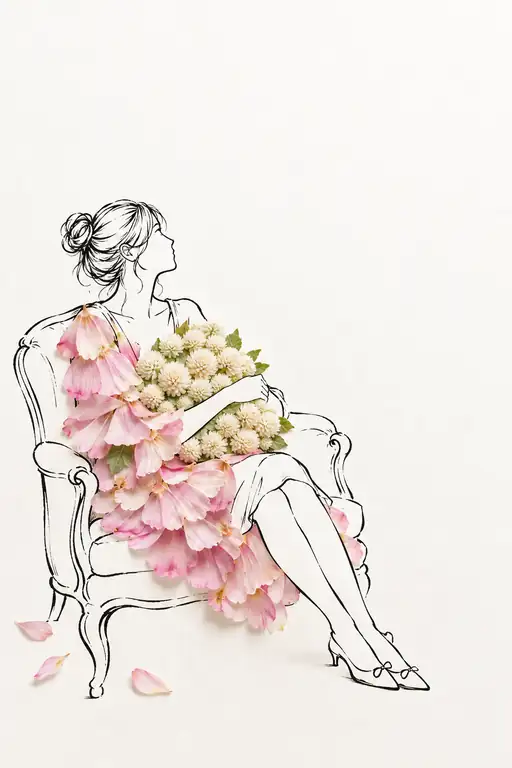 For Once, Nothing to Hurry Toward
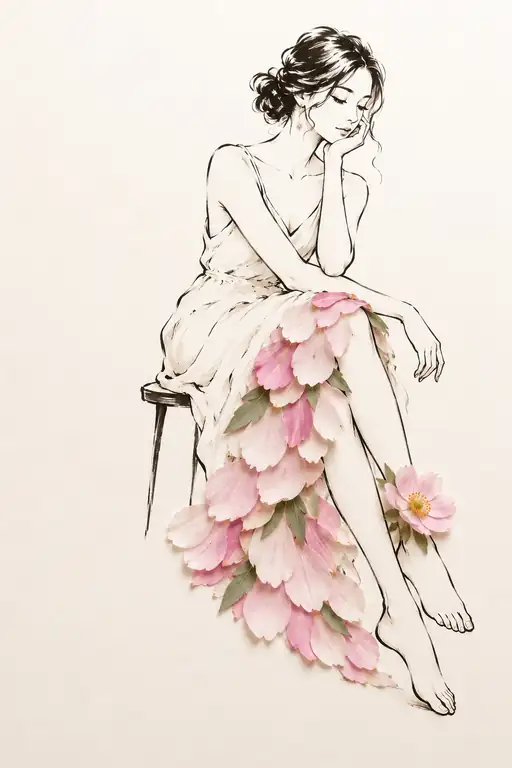 The Day Slows at My Knees
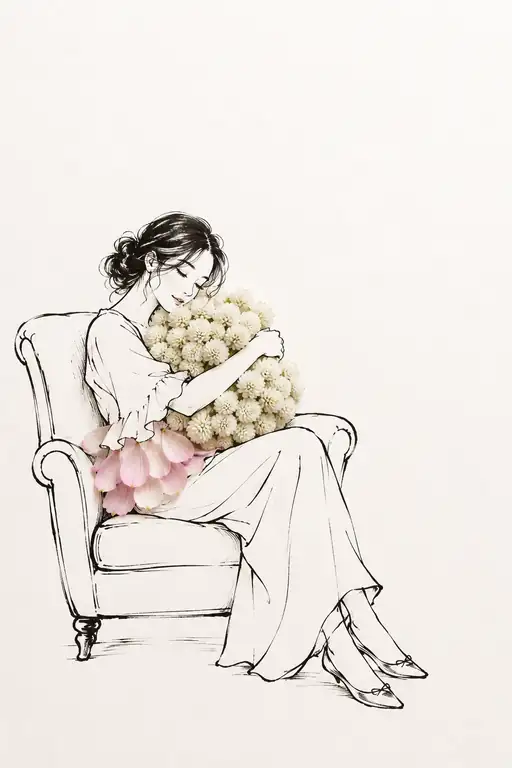 Nothing to Hurry Me Away
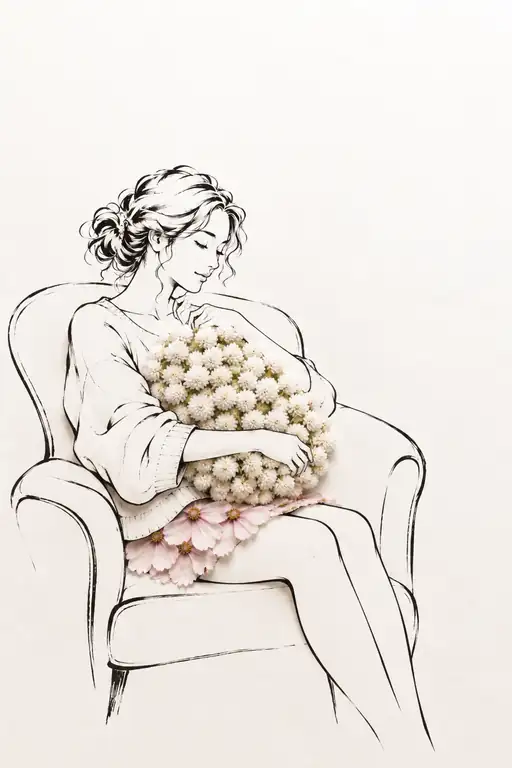 A Tenderness to Rest My Thoughts Upon
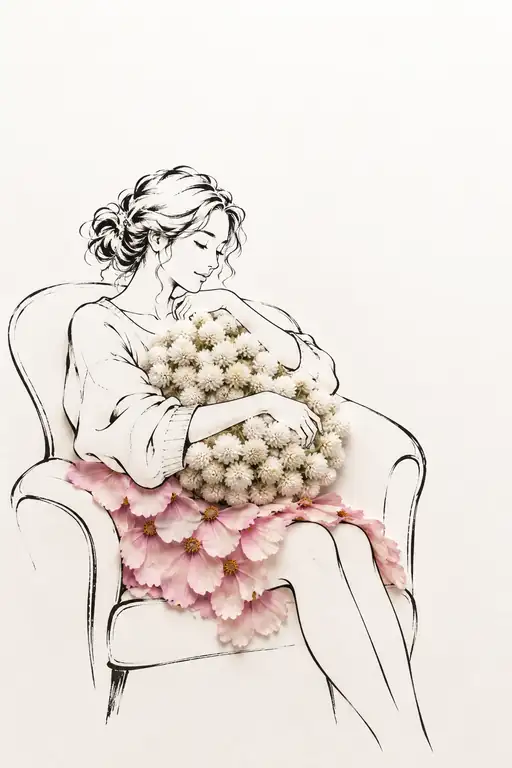 The Quiet I Hold Close
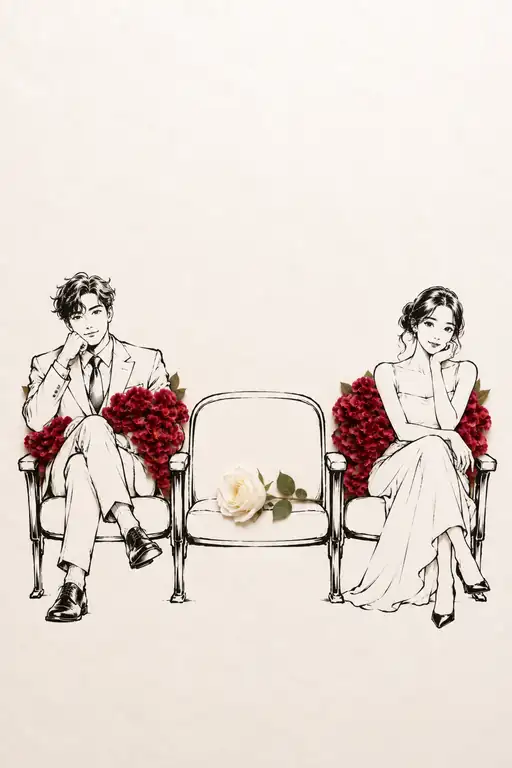 The Seat Between Us
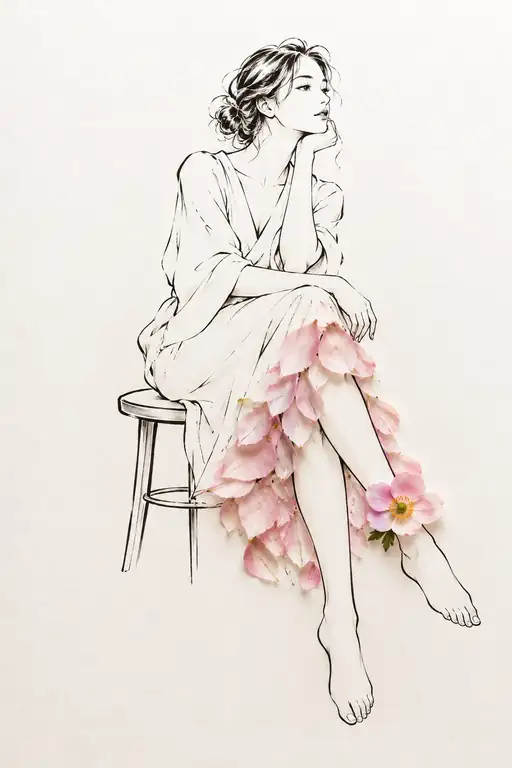 The Softness of Staying
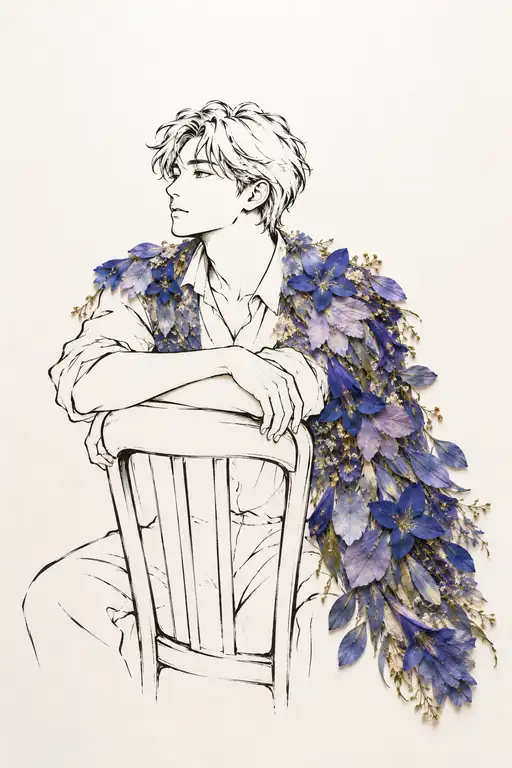 Somewhere Beyond This Blue
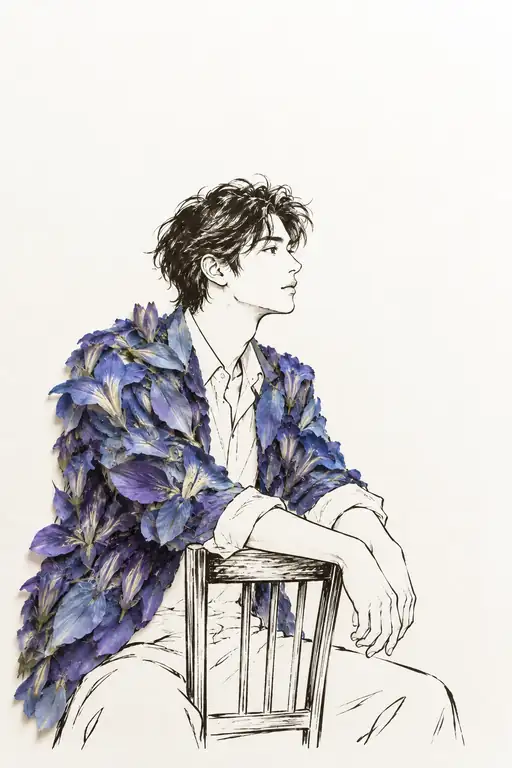 The Blue I Wear While Waiting