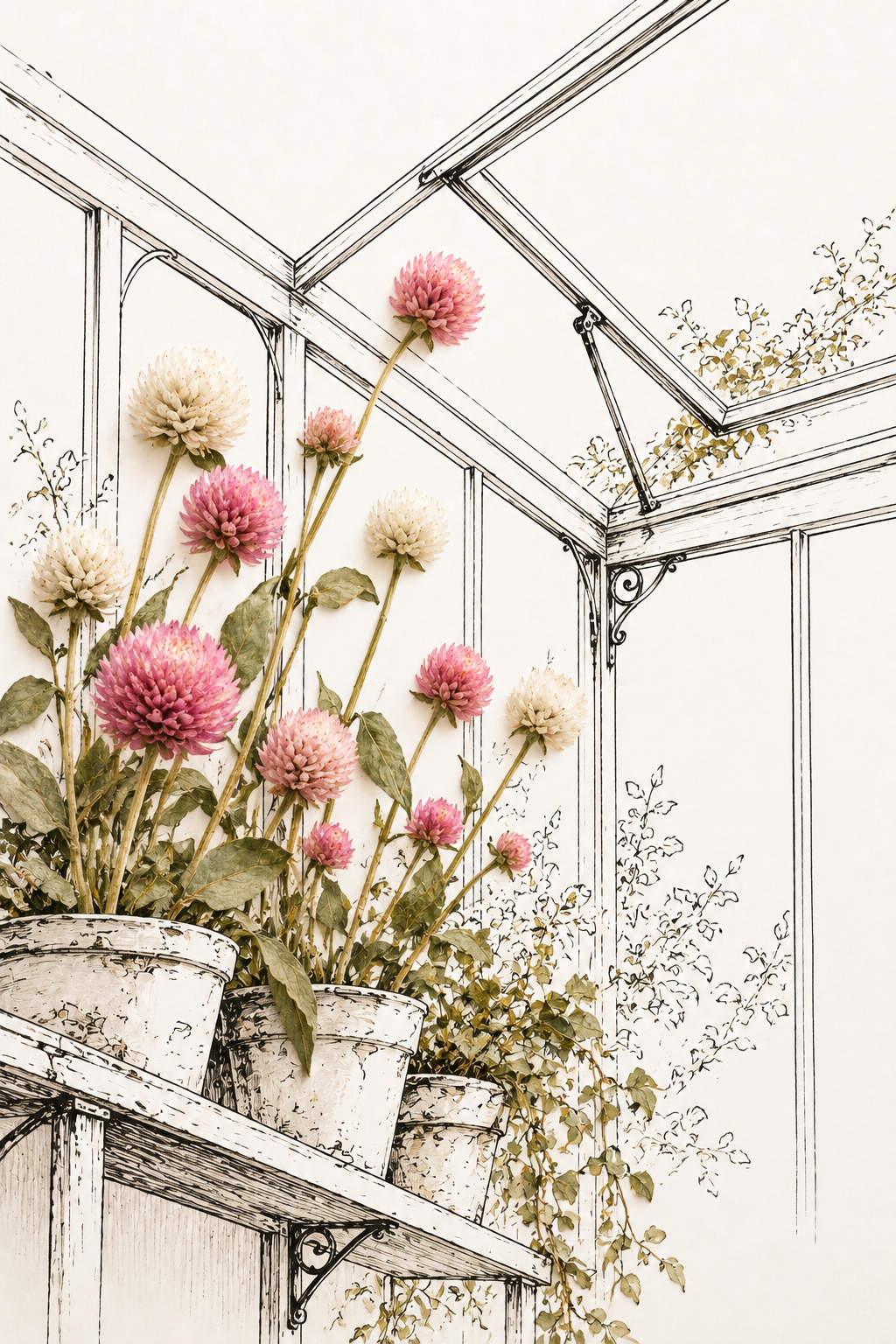
Room for Tomorrow to Grow
Critique
Introduction Pink and white rounded flower heads rise from pots on a greenhouse shelf. The viewpoint looks upward, placing the flowers beneath a sharply outlined roof and open vent. Botanical detail occupies the left and lower portions, while the architectural framework organizes the expansive pale space above and to the right. Description Long green stems carry dense heads of small overlapping florets at unequal heights. The tallest pink bloom approaches the roof beam. Three pots stand along a diagonal shelf, with leaves spilling between them. A trailing vine descends on the right, and scattered outlined foliage appears beside the greenhouse posts and behind the open roof panel. Analysis The shelf and roof create opposing diagonals around the vertical stems. Repeated pink spheres connect the pots to the upper structure, while white heads soften their color rhythm. The pots' rough black marks echo the beams but differ from the flowers' fine surfaces. Leaves with muted olive tones mediate between the strong linework and brighter blossoms. Interpretation and Evaluation The scene suggests cultivation through the visible pots, shelf, and adjustable roof opening. The plants nevertheless extend across those ordered divisions. Its compositional strength lies in showing both supports and growing forms without describing a crowded interior. Differing flower heights and the falling vine keep the architecture from becoming a rigid frame around a single floral mass. Conclusion The first impression of tall flowers develops into awareness of the greenhouse as an active spatial structure. Diagonal beams establish the viewpoint, while stems and vines provide contrasting movements. Carefully limited color and varied textures allow the plant surfaces to remain prominent within a mostly linear setting.
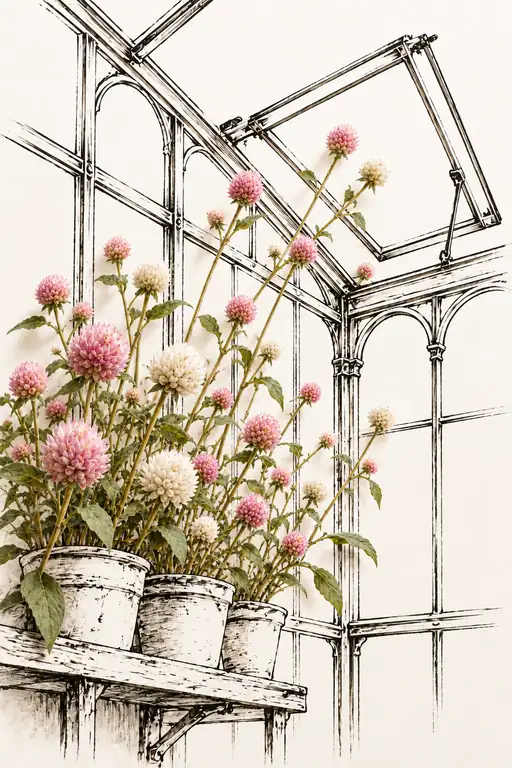 Room to Grow Beyond the Roof
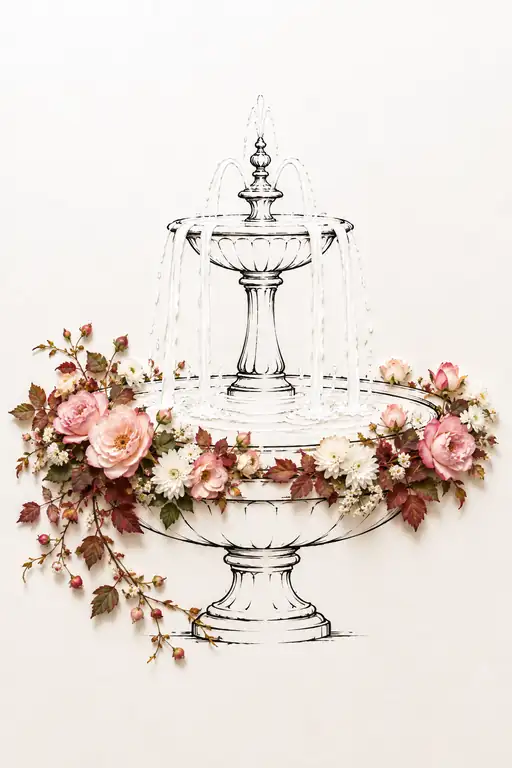 Where Tenderness Returns
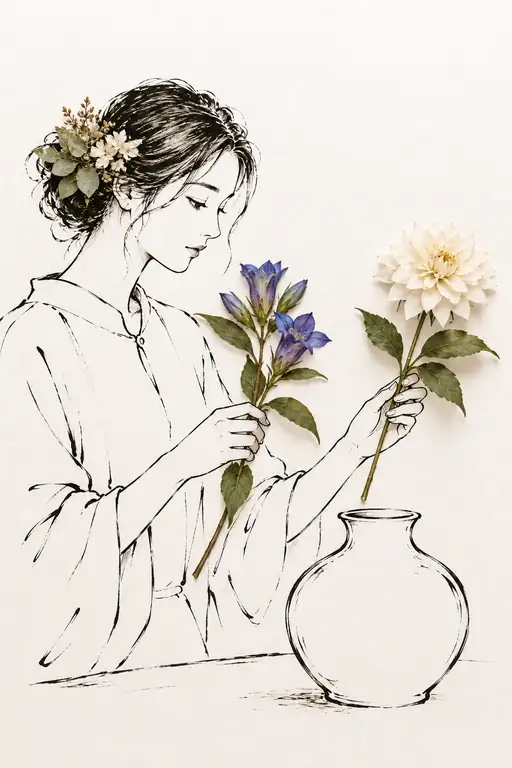 Before My Hands Decide
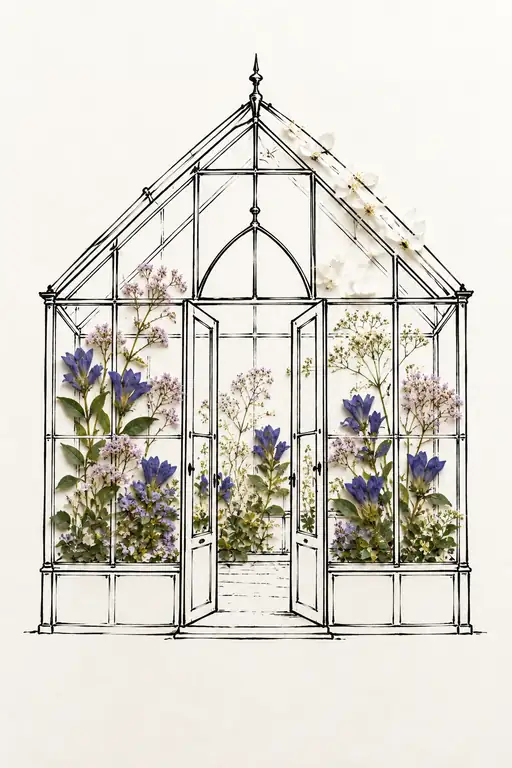 Come Into My Quiet Blue
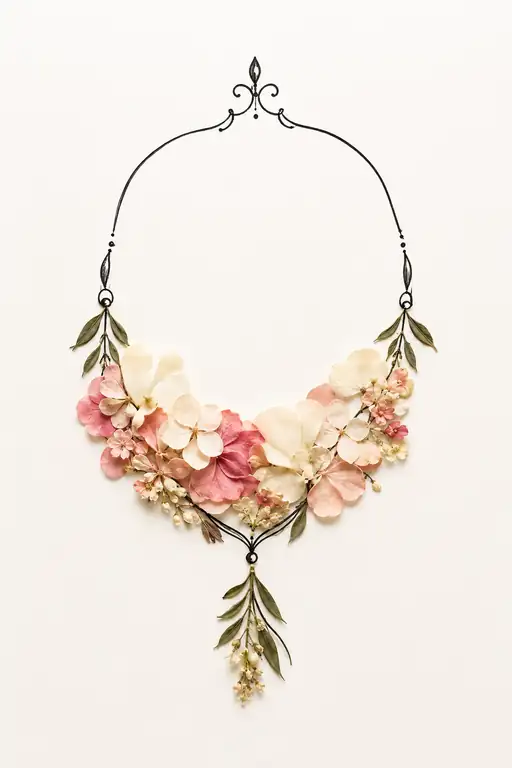 Royal Necklace Woven with Ephemeral Blossoms
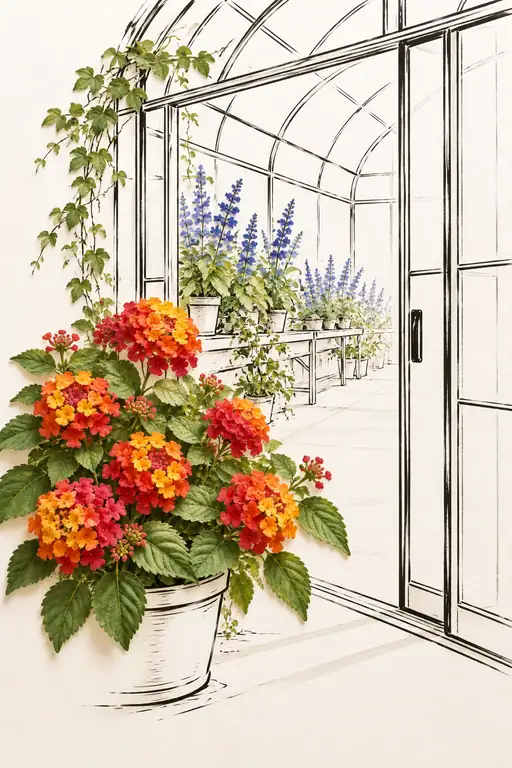 The Doorway to Growing Light
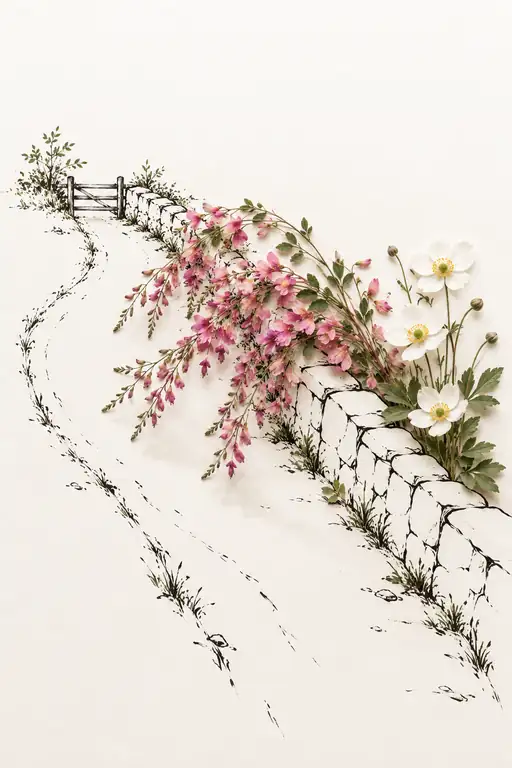 I Take the Long Way Home
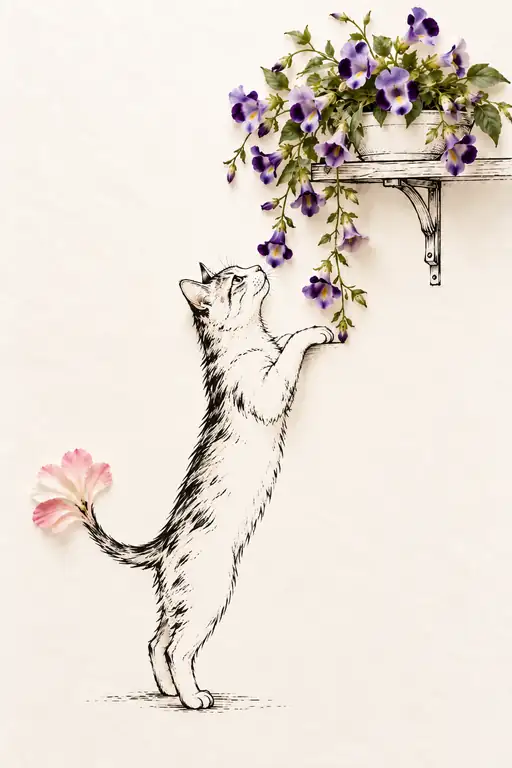 The World Is Just Above My Nose
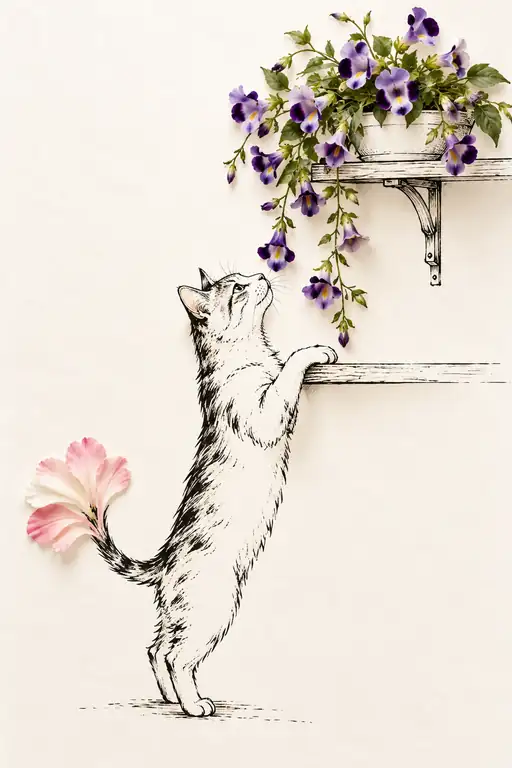 One Breath Away from Wonder
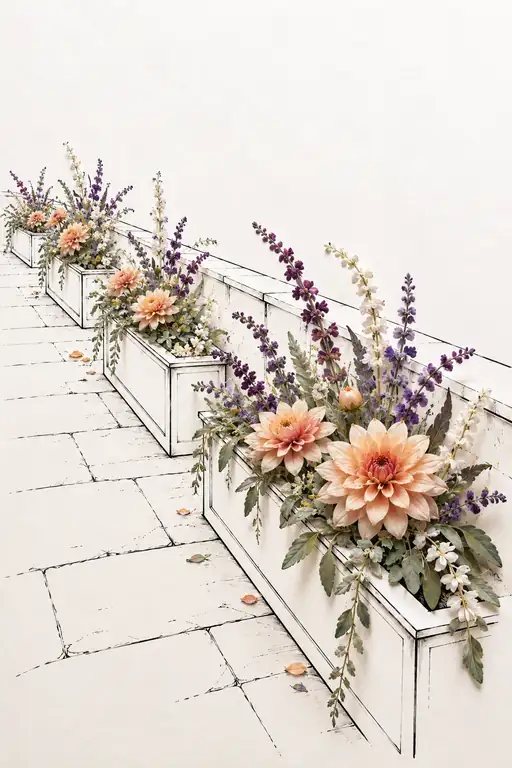 Every Step Toward You