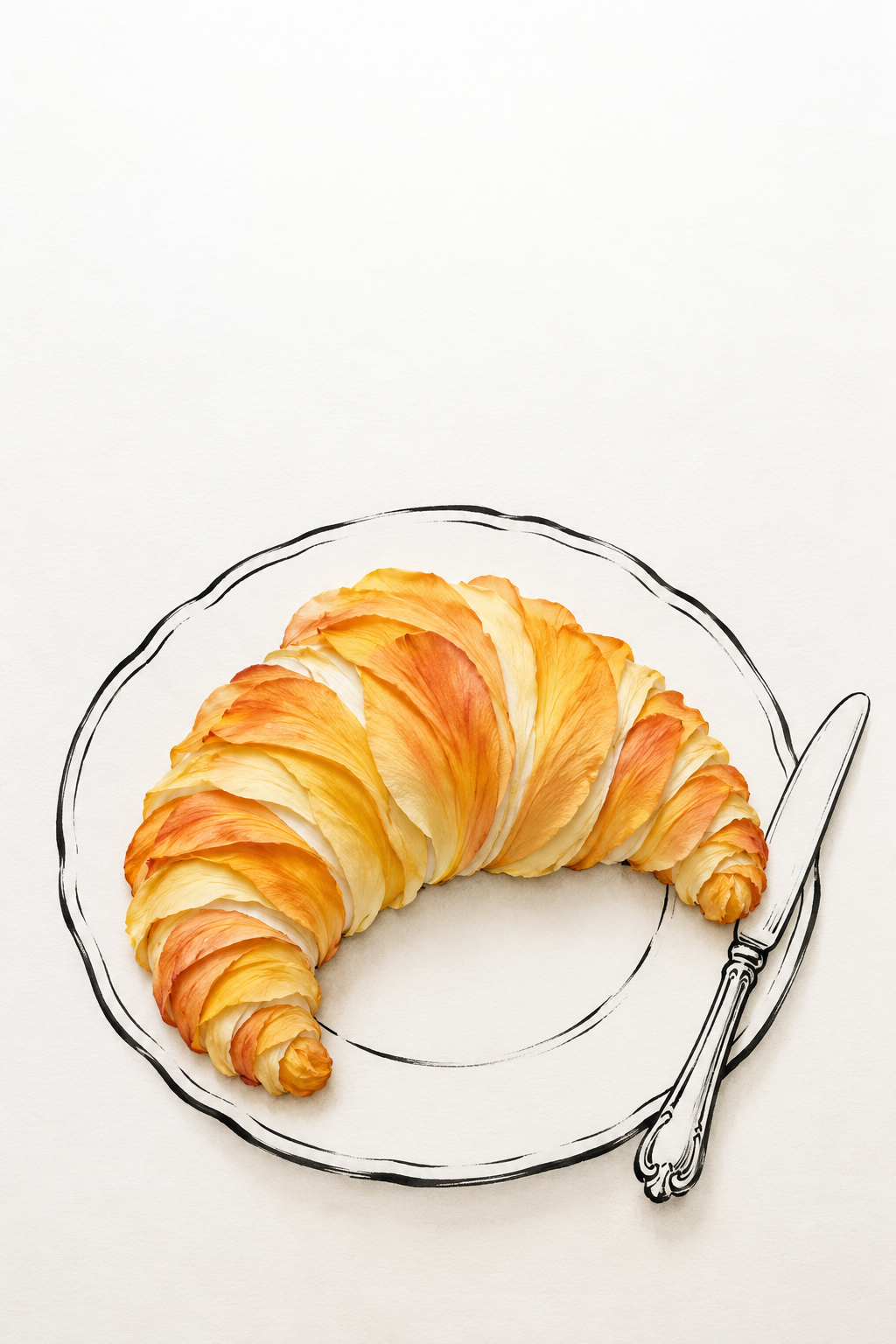
Morning Folded into a Golden Crescent
Critique
1. Introduction A crescent-shaped pastry is formed from overlapping yellow and orange petals on a lightly outlined plate. A knife rests along the right edge. The image transforms a familiar food shape through botanical texture, concentrating warm color in the lower half beneath a broad area of unoccupied pale background. 2. Description The pastry curves from a larger lower-left tip around a full central arc to a smaller right end. Broad petals wrap its thickest section, while narrow curled pieces gather at the ends. The plate has a gently irregular rim and inner circle. The knife has a long pale blade and a dark-outlined ornamental handle extending downward. 3. Analysis Changing petal scale follows the pastry's taper, helping separate its broad middle from tightly rolled ends. Orange surfaces alternate with cream and yellow layers, recalling a baked crust without erasing the petals' visible veins. The knife's straight diagonal contrasts with the curved food and plate. Soft contact shadows give the layered form weight on the otherwise flat drawing. 4. Interpretation and Evaluation The arrangement invites comparison between flaky pastry and thin plant surfaces through their shared folds. The material substitution is inventive because the overall silhouette remains immediately recognizable. Color and volume are coherent, although the flowerlike edges keep the object decorative rather than sustaining a complete illusion of edible texture. 5. Conclusion The initial impression of a croissant develops into close attention to the botanical construction of its layers. The restrained utensils provide scale and a simple serving context. The work succeeds through controlled tapering and selective warmth, allowing a single transformed object to sustain visual interest without requiring additional still-life elements.
 The Warmth We Share
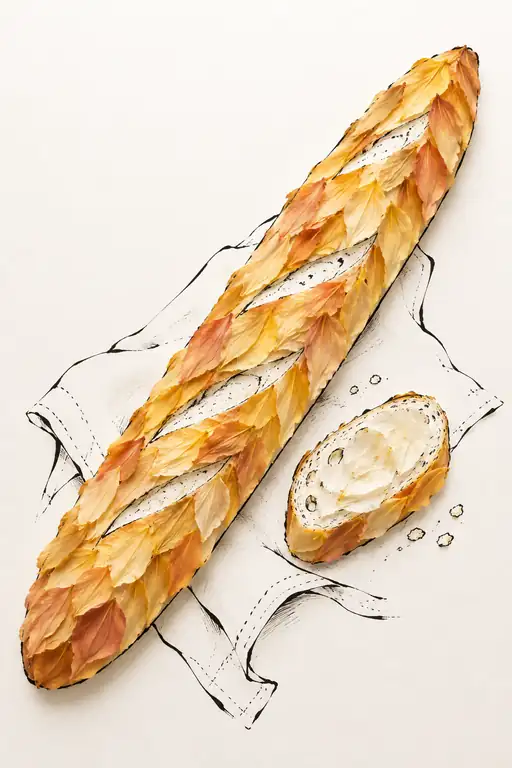 The Gold of Ordinary Days
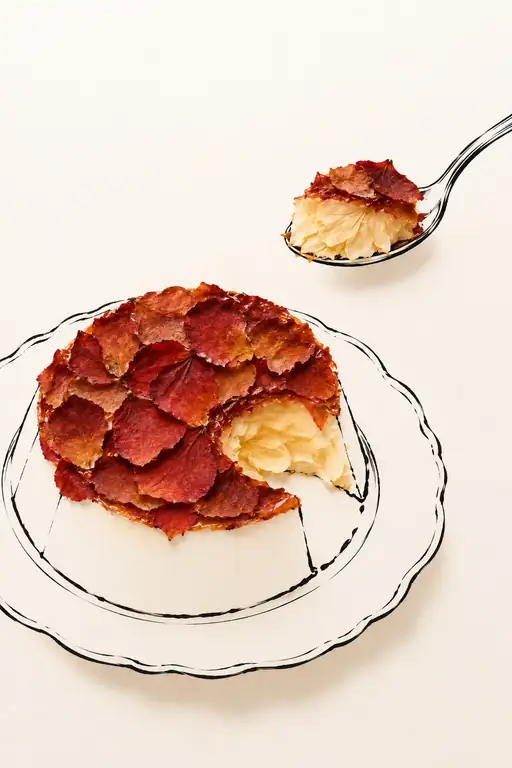 The Warmth We Leave Behind
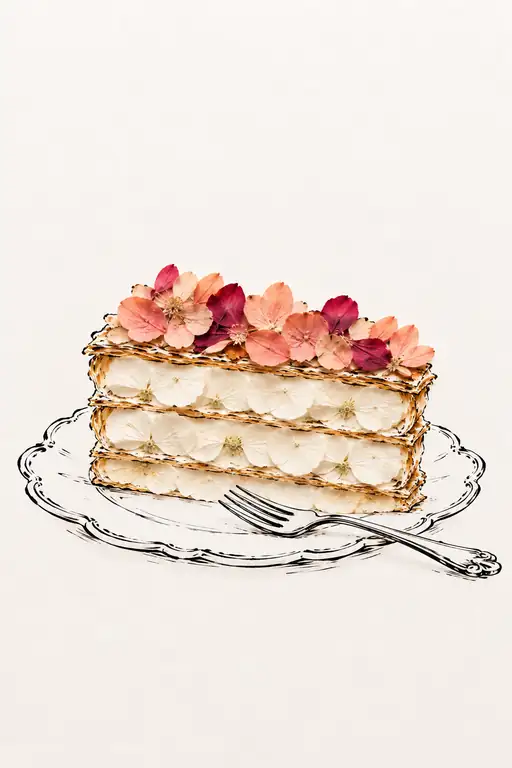 Layers of a Small Delight
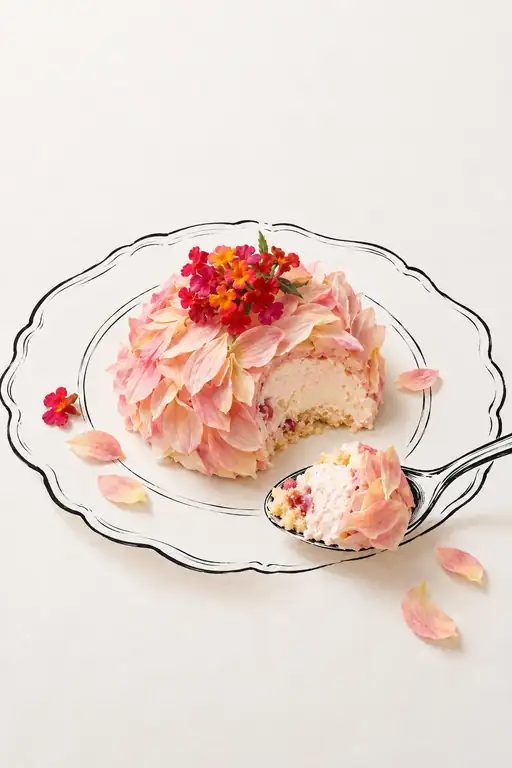 The First Bite of Celebration
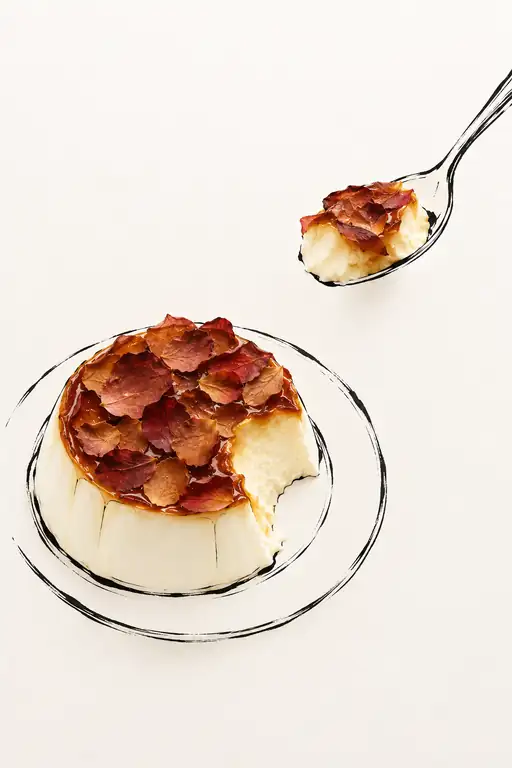 The Sweetness of Almost
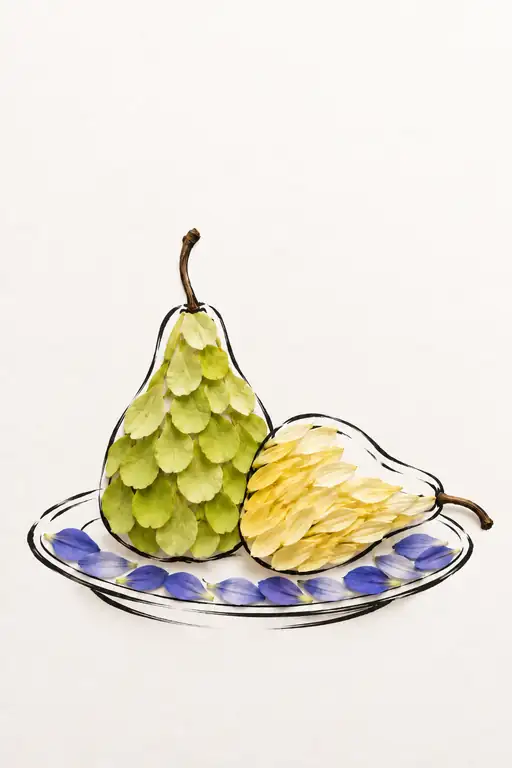 Two Ways to Rest in Light
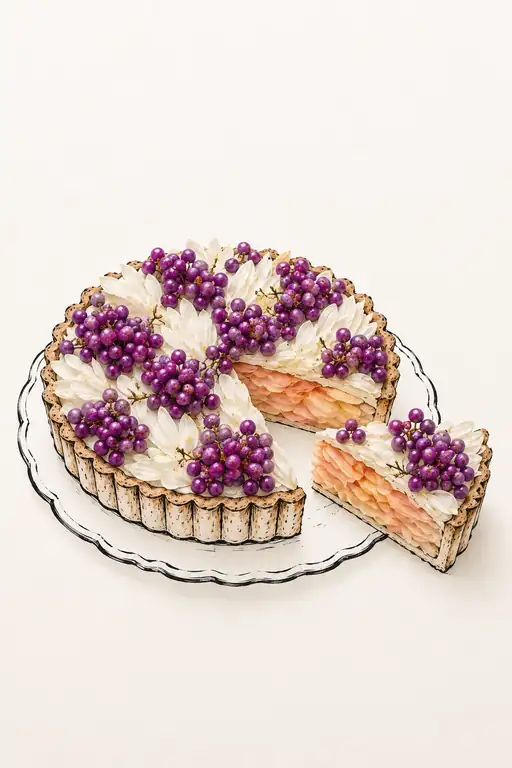 A Little Sweetness Set Aside for You
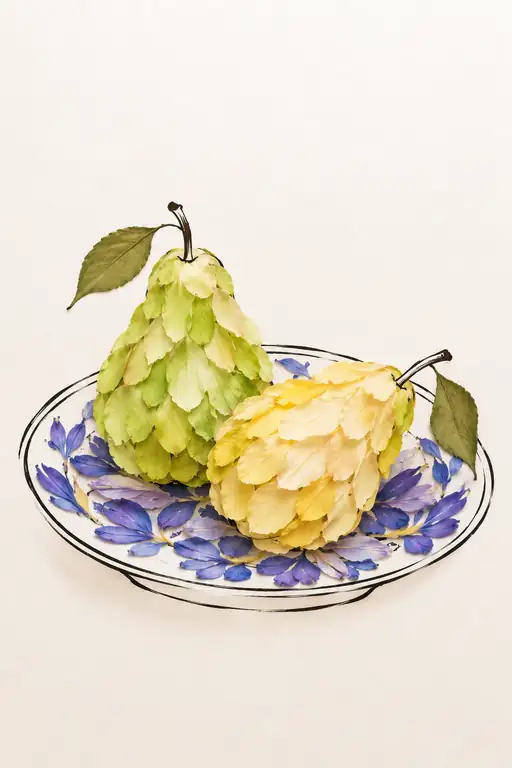 Contentment in Two Voices
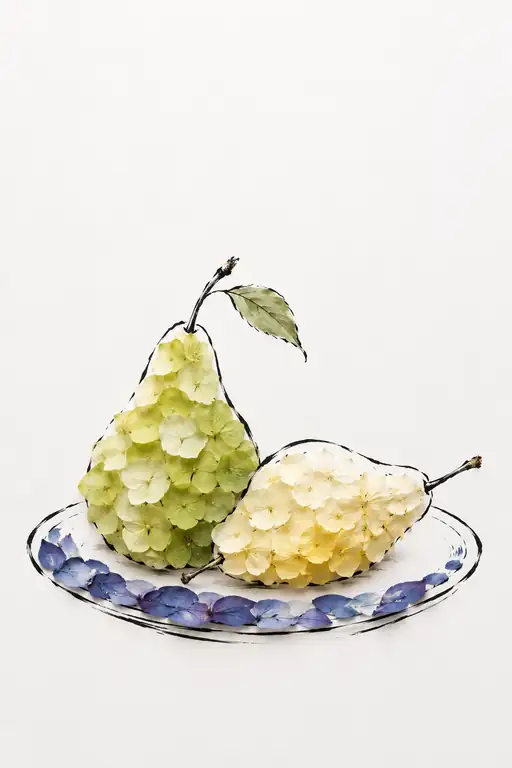 A Quiet Plenty