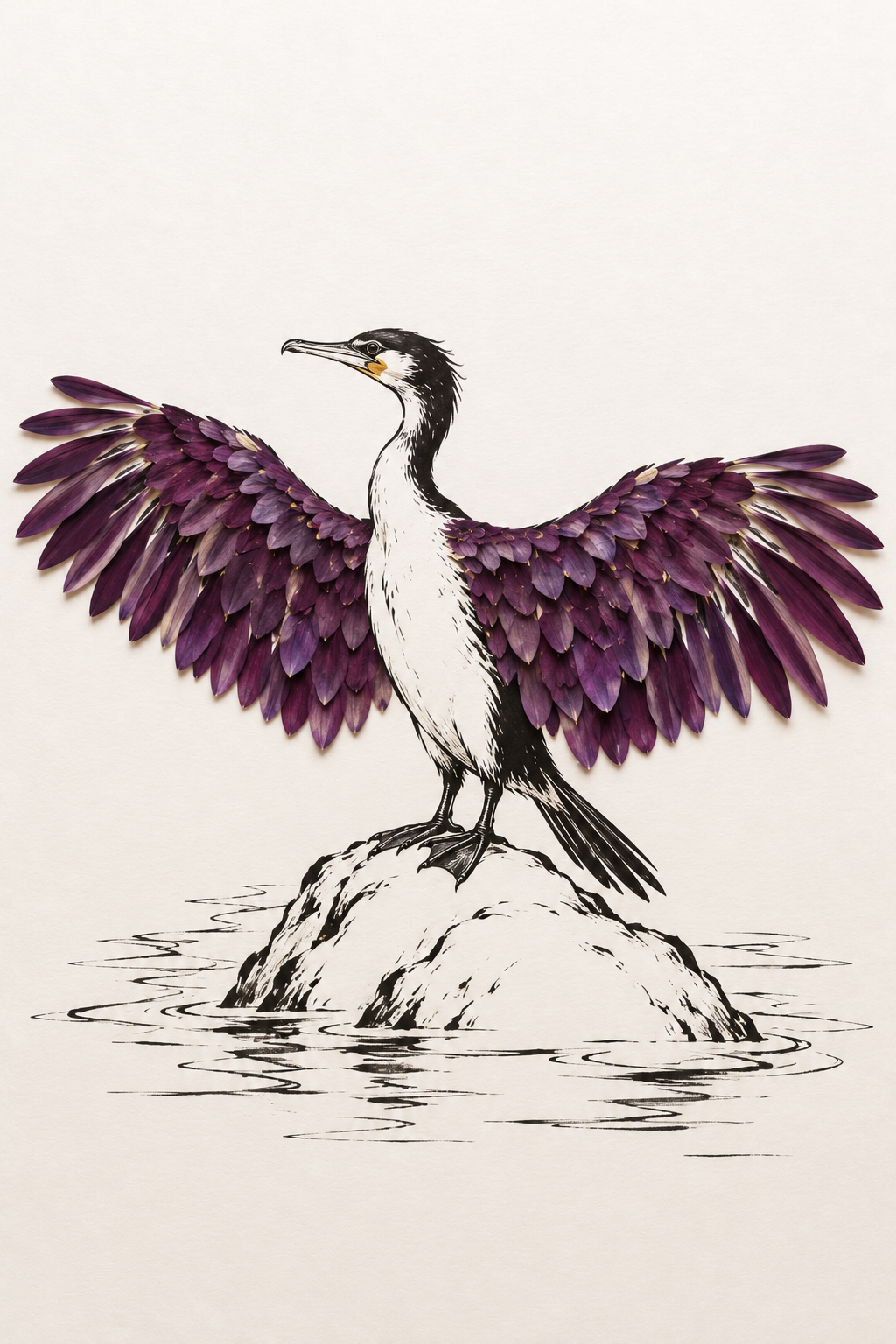
I Open My Wings to the Waiting Air
Critique
1. Introduction A long-necked waterbird stands on a rock with both wings fully spread. Purple petals replace the wing feathers, while the head, white breast, feet, and tail retain black linear description. The image combines a nearly frontal display with a left-facing profile, giving stillness a broad, expansive silhouette. 2. Description The narrow hooked bill points left, and a small yellow patch appears beside the cheek. Short rounded petals cover the inner wings, giving way to long dark pieces at the outer tips. Webbed feet rest on the rock's summit. Thin horizontal water marks and broken reflections surround the pale, irregular stone base. 3. Analysis The wings form a wide arc around the upright neck and breast. Their petal lengths change systematically, making the feather structure legible despite the substituted material. The pale torso divides the saturated purple area, while black tail lines continue diagonally down to the right. The central rock anchors the display and prevents the broad wings from appearing detached. 4. Interpretation and Evaluation The posture suggests drying or displaying wings rather than active flight. This distinction is supported by planted feet and a stable vertical body. Anatomical arrangement and tonal contrast are effective, although the decorative purple surfaces differ from the restrained realism of the face and establish an intentionally hybrid character. 5. Conclusion The initial attraction of floral wings develops into an appreciation of their graded structure and stable support. Water lines give the isolated bird a modest environmental context. The work succeeds through the contrast between expansive colored surfaces and economical central drawing, allowing a familiar perched gesture to remain readable within an inventive botanical transformation.
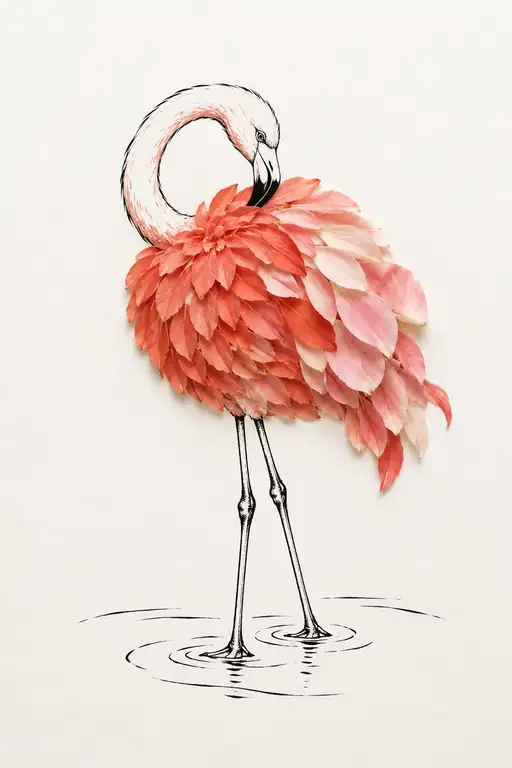 Turning Gently Inward
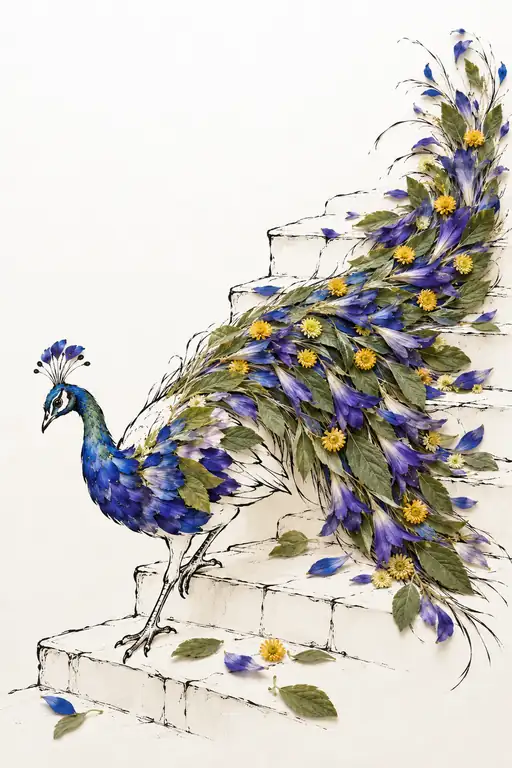 My Blue Lingers on Every Step
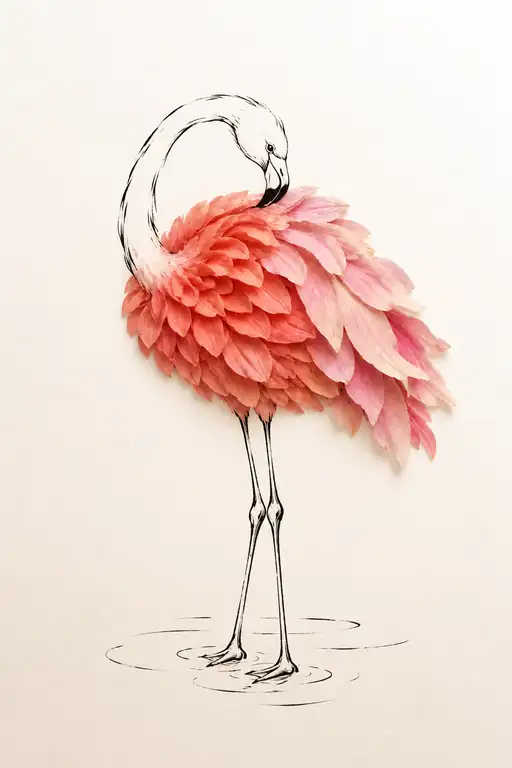 A Pause in Rose
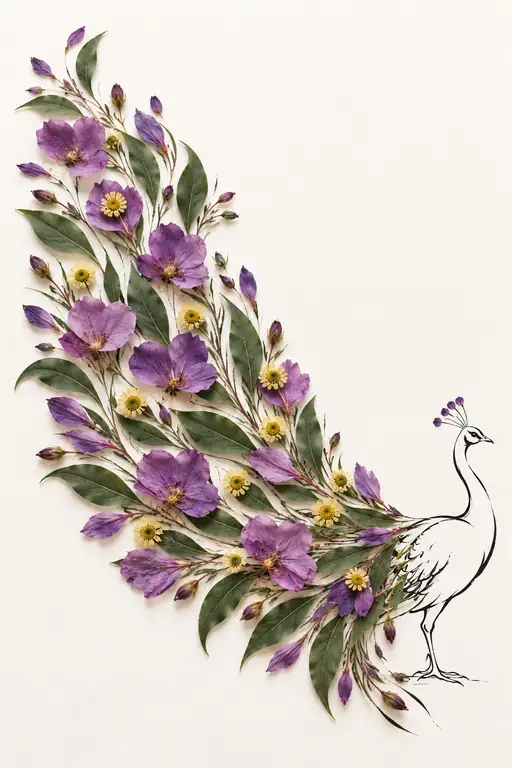 The Splendor of Becoming
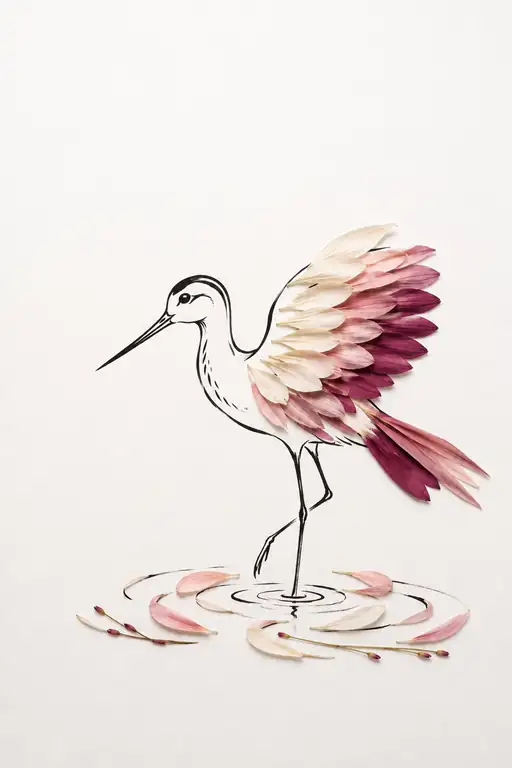 Crimson Plumage Poised Above Still Waters
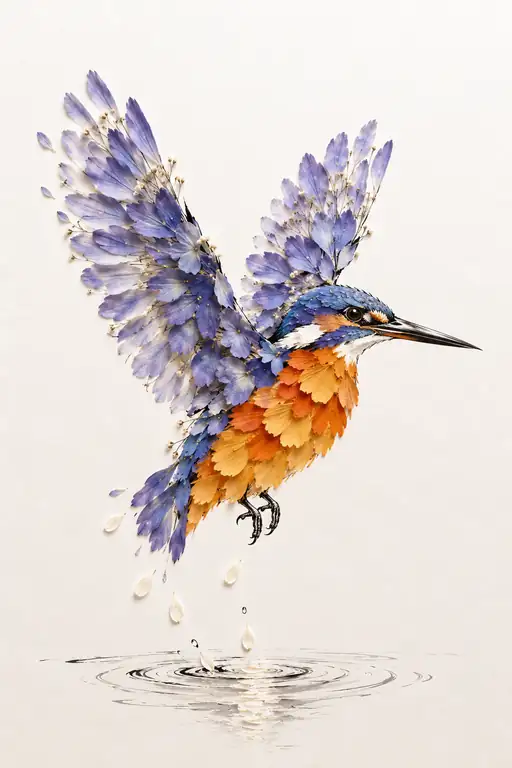 The Heartbeat Before Flight
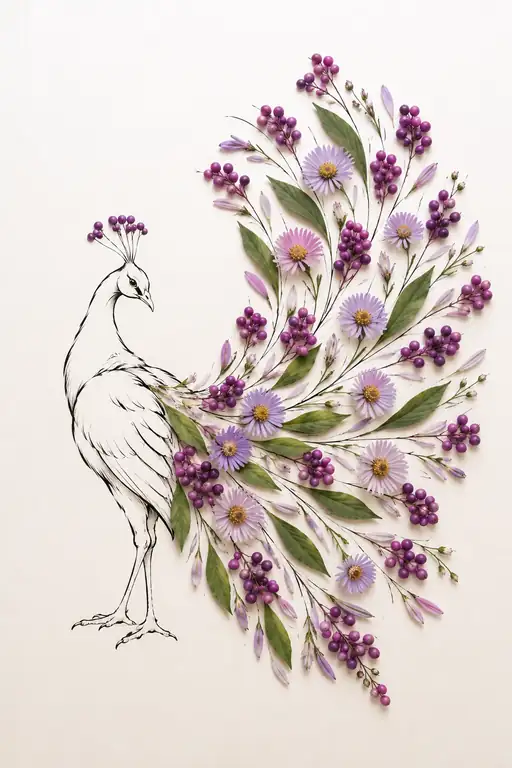 All That I Keep Within
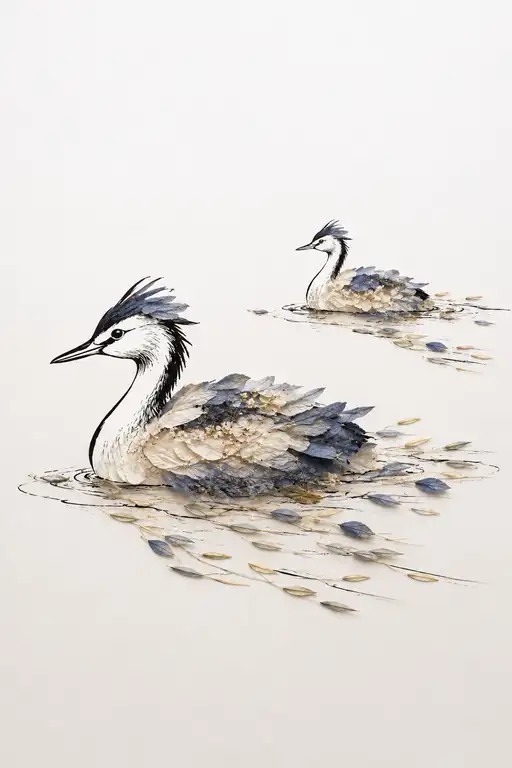 Gliding Across Cerulean Ripples
 Heron of Floral Plumage Reflected in Still Waters
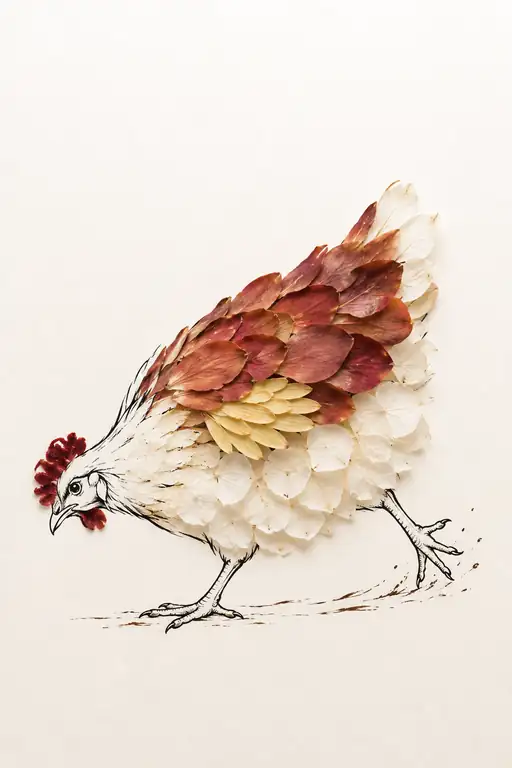 A Small Hurry of My Own