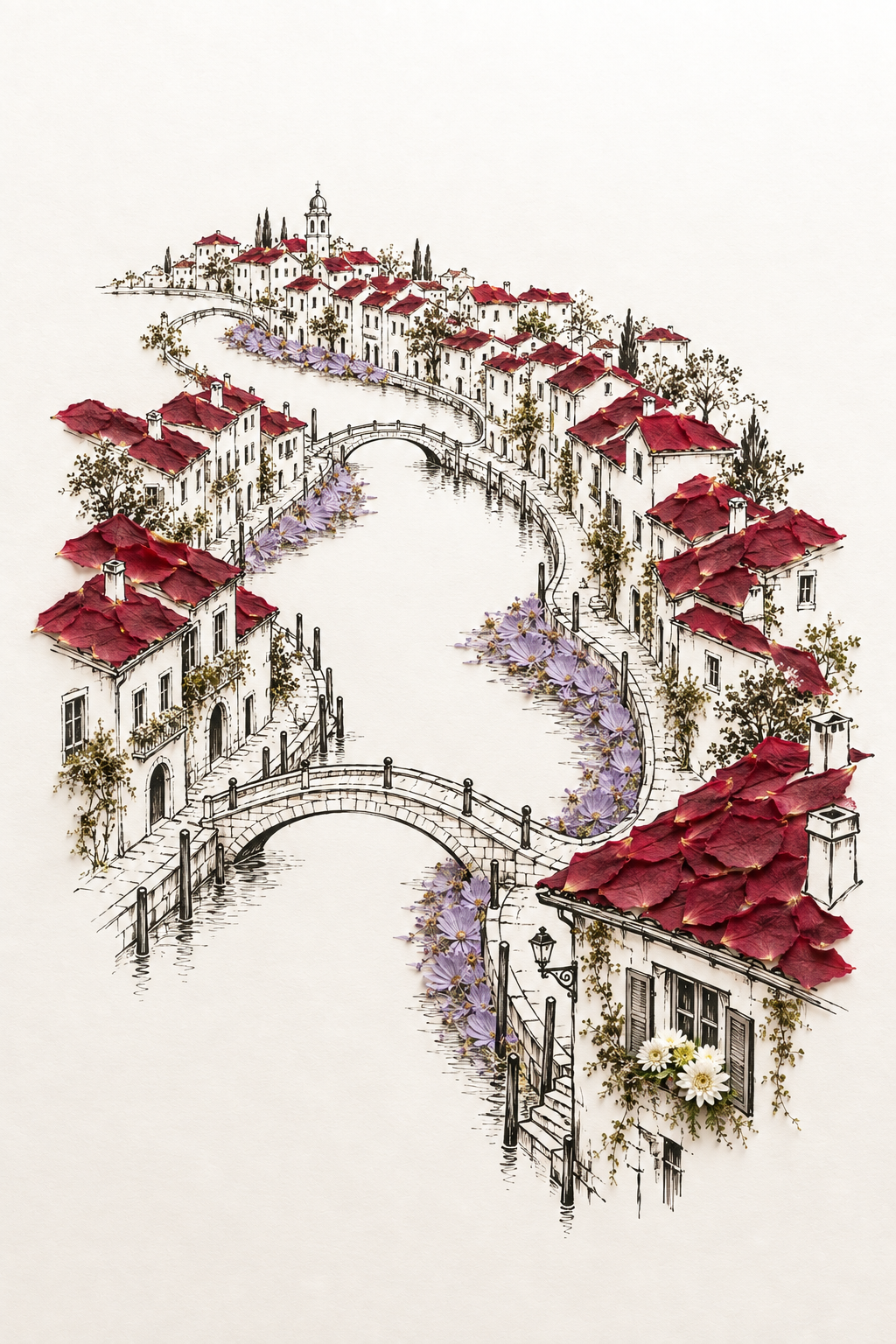
Where Our Ways Meet Again
Critique
Introduction A winding canal threads through a small town of white houses and red petal roofs. Description The canal begins near the bottom and bends in a broad S toward a distant bell tower. Houses cluster on both banks, with white walls, small windows, shutters, chimneys, and deep crimson roofs assembled from overlapping petal-like forms. Stone footbridges cross the canal at near, middle, and far distances. Lavender blossoms gather along the water's edges, especially near the foreground bend. Analysis The S-shaped waterway provides a continuous route through a visually dense settlement. Bridges interrupt this route at regular intervals, creating stepping stones for the eye from foreground to distance. Red roofs repeat across both banks and diminish in size toward the tower, reinforcing perspective. Their textured petals contrast with the spare ink lines of walls and railings. Lavender flower banks supply a cooler ribbon that traces the canal's turns. The large white water surface gives the crowded buildings breathing room and prevents the many roofs from becoming a single dark mass. Interpretation and Evaluation The water connects rather than divides the two sides of town, as shown by the frequent bridges and paired rows of homes. The red roofs make the town seem to bloom from above, while the lilac border brings that growth down to the waterline. There are no people, yet doorways, paths, and bridges imply repeated daily crossings. Conclusion The picture succeeds through its winding spatial design and limited, memorable palette. It transforms an orderly canal town into a living floral pattern while preserving the pleasure of following every turn and crossing.
Same Subcategory
 Autumn Travels Beside Us
Similar Artworks
 The Long Red Rhythm of Belonging
 Waterway of Drifting Petals
 Canal Journey Under Pale Skies
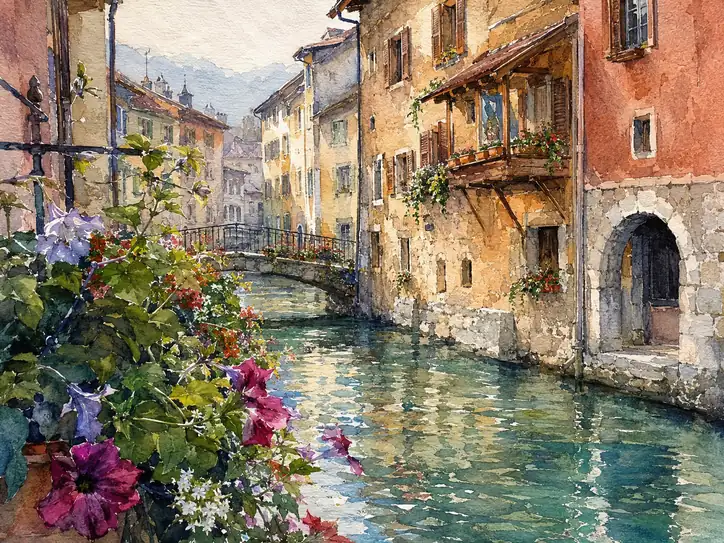 Whispers from a Sun-Drenched Canal
 Gondola through the Bougainvillea Canal
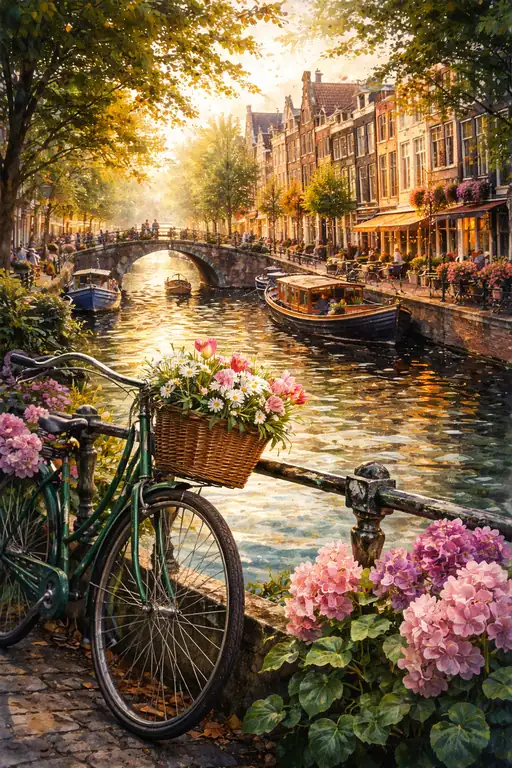 Golden Serenade of the Canal
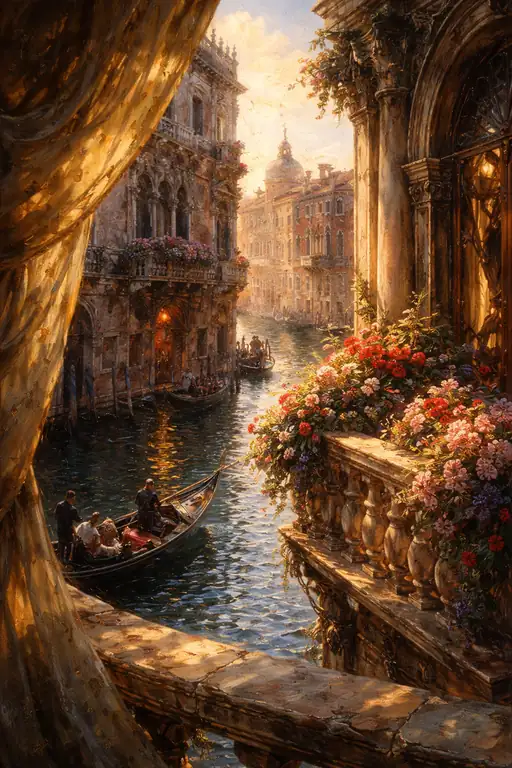 Serenade of the Floating City
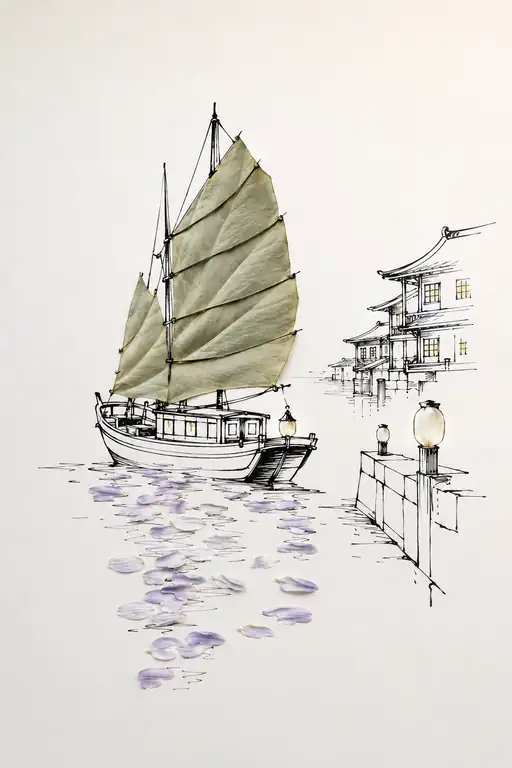 Evening Anchorage Under Leaf-Woven Sails
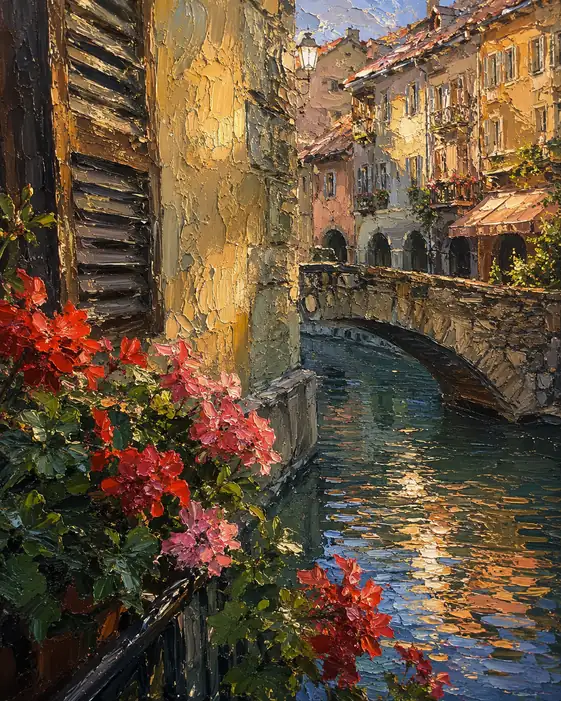 Scarlet Whispers by the Canal
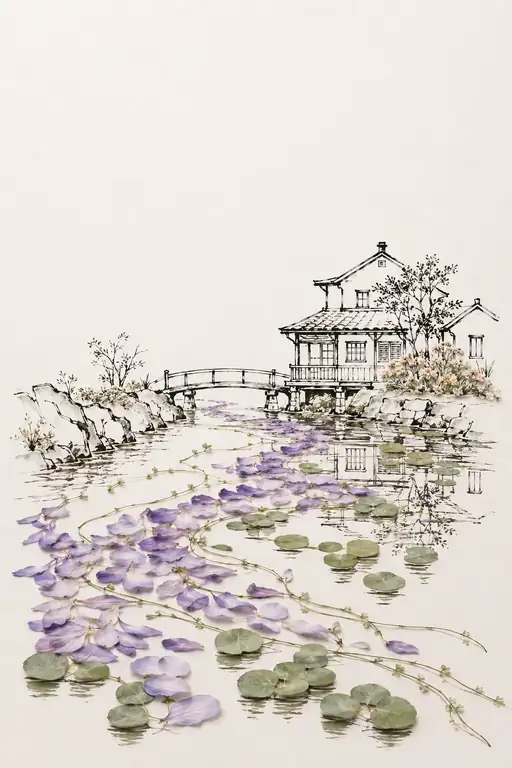 Ripple and Reflection at the Canal House