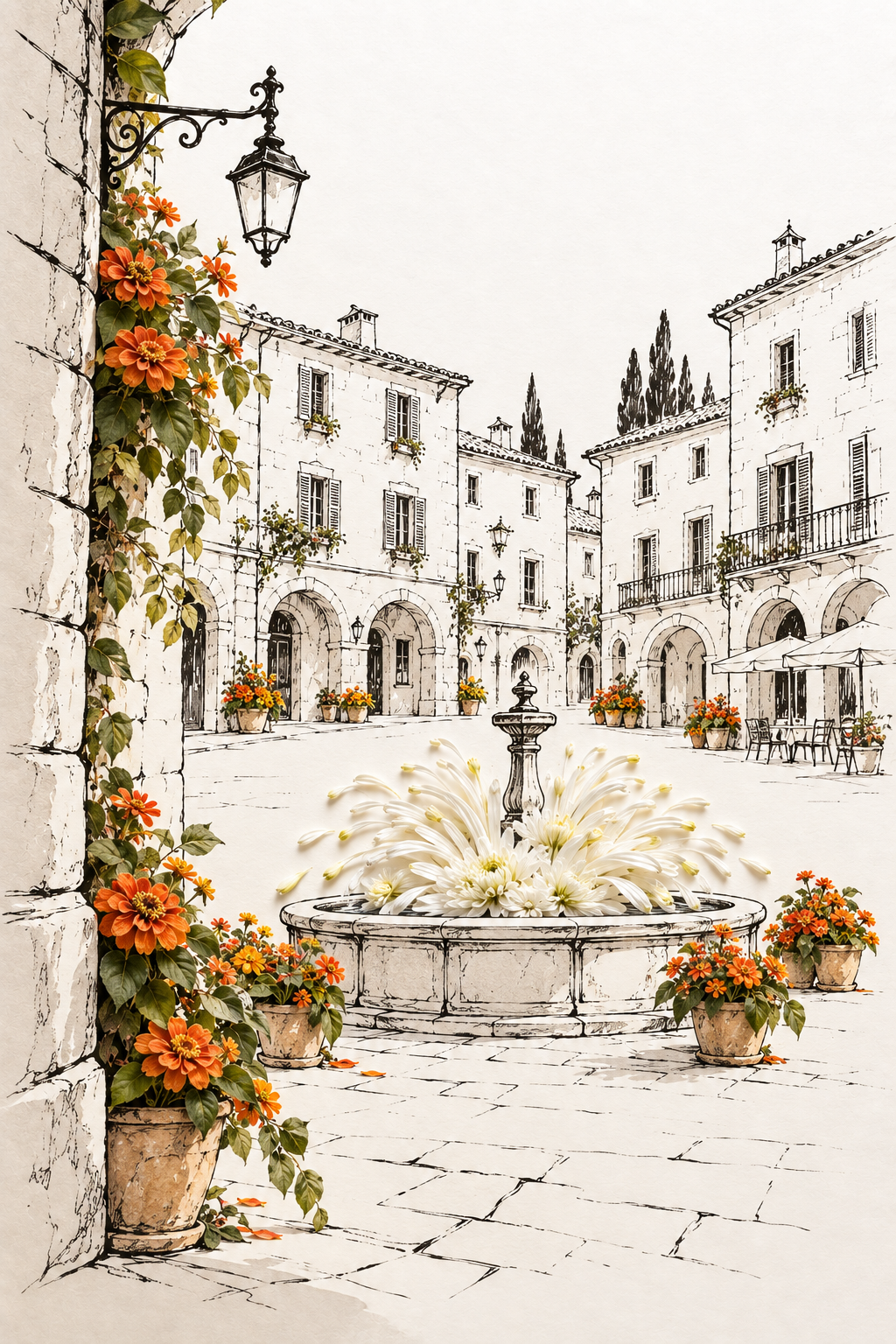
The Town Takes a Quiet Breath
Critique
Introduction An empty town square is organized around a fountain whose basin seems to overflow with white flowers instead of water. Description Arcaded pale buildings enclose the open plaza, with shuttered windows, balconies, tiled rooflines, and tall dark trees rising behind them. Near the center foreground stands a low circular basin with a slender fountain stem. A burst of long, narrow white petals fills the basin and spreads outward. Terracotta pots with orange flowers occupy the near corners and the far edges of the square. Café umbrellas and chairs appear to the right, without any occupants. Analysis The square's paving lines guide the eye toward the central fountain, while the surrounding arcades provide a steady horizontal measure of depth. The nearest left wall and vine create a strong foreground plane; their warm blossoms repeat in smaller clusters across the plaza. At the center, pale petals merge with the pale stone and open space, making the fountain feel both prominent and almost weightless. The dark cypress-like trees and lantern supply vertical accents that counter the low basin and spreading flower heads. Interpretation and Evaluation Replacing the expected spray of water with flowers turns a public utility into a celebration of growth. There is also a delicate ambiguity in the white burst, which may at first resemble water before resolving into petals. That shift rewards a second look and makes the familiar civic setting quietly surprising. Conclusion The image balances a legible built environment with a gently impossible centerpiece. Its orange flowers give the eye a route around the plaza, while the white floral fountain holds the open square together and gives its stillness a sense of life.
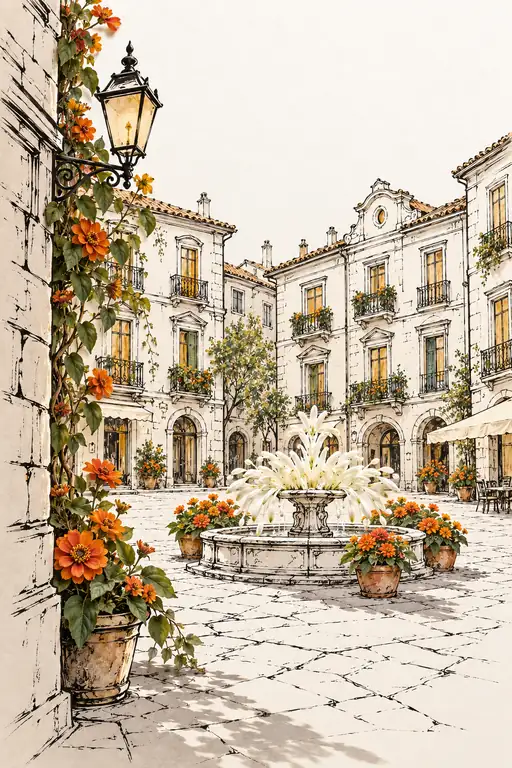 The Day Has Room for Joy
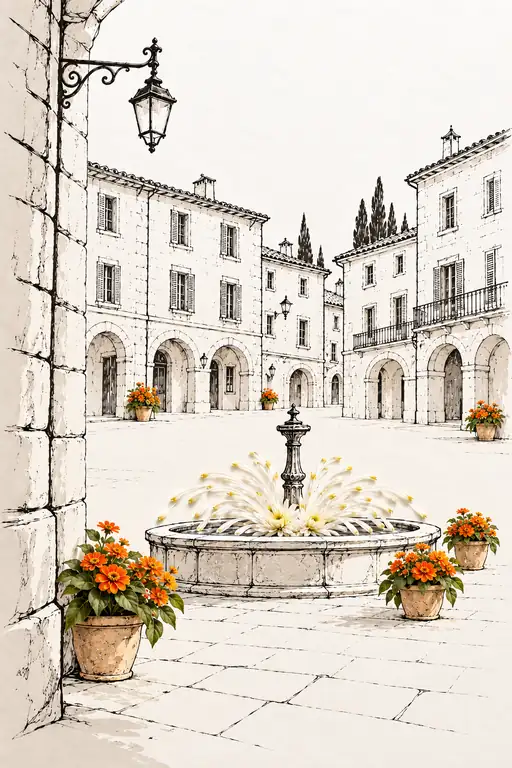 A Stillness at the Turning
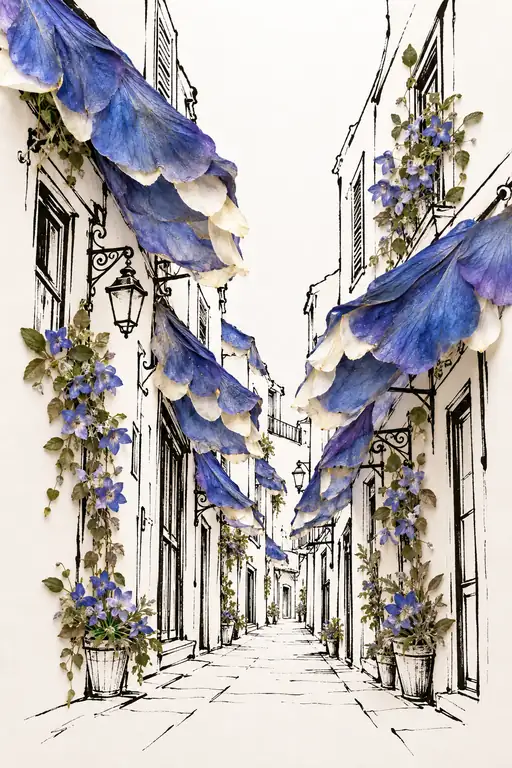 Under a Blue Kindness
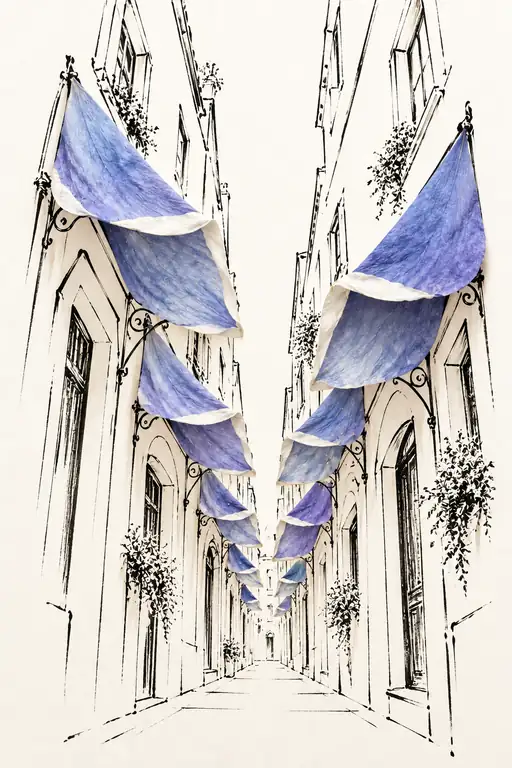 Follow the Blue a Little Further
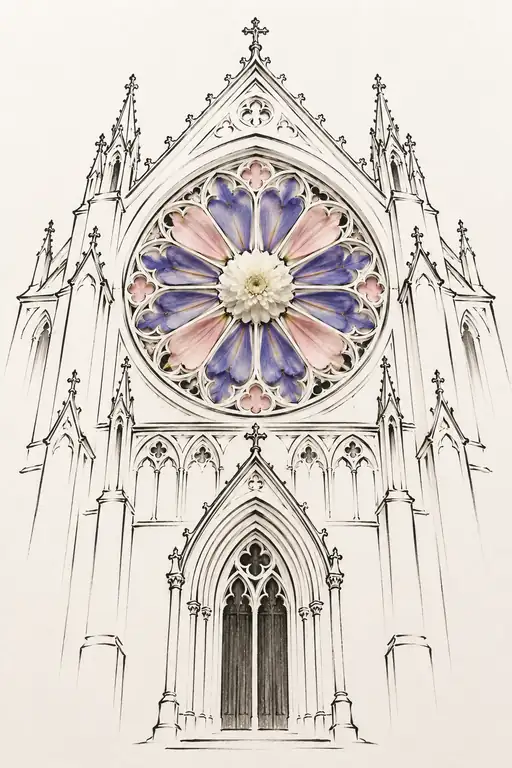 My Prayer Finds Its Light
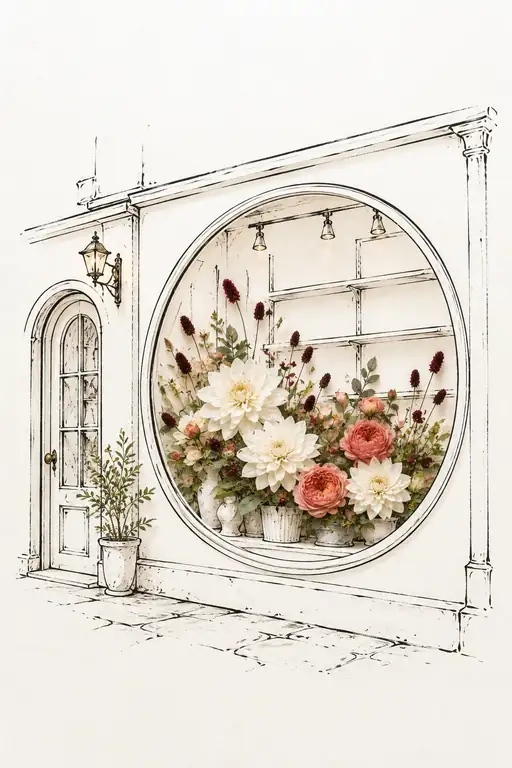 An Ordinary Day Worth Pausing For
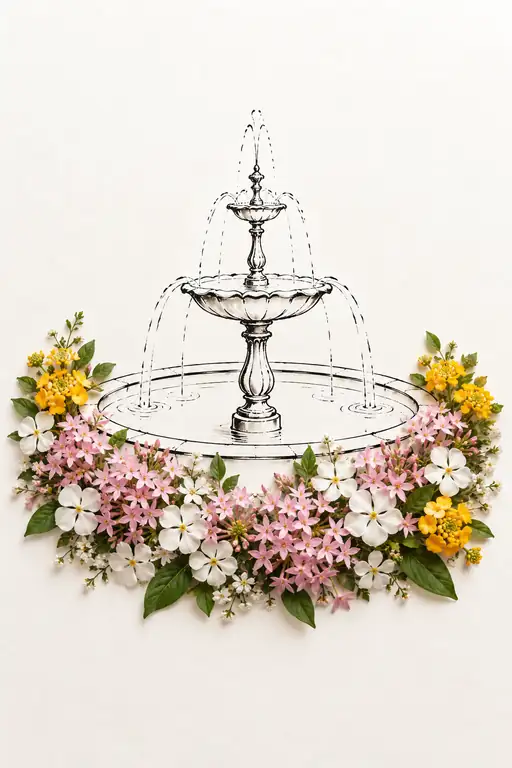 Again, the Heart Opens
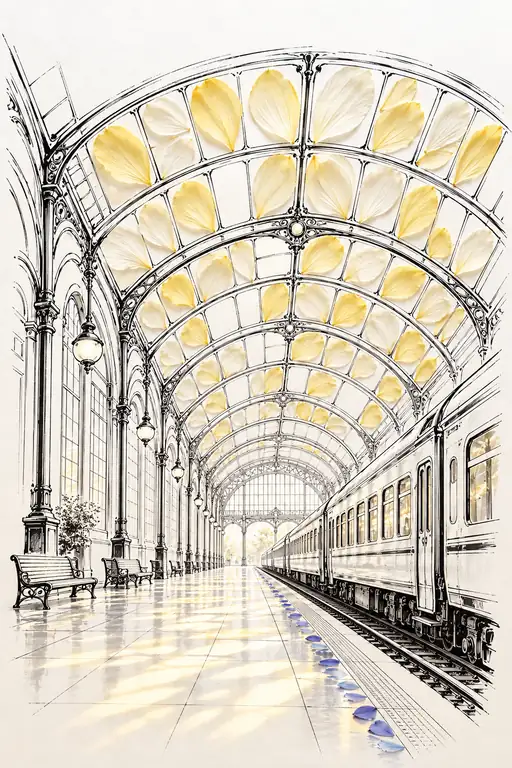 The Light Before Departure
 Joy Refuses to Stay Still
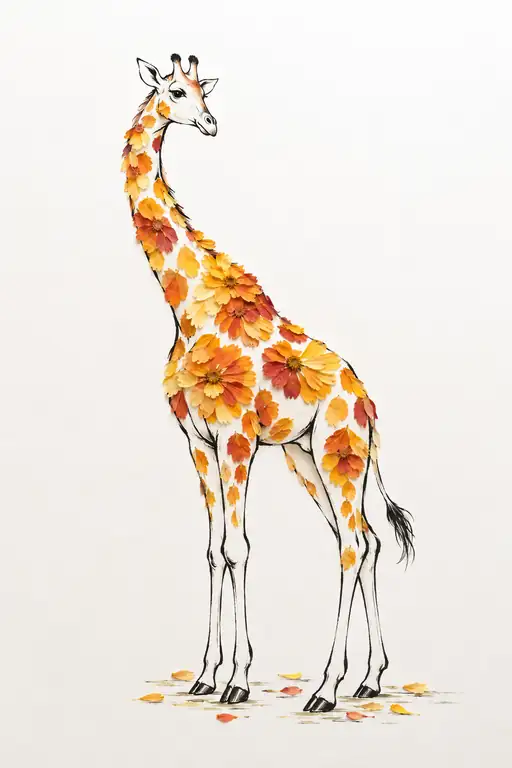 A Gentle Height Above the World