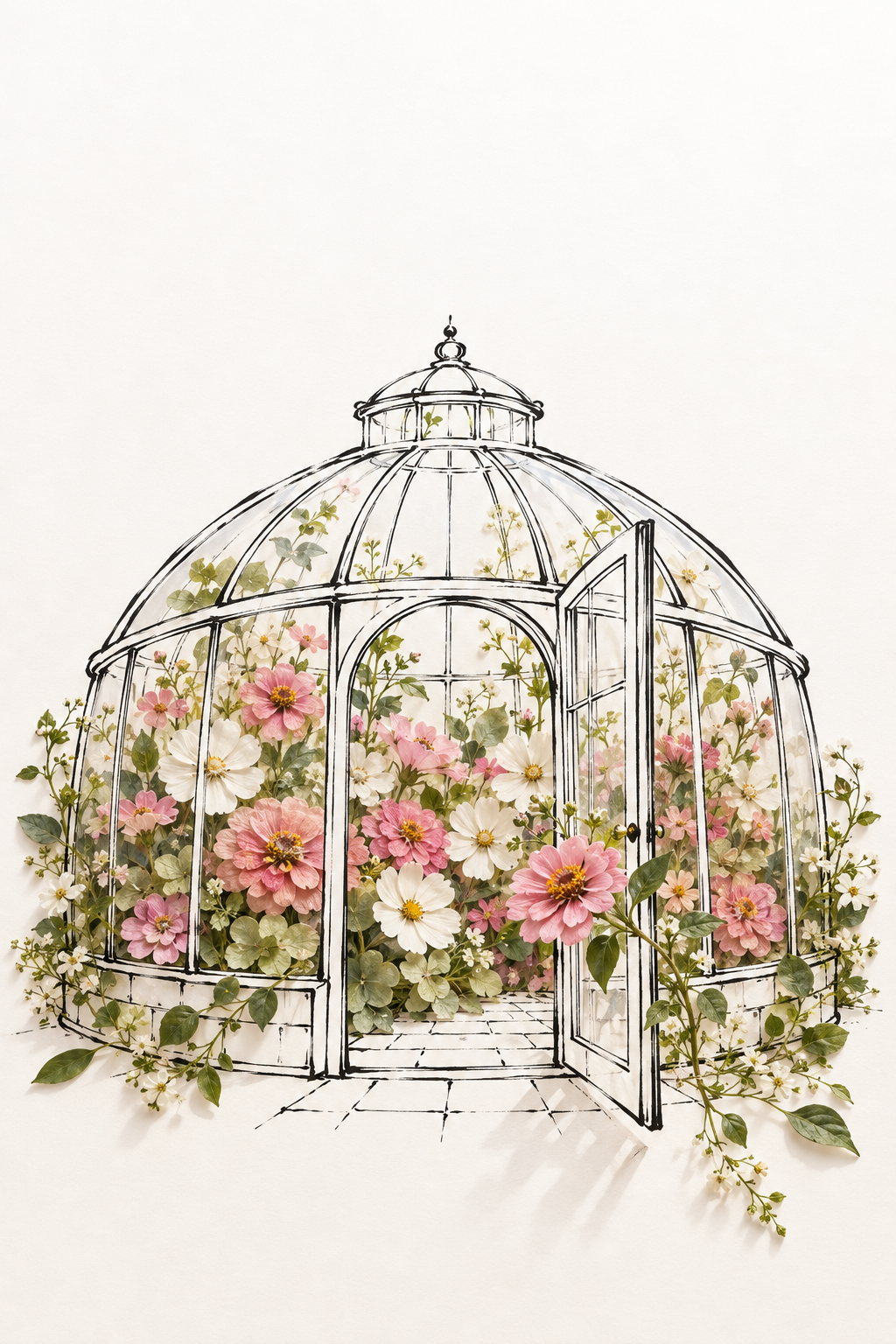
An Open Door to Tenderness
Critique
Introduction A domed glasshouse stands full of pink and white flowers, its central door opened toward the viewer. Black lines outline the ribs, panes, and tiled entrance. Description The rounded dome rises to a small lantern at the top. Vertical bars divide the curved glass walls, and the doorway sits near the center with its right-hand leaf swung outward. Pink blooms of several sizes and white daisylike flowers fill the interior among green stems. Vines trail across the base and into the open foreground on both sides. Fine floor tiles lead through the threshold. Analysis The regular ribs and window divisions create a stable geometry around the irregular plants. Flower density is greatest below the dome, while a few taller stems reach into its lighter upper panes. The open door interrupts the glasshouse's near symmetry and gives the eye a route inward. Pink and white blossoms alternate across the width, preventing a single side from dominating. The black floor lines extend the structure toward the viewer as the vines move beyond it more freely. Interpretation and Evaluation The open entrance makes the greenhouse feel accessible even though no visitor appears. Flowers inside and outside its walls blur the boundary between tended collection and surrounding growth. The composition balances containment with overflow. Precise architectural drawing keeps the dome legible; varied floral sizes and restrained pink color convey abundance without hiding the door. The plain background helps this relationship remain clear. Conclusion The floral interior attracts attention first, but the open door defines how to approach it. The work joins orderly enclosure and living expansion in one inviting view.
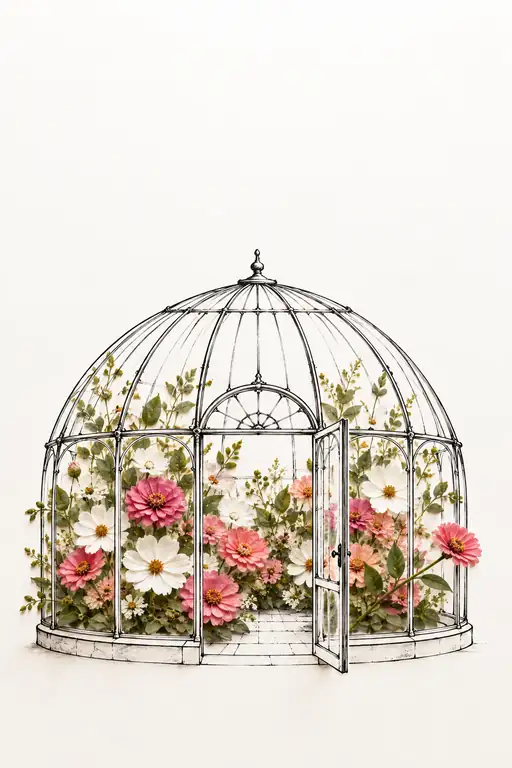 Come Into the Tenderness
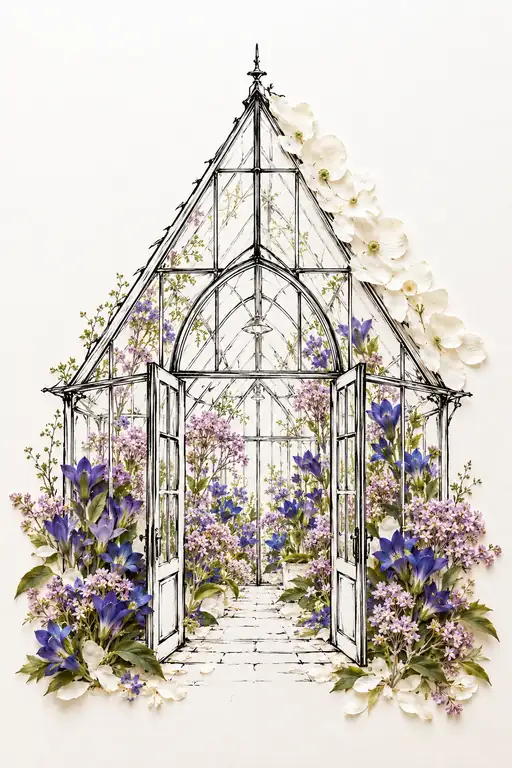 Come Into My Growing World
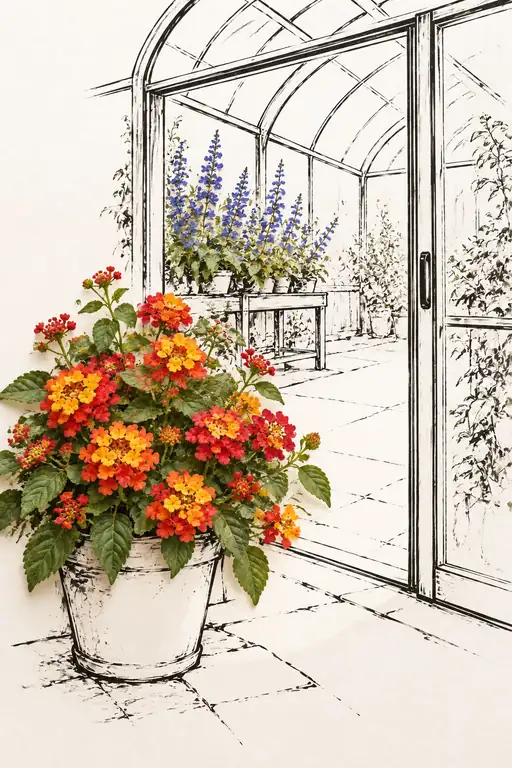 An Invitation from the Other Blue
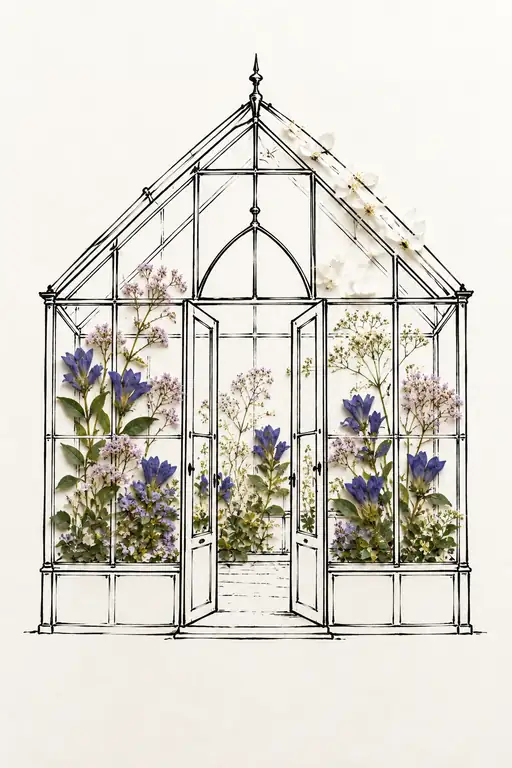 Come Into My Quiet Blue
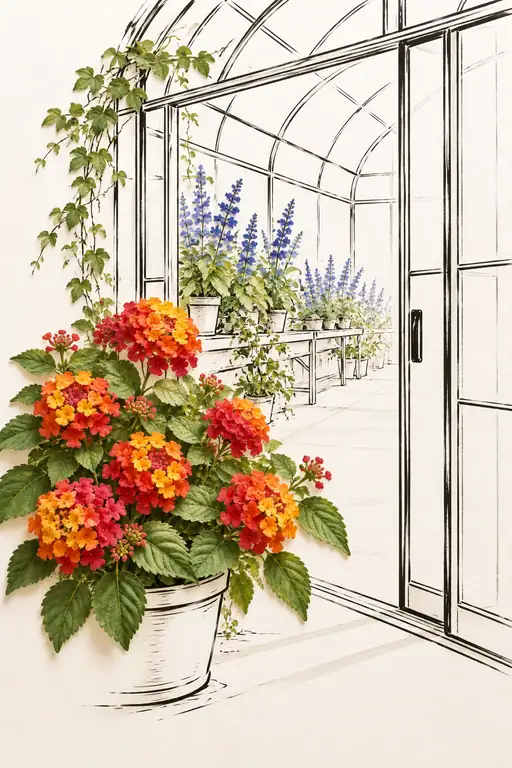 The Doorway to Growing Light
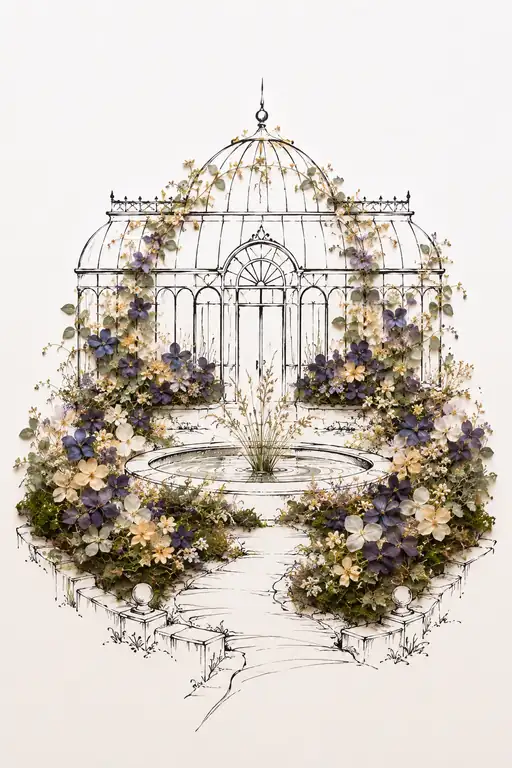 Glass Conservatory Gilded in Violet Blossoms
 A Symphony of Glass and Green
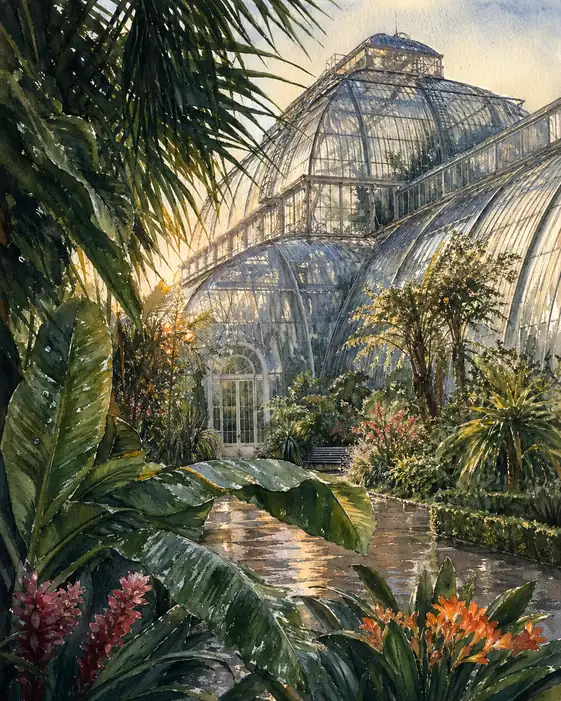 Breath of the Glass Eden
 Again, the Heart Opens
 There Is Still a Way In