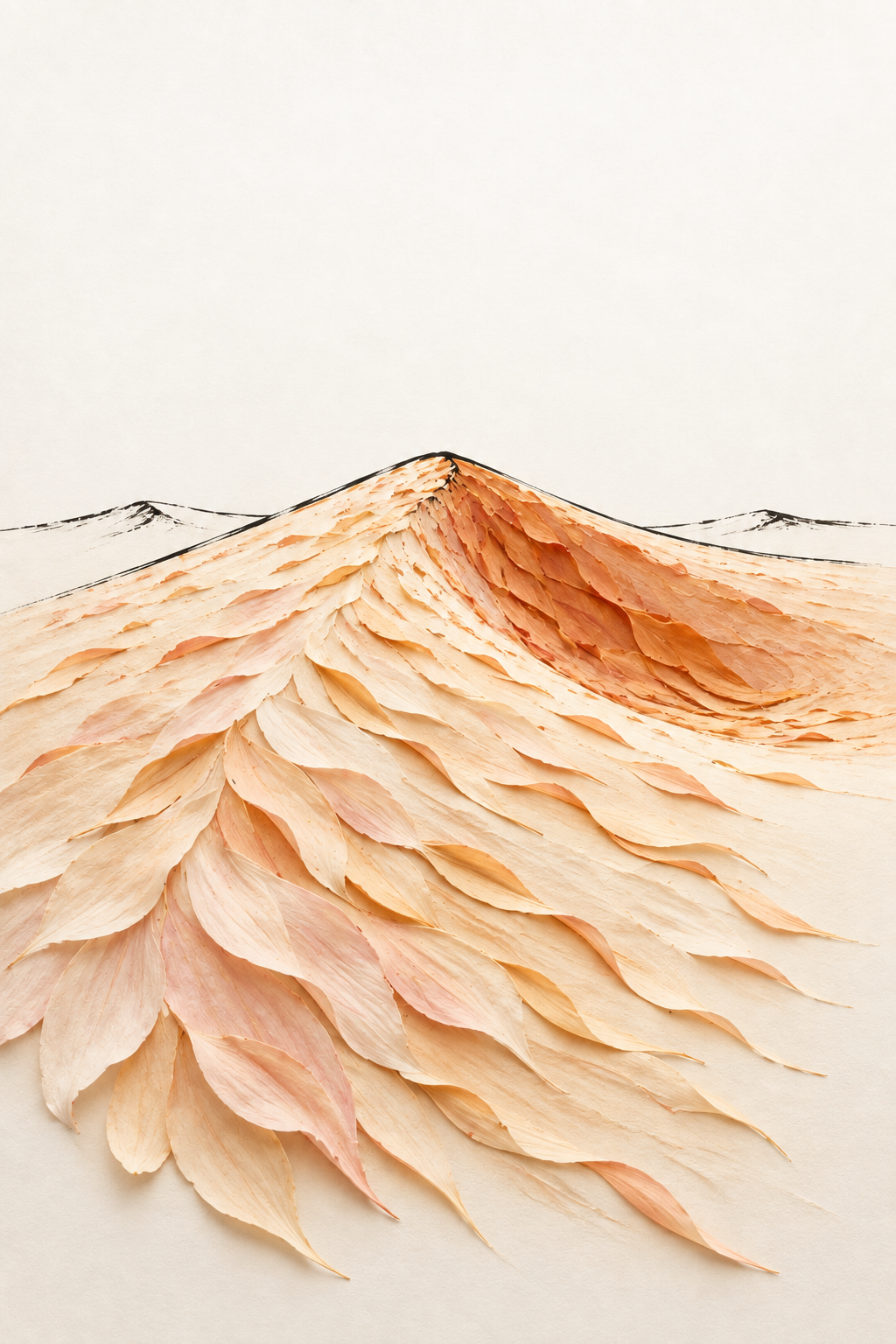
The Wind Remembers Its Way
Critique
Introduction A broad dune rises toward a central peak, its slopes formed from overlapping apricot and sand-colored petals. Sparse black lines mark the ridge and distant hills. Description The crest begins near the center of the image and slopes gently outward to either side. On the right, a darker orange hollow curves beneath the ridge. The nearer left slope is covered with larger pale petals whose pointed ends descend toward the bottom. Smaller, flatter fragments extend across the far right. Low hills drawn in black appear behind the main dune, just above its edges. Analysis The peak organizes the landscape into two unequal slopes. Large foreground petals overlap like layers of sand, while finer marks and warmer shadows describe the recessed right side. This change in scale and value makes the dune appear to turn in space. The black ridge line gives a firm boundary to the soft material, and the distant hills establish another plane behind it. Interpretation and Evaluation The dune's flowing surface suggests slow shaping by wind, although no wind is directly shown. Petals make the terrain appear fragile at close range, while the overall mass remains monumental. The composition holds this contrast through a simple peak and broad descending planes. Subtle warm colors convey light and shadow; the economical black drawing keeps the distant hills separate. The varied petal sizes make the foreground especially tactile. Conclusion The landscape first reads as a sunlit dune, then its petal layers reveal a second, more delicate material. Large scale, restrained line, and changing warm tones make the scene spacious yet closely observable.
Same Subcategory
Similar Artworks
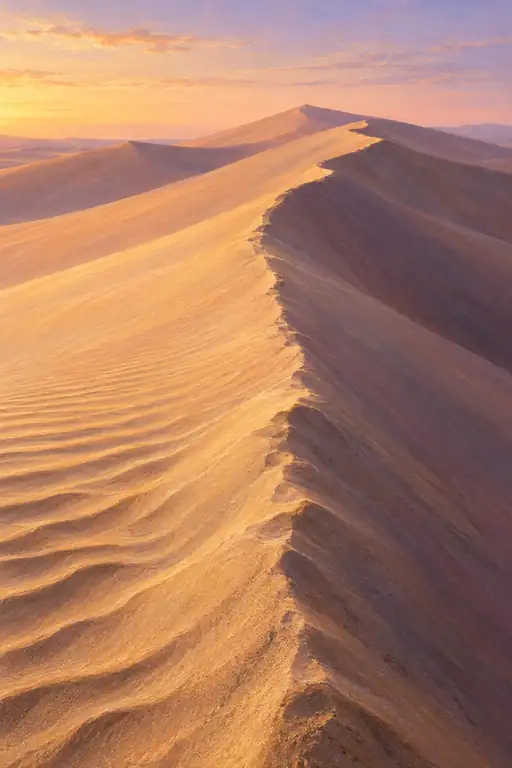 Where the Wind Traces Silence
 The Ridge between Light and Shadow
 Distance Made Gentle
 Blossom Volcano in the Morning Sky
 First Light Over the Ridge of Clouds
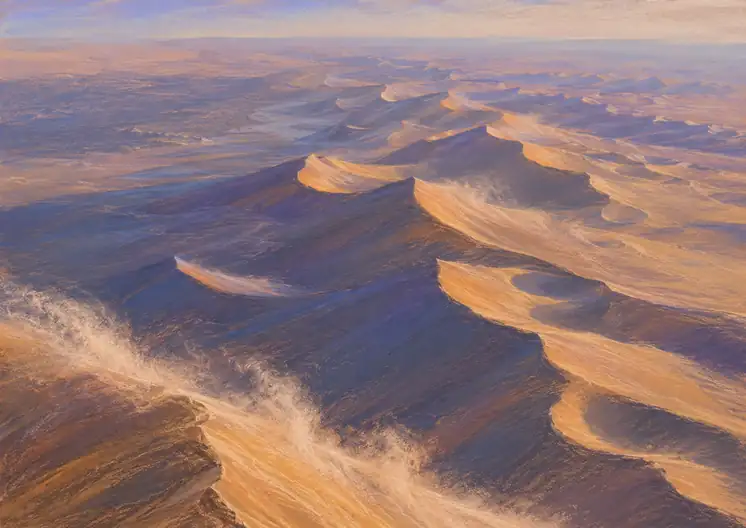 Where the Wind Carves the Earth
 Divided by Light
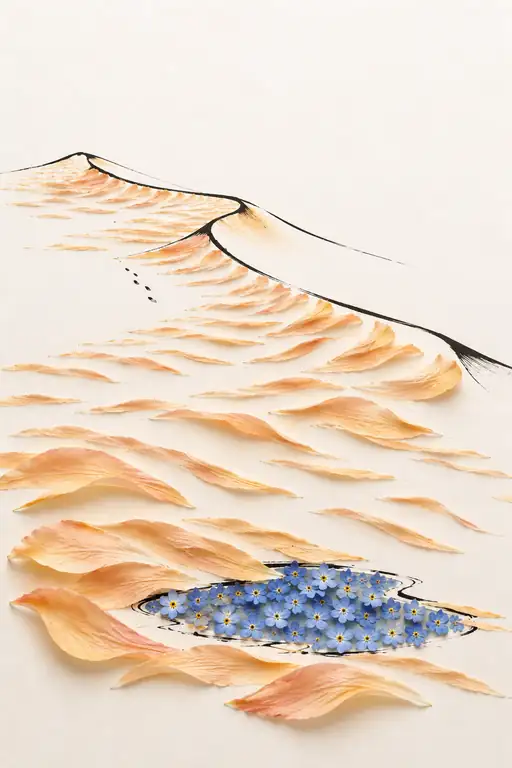 A Little Coolness in the Vast Warmth
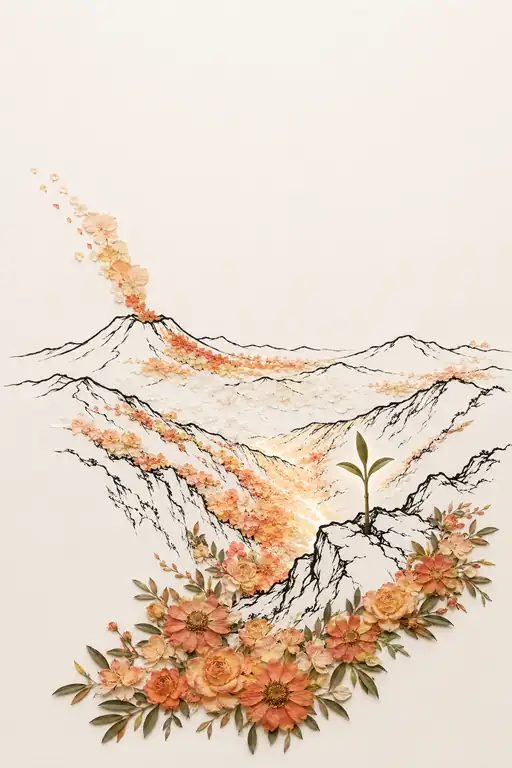 Sprout of Hope on the Volcanic Crest
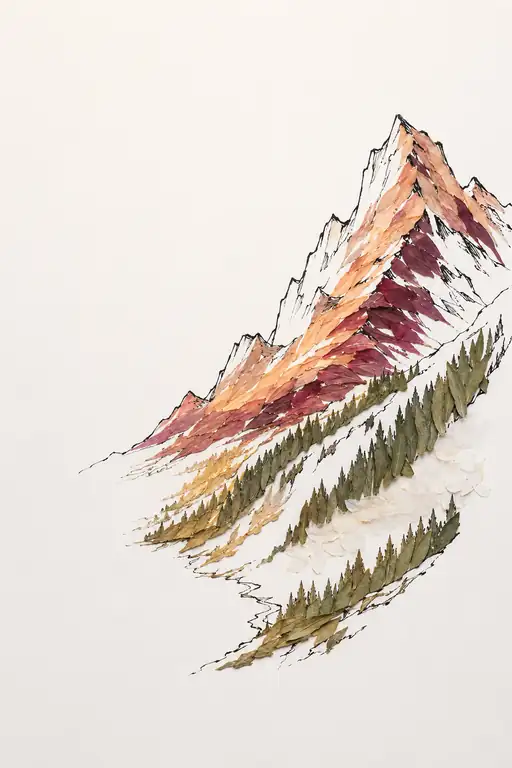 Ridge of Sunset and Evergreen Slopes