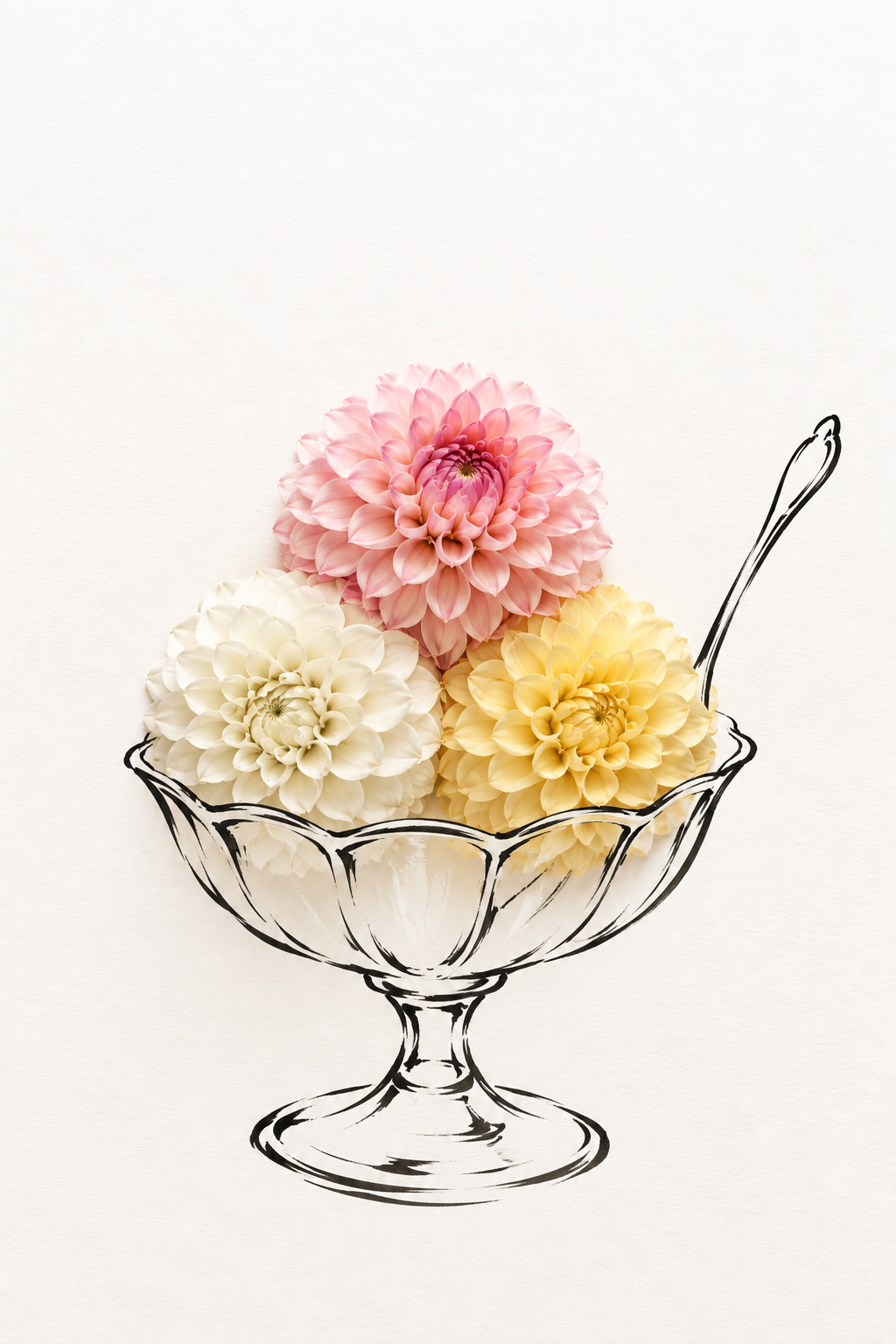
An Afternoon Too Sweet to Hurry
Critique
Introduction Three full flowers fill a stemmed dessert bowl, with a spoon rising behind them. Pink, ivory, and yellow blossoms replace the expected scoops while retaining the familiar triangular arrangement. Description The largest pink bloom sits at the top, its many curled petals gathering around a darker center. A cream flower occupies the lower left, and a yellow one fills the lower right. Their petals overlap slightly above the bowl's scalloped rim. The vessel narrows to a short stem and round foot, all drawn with brisk black strokes. A long spoon tilts upward on the right, with only its handle and small upper end visible. Analysis The three blooms form a stable triangle, balanced on the bowl's narrow stem. Pink is placed high, while ivory and yellow provide a lighter base. Repeated petal rings give each flower a rounded volume, recalling the shapes usually held in this kind of dish. The scalloped rim echoes those curves but remains visibly harder through its black contour. The spoon adds a steep line that interrupts the otherwise compact symmetry and points back toward the upper bloom. Interpretation and Evaluation The arrangement invites an expectation of dessert, then replaces edible scoops with fragile flowers. That substitution turns a moment of consumption into one of looking. The composition is effective because the glass and spoon supply clear clues without competing with the blossoms. Gentle colors separate the three forms; detailed petal shading gives each a believable surface. Conclusion The flowers first appear as a bouquet, but the bowl and spoon reveal a serving arrangement. The work joins familiar tableware to carefully ordered blooms, inviting attention to both visual pleasure and the act of presentation.
Same Subcategory
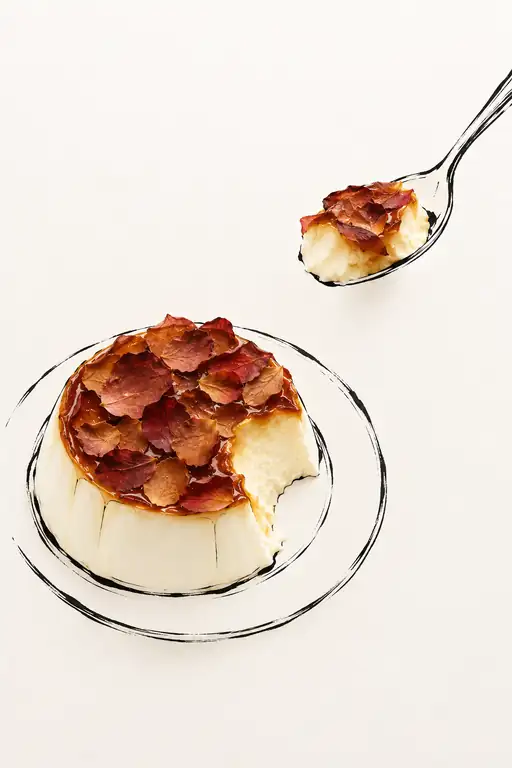 The Sweetness of Almost
Similar Artworks
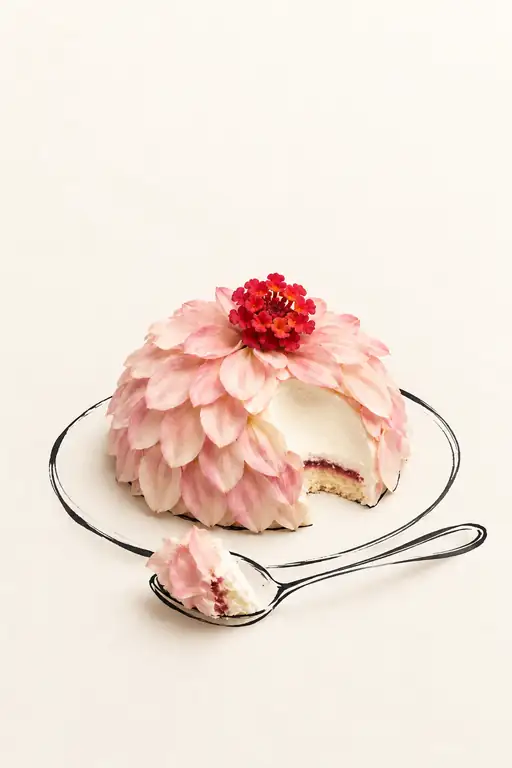 The Sweetness of Being Missed
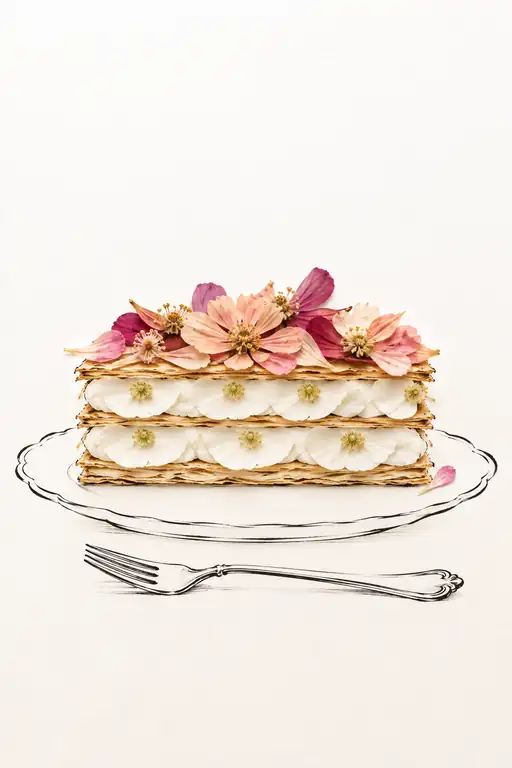 Let the Sweet Moment Linger
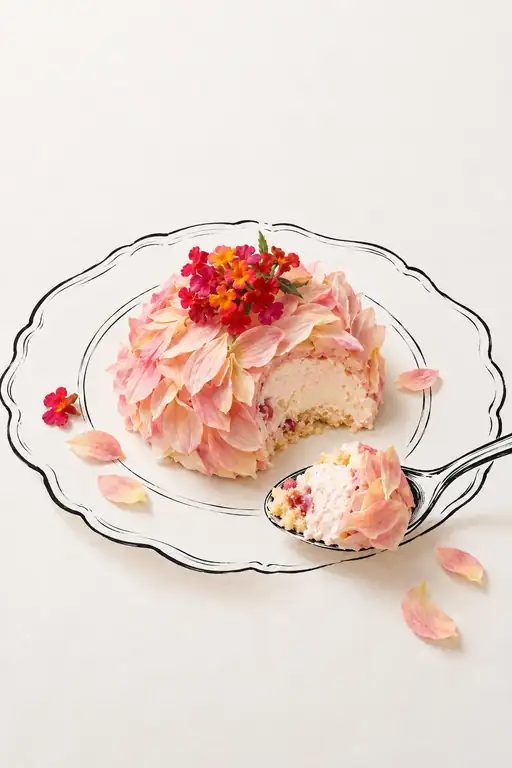 The First Bite of Celebration
 A Spoonful of Blue on a Hot Morning
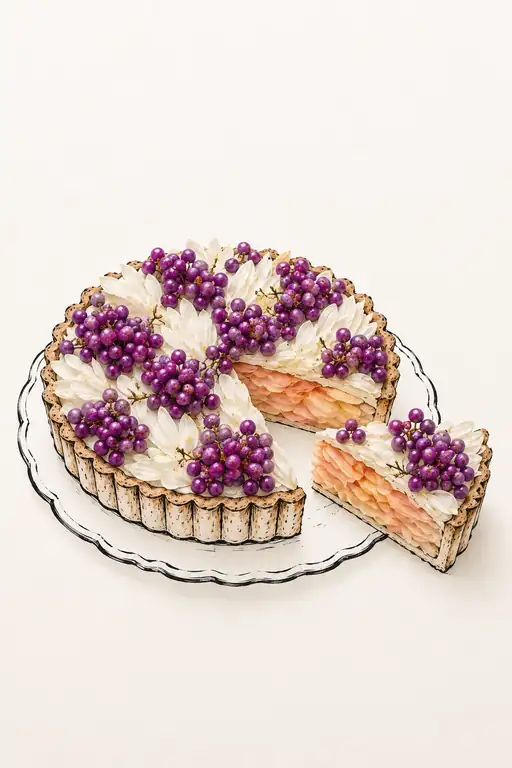 A Little Sweetness Set Aside for You
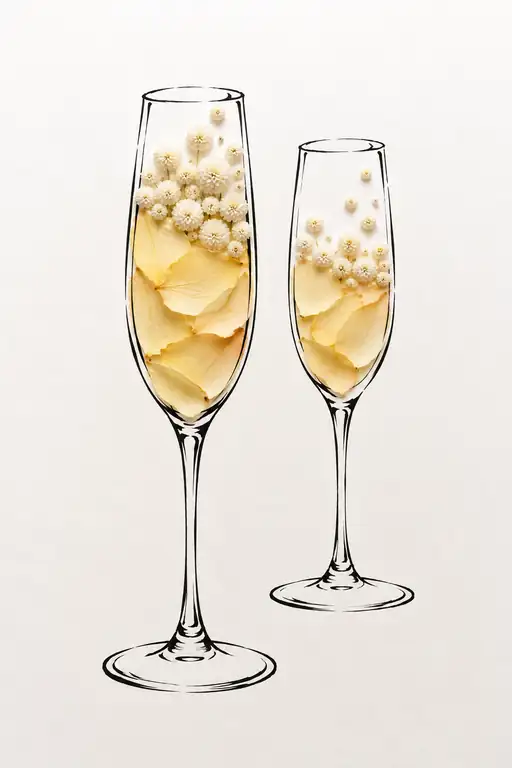 To Our Unspoken Joy
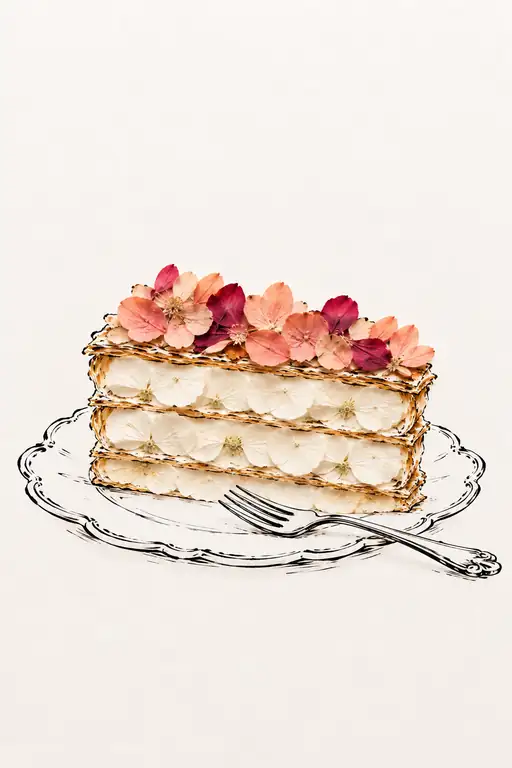 Layers of a Small Delight
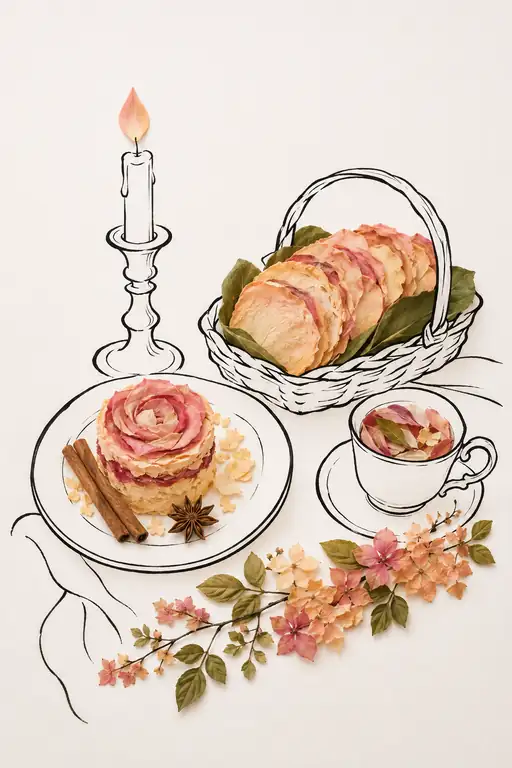 Tea Table of Petal Cake and Cinnamon Flame
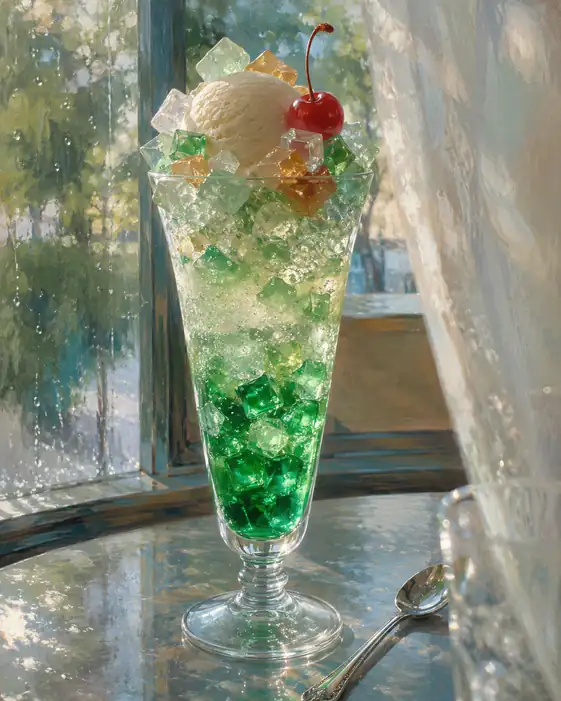 Emerald Summer Rings in a Crystal Glass
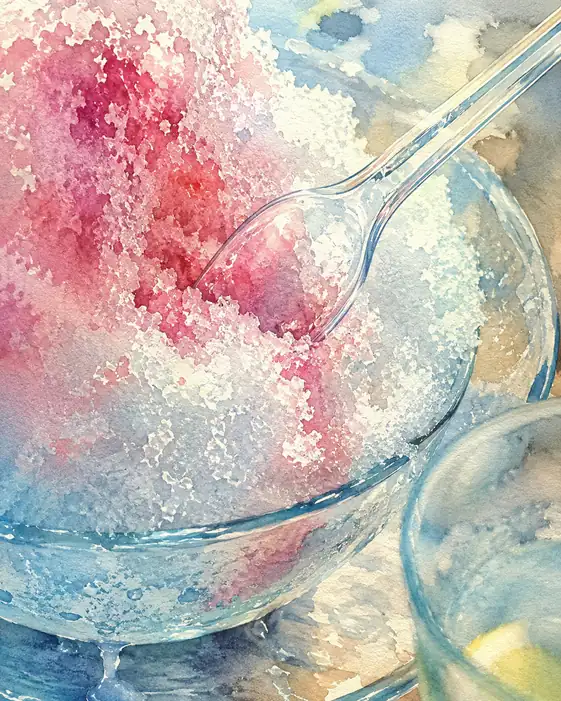 A Melting Bite of Summer